


The economy of Paraguay is an open economy of a landlocked South American nation, with the capital Asunción as its centre. The growth structure relies heavily on agriculture, livestock, and abundant hydroelectric power, combined with a vibrant border trade sector and the distinctive national currency, the guarani.
Contents
Economic overview of Paraguay
The Paraguayan economy is often described as a mid-sized economy in South America with high trade openness and significant reliance on natural resources. As a landlocked country, the Paraguay and Paraná river systems serve as vital arteries for transport and the export of goods to international markets.
According to international organisations such as World Bank, the economy of the country of Paraguay has recorded a period of relatively stable growth for many years, although it remains significantly affected by weather fluctuations and global agricultural commodity prices. This characteristic means that growth can fluctuate sharply from year to year.
Another feature is that the informal economy still accounts for a significant share of labour and trade. Furthermore, while a young population provides an abundant labour force, it also creates long-term demands for employment, vocational training, and productivity improvements.
The economic structure of Paraguay is often envisioned as a combination of a modern, highly mechanised export sector in agriculture and energy, and a traditional domestic sector with significant room for development. This coexistence creates an economic landscape that is dynamic in its export segment while posing challenges for upgrading infrastructure, public services, and institutional quality for the rest of the economy.
Considering a residency programme? The Prosperous Living Investment team assesses your profile free of charge and advises on the pathway that fits your goals.
Agriculture is a pillar of the Paraguayan economy
Agriculture is considered one of the most important pillars of the Paraguayan economy. The fertile eastern region, with its subtropical climate and abundant water resources, is where the majority of cultivated land is concentrated. These Paraguay geography favourable conditions help the country become one of the world’s notable agricultural exporters.
Soybeans are the most prominent crop. Soybeans and processed soy products account for a large portion of the export structure, placing Paraguay among the leading soybean suppliers in the region and globally. However, because it relies on a few staple commodities, export turnover is easily affected by seasonal factors and world prices.
In addition to soybeans, Paraguay cultivates many other crops such as maize, wheat, rice, sugarcane, and oilseeds. This diversity helps to mitigate risk to some extent, although agriculture remains generally sensitive to drought and extreme weather events.
Large-scale, highly mechanised farming models exist alongside smallholder farms. The gap between these two sectors is a frequently discussed topic when addressing income distribution and rural development.
Paraguay’s agricultural value chain extends beyond cultivation to transport, warehousing, rural financial services, and the processing industry. A good harvest season often leads to activity in many supporting industries, while a year of drought can have a chain reaction on consumption, credit, and tax revenue. Therefore, stable agricultural production is considered one of the fundamental conditions for macroeconomic stability.
- Soybeans and soy products: the primary export group.
- Maize, wheat, rice, sugarcane: important supplementary crops.
- Cultivation is concentrated in the fertile eastern region, near the major river systems.
Beef farming and exports
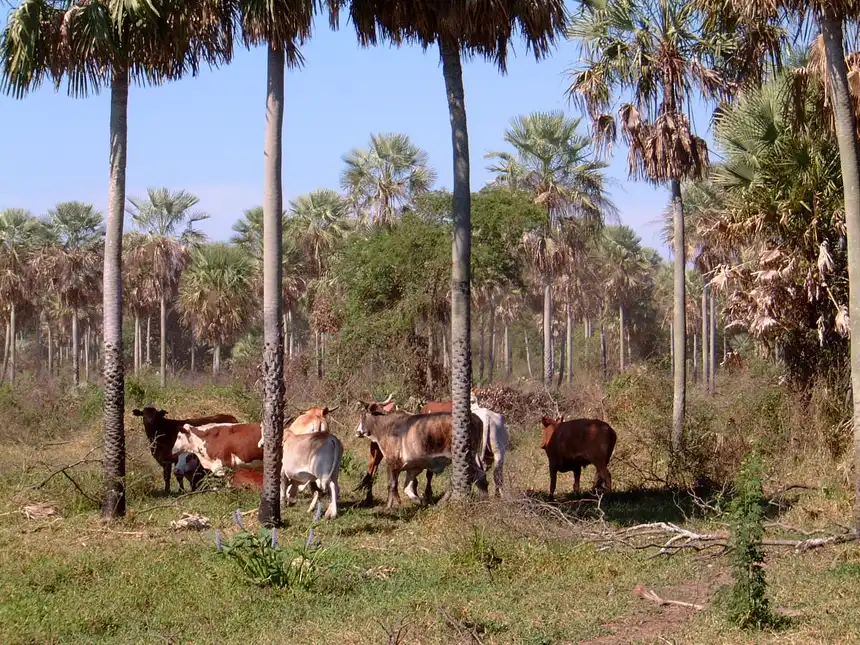
Livestock farming, particularly beef cattle, is another important segment of the economy. Vast pastures in both the eastern region and the western Gran Chaco region provide favourable conditions for large-scale, grazing-based cattle farming.
Beef is one of Paraguay’s primary exports, alongside soybeans. The country’s beef products are consumed in many regional and international markets, contributing significantly to foreign currency earnings. Expanding and maintaining beef export markets is always a priority in trade policy.
However, the livestock industry also faces challenges regarding disease control, veterinary standards, and increasingly stringent traceability requirements from importing markets. The ability to meet these standards directly affects the maintenance of beef export turnover.
Besides beef, livestock by-products such as leather and processed offal also contribute to exports and light industry. Improving quality standards, expanding internationally certified slaughtering capacity, and diversifying consumer markets are seen as ways to help the livestock industry increase value-added rather than merely exporting raw products.
Itaipú Hydroelectric Dam and energy
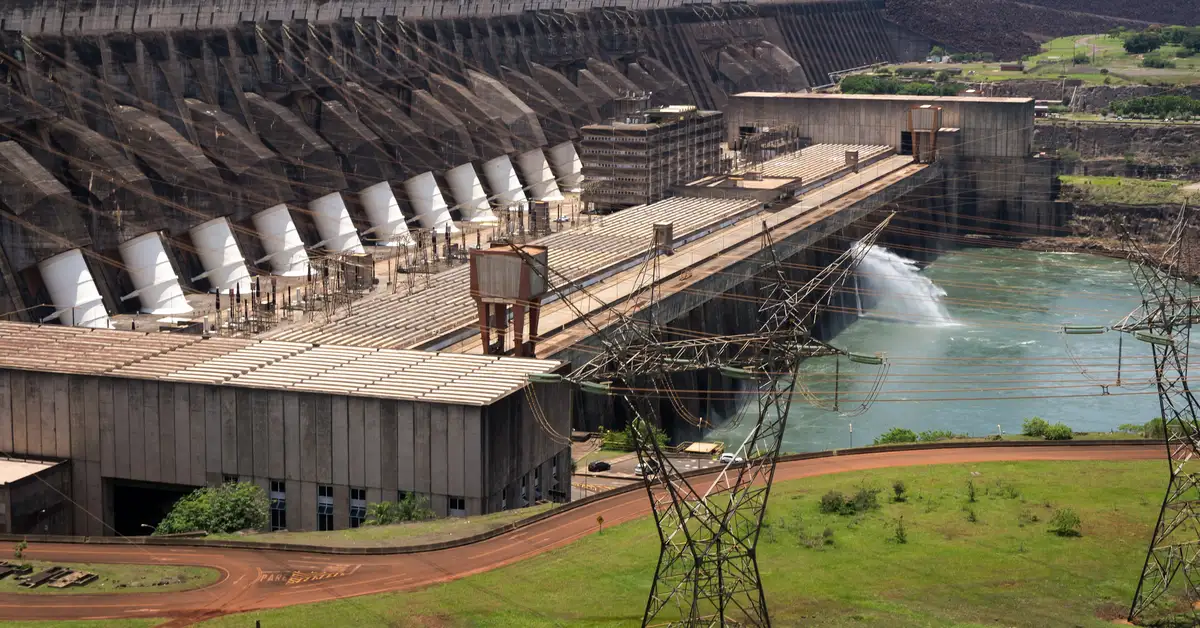
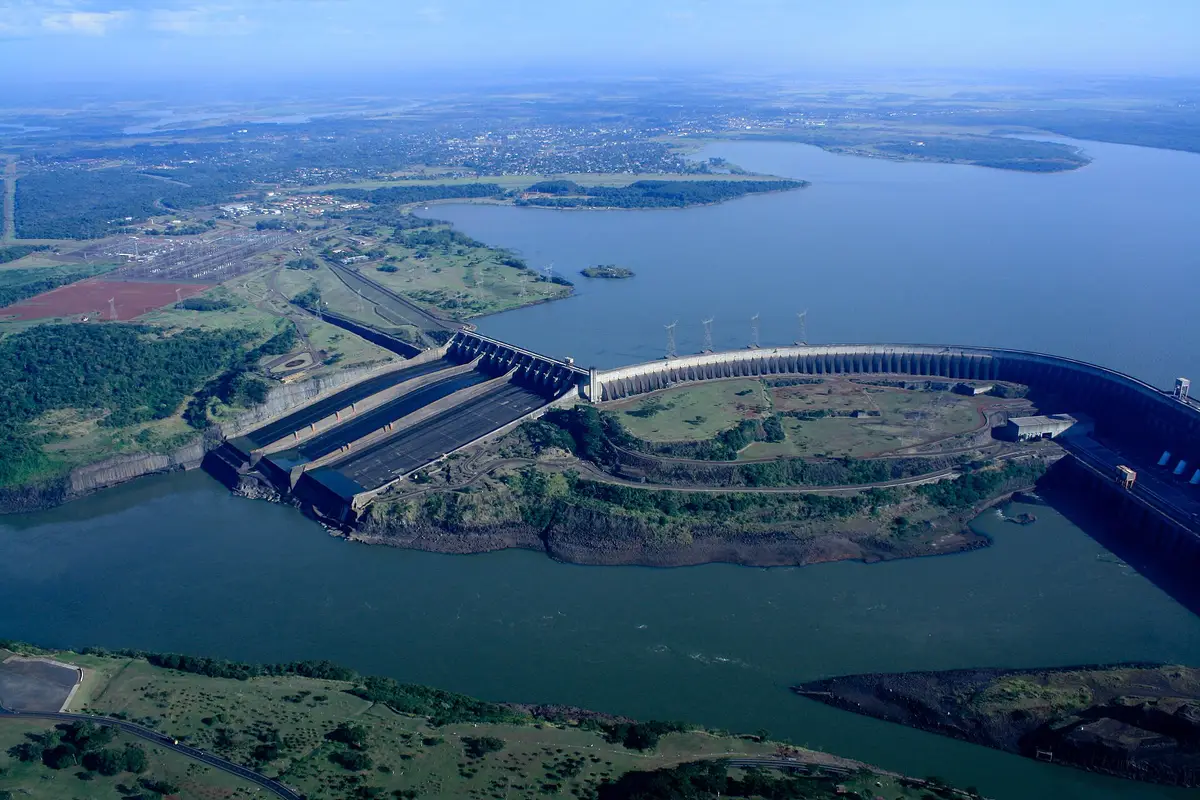
A feature that makes the Paraguayan economy stand out is its abundant hydroelectric power. The Itaipú Dam on the Paraná River, jointly operated by Paraguay and Brazil, is one of the world’s largest hydroelectric plants in terms of power generation. Additionally, Paraguay also participates in the operation of the Yacyretá Dam with Argentina.
Thanks to these facilities, Paraguay produces electricity far exceeding domestic consumption, becoming a notable electricity exporter. Hydroelectric power is almost clean and low-cost, which is considered a long-term competitive advantage for the economy.
Cheap and relatively stable electricity is also a factor attracting certain energy-intensive industries. In recent years, the topic of more effectively exploiting surplus electricity, including for technology and processing industries, has been discussed as a path for economic diversification.
On the other hand, heavy reliance on hydroelectric power also raises questions regarding the management of bilateral agreements, electricity pricing, and the sharing of benefits. These are economic issues closely tied to Paraguay residency by investment and the general business environment, as energy is a fundamental input.
Renewable energy and the appeal of green industry
A unique point about Paraguay is that the majority of its electricity is generated from hydropower, a renewable energy source. This gives the country’s energy mix a low emission intensity compared to many economies reliant on coal or gas-fired thermal power. This is seen as an advantage in a world increasingly focused on environmental criteria and sustainable development.
Clean, abundant, and competitively priced electricity enables Paraguay to position itself as a potential location for energy-intensive but low-emission industries. Some sectors frequently mentioned include deep processing of agricultural products, materials industry, and data and technology operations that require a stable power supply.
However, to turn this energy advantage into a tangible industrial driver, the country needs to invest synchronously in transmission grids, connectivity infrastructure, and a clear legal framework. Upgrading domestic electricity distribution capacity, alongside negotiating reasonable electricity export terms, is seen as the key to better utilising this renewable resource.
The guarani and monetary policy
The country’s official currency is the guarani, with the international currency code PYG. The name of the currency is linked to the indigenous Guaraní cultural heritage, which is deeply present in the lives and language of the people. The guarani exchange rate against major currencies is often quoted at a fairly high nominal level.
The central bank plays the role of managing monetary policy, controlling inflation, and stabilising the value of the domestic currency. For many years, Paraguay has been assessed as maintaining relatively stable inflation compared to some countries in the region, although the specific figures may vary by period.
For trade and investment activities, the guarani and the level of macroeconomic stability are factors that investors are concerned about. A stable macroeconomic foundation is often cited as a plus in the country’s business environment.
Cross-border trade and regional integration
As a landlocked country bordering Argentina, Brazil, and Bolivia, Paraguay has very vibrant cross-border trade. Border cities, such as Ciudad del Este bordering Brazil, have long been known as centres for large-scale cross-border trade, re-export, and shopping.
Paraguay is a member of the Southern Common Market (Mercosur), along with Argentina, Brazil, and Uruguay. This membership shapes many of the country’s trade policies, tariffs, and the flow of goods in the region.
The Paraguay and Paraná river systems form a vital waterway for transporting export goods to the sea via the ports of neighbouring countries. Because it has no sea ports of its own, river transport efficiency directly affects logistics costs and export competitiveness.
Being located between two major economies, Brazil and Argentina, offers broad market access while also making Paraguay sensitive to its neighbours’ economic fluctuations. When exchange rates or purchasing power in a neighbouring country shift, shopper flows and border trade can move quickly. For this reason, policy stability and harmonisation within the Mercosur bloc are considered crucial to Paraguay’s trade prospects.
International trade and the balance of exports and imports
International trade plays a central role in Paraguay’s economy, with an export basket leaning heavily towards basic commodities such as soybeans, beef and electricity. This structure allows the country to leverage its natural advantages, but it also makes export values dependent on global commodity prices and seasonal conditions each year.
On the import side, Paraguay receives various industrial goods, machinery, fuels and consumer products from major partners within and outside the region. Some imports serve domestic demand, while others are linked to re-export activities through border trade centres, creating a distinctive flow of goods.
Paraguay’s main trade partners are concentrated in South America, particularly neighbouring countries, alongside larger markets in Asia and Europe for certain agricultural products. Expanding and diversifying the portfolio of trade partners is seen as a way to mitigate risks when a specific market faces difficulties.
Overall, the direction favoured by many parties is to progressively increase the processing content of exports rather than selling raw products alone. Boosting added value not only improves turnover but also makes the economy less sensitive to global raw material price fluctuations.
Industry, services, and diversification
Alongside agriculture and energy, the industrial and services sectors are receiving increasing attention. Processing industries focus heavily on agricultural and food products, such as soybean processing, meat and related products, creating added value for raw exports.
Certain investment incentive policies, including the export processing regime (commonly known as maquila), are applied to attract export-oriented manufacturing plants. The services sector, comprising trade, finance and transport, also contributes increasingly to urban economic activity around Asunción.
Economic diversification is a frequently mentioned direction aimed at reducing dependence on a few agricultural commodities. However, this process is tied to infrastructure quality, human resources and the institutional environment, which are factors that take time to improve.
Within the services group, retail trade, banking, telecommunications and river transport form a support network for both the export sector and domestic consumption. The growth of the urban middle class and the digitalisation of financial services are expected to expand growth room for the services sector in the coming years.
Tax environment and investment
Paraguay is often noted for its relatively low tax environment compared to regional benchmarks, with main taxes such as corporate income tax, value-added tax and personal income tax rated as competitive. However, details on tax rates can change following policy reforms, so current regulations should be checked.
Alongside low energy costs and a young population, taxation is considered one of the attractive points of the investment environment. Authorities, including the Ministry of Industry and Commerce, play a role in developing and implementing investment attraction policies.
Even so, investors also note challenges such as the level of infrastructure development, administrative capacity and the modest size of the domestic market. The quality of human resources, which is closely linked to the system Paraguay education, is also a factor affecting long-term economic prospects.
Foreign investment and capital flows
Attracting foreign investment is one of the frequently mentioned priorities when discussing Paraguay’s economic development strategy. The combination of low energy costs, competitive tax rates, a young workforce and a central South American location is generally seen as creating appeal for international investors.
Foreign capital tends to flow towards sectors tied to the country’s existing advantages, such as agricultural processing, food industry, export-oriented manufacturing under the processing model and certain service industries. Investment incentive mechanisms and export-oriented policies are expected to help attract more factories and new technologies.
Nevertheless, for capital flows to remain sustainable, investors generally care about the stability and transparency of the legal framework, the quality of transport and logistics infrastructure, and policy predictability. Consolidating these factors is considered a key condition for Paraguay to enhance its competitive position in attracting investment compared to regional peers.
Macroeconomic stability, a relatively stable domestic currency and trade relations within the Mercosur bloc are foundations frequently cited as anchors for investor confidence. When these factors are maintained and accompanied by institutional improvements, the economy’s long-term capital attraction prospects are assessed as positive.
Challenges and prospects for the Paraguayan economy
Economic prospects are closely tied to the ability to overcome certain core challenges. First is the high dependence on agriculture and primary commodity exports, making growth vulnerable to weather and world prices. Severe droughts can reduce both agricultural output and hydroelectricity generation.
Additionally, issues of poverty reduction, income inequality, the informal sector and institutional quality continue to be central themes in development policy. According to assessments by International Monetary Fund, strengthening macroeconomic foundations and diversifying production are crucial conditions for sustainable growth.
Furthermore, investments in transport infrastructure, river logistics and labour productivity are seen as necessary directions. By effectively harnessing its clean energy advantages and central South American location, Paraguay has the opportunity to elevate its standing in regional supply chains.
Overall, Paraguay’s economy both holds specific advantages in agriculture and hydroelectricity, and faces requirements for diversification and institutional upgrading. The balance between these two aspects will shape the path of development in the coming years.
Accompanying you on your journey in residency investment
The Prosperous Living Investment team advises on pathways, assesses profiles and manages investments transparently for every residency, citizenship and international property objective.
Free profile assessmentWhere life gets prosperous