


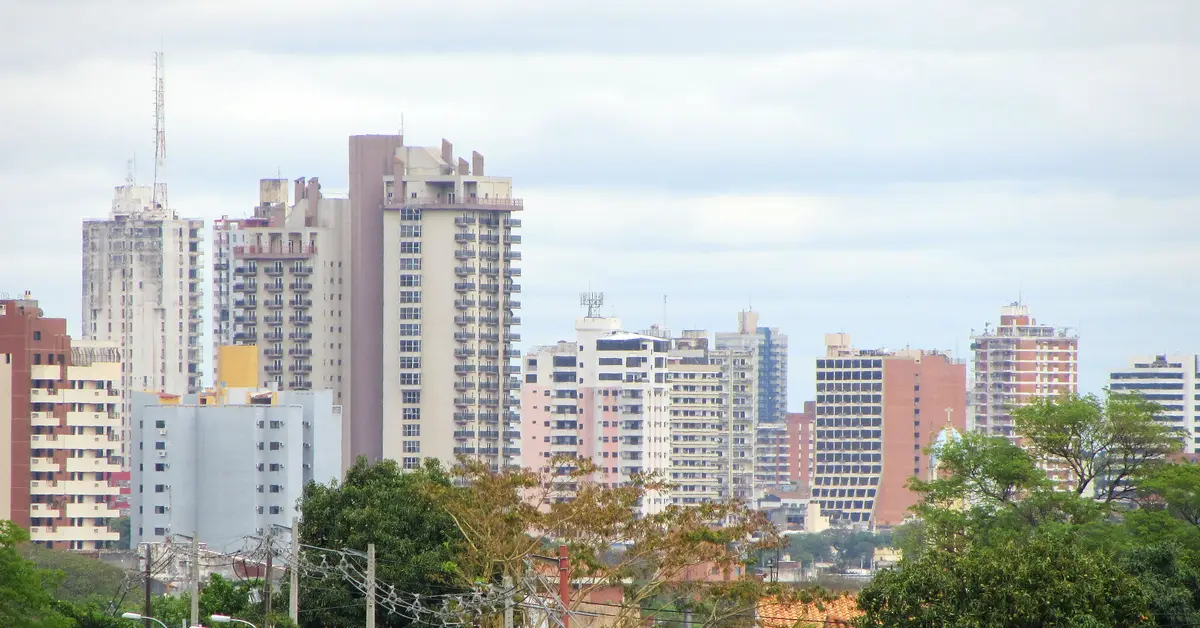
Education in Paraguay is a system with the distinct mark of this landlocked South American nation, where teaching and learning take place in both Spanish and Guaraní. From compulsory basic education to the university level, with the National University of Asunción at its core, this model is both rich in identity and faces many challenges.
Contents
Overview of the Paraguayan education system
As a landlocked country located in the heart of South America with its capital in Asunción, Paraguay has built a widespread public education system that is free at basic levels and managed by the state. The lead agency is the Ministry of Education and Science (Ministerio de Educación y Ciencias), which is responsible for developing the framework curriculum, monitoring quality, and coordinating the budget nationwide.
The system is organised into sequential levels: preschool education, compulsory basic education (educación escolar básica), followed by secondary school, and then higher and postgraduate education. Additionally, there are technical-vocational and adult education branches, aimed at expanding learning opportunities for population groups beyond school age.
The most noticeable difference in Paraguayan education lies in its bilingual nature. Unlike many Latin American countries that use only Spanish, Paraguay incorporates the indigenous Guaraní language into schools as a language of instruction and an official subject. To understand the broader context of this country, one can refer to the overview article on the country of Paraguay.
Considering a residency programme? The Prosperous Living Investment team assesses your profile free of charge and advises on the pathway that fits your goals.
Management structure and legal framework
The Ministry of Education and Science plays a central role in managing Paraguayan education. This agency issues the national curriculum, regulates teacher training standards, allocates resources, and coordinates with local units in each department (departamento). Official information on policies and programmes is published through the Ministry’s portal.
The legal foundation of the system is based on a General Education Law along with accompanying guidance documents. This framework defines the principle of compulsory basic education, the bilingual nature of schools, and the state’s responsibility to ensure access for all children.
In recent decades, Paraguay has undergone several educational reforms aimed at modernising the curriculum and linking teaching with socio-economic development needs. According to the portal of the Ministry of Education and Science of Paraguay, policies are adjusted in phases, so interested parties should check current regulations rather than relying on old milestones.
Alongside state management, the private sector and religious organisations also participate in providing educational services, especially in large urban areas. The interweaving of public and private schools creates a diverse picture, but also raises questions about equity in access to quality among population groups.
Levels of education from preschool to secondary
The preschool level aims to familiarise children with the school environment and develop foundational skills before formal schooling. The rate of children accessing preschool education has expanded over time, but a gap remains between urban and rural areas.
Basic education is the backbone of the system. This is a compulsory stage, lasting several years and divided into sequential cycles. The goal of this level is to equip students with literacy, numeracy, and foundational knowledge in science, social studies, and language. Students are exposed to both Spanish and Guaraní during this process.
After basic education, students enter secondary school (educación media). At this stage, the curriculum becomes more differentiated, with academic branches preparing for university and technical-vocational branches oriented towards the labour market. Completing secondary school is a prerequisite for university admission.
However, the rate of students completing all levels of education is uneven. The phenomenon of dropping out, especially in rural areas and among low-income families, remains an issue of concern for policymakers. Family economic factors, geographical distance to school, and the need for early labour are frequently cited causes.
Bilingual education in Spanish and Guaraní
The most prominent feature of Paraguayan education is the bilingual model. Paraguay is one of the few countries in the Americas where an indigenous language — Guaraní — is widely used in daily life by the majority of the population, alongside Spanish. Both are official languages of the country.
In schools, bilingual education policy aims for children to develop proficiency in both languages. For many students, especially in rural areas, Guaraní is their mother tongue, while Spanish is associated with administration, the economy, and academia. Teaching in the mother tongue in the early years is seen as a way to help children acquire knowledge more effectively.
This model has profound cultural significance, contributing to the preservation of a vibrant indigenous language in the heart of South America. The link between language and national identity is clearly reflected in social life; readers can learn more through the article on Paraguay demographics to see a broader picture of language and population.
Although rich in value, the bilingual model also poses practical challenges. Compiling standard materials for Guaraní, training teachers capable of teaching in two languages, and balancing the time allocated to both languages require significant resources and expertise. This is an area that continuous reforms must address.
University system and the National University of Asunción (UNA)
At the higher level, Paraguayan education includes both public and private universities, as well as specialised training institutes. The centre of this system is the National University of Asunción (Universidad Nacional de Asunción – UNA), the country’s oldest higher education institution, located in the capital, Asunción.
Established in the late 19th century, UNA includes many faculties and departments spanning fields such as medicine, law, engineering, economics, agriculture, social sciences, and humanities. It has trained the majority of the nation’s professional staff for many generations and maintains a leading role in academic research.
Besides UNA, the system also has other public universities in the provinces and a network of private universities that has grown strongly in recent decades. The expansion of the private sector helps increase the number of study places, but also raises questions about accreditation and quality assurance.
The ability to access higher education is closely tied to economic and geographical conditions. Students in areas far from the capital often face more barriers to pursuing quality programmes. The link between human resource levels and development is analysed in more depth in the article on Paraguay’s economy.
Teacher training and curriculum
The quality of teaching staff is a key factor determining the effectiveness of any education system. In Paraguay, teacher training and professional development are carried out through teacher training institutes and specialised university programmes, under the coordination of the Ministry of Education and Science.
A specific requirement for Paraguayan teachers is bilingual teaching competence. Teachers not only need professional knowledge but must also be capable of teaching in both Spanish and Guaraní, especially in areas with many indigenous-speaking students. This is a long-standing challenge in training and recruitment.
Regarding the curriculum, reforms over many years have aimed to shift from rote learning to the development of competence and critical thinking. Updating textbooks, integrating technology, and linking content with local realities are priorities frequently mentioned in industry development plans.
However, implementing the new programme in actual classrooms faces difficulties due to disparities in school conditions, materials, and teacher training across regions. The gap between policy on paper and classroom practice is a point that many independent assessments continue to note.
Public spending and the urban-rural divide
Public investment in education is a frequently debated topic in Paraguay. Compared to some countries in the region, the share of public spending allocated to education is considered by many analyses to be modest relative to needs, although it has shown a trend of increasing over time. Because specific figures change with each budget year, it is necessary to consult updated data when accuracy is required.
Limited resources are reflected in school facilities, particularly in rural areas and the sparsely populated Gran Chaco region in the west. Many schools lack equipment, internet connectivity, and adequate learning materials, creating a clear gap compared to schools in Asunción and major urban centres.
The urban-rural divide lies not only in infrastructure but also in learning outcomes. Urban students generally have better access to highly qualified teachers and more favourable learning environments. This is one of the core inequalities that education policy aims to narrow.
International organisations monitoring the education sector in the region, including assessments by the Organisation for Economic Co-operation and Development (OECD), often emphasise that effective investment and equitable resource allocation are conditions for sustainably improving quality.
Challenges regarding educational quality
Beyond the reach of the system, learning quality is a major concern for Paraguayan education. Regional and international assessments have repeatedly pointed out that student performance in foundational subjects such as reading comprehension, mathematics, and science remains at a level that requires significant improvement compared to the set goals.
Many factors impact quality: limited resources, uneven teacher training, high dropout and repetition rates, and difficulties in implementing bilingual programmes. When these factors accumulate, the system’s output is clearly affected.
Another challenge is the connection between education and the labour market. Equipping learners with skills suitable for an economy in transition — from traditional agriculture to service and industrial sectors — requires vocational training and university programmes to stay closely aligned with practical needs.
Nevertheless, progress must also be acknowledged. Expanding access to basic education, maintaining a bilingual model rich in identity, and developing the university system are important foundations. The issue is how to transform coverage into substantive quality for all groups of students.
Reform and development orientation
Faced with these challenges, Paraguay has been pursuing many education reform programmes. Directions often focus on improving teacher quality, modernising curricula, increasing the application of technology, and narrowing regional gaps.
Improving public investment, upgrading facilities, and ensuring transparency in resource use are conditions frequently mentioned. Additionally, cooperation with international and regional organisations helps Paraguay access experience as well as quality assessment tools.
Another important direction is linking education with sustainable and inclusive development, so that children in all regions — from Asunción to remote provinces — have relatively fair learning opportunities. Preserving and promoting the bilingual model is still considered a part of the identity that must be maintained during the modernisation process.
In general, the Paraguayan education system is a combination of a foundation rich in cultural identity and unfinished development tasks. The journey ahead depends on the ability to turn reform commitments into substantive changes in every classroom across the country.
Accompanying you on your journey in residency investment
The Prosperous Living Investment team advises on pathways, assesses profiles and manages investments transparently for every residency, citizenship and international property objective.
Free profile assessmentWhere life gets prosperous