

Canada
Canada suspends citizenship by descent certificates issued under Bill C-3
IRCC has suspended some citizenship-by-descent certificates issued under Bill C-3 and requested their return, over concerns about the…



The City of Kelowna has announced the priority sectors and occupations targeted under the Francophone Community Immigration Pilot (FCIP) for 2026.
This year, Kelowna – a city located in south-central British Columbia, on the eastern shore of the Okanagan Valley – has added one priority sector and eight new in-demand occupations.
To be considered for permanent residence (PR) nomination through the FCIP, foreign nationals must have qualified French language proficiency and a job offer from a designated employer.
This year, Kelowna is prioritising six sectors under the FCIP – all of which are currently listed as “open” by the Société de développement économique de la Colombie-Britannique (SDECB), the entity overseeing referrals and designations:
In general, these sectors reflect Kelowna’s 2025 priorities, with the only change this year being the addition of the “business, finance and administration” sector.
Note: Specifically for the sales and service sector, the SDECB will not issue more than 10 community recommendation certificates (or “referrals”) – and a maximum of two referrals per code National Occupational Classification (NOC) system. For the trades sector, each trade is limited to a maximum of three recommendations.
Considering a residency programme? The Prosperous Living Investment team assesses your profile free of charge and advises on the pathway that fits your goals.
The largest city in the Okanagan Valley has identified the following 25 occupations – along with their corresponding NOC codes – as high-demand professions in 2026.
Occupations in bold are newly prioritised in 2026 (a total of eight occupations), while all remaining occupations were also targeted in 2025.
| Occupations | NOC code |
|---|---|
| Accounting technicians and bookkeepers | 12200 |
| Administrative officers | 13100 |
| Automotive service technicians, truck and bus mechanics | 72410 |
| Bakers | 63202 |
| Cabinetmakers | 72311 |
| Carpenters | 72310 |
| Cleaning supervisors | 62024 |
| Cooks | 63200 |
| Corporate sales managers | 60010 |
| Early childhood educators and assistants | 42202 |
| Electricians (except industrial and power system) | 72200 |
| Elementary and secondary school teacher assistants | 43100 |
| Forestry technicians | 22112 |
| Home child care providers and related occupations | 44101 |
| Hotel front desk clerks | 64314 |
| Medical laboratory assistants and related technical occupations | 33101 |
| Nurse aides, orderlies and patient service associates | 33102 |
| Other assisting occupations in support of health services | 33109 |
| Other repairers and servicers | 73209 |
| Painters and decorators (except interior designers) | 73112 |
| Plasterers, drywall installers and finishers | 73102 |
| Roofer | 73110 |
| Social and community service workers | 42201 |
| Financial and insurance clerks | 12011 |
| Office and administrative support supervisors | 12010 |
There are currently 40 employers designated by the SDECB to participate in the FCIP, though most are not currently hiring. The full list can be found on the SDECB website.
The City of Kelowna notes that “fast-food restaurants, convenience stores, gas stations, vape shops, and cannabis stores are not eligible to participate in the programme”.
The minimum wage for the aforementioned occupations ranges from CA$21 to CA$28 per hour.
Kelowna will have seven intake periods in 2026, with the first opening in June.
Each intake period will be open from the 15th to the 30th of each month, during which designated employers may submit candidate proposals to the SDECB for review. Each employer may not submit more than three proposals for consideration.
The SDECB notes that at the time of writing, there is one proposal certificate available for NOC code 60010 (corporate sales manager) and two certificates remaining for the following occupations: baker (63202), cleaning supervisor (62024), cook (63200), and hotel front desk clerk (64314).
The FCIP is a five-year pilot programme launched in 2025 alongside Rural Community Immigration Pilot (RCIP), designed to promote immigration to Francophone minority communities outside Quebec.
To be eligible, applicants must have a job offer from an employer designated by the community (e.g., the SDECB in Kelowna) and demonstrate language proficiency at level 5 on the Niveaux de compétence linguistique canadiens (NCLC) scale across all four language skills.
Once the foreign national is granted a job offer, the employer will propose them to the community for participation in the FCIP. Only those with job offers in priority sectors and occupations will be proposed.
If the proposal is approved by the designated community, the foreign national may apply to Immigration, Refugees and Citizenship Canada (IRCC) for permanent residence.
In addition to the job offer and language requirements, French-speaking candidates must also have:
Note: Foreign nationals may be eligible for a special two-year work permit, allowing them to begin working for the designated employer under the FCIP while their permanent residence application is being processed.
IRCC has suspended some citizenship-by-descent certificates issued under Bill C-3 and requested their return, over concerns about the…
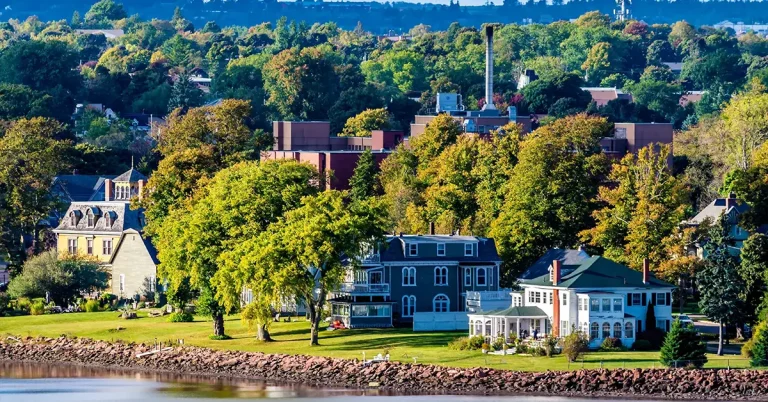
On 21 May 2026, Prince Edward Island issued 114 PNP invitations through the Labour Impact and Express Entry…

Alberta issued 1,051 AAIP invitations between 1 and 13 May 2026 across four draws, prioritising healthcare, technology and…
The Prosperous Living Investment team advises on pathways, assesses profiles and manages investments transparently for every residency, citizenship and international property objective.
Free profile assessmentWhere life gets prosperous
We use analytics cookies (Google Analytics) to understand how this site is used. They stay off until you agree. Privacy policy.