


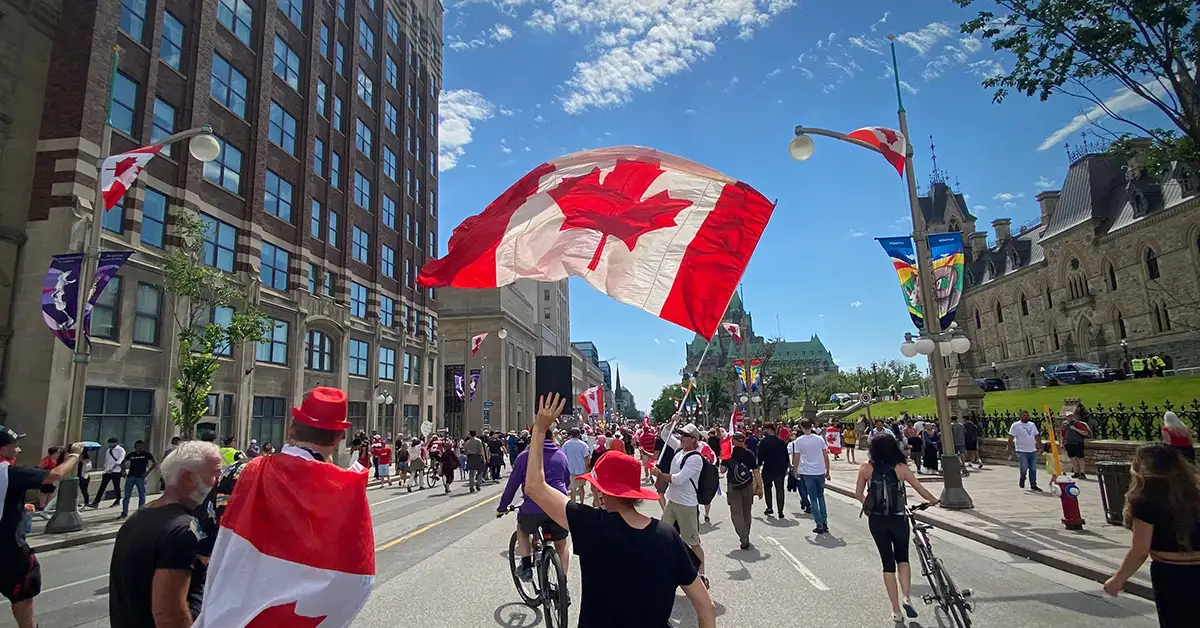
Canadian permanent residence describes a person permitted to reside in Canada lawfully and on a long-term basis. Canadian permanent resident status may be compared with permanent residence status in Vietnam and household registration. Differences nonetheless remain in the rights and obligations attached to permanent residence in different countries.
This article gives a comprehensive view of Canadian permanent residence — from the rights and obligations and the routes to obtaining this status, to a comparison with US permanent residence — helping readers better understand the immigration pathway.
Message
An introduction to Canadian permanent residence
A permanent resident, abbreviated to PR, holds the legal status permitting an individual to live, work and study in Canada indefinitely without being a Canadian citizen.
Permanent residence is an important stepping stone towards Canadian citizenship, bringing many rights close to those of citizens, such as access to public healthcare, high-quality education and freedom of movement between provinces. Permanent residents cannot, however, vote, stand for election or hold certain jobs requiring high-level security clearance.
Permanent resident status plays an important part in attracting global talent to Canada, a country known for its high quality of life, multicultural environment and stable economy.
For many, becoming a permanent resident is the beginning of a new life, in which they can build a secure future for themselves and their family.
Considering a residency programme? The Prosperous Living Investment team assesses your profile free of charge and advises on the pathway that fits your goals.
Benefits of Canadian permanent residence
A detailed article aboutBenefits of Canadian permanent residence.
Canadian permanent residents enjoy many attractive benefits, making this status the goal of millions of people around the world. The main benefits are as follows:
- Access to public healthcare: Canada has a high-quality public health system, and permanent residents receive healthcare services free of charge or at low cost, depending on the province in which they live.
- The right to study and work: permanent residents may study at public institutions at preferential fee rates (the same as citizens) and work in any occupation, in any province, without a work permit.
- Freedom of movement: they may live anywhere in Canada, from vibrant cities such as Toronto and Vancouver to peaceful areas such as Prince Edward Island.
- Sponsoring relatives: permanent residents have the right to sponsor a spouse, dependent children or other relatives (such as parents and grandparents) to become permanent residents as well, under the rules ofImmigration, Refugees and Citizenship Canada (IRCC).
- Receiving social benefits: certain financial support programmes, such as unemployment benefit or child support, also apply to permanent residents.
The obligations of a Canadian permanent resident
A detailed article aboutThe obligations of a Canadian permanent resident.
Alongside these rights, permanent residents must also meet a number of obligations to maintain their status:
- Complying with the law: permanent residents must comply with all Canadian laws. A serious breach, such as committing a criminal offence, may lead to removal.
- The residency requirement: to keep PR status, they need to live in Canada for at least 730 days (2 years) in every 5-year period. Time spent abroad for work or humanitarian reasons may be taken into account, but must be clearly evidenced.
- Paying tax: permanent residents are obliged to pay income tax and other taxes under provincial and federal rules.
A clear understanding of these rights and obligations helps permanent residents make the most of the opportunities in Canada while avoiding legal risk.

Routes to becoming a Canadian permanent resident
Canada offers many immigration programmes leading to permanent residence, suited to different groups, from skilled workers and international students to refugees. The most common routes are set out below:
Express Entry
Express Entryis Canada’s main economic immigration system, managing 3 programmes:
- Federal Skilled Worker Programme (FSWP)
- Federal Skilled Trades Programme (FSTP)
- Canadian Experience Class (CEC)
Express Entry uses theComprehensive Ranking System (CRS)to score candidates on age, education, experience, language and other factors. The highest-scoring candidates receive anInvitation to Apply (ITA)to apply for PR.
Provincial Nominee Programme (PNP)
Provincial Nominee Programme (PNP)allows provinces and territories to nominate candidates who meet local labour needs. Each province has its own immigration streams, including:
- Alberta Advantage Immigration Program (AAIP)
- The British Columbia Provincial Nominee Program (BC PNP)
- The Manitoba Provincial Nominee Program (MPNP)
- The New Brunswick Provincial Nominee Program (NBPNP)
- The Newfoundland and Labrador Provincial Nominee Program (NLPNP)
- The Nova Scotia Nominee Program (NSNP)
- The Ontario Immigrant Nominee Program (OINP)
- The Prince Edward Island Provincial Nominee Program (PEI PNP)
- The Saskatchewan Immigrant Nominee Program (SINP)
- Northwest Territories Nominee Programme (NTNP)
- The Yukon Nominee Program (YNP)
A PNP may be linked to Express Entry (an Enhanced PNP), giving candidates additional CRS points, or operate independently (a Base PNP).
Family sponsorship
The family sponsorship programme allows Canadian permanent residents or citizens to sponsor:
- A spouse or common-law partner
- Dependent children under 22
- Parents or grandparents
Sponsored candidates need to meet the medical and criminal record requirements and to evidence a genuine relationship.
Federal immigration programmes
- The Atlantic Immigration Program (AIP): focused on the Atlantic provinces (New Brunswick, Nova Scotia, Newfoundland and Labrador, and Prince Edward Island).
- The Rural and Northern Immigration Pilot (RNIP): supporting workers in small communities in northern and rural Canada.
- The Agri-Food Immigration Pilot (AFIP): supporting workers in the agricultural sector.
- The Start-up Visa:for international entrepreneurs with an original business idea.
Each route has its own requirements, and candidates need to research them carefully to choose the one that suits them best.
Quebec immigration programmes
Immigration to Quebec is an attractive option for those wishing to become Canadian permanent residents, thanks to the province’s distinct immigration policy.
Quebec administers its own economic immigration programmes, including:
- Quebec Skilled Worker Selection Programme (SWSP)
- The Quebec Experience Program (PEQ)
- The Quebec Entrepreneur Program
Candidates need to meet requirements on language (French is favoured), education, work experience and the ability to integrate.
The process usually involves submitting an application for aQuebec Selection Certificate (CSQ), then applying for permanent residence throughImmigration, Refugees and Citizenship Canada (IRCC). Quebec stands out for its francophone culture, high quality of life and employment opportunities in sectors such as technology and healthcare. To succeed, candidates should prepare their application thoroughly and improve their French.
Humanitarian and refugee programmes
Canada has programmes for refugees and exceptional humanitarian cases, such as:
- Asylum: for those facing threats in their own country, assessed in Canada or through international organisations.
- Humanitarian and Compassionate (H&C): for those who do not qualify under other programmes but have exceptional circumstances, such as deep integration into a Canadian community.

Requirements for applying for permanent residence
Whichever programme they choose, candidates must usually meet the following basic requirements:
- Language ability: meeting the minimum score under theCanadian Language Benchmark (CLB)framework, depending on the programme.
- Work experience: provide evidence of relevant work experience, usually 1–3 years, in suitable occupations.
- Level of education: qualifications from recognised institutions, usually requiring anEducational Credential Assessment (ECA)by an organisation such as WES.
- Health and criminal record: candidates must pass a medical examination and have no serious criminal record.
- Finances: some programmes require proof of funds to demonstrate the ability to support themselves in Canada.
The permanent residence application process
The PR application process usually comprises the following steps:
- Identify the right programme: candidates need to research and choose a programme based on their personal profile (Express Entry, a PNP, sponsorship and so on).
- Prepare the application: gather the necessary documents, such as language certificates, qualifications, work experience references, a passport and other personal documents.
- Apply online: most programmes require applications through the IRCC online portal or a province’s own system. Express Entry requires a personal profile to be created in the system.
- Await a decision: processing times depend on the programme, from 6 months (Express Entry) to more than a year (a PNP or sponsorship).
- Receive the PR card: once approved, candidates receive a permanent resident card (PR Card), allowing them to enter and live in Canada.
Candidates need to ensure their application is complete and accurate to avoid refusal or delay.

Comparing Canadian and US permanent residence
Canadian and US permanent residence (US permanent residents are usually known as “Green Card” holders) both confer the right to live, work and study long term in the respective country, but differ in many ways as to rights, obligations and the immigration route. A detailed comparison is set out below:
| Criterion | Canadian permanent residence | US permanent residence |
|---|---|---|
| Health entitlements | Free or low-cost public healthcare nationwide. | No nationwide public healthcare; private insurance must be bought, at high cost. |
| The right to study | Preferential tuition fees at public institutions, the same as citizens. | Access to public education, but university fees are usually higher, particularly out of state. |
| Sponsoring relatives | Sponsorship of a spouse, children, parents and grandparents (under the PGP programme). | Mainly sponsorship of a spouse and unmarried children; parents and siblings take much longer. |
| Freedom of movement/work | Freedom to live and work in any province, without a work permit. | Freedom of movement and work nationwide, but some government jobs require citizenship. |
| The residency requirement | Living in Canada for at least 730 days (2 years) in every 5 years. | No specific requirement, but leaving the United States for more than 6 months may be treated as abandoning PR status. |
| Paying tax | Paying provincial and federal income tax. | Paying federal and state tax; failing to file while abroad may create risk. |
| The immigration route | Express Entry, a PNP, family sponsorship; processing takes 6 months to 2 years; fees around CAD 1,365. | Family sponsorship, employment, the green card lottery; 1–10 years; fees of US$1,200–2,000. |
| The route to citizenship | Apply for citizenship after 3 years (1,095 days) within 5 years; dual citizenship permitted. | Apply for citizenship after 5 years (3 years if married to a US citizen); dual citizenship is more complex. |
| Quality of life | A multicultural, safe environment with strong social provision (healthcare, education). | A wide range of employment opportunities, but a high cost of living and limited social provision. |
Canadian permanent resident status suits those who prioritise public healthcare, affordable education and a fast, transparent immigration process. US permanent residence, meanwhile, appeals to those seeking a wide range of career opportunities and a large labour market, but comes with higher costs and a more complex process. Candidates should weigh up their personal goals, finances and long-term plans when choosing between the two countries.
The role of the Canadian permanent resident card
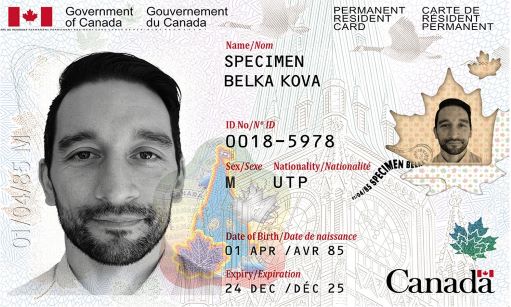
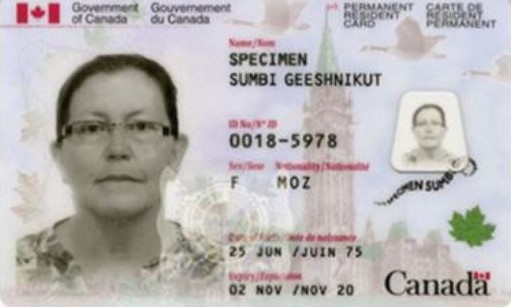
Once approved, permanent residents receive a Canadian permanent resident card (PR Card), the official document proving PR status when entering Canada. This card is valid for 5 years and needs to be renewed when it expires.
Where the card is lost or the holder has been abroad for a long period, permanent residents may apply for a Permanent Resident Travel Document (PRTD) in order to return to Canada.
To renew a PR card, applicants must demonstrate that they have met the residency requirement (730 days in 5 years). Where they have not, they may lose PR status, unless there are humanitarian grounds accepted by IRCC.
Advice for those wishing to become Canadian permanent residents
To make the journey to Canadian permanent residence go smoothly, candidates should:
- Research thoroughly: learn about the immigration programmes, their specific requirements and processing times. The official IRCC website is athere.
- Prepare financially: ensure there is enough budget for application fees, initial living costs and related expenses.
- Learn the language: English or French is an important factor. Invest time in courses or in preparing for IELTS/TEF.
- Seek professional support: consult an immigration lawyer or a licensed consultant (RCIC) to ensure the application is accurate.
- Be patient and persistent: the immigration process can be lengthy, but persistence brings worthwhile results.
Conclusion
Canadian permanent resident status is the gateway to a stable, safe life full of opportunity in one of the world’s most liveable countries. With entitlements such as access to healthcare and education and the freedom to work, alongside the opportunity to sponsor family, permanent residence is an appealing goal for those wishing to build a future in the land of the maple leaf.
Compared with the United States, Canada offers a transparent immigration process, reasonable costs and a strong social welfare system, suiting those who prioritise quality of life and public healthcare. The journey nonetheless demands thorough preparation, from meeting the programme requirements and strengthening the application to overcoming the challenges of time and cost.
To begin, candidates should research programmes such as Express Entry, a PNP or family sponsorship carefully, and prepare their application with care. Where support is needed, contact an immigration specialist or visit the official IRCC website. With persistence and a clear plan, the dream of becoming a Canadian permanent resident is entirely within reach.
Accompanying you on your journey in residency investment
The Prosperous Living Investment team advises on pathways, assesses profiles and manages investments transparently for every residency, citizenship and international property objective.
Free profile assessmentWhere life gets prosperous