


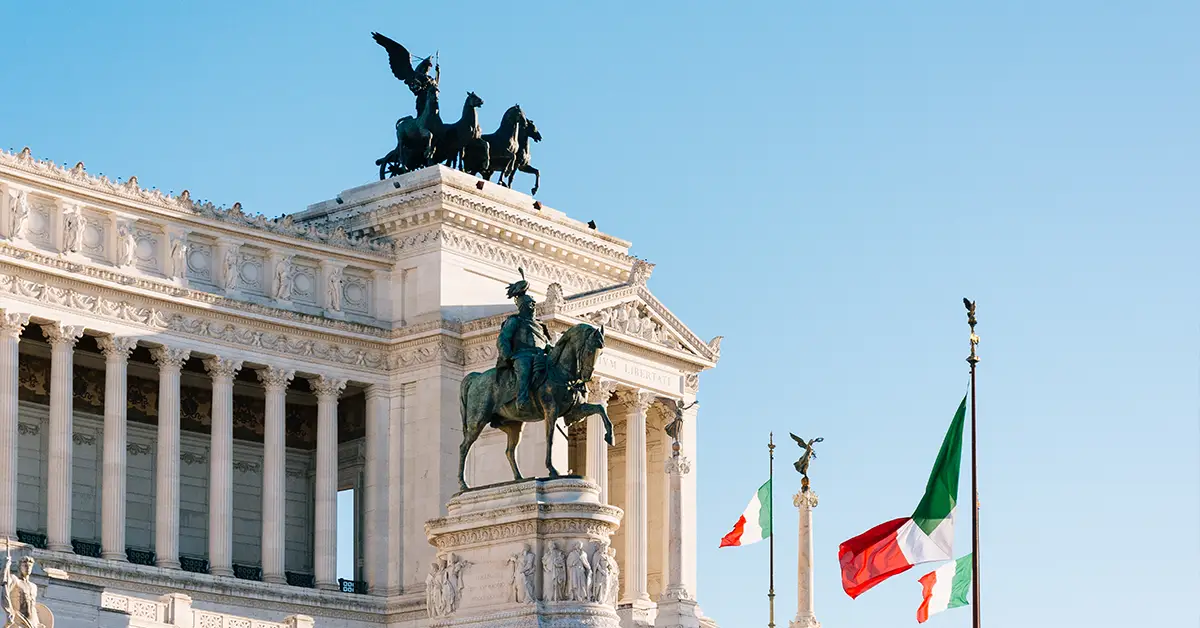
Italy is a country in Southern Europe with a distinctive boot-shaped peninsula extending into the Mediterranean Sea. With an area of about 301,340 km² and an estimated population of 58.93 million in mid-2026, Italy is the third-largest economy in the eurozone and a member of leading international organisations such as the European Union (EU), the North Atlantic Treaty Organization (NATO) and the G7.
The country is the cradle of Roman civilisation and the Renaissance, and home to the Vatican — the global centre of the Roman Catholic Church. Italy also has more UNESCO World Heritage Sites than any other country, with 61 sites as of 2025. This article provides an overview of Italy’s history, geography, politics, economy, culture and society, serving as a foundation for in-depth articles on each specific aspect.
Message
History
Detailed article:History of Italy
Italy has more than 2,500 years of history, beginning with pre-Roman civilisations such as the Etruscans on the peninsula. The Roman Empire, which emerged in the 8th century BC with the legend of Romulus and Remus, grew into one of the most powerful empires in world history and left a deep mark on the law, architecture, languages and administrative systems of modern Europe.
After the empire collapsed in the 5th century, the peninsula entered the Middle Ages with the rise of city-states and Maritime Republics such as Venice, Genoa, Pisa and Amalfi. The Renaissance, from the 14th to the 17th century, made Italy the centre of European art, science and humanist thought, producing great figures such as Leonardo da Vinci, Michelangelo, Galileo Galilei and Dante Alighieri.
National unification, known as the Risorgimento, took place in the 19th century and was completed in 1871 with the establishment of the Kingdom of Italy. After two World Wars, and especially the period under Benito Mussolini’s fascist regime, Italians abolished the monarchy in a referendum on 02/06/1946 and founded the Italian Republic. The Republican Constitution came into force on 01/01/1948, laying the foundation for the current political system.
Considering a residency programme? The Prosperous Living Investment team assesses your profile free of charge and advises on the pathway that fits your goals.
Geography
Detailed article:Geography of Italy
Italy occupies the Italian Peninsula in the Mediterranean Sea, stretching from the Alps in the north to the tip of Calabria in the south, together with two large islands, Sicily and Sardinia. The country borders France to the northwest, Switzerland and Austria to the north and Slovenia to the northeast, and surrounds two small states, San Marino and the Vatican.
Italy’s terrain is varied, with about 35% of its area mountainous and 42% hilly. The Alps in the north and the Apennines running down the peninsula from north to south form its distinctive landscape. The Po Valley in the north, about 650 km long, is the most fertile land, home to about a third of the country’s population and its main industrial and agricultural hub.
Italy’s coastline is more than 7,600 km long, connecting the country with most Mediterranean civilisations. The climate varies by region: the north has continental features with cold winters and warm summers, while the centre and south have a typical Mediterranean climate with hot, dry summers and mild winters. The country also has two famous active volcanoes, Etna in Sicily and Vesuvius near Naples.
Politics
Detailed article:Politics of Italy
Italy is a parliamentary republic with a bicameral system. The current President is Sergio Mattarella, first elected on 31/01/2015 and re-elected for a second term on 29/01/2022. The President is the head of state, with a largely ceremonial role as guardian of the Constitution, and serves a 7-year term.
Real executive power lies with the Prime Minister and the Council of Ministers. Giorgia Meloni, leader of Fratelli d’Italia (Brothers of Italy), became Italy’s first female Prime Minister on 22/10/2022 and leads the ruling centre-right coalition. The next general election is expected in 2027.
The Italian Parliament comprises the Chamber of Deputies (Camera dei Deputati) with 400 seats and the Senate (Senato della Repubblica) with 200 elected seats plus senators for life. Both chambers serve 5-year terms and have equal legislative powers. The judiciary is independent and headed by the Constitutional Court of 15 judges, which reviews the constitutionality of laws. On 22–23/03/2026, Italy held a confirmatory referendum on the Nordio judicial reform, and a 53.5% “No” vote rejected the reform.
Economy
Detailed article:Economy of Italy
According to the International Monetary Fund (IMF), Italy is the world’s eighth-largest economy and the third-largest in the eurozone by nominal GDP. In 2025, Italy’s GDP grew by about 0.5%, and forecasts for 2026 range from 0.4% to 0.8% depending on the source. The official currency is the euro, adopted by Italy in 2002 to replace the lira.
Italy’s economy is clearly divided between the North and the South. Northern Italy, with its “industrial triangle” of Milan, Turin and Genoa, is the main economic engine, home to car, machinery and fashion groups. Southern Italy, or the Mezzogiorno, has a significantly lower per capita income and relies heavily on agriculture and tourism.
Italy is famous for high-quality industries such as fashion (Gucci, Prada, Armani), cars (Ferrari, Lamborghini, Fiat), processed food and wine. However, the country also faces serious fiscal challenges. According to ISTAT, Italy’s public debt rose to 137.1% of GDP in 2025, second in the eurozone only to Greece, while the budget deficit stood at 3.1% of GDP. Hosting the Milan-Cortina 2026 Winter Olympics is expected to generate about 5 billion euros in added economic value and millions of international visitors.
Demographics
Detailed article:Demographics of Italy
According to preliminary 2025 data fromISTATreleased on 31/03/2026, Italy’s resident population has stabilised at 58.94 million after more than a decade of decline. This stability comes entirely from net immigration of 296,000 people, offsetting a record-low 355,000 births and about 652,000 deaths.
Italy has one of the oldest populations in the world. The median age is 48.6, and the total fertility rate was 1.18 children per woman in 2024, falling further to 1.14 in 2025 — a new record low and well below the EU average of 1.38. Population density is about 200 people/km², much higher than the EU and European averages.
Foreign residents in Italy numbered 5.56 million as of 01/01/2026, or 9.4% of the total population. The largest immigrant community is Romanian (about 1.15 million), followed by Albanians, Moroccans and Chinese. The urbanisation rate is about 72.4%, and the most populous regions are Lombardy (10 million), Lazio (5.7 million) and Campania (5.6 million).
Education
Detailed article:Education in Italy
Italy’s education system is organised as a free public system for citizens and legal residents, managed by the Ministry of Education and Merit (MIM). Compulsory education lasts 10 years, from ages 6 to 16, comprising 5 years of primary school, 3 years of lower secondary school and the first 2 years of upper secondary school.
Italy’s university system has a long history: the University of Bologna, founded in 1088, is considered the oldest continuously operating university in the Western world. Italy was one of the signatories of the 1999 Bologna Declaration, which laid the foundation for the European Higher Education Area with a three-cycle degree system: bachelor’s (Laurea), master’s (Laurea Magistrale) and doctorate.
Italy’s leading universities include Politecnico di Milano, the University of Bologna, Sapienza University of Rome, Bocconi University and the University of Padua. Each year, Italy attracts tens of thousands of international students thanks to tuition fees that are affordable by Western European standards, combined with high-quality programmes in architecture, design, fashion, the arts and engineering.
Culture
Detailed article:Culture of Italy
Italian culture has shaped many of the core values of Western civilisation. Modern Italian derives from the Tuscan dialect of the Renaissance, standardised through Dante Alighieri’s “Divine Comedy”. Some regions also use recognised minority languages such as German (South Tyrol), French (Aosta) and Slovene (Friuli).
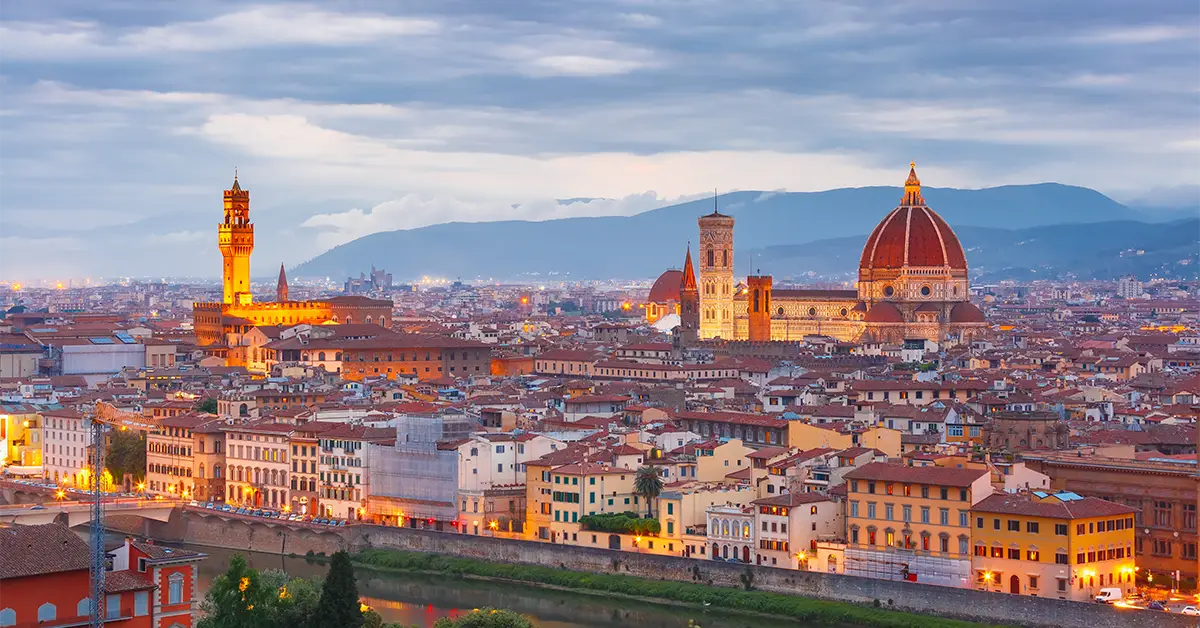
Italy has more UNESCO World Heritage Sites than any other country. According to the UNESCO World Heritage Centre, as of 2025 the country has 61 inscribed sites, ahead of China (60) and Germany (55). They include famous icons such as the historic centre of Rome, Venice and its lagoon, the Leaning Tower of Pisa, Pompeii, the Dolomites, the Aeolian Islands and, most recently, the “domus de janas” rock-cut tombs of Sardinia (2025).
Italian cuisine is one of the most influential in the world, with pizza, pasta, risotto, gelato and wines from Tuscany and Piedmont. In December 2025, traditional Italian cuisine was recognised by UNESCO as an Intangible Cultural Heritage of Humanity. Football is the most popular sport, and the national team (the Azzurri) has won the World Cup four times.
International relations
Detailed article:International relations of Italy
Italy was one of the six founding members of the European Economic Community (EEC) in 1957 — the forerunner of today’s EU. The Treaty of Rome, which established the EEC, was signed in the capital on 25/03/1957. Italy is also a founding member of NATO since 1949 and one of the world’s seven leading industrialised economies (G7).
Within the EU, Italy is one of the largest beneficiaries of the Recovery and Resilience Facility (Next Generation EU), with a 194 billion euro package for its National Recovery and Resilience Plan (NRRP). The country also plays a key role in the Mediterranean, particularly on migration, energy and security issues related to North Africa.
Vietnam – Italy relations were established on 23/03/1973 and upgraded to a strategic partnership in 2013. According to Italy’s Ministry of Foreign Affairs and International Cooperation, the two countries maintain close cooperation in trade, investment, culture, education and technology. Italy is currently one of Vietnam’s 10 largest trading partners in Europe.
Healthcare and environment
Detailed article:Healthcare in Italy
Italy has a universal public health system, the Servizio Sanitario Nazionale (SSN), founded in 1978, which guarantees access to basic healthcare for all citizens and legal residents. The World Health Organization (WHO) has repeatedly ranked Italy’s health system among the most efficient in the world in terms of cost versus outcomes.
Life expectancy in Italy in 2025 was 81.7 years for men and 85.7 years for women — among the highest in the world. The health system is decentralised, with the 20 regions (regioni) responsible for running health services in their territory under the coordination of the central Ministry of Health.
Environmentally, Italy faces challenges such as coastal erosion, pollution of the Po River and tourism pressure on heritage cities. The country is a party to the Paris Climate Agreement and has committed to carbon neutrality by 2050. According to OECD data, Italy is accelerating its green transition under the NRRP, with nearly 40% of the budget earmarked for climate and renewable energy goals.
Sport
Football is the most popular sport in Italy. The Azzurri national team has won 4 World Cups (1934, 1938, 1982, 2006) and 2 European Championships (1968, 2020), level with Germany in World Cup titles and behind only Brazil in the overall rankings. Serie A, the national league, is one of Europe’s top five leagues, with legendary clubs such as Juventus, AC Milan, Inter Milan, AS Roma and Napoli.
Besides football, Italy is also a powerhouse in cycling, motor racing and volleyball. The Giro d’Italia is one of the world’s three Grand Tours in cycling, along with the Tour de France and the Vuelta a España. The country is also home to Ferrari and the Scuderia Ferrari team in Formula 1.
On 06/02/2026, President Sergio Mattarella officially opened the 2026 Winter Olympics in Milan and Cortina d’Ampezzo, the largest international sporting event hosted by Italy in the past decade. This is the second time Italy has hosted the Winter Olympics, after Cortina d’Ampezzo in 1956.
Transport
Italy’s transport infrastructure is among the most modern in Europe. The motorway network (autostrade) is more than 7,000 km long and connects major cities, with the A1 Autostrada del Sole linking Milan and Naples as the country’s backbone route. The Frecciarossa and Italo high-speed rail services reach speeds of up to 300 km/h, connecting Rome and Milan in about 3 hours.
Italy has 4 main international airports: Rome–Fiumicino (the largest, named after Leonardo da Vinci), Milan–Malpensa, Venice–Marco Polo and Naples–Capodichino. The national airline ITA Airways, successor to Alitalia, is now owned by Lufthansa Group following a deal completed in 2024 and is the main gateway for international visitors to Italy.
Italy’s seaports play an important role in Mediterranean shipping, with major ports such as Genoa, Trieste, Gioia Tauro and Livorno. In major cities, metro systems operate in Rome, Milan, Naples, Turin, Brescia and Catania, combined with well-developed bus and tram networks.
Defence
The Italian Armed Forces (Forze Armate Italiane) comprise four branches: the Army, the Navy, the Air Force and the Carabinieri (military police). Total active personnel number about 165,000, equipped to modern NATO standards. Italy has a well-developed defence industry, with major groups such as Leonardo and Fincantieri.
Under its NATO commitments, Italy is gradually increasing its defence budget to reach the 2% of GDP target. According to the 2026 Public Finance Document published by Economy Minister Giancarlo Giorgetti, defence spending will rise by 0.15% of GDP in 2026, 0.3% in 2027 and 0.5% in 2028. Italy contributes forces to many UN and NATO peacekeeping missions.
The Italian military retains primary responsibility for security in the Mediterranean, particularly controlling illegal migration and counter-terrorism. The Carabinieri, a force dating back to 1814, act both as a civilian police force and as an armed service branch, with many elite units working on anti-mafia operations and protecting cultural heritage.
Summary
Italy combines thousands of years of historical depth with a leading economic and political position in the EU and G7. Despite the challenges of an ageing population, high public debt and the North–South economic divide, Italy remains a global centre of culture, creative industries and tourism, with 61 UNESCO sites and Made in Italy brands prized around the world.
For Vietnamese people, Italy offers a wide range of opportunities. For tourism, it is one of Europe’s top destinations, with a rich heritage and access through the Schengen visa. For study, Italy attracts international students with affordable tuition and top universities in design, fashion, architecture and engineering.
For business and investment, the Vietnam – Italy strategic partnership creates favourable conditions for bilateral trade. For long-term settlement, Italy offers many visa pathways for investors, skilled workers and financially independent people, providing a stable option for living in one of the countries with the highest quality of life in the Mediterranean.
Accompanying you on your journey in residency investment
The Prosperous Living Investment team advises on pathways, assesses profiles and manages investments transparently for every residency, citizenship and international property objective.
Free profile assessmentWhere life gets prosperous