


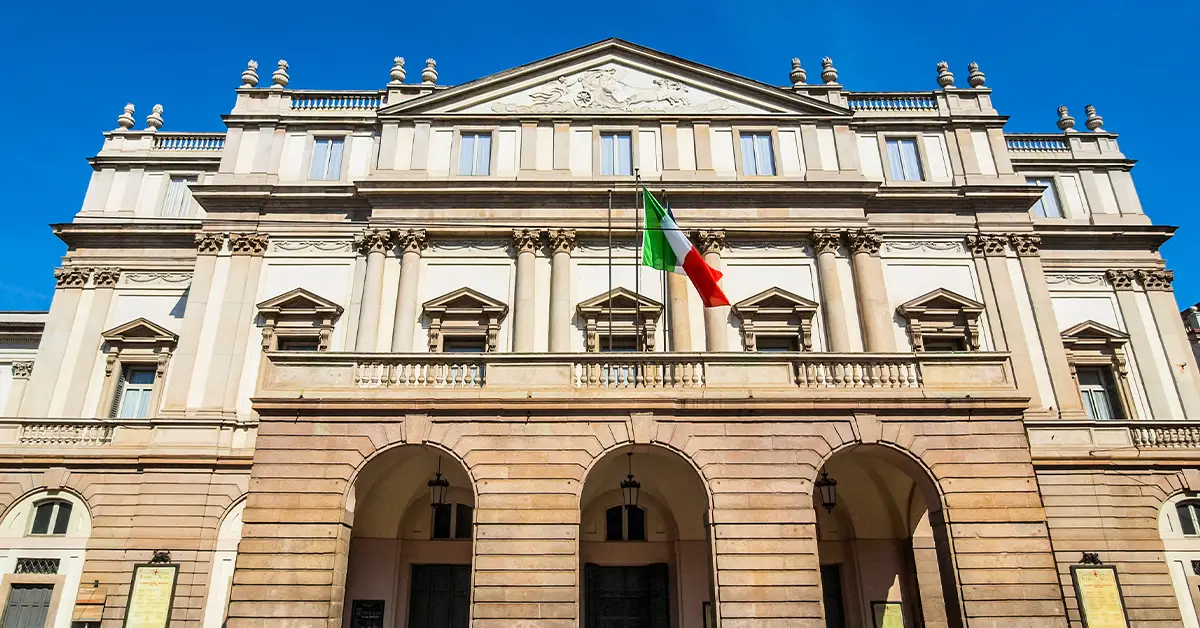
Italian politics operates as a multi-party parliamentary republic, established after the Second World War under the 1948 Constitution. The country’s political system has three independent branches of power — executive, legislative and judicial — with the President as head of state ensuring balance between the branches.
This article gives a complete picture of Italian politics, from the founding 1948 Constitution, the roles of the President and Prime Minister, the bicameral Parliament and the judicial system with the Constitutional Court, to the party system and the historic judicial reform referendum of March 2026.
Detailed articleItaly.
Message
The 1948 Italian Constitution and its founding principles
The Constitution of the Italian Republic was adopted by the Constituent Assembly on 22/12/1947 and came into force on 01/01/1948. It has 139 articles, divided into fundamental principles (the first 12 articles), part one on the rights and duties of citizens, and part two on the organisation of the state. The Constitution was drafted by a coalition of anti-fascist forces including Christian Democracy, the Socialist Party and the Italian Communist Party.
The founding principles of the Constitution define Italy as “a democratic Republic founded on labour” (Article 1), establish a secular state (Articles 7–8), and guarantee equality (Article 3), freedom of religion, freedom of expression and freedom of assembly. The Constitution also prohibits the re-establishment of the fascist party in any form (Transitional Provision XII), a historic measure to prevent the Mussolini era from recurring.
The Italian Constitution is “rigid”, meaning amendments require a special procedure under Article 138. Each amendment must be passed twice by both chambers at least 3 months apart. If the second vote does not reach a two-thirds majority in each chamber, one-fifth of the members of either chamber, 500,000 voters or 5 regional councils can request a confirmatory referendum. This procedure has been used several times in history, most recently in the judicial reform referendum of March 2026.
Considering a residency programme? The Prosperous Living Investment team assesses your profile free of charge and advises on the pathway that fits your goals.
The President of Italy: the role of Sergio Mattarella
The President of the Republic (Presidente della Repubblica) is Italy’s head of state, serving a 7-year term under Article 85 of the Constitution. The President is elected by Parliament in joint session together with 58 regional delegates (3 from each region, except Valle d’Aosta, which sends 1). Candidates must be Italian citizens aged at least 50 and enjoy full civil and political rights.
The current President, Sergio Mattarella, was born on 23/07/1941 in Palermo, Sicily. He was first elected President on 31/01/2015 and re-elected for a second term on 29/01/2022, becoming the longest-serving President in the history of the Italian Republic. Mattarella comes from Christian Democracy and previously served as Minister for Relations with Parliament (1987–1989), Minister of Education (1989–1990), Deputy Prime Minister and Minister of Defence (1999–2001) and judge of the Constitutional Court (2011–2015).
The President’s powers include: appointing the Prime Minister and ministers, dissolving Parliament, promulgating laws, representing the country in international relations, serving as Commander-in-Chief of the Armed Forces, and chairing the High Council of the Judiciary and the Supreme Defence Council. The President also has a suspensive veto, asking Parliament to reconsider a law before signing it; but if Parliament passes it again, the President must sign it.
The President’s role is largely ceremonial and stabilising, but in times of political crisis the President can become a decisive figure. For example, in 2018 President Mattarella refused to appoint Paolo Savona as Economy Minister because of his Eurosceptic views, triggering a government crisis. In 2021, he also played a key role in appointing Mario Draghi as Prime Minister to lead the recovery after COVID-19.
The Prime Minister and the Council of Ministers
Italy’s Prime Minister is officially called the “President of the Council of Ministers” (Presidente del Consiglio dei Ministri) and is the head of government. According to theItalian Government portal, the Prime Minister is appointed by the President after consulting party leaders and must win a vote of confidence in both chambers of Parliament within 10 days of being sworn in.
The current Prime Minister, Giorgia Meloni, was born on 15/01/1977 in Rome and is the leader of Fratelli d’Italia (Brothers of Italy). She took office on 22/10/2022 after winning the general election of 25/09/2022, becoming the first female Prime Minister in Italy’s history. Her ruling centre-right coalition consists of three main parties: Fratelli d’Italia, Matteo Salvini’s Lega (League), and Forza Italia (Forward Italy) — the party of the late Prime Minister Silvio Berlusconi.
The Council of Ministers currently has 25 ministers, including 2 Deputy Prime Ministers: Antonio Tajani (Forza Italia, also Foreign Minister) and Matteo Salvini (Lega, also Minister of Infrastructure and Transport). Other key ministries include: Economy and Finance (Giancarlo Giorgetti), Justice (Carlo Nordio), Interior (Matteo Piantedosi), Defence (Guido Crosetto) and Health (Orazio Schillaci).
The government has the power to propose laws, issue decree-laws (decreto-legge) in urgent cases and legislative decrees (decreto legislativo) when delegated by Parliament. Decree-laws take effect immediately but must be converted into law by Parliament within 60 days or they automatically lapse. In recent years, the use of decree-laws has become increasingly common, raising concerns about a shift of legislative power from Parliament to the government.
The bicameral Parliament: the Chamber of Deputies and the Senate
The Italian Parliament consists of two chambers with equal legislative powers, a feature known as “perfect bicameralism” (bicameralismo perfetto). The Chamber of Deputies (Camera dei Deputati) has 400 seats and meets at Palazzo Montecitorio in Rome. The Senate (Senato della Repubblica) has 200 elected seats plus senators for life and meets at Palazzo Madama. Both chambers serve 5-year terms.
The number of seats in Parliament was reduced after the referendum of 20–21/09/2020, in which 70% of voters supported cutting the Chamber from 630 to 400 seats and the elected Senate from 315 to 200 seats. The reform aimed to streamline the institutions and save money, and took effect from the 2022 election. Of the 200 elected senators, 196 are elected from constituencies in Italy and 4 by Italian citizens abroad. In addition, there are about 6 senators for life, appointed by the President or serving by right as former Presidents.
The minimum ages for voting and standing for election differ between the chambers. Voters for the Chamber must be 18 or over and candidates 25 or over. Voters for the Senate must be 18 or over (since a 2021 reform; previously 25) and candidates 40 or over. The current electoral system, the “Rosatellum” adopted in 2017, combines first-past-the-post in single-member constituencies (37%) with proportional representation in multi-member constituencies (63%).
Both chambers take part in electing the President and elect one-third of the members of the Constitutional Court and one-third of the members of the High Council of the Judiciary. An ordinary bill requires a simple majority in both chambers. Constitutional laws require a two-thirds majority or approval by referendum. Parliament can also impeach the President for high treason or attacks on the Constitution.
The judicial system and the Constitutional Court
The Italian judiciary is independent of the executive and legislature under Article 104 of the Constitution. It consists of civil and criminal courts (giudici ordinari) handling ordinary cases, and administrative courts (giudici amministrativi), including the Regional Administrative Tribunals (TAR) and the Council of State (Consiglio di Stato), which handle disputes between citizens and public authorities.
The High Council of the Judiciary (Consiglio Superiore della Magistratura — CSM) is the self-governing body of the judiciary, with 30 members: 20 elected by judges and prosecutors and 10 elected by Parliament from among law professors and lawyers with at least 15 years’ experience. The President chairs the CSM under the Constitution. The CSM is responsible for appointing, promoting, disciplining and transferring judges and prosecutors nationwide.
The Italian Constitutional Court (Corte Costituzionale) has 15 judges: 5 appointed by the President, 5 elected by Parliament (by a two-thirds majority in the first 3 rounds and three-fifths thereafter) and 5 elected by the supreme courts. Each judge serves a single 9-year term. The Court has jurisdiction to review the constitutionality of laws, resolve conflicts of competence between branches of power, try the President in impeachment cases and rule on the admissibility of referendum requests.
A major challenge for the Italian judiciary is lengthy proceedings. According to periodic EU reports, Italy’s average time to resolve civil cases is much longer than in many other European countries. Corruption is also a historic challenge: the “Mani Pulite” (Clean Hands) campaign in the early 1990s brought down the First Republic and still leaves many complex cases today.
Political parties and elections
Italy’s party system has had a turbulent history. From 1946 to 1992 (the “First Republic”), Christian Democracy dominated as the central force, opposed by the Italian Communist Party — then the largest communist party in Western Europe. The “Mani Pulite” anti-corruption campaign of 1992–1995 wiped out the traditional parties, ushering in the “Second Republic” with the rise of Silvio Berlusconi and Forza Italia.
Today, Italy’s main political parties are: Fratelli d’Italia (FdI, right-wing, led by Giorgia Meloni), the Democratic Party (PD, centre-left, led by Elly Schlein), the Five Star Movement (M5S, populist, led by Giuseppe Conte), Lega (far-right, led by Matteo Salvini), Forza Italia (FI, centre-right) and the Greens and Left Alliance (Verdi-Sinistra, green-left). The current ruling centre-right coalition consists of FdI, Lega and FI.
In the general election of 25/09/2022, the centre-right coalition won 44% of the vote but, thanks to the mixed majoritarian-proportional electoral system, secured a large majority in both chambers. FdI was the largest party with 26% of the vote. Turnout was only 64%, a record low in Italian electoral history. The next election is expected in 2027.
On 22–23/03/2026, Italy held a confirmatory referendum on the Nordio judicial reform, which proposed separating the careers of judges and prosecutors, splitting the CSM into two separate bodies and creating a High Disciplinary Court. With turnout of 58.93%, 53.5% voted “No”, rejecting the reform. It was a major political blow for the Meloni government, but she declared that she respected the result and would continue to lead the government.
Administrative divisions: 20 regions and local government
Italy is organised on a three-tier model: 20 regions (regioni), 107 provinces and metropolitan cities (province and città metropolitane) and about 7,900 municipalities (comuni). Of the 20 regions, 5 have special status with greater legislative, budgetary and cultural autonomy: Sicily, Sardinia, Trentino-Alto Adige, Friuli-Venezia Giulia and Valle d’Aosta. The other regions have ordinary status.
Each region is led by a Regional President (Presidente della Regione) directly elected by the people, together with a Regional Council and a Regional Executive. Regions have legislative powers in areas assigned by the Constitution, such as health, education, local transport, tourism, agriculture, the environment and social services. The 2001 constitutional reform significantly expanded regional autonomy.
Municipalities are headed by a Mayor (Sindaco), directly elected for a 5-year term with a maximum of 2 consecutive terms. Italy’s 14 largest cities — Rome, Milan, Naples, Turin, Genoa, Bologna, Florence, Bari, Catania, Palermo, Reggio Calabria, Venice, Messina and Cagliari — have “Metropolitan City” (Città Metropolitana) status, combining provincial administration with metropolitan coordination.
Since 2024, the Meloni government has implemented the Differentiated Autonomy Law (autonomia differenziata), allowing ordinary-status regions to request additional autonomy in 23 areas currently managed by the state. The law is controversial, with concerns that it will widen the North – South divide, as the wealthier northern regions have greater capacity for fiscal autonomy. The Constitutional Court issued a partial ruling on the law’s constitutionality in 2024.
For Vietnamese readers: understanding Italian politics when engaging with the country
For Vietnamese people interested in tourism or short-term residence in Italy, the national political system directly affects Schengen visa policy, border control and the rights of foreign nationals. The Ministry of the Interior and the Ministry of Foreign Affairs are the two bodies directly responsible for visas, residence and consular matters, while the Italian Embassy in Hanoi and the Consulate General in Ho Chi Minh City are the first point of contact for Vietnamese citizens.
For international students, understanding Italy’s political structure helps guide study in law, international relations and public policy at leading universities such as the University of Bologna, Sapienza University of Rome and LUISS University. Italy is also an attractive destination for international relations students thanks to the role of the Vatican, FAO, WFP and the many international organisations headquartered in Rome.
For Vietnamese investors and businesses, the stability of the Meloni government (in power for more than 3 years — a rare achievement in modern Italian politics) is a positive factor for the business environment. The government’s economic policies focus on implementing the 194 billion euro National Recovery and Resilience Plan (NRRP), tax reform and attracting foreign investment through the Italy Investor Visa programme.
For Vietnamese people considering long-term settlement, the Italian political system has several points to note. Naturalisation requires 10 years of continuous legal residence, passing a B1-level Italian language test and a test of knowledge of the Constitution, history and national culture. The Meloni government has also passed Law 74/2025 tightening the process for citizenship by descent, directly affecting Italian communities abroad. Following updates from the Italian government closely is essential to prepare a settlement application correctly.
Accompanying you on your journey in residency investment
The Prosperous Living Investment team advises on pathways, assesses profiles and manages investments transparently for every residency, citizenship and international property objective.
Free profile assessmentWhere life gets prosperous