

Italy’s geography has the distinctive shape of a boot (“lo Stivale”) extending into the Mediterranean Sea, stretching about 1,200 km from the Alps in the north to the tip of Calabria in the south. The country’s total area is 301,340 km², comprising the main peninsula, the two large islands of Sicily and Sardinia and many smaller archipelagos — creating one of the most diverse landscapes in Europe.
This article presents the geography of Italy in terms of location and borders, mountainous terrain, coastline and islands, climate, administrative regions, natural resources, and practical points for Vietnamese people travelling or living there.
Detailed articleItaly.
Message
Italy’s location and borders in Europe
Italy lies in Southern Europe, between latitudes 35° and 47° North and longitudes 6° and 19° East. The country has a geostrategic position at the centre of the Mediterranean, a natural bridge between Europe and Africa and a gateway between Western and Southeastern Europe. Its coastline of more than 7,600 km borders five seas: the Adriatic Sea to the east, the Ionian Sea to the south, the Tyrrhenian Sea to the west, the Ligurian Sea to the northwest and the wider Mediterranean Sea to the south.
Italy borders four countries by land: France to the northwest (a 488 km border), Switzerland to the north (740 km), Austria to the north (430 km) and Slovenia to the northeast (232 km). The country also completely surrounds two microstates: the Republic of San Marino (61 km border, one of the oldest republics in the world) and Vatican City (3.2 km border, the centre of the Roman Catholic Church).
More than 35% of Italy is mountainous, 42% hilly and only about 23% plains. This varied terrain combined with its Mediterranean location has created a rich ecosystem with more than 67,500 recorded species of plants and animals, about a third of all species in Europe. Italy has 25 national parks and more than 800 nature reserves across its territory.
Considering a residency programme? The Prosperous Living Investment team assesses your profile free of charge and advises on the pathway that fits your goals.
Terrain: the Alps, the Apennines and the Po Valley
The Alps form Italy’s natural northern border, stretching about 1,200 km from France through Switzerland and Austria to Slovenia. The highest peak is Mont Blanc (Monte Bianco) at 4,810 m, on the Italy – France border. Other famous peaks include the Matterhorn (Monte Cervino, 4,478 m), Monte Rosa (4,634 m) and Gran Paradiso (4,061 m) in the west, and the Stelvio, the Marmolada (3,343 m) and the Dolomites in the east. The Italian Alps are divided into three parts: the Western Alps, the Central Alps and the Eastern Alps.
The Dolomites in the northeast (Trentino-Alto Adige and Veneto) have been a UNESCO World Heritage Site since 2009, famous for their distinctive limestone landscape of towers, sheer cliffs and deep valleys. The area is one of Europe’s leading skiing and mountaineering destinations, especially with Italy hosting the Milan-Cortina 2026 Winter Olympics — with many snow and ice events held in Cortina d’Ampezzo in the heart of the Dolomites.
The Apennines form the backbone of the Italian peninsula, stretching about 2,000 km from the Cadibona Pass (next to the Alps) down the length of the peninsula to the tip of Calabria and continuing into Sicily. The highest peak is Corno Grande in the Gran Sasso d’Italia massif at 2,912 m in Abruzzo. This is also home to the Calderone — the only remaining glacier on the Italian peninsula and the southernmost glacier in Europe. The Apennines are divided into three parts: the Northern, Central and Southern Apennines.
The Po Valley (Pianura Padana) is Italy’s largest plain, covering 46,000 km², 16% of the country’s total area and 71% of its plains. It is Italy’s breadbasket and main industrial and agricultural hub, home to about 23 million people (nearly 40% of the national population) with an average density of 500 people/km². The plain was formed by alluvium from the Po — Italy’s longest river at 652 km — and its tributaries, and contributes more than 40% of national GDP.
Coastline and major islands (Sicily, Sardinia)
Italy has a 7,600 km coastline, one of the longest in the Mediterranean. The coast is highly varied: deep bays (the Gulf of Naples, the Gulf of Salerno), lagoons (the Venetian Lagoon, the Marano Lagoon), steep rocky shores (the Amalfi Coast and Cinque Terre — both UNESCO sites), long sandy beaches (the Adriatic coast) and limestone peninsulas (Salento, Gargano).
Sicily is the largest island in the Mediterranean, covering 25,711 km² with a population of about 4.8 million. It has characteristically mountainous terrain dominated by Mount Etna (3,357 m) — the highest active volcano in Europe and a UNESCO site. Sicily has a rich history with ancient Greek heritage (the Valley of the Temples in Agrigento), Arab-Norman heritage (Palermo) and Baroque heritage (Val di Noto) — all recognised by UNESCO. The regional capital Palermo, Catania and Syracuse are its major historic cities.
Sardinia is the second-largest island, covering 24,090 km² with a population of about 1.6 million. The island is famous for its rugged, unspoilt landscapes, some of Italy’s most beautiful beaches such as the Costa Smeralda, and its unique Nuragic heritage — conical stone towers built by the indigenous people in the Bronze Age (1500 BC). The Nuragic site of Su Nuraxi di Barumini and, most recently, the “domus de janas” rock-cut tombs (inscribed in 2025) are the island’s UNESCO sites.
Besides the two large islands, Italy has many famous smaller archipelagos. The Aeolian Islands north of Sicily (a UNESCO site) comprise 7 volcanic islands, with Stromboli and Vulcano as active volcanoes. The Egadi and Pelagie Islands west of Sicily, Capri and Ischia in the Gulf of Naples, Elba in Tuscany (where Napoleon was exiled in 1814) and the La Maddalena archipelago near Sardinia are all popular tourist destinations.
Climate and natural environment
Italy’s climate varies considerably because of its great north-south length and complex terrain. It can be divided into four main climate zones. The Po Valley and northern valleys have a humid subtropical climate with four distinct seasons, cold foggy winters (-10°C to 5°C) and hot, humid summers (22–35°C). This area usually has peak rainfall in spring and autumn.
The Alpine region has a high mountain climate, cold all year above 1,500 m, with snow cover from November to May. Peaks above 3,000 m have year-round snow and some active glaciers. The pre-Alpine lakes area, including Lake Garda (Italy’s largest), Lake Como and Lake Maggiore, has a special microclimate — winters about 3–5°C warmer than neighbouring areas thanks to the moderating effect of the lakes, allowing citrus and olives to be grown.
The central and southern coasts have a typical Mediterranean climate with hot, dry summers (25–35°C, sometimes above 40°C when the Sirocco wind blows in from North Africa) and mild winters (5–15°C), with rainfall concentrated in autumn and winter. Sardinia and Sicily are the sunniest regions, with more than 2,500 hours of sunshine a year. The inland areas of the Apennines have a colder continental climate, especially in winter.
Italy faces many natural hazards due to its complex geology. Seismic activity is strong in the centre and south, notably the earthquakes of 1980 (Irpinia), 2009 (L’Aquila) and 2016 (Amatrice), which caused heavy loss of life and property. Four active volcanoes (Vesuvius, Etna, Stromboli, Vulcano) are continuously monitored by INGV — the National Institute of Geophysics and Volcanology. Hydro-meteorological risks such as floods, landslides and droughts are also increasing due to climate change — the 2022 Po Valley drought was recorded as the worst in two centuries.
Italy’s 20 administrative regions
Italy is organised into 20 regions (regioni), of which 5 have special status with a high degree of legislative, budgetary and cultural autonomy: Sicily, Sardinia, Trentino-Alto Adige (bilingual Italian – German), Friuli-Venezia Giulia (multilingual Italian – Slovene – Friulian) and Valle d’Aosta (bilingual Italian – French). The other 15 regions have ordinary status: Piedmont, Lombardy, Liguria, Veneto, Emilia-Romagna, Tuscany, Umbria, Marche, Lazio, Abruzzo, Molise, Campania, Puglia, Basilicata and Calabria.
The richest region is Lombardy, with its capital Milan, contributing about 22% of national GDP and serving as the centre of industry, finance and fashion. Lazio, with the capital Rome, is the second most populous region (5.7 million) and the administrative and religious centre (surrounding Vatican City). Campania, with its capital Naples, is the third most populous region (5.6 million) in the South, famous for Pompeii, Herculaneum and the Amalfi Coast.
Tuscany (capital Florence) is the cradle of the Renaissance, famous for its olive-covered hills and Chianti wine. Veneto (capital Venice) has the UNESCO-listed Venetian Lagoon and produces the renowned Prosecco. Piedmont (capital Turin) is the cradle of the Italian car industry with Fiat and home to Barolo and Barbaresco wines. Emilia-Romagna (capital Bologna) is the “food valley” of Parmigiano Reggiano, Prosciutto di Parma and Aceto Balsamico.
Below the regions are 107 provinces and metropolitan cities (province and città metropolitane) and about 7,900 municipalities (comuni). The 14 largest cities — Rome, Milan, Naples, Turin, Genoa, Bologna, Florence, Bari, Catania, Palermo, Reggio Calabria, Venice, Messina and Cagliari — have “Metropolitan City” (Città Metropolitana) status, combining provincial administration with metropolitan coordination.
Natural resources and conservation
Italy has diverse natural resources. Its agricultural land is rich, especially in the Po Valley, Tuscany, Puglia and Sicily — making Italy the world’s largest producer of wine and one of the largest producers of olive oil. Mineral resources are limited, mainly marble (Carrara, the most famous in the world — where Michelangelo sourced the stone for his David), granite and sulphur in Sicily.
Italy has about 1,500 lakes, most of them small glacial lakes in the Alps used for hydroelectric power. The five largest are in the pre-Alpine area north of Milan: Garda, Maggiore, Como, Iseo and Lugano (shared with Switzerland). Volcanic lakes such as Bolsena and Albano in Lazio lie in extinct volcanic craters. Karst limestone systems have created many underground caves — the most famous being the Castellana Caves in Puglia.
Italy faces growing environmental pressures. According to the Italian Institute for Environmental Protection and Research (ISPRA), the challenges include coastal erosion (about 50 km² of coastal land lost over the past 50 years), pollution of the Po River and industrial areas, landslide risk in mountain areas with about 7 million people living in high-risk zones, and tourism pressure on heritage cities such as Venice, Florence and Rome.
Italy is a party to the Paris Climate Agreement and has committed to carbon neutrality by 2050. Under the National Recovery and Resilience Plan (NRRP), nearly 40% of the total 194 billion euro budget is earmarked for climate and renewable energy goals. Italy is in Europe’s top 5 for solar and hydroelectric power generation and is expanding offshore wind in the southern seas and around Sardinia.
For Vietnamese readers: travelling, settling and exploring Italy’s geography
For Vietnamese people, Italy’s geographic diversity offers many travel and residence options to suit every taste. Lovers of mountains and winter sports will enjoy Trentino-Alto Adige, Valle d’Aosta or Lombardy, with world-class ski resorts. Meanwhile, those who prefer the sea and a warm climate will be well suited to Sicily, Sardinia, Puglia or the Amalfi Coast.
When choosing a city to live in Italy, geography directly affects quality of life. Milan and the Po Valley cities have economic and employment advantages but thick fog in winter. Rome, Florence and Bologna have a more balanced climate and are close to cultural heritage centres. Naples, Bari and Palermo have a warm Mediterranean climate all year and lower living costs than the North.
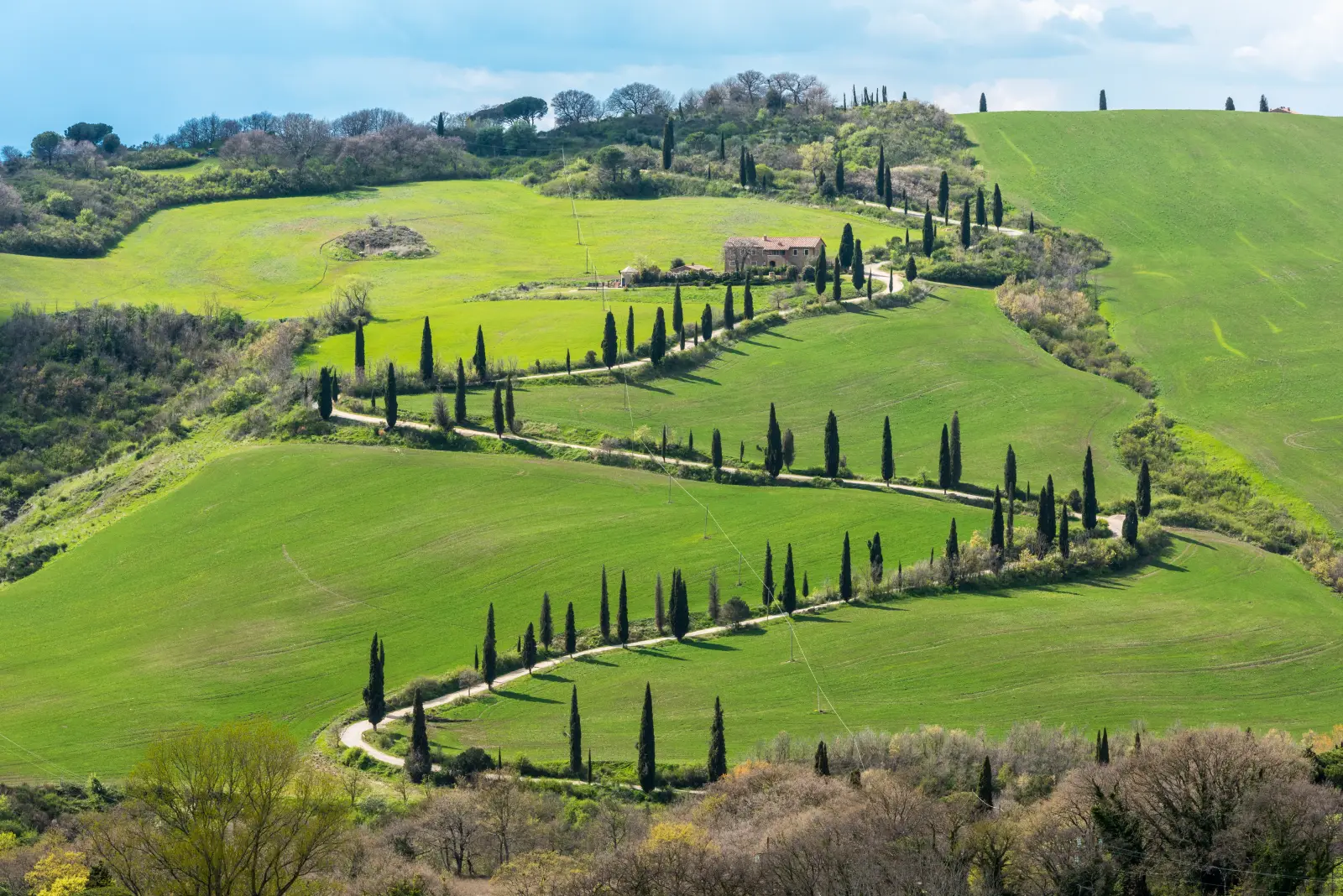
For property investors or retirees, the regions most popular with foreigners are Tuscany (countryside and wine), Liguria (Cinque Terre), Umbria (green hills and old villages), Puglia (the trulli of Alberobello and the coast), and the islands of Sicily and Sardinia. Many southern regions offer tax incentives for foreign nationals who move there, combined with property prices that are affordable compared with Western Europe.
For Vietnamese people considering long-term settlement, understanding Italy’s geography is also important for choosing the right visa and pathway. Large cities such as Milan and Rome have many job opportunities for highly skilled workers. Trentino-Alto Adige has favourable residence policies thanks to its autonomous budget. Southern regions often offer preferential financial support for new residents — suitable for those who want to invest in property or start a business in developing areas.
Accompanying you on your journey in residency investment
The Prosperous Living Investment team advises on pathways, assesses profiles and manages investments transparently for every residency, citizenship and international property objective.
Free profile assessmentWhere life gets prosperous