


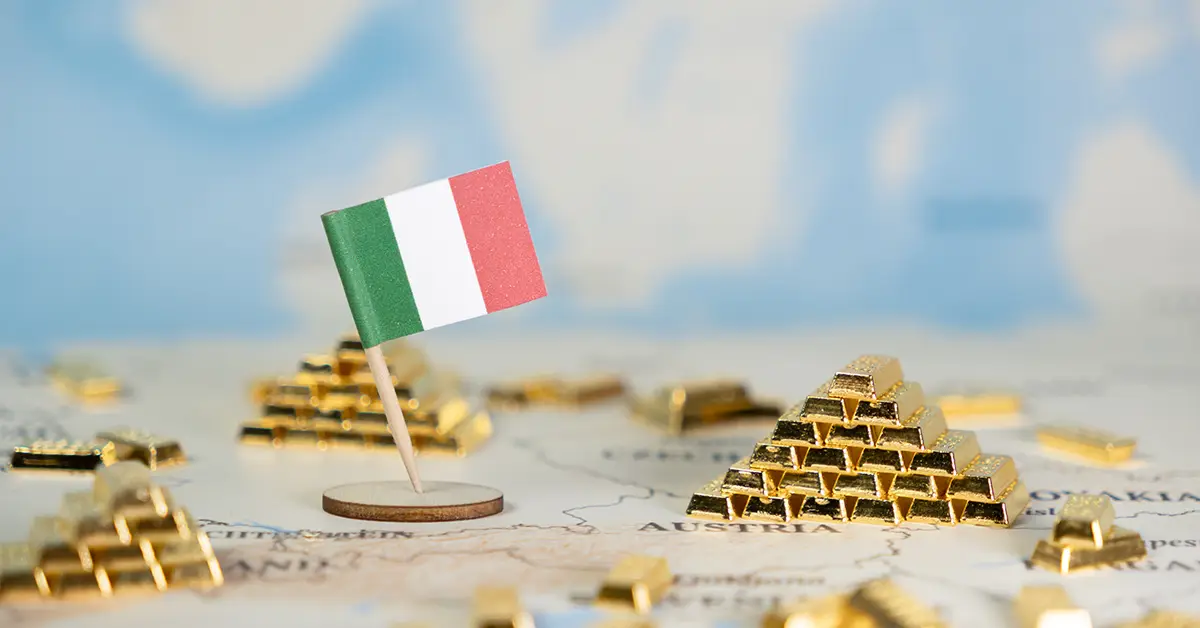
The Italian economy is the 8th-largest in the world and the 3rd-largest in the eurozone by nominal GDP, after Germany and France. It is a highly developed social market economy, notable for its quality manufacturing (the second-largest in Europe and seventh in the world), diverse Made in Italy exports and a distinctive network of small and medium-sized enterprises.
This article analyses the Italian economy in 2026 from many angles: an overview of GDP and growth, the North – South structure, key industries, tourism, agriculture, finance and banking, public debt, the Recovery Plan (NRRP) and international trade relations.
Detailed articleItaly.
Message
Overview of the Italian economy in 2026: GDP, growth and global position
According to the International Monetary Fund (IMF), Italy’s GDP is forecast to grow 0.5% in 2026, with consumer prices rising 2.6%. ISTAT and Banca d’Italia figures are similar: Banca d’Italia forecast +0.6% for 2026 in its January 2026 Economic Bulletin, while the European Commission expects growth of 0.8% in both 2026 and 2027. GDP grew 0.5% in 2025, after 0.7% in 2024.
Italy’s GDP growth has declined over the decades, from 2% or more in the 1980s–1990s to below 1% in recent years. This pace is significantly lower than the EU average and particularly low compared with Spain (forecast at 2% for 2026) or Germany (+1.2%). However, Italy’s real economic output remains very large — World Economics estimates Italy’s GDP in 2026 at USD 3.72 trillion at purchasing power parity (PPP).
Italy adopted the euro on 01/01/2002, replacing the lira. As one of the founding members of the European single currency area, Italy is directly affected by the policies of the European Central Bank (ECB). Notably, former Banca d’Italia Governor Mario Draghi served as ECB President (2011–2019) before becoming Prime Minister of Italy (2021–2022). Interest rate policy is now set by the ECB in Frankfurt.
Italy’s unemployment rate has improved significantly in recent years. According to the European Commission, unemployment is expected to fall to 5.9% by 2027, the lowest in decades. However, labour productivity remains a weakness, with total factor productivity (TFP) growing more slowly than in other advanced economies over the past two decades. This is the main reason for Italy’s slow GDP growth.
Considering a residency programme? The Prosperous Living Investment team assesses your profile free of charge and advises on the pathway that fits your goals.
Economic structure: the North – South divide
A striking feature of the Italian economy is the clear divide between the wealthy, industrialised North and the less developed South (Mezzogiorno). The gap in per capita income between the richest regions (Lombardy, Trentino-Alto Adige, Emilia-Romagna) and the poorest (Calabria, Campania, Sicily) is among the largest in the OECD.
Northern Italy, with its “industrial triangle” of Milan, Turin and Genoa, is the main engine of the economy. Lombardy alone contributes about 22% of national GDP and is Italy’s richest region, with Milan as its capital of finance, fashion and technology. Milan alone accounts for 9% of the country’s GDP. The area is home to groups in car manufacturing (Fiat, Ferrari, Lamborghini, Maserati), fashion (Prada, Armani, Versace), finance (Intesa Sanpaolo, UniCredit) and media.
The Northeast, comprising Veneto, Friuli-Venezia Giulia and Trentino-Alto Adige, is known for the “Third Italy” (Terza Italia) model — a network of small and medium-sized family businesses specialising in design, furniture, eyewear, jewellery and precision machinery. Veneto produces Prosecco and is home to groups such as Luxottica (eyewear), Benetton (fashion) and De’Longhi (household appliances).
Southern Italy comprises the regions of Sicily, Calabria, Campania, Basilicata, Puglia and Molise. The area has per capita income of only 60–65% of the national average and unemployment twice as high as in the North, especially among young people. The Mezzogiorno relies mainly on agriculture, tourism and a few large industrial centres such as Naples (Campania), Taranto (Puglia, steel) and Catania (Sicily, microelectronics).
Key industries: manufacturing, fashion, cars
Italy is the second-largest manufacturer in Europe (after Germany) and seventh in the world. Manufacturing accounts for about 18–19% of GDP and 25% of the workforce. A hallmark of Italian manufacturing is its network of industrial districts (distretti industriali) — highly specialised clusters of small and medium-sized enterprises in specific geographic areas, creating a unique competitive advantage.
Mechanical engineering and machinery is the largest export sector, accounting for about 45% of Italy’s total exports. According to the Italian Ministry of Foreign Affairs through its OpportunItaly platform, Italy is the world’s 5th-largest exporter of machinery, with nearly 100 billion euros in 2024, behind only China, Germany, the United States and Japan. Major groups include Leonardo (aerospace, defence), Brembo (car brakes), Salvagnini (metalworking machinery) and CNH Industrial (agricultural machinery).
The Italian fashion industry ranks first in Europe and second in the world (after France), with exports of 83.1 billion euros in 2024. Italy is home to many of the world’s leading luxury fashion brands: Gucci, Prada, Armani, Versace, Dolce & Gabbana, Bulgari, Salvatore Ferragamo, Bottega Veneta and Moncler. The Prada group alone had revenue of 5.4 billion euros in 2024, and Moncler 3.1 billion. Milan is one of the world’s “Big Four” fashion capitals, alongside Paris, New York and London.
The Italian car industry has a long history with Fiat (founded in 1899, now part of Stellantis) and luxury brands such as Ferrari (revenue of 6.7 billion euros in 2024), Lamborghini, Maserati and Pagani. Car exports reached 40.9 billion euros in 2024. Italy is also the world’s 6th-largest exporter of bicycles and motorcycles, with 3.8 billion euros, with Ducati and Piaggio (maker of the Vespa) as icons. Luxury shipbuilding exports reached 4.3 billion euros in 2024, led by Azimut-Benetti and Sanlorenzo.
Pharmaceuticals and chemicals have emerged as a new driver of Italian exports. According to 2025 data, pharmaceuticals grew 38.8% with exports of 49 billion euros, ranking in the world’s top 10. Chemicals account for 18% of national exports, at 40 billion euros. The main pharmaceutical centres are in Lombardy, Lazio and Tuscany.
Tourism and services
Tourism is a key sector of the Italian economy, contributing about 13% of GDP including direct and indirect effects. Italy is one of the world’s top five tourist destinations by international arrivals, welcoming about 65 million international visitors a year before the pandemic, and has recovered strongly since COVID-19.
Key destinations include Rome (Roman heritage, the Vatican), Venice (canals and lagoon), Florence (cradle of the Renaissance), Milan (fashion and business), Naples (Pompeii, Capri), the Amalfi Coast, Sicily and Sardinia. Italy has 61 UNESCO sites — the most in the world — and 887 products recognised under PDO/PGI/TSG geographical indications, more than 60% of which are exported.
Services account for about 73% of Italy’s GDP and are the largest pillar of the economy. Besides tourism, important sub-sectors include retail and wholesale trade, transport and logistics, financial and banking services, information and communications technology, and legal and consulting services. Italy has a well-developed entertainment industry with the Cinecittà film studios in Rome — once dubbed “Hollywood on the Tiber”.
In 2026, Italy is hosting the Milan-Cortina Winter Olympics, the country’s largest sporting event of the past decade. According to government reports, the event is expected to generate about 5 billion euros in added economic value and attract millions of international visitors to Lombardy, Veneto and Trentino-Alto Adige.
Agriculture and food exports
Italy is an agricultural powerhouse in Europe, leading the EU in agricultural value added with 42.4 billion euros, 18.2% of the EU’s total agricultural value. The entire agri-food value chain reached about 75 billion euros in 2024, more than the fashion, furniture and car industries combined. Agri-food exports exceeded 70 billion euros in 2024 and are expected to reach 73 billion euros in 2025.
Italy is the world’s largest wine producer, ahead of France by volume. Famous wine regions include Tuscany (Chianti, Brunello di Montalcino), Piedmont (Barolo, Barbaresco), Veneto (Prosecco, Amarone) and Sicily (Nero d’Avola, Marsala). Italy is also the world’s largest pasta exporter and the world’s second-largest exporter of olive oil and coffee.
According to the Edison Foundation, Italy is in the EU’s top 3 for 41 agricultural products and first for 16 products, including artichokes, rapeseed, kiwi fruit and durum wheat. The main producing regions are Puglia, Sicily, Tuscany and Campania. Italy also leads Europe in organic farming, with 18.7% of agricultural land farmed organically and more than 92,000 businesses involved.
The EU geographical indication system protects 887 Italian products under PDO (Protected Designation of Origin), PGI (Protected Geographical Indication) and TSG (Traditional Speciality Guaranteed) standards. Signature products include Parmigiano Reggiano, Prosciutto di Parma, Balsamico di Modena, Mozzarella di Bufala Campana and Aceto Balsamico Tradizionale. In December 2025, traditional Italian cuisine was recognised by UNESCO as an Intangible Cultural Heritage of Humanity.
The financial system, banks and the euro
Italy’s banking system is led by two groups, Intesa Sanpaolo and UniCredit, both among the most highly capitalised in the eurozone. They are followed by Banco BPM, Mediobanca, BPER Banca and Monte dei Paschi di Siena (a bank dating back to 1472, considered the oldest bank still in operation in the world). The Borsa Italiana stock exchange is in Milan and has been owned by Euronext since 2021.
Banca d’Italia, the Central Bank of Italy founded in 1893, supervises the banking system and is a member of the European System of Central Banks. Italy holds the world’s third-largest gold reserves (after the United States and Germany), with about 2,452 tonnes. Total Italian bank assets are about 4 trillion euros.
A distinctive feature of Italy is its very large household private wealth, second in the world as a ratio of private wealth to GDP (after Hong Kong). Average household savings in Italy are among the higher levels in the OECD. This helps stabilise the economy during crises, although relatively low consumption limits domestic growth.
The euro has been Italy’s official currency since 2002. Italy is one of the founding members of the eurozone and European Monetary Union, contributes significantly to the EU budget and is the third-largest net contributor after Germany and France. Maintaining fiscal discipline under the EU Stability and Growth Pact is a constant challenge for Italian governments.
Public debt, the budget deficit and fiscal policy
One of the biggest challenges for the Italian economy is high public debt. According to ISTAT, Italy’s public debt rose to 137.1% of GDP in 2025, second in the eurozone after Greece. The IMF forecasts that Italy’s public debt will overtake Greece’s by the end of 2026, reaching 138.4% of GDP, while Greece’s falls to 136.9%. This would be the first time Italy has the highest public debt ratio in the eurozone.
Italy’s budget deficit in 2025 was 3.1% of GDP according to confirmed ISTAT data published on 22/04/2026, above the 3% ceiling under the EU Stability and Growth Pact. This keeps Italy in the EU’s “Excessive Deficit Procedure”, limiting the Meloni government’s spending power ahead of the election expected in 2027. The Ministry of Finance aims to reduce the deficit to 2.8% of GDP in 2026.
Economy and Finance Minister Giancarlo Giorgetti published the 2026 Public Finance Document on 23/04/2026, warning that “budget margins are narrowing significantly” due to international tensions from the Middle East conflict and volatile energy prices. The government remains committed to supporting household incomes and business liquidity while gradually increasing defence spending in line with NATO commitments.
Italy’s tax system has progressive personal income tax (IRPEF) from 23% to 43%, a standard value-added tax (IVA) rate of 22%, and corporate income tax (IRES) of 24% plus a regional tax (IRAP) of 3.9%. Italy’s overall tax burden is among the higher levels in the OECD, with a tax-to-GDP ratio of about 42–43%. The 2025 tax reform reduced income tax for middle earners.
The National Recovery and Resilience Plan (NRRP)
The National Recovery and Resilience Plan (Piano Nazionale di Ripresa e Resilienza — NRRP) is the largest public investment programme in Italy’s post-war history. Italy is the largest beneficiary of the European Union’s Next Generation EU fund, with a total package of 194 billion euros comprising 71.8 billion euros in grants and 122.6 billion euros in concessional loans.
The NRRP was approved by the European Commission in 2021 and runs from 2021 to 2026 with 6 strategic missions: digitalisation and innovation (40.3 billion euros), the green revolution and ecological transition (59.5 billion euros), sustainable transport infrastructure (25.4 billion euros), education and research (30.9 billion euros), social inclusion (19.8 billion euros) and health (15.6 billion euros). About 40% of the budget is earmarked for climate goals.
The NRRP is a key growth driver for the Italian economy in 2024–2027. According to analysis by international organisations, without the NRRP Italy’s GDP might have fallen into recession. However, implementation has been criticised as slow and fragmented — unlike Spain, which focused on stimulating business investment, Italy allocated more of the budget to public projects and transfers to local authorities.
The NRRP is due to end in August 2026, raising concerns about an “investment cliff” afterwards. At the same time, US tariff policies under the Trump administration (15% on EU goods) are putting additional pressure on Made in Italy exports, especially fashion, wine, olive oil and luxury goods. The United States is Italy’s largest non-EU market, with 12 billion euros of fashion exports in 2024.
International trade relations and foreign direct investment
Italy is the world’s 9th-largest exporter by value, with Made in Italy exports reaching 643 billion euros in 2025 (+3.3% on 2024). In Q3 2025, Italy overtook Japan in quarterly exports according to OECD data, with growth of 4.5% — one of the strongest performances in the G20. Exports account for about 30% of Italy’s GDP.
Italy’s largest trading partners are EU countries, accounting for about 59% of total foreign trade. Germany is the largest partner (12.5%), followed by France (10.3%), the United States (9%), Spain (5.2%), the United Kingdom (5.2%) and Switzerland (4.6%). Italy has a significant trade surplus and is among the EU’s major surplus economies.
Vietnam – Italy trade relations are developing positively thanks to the EU – Vietnam Free Trade Agreement (EVFTA), in force since 2020. According to market analysis, Vietnam has become the EU’s largest ASEAN export partner, opening opportunities for Italian businesses to expand into Southeast Asia. Italy is currently one of Vietnam’s 10 largest trading partners in Europe.
Foreign direct investment (FDI) into Italy has been about 22–25 billion euros a year in recent years. To attract FDI, the Meloni government has launched an Italian Export Action Plan, expanded tax incentives for foreign-invested businesses and simplified procedures through the OpportunItaly programme coordinated by the Ministry of Foreign Affairs and ITA — the Italian Trade Agency.
For Vietnamese readers: investment, business and economic opportunities in Italy
For Vietnamese people interested in the Italian economy from a trade perspective, Italy is a promising market for Vietnamese exports such as seafood, coffee, textiles and garments, footwear and furniture. The EVFTA has removed most tariffs between the two countries, making it easier for Vietnamese businesses to enter the market. At the same time, Made in Italy imports into Vietnam, such as wine, olive oil, luxury fashion and machinery, are also growing steadily.
For students of economics and business administration, Italy has leading universities such as Bocconi University (Milan, in Europe’s top 10 for business), LUISS Guido Carli (Rome), the University of Bologna and Politecnico di Milano. English-taught MBA and Master in Finance programmes attract international students with tuition that is affordable compared with the UK or France.
For Vietnamese investors considering Italy as an investment and residence destination, there are two main routes. The first is the Italy Investor Visa, with investment thresholds from 250,000 euros (in innovative start-ups) to 2 million euros (in government bonds). The second is property investment in major cities such as Milan, Rome and Florence — which does not grant an investment visa directly but can be combined with the Elective Residency Visa for financially independent people.
For Vietnamese people living and working in Italy, understanding the national economy helps guide career and personal investment decisions. Sectors with labour shortages that readily hire foreign nationals include nursing, elderly care, information technology, mechanical engineering, tourism and hospitality, and logistics. Average salaries in Italy are lower than in Germany and France, but living costs are also relatively lower, especially in central and southern Italy.
Accompanying you on your journey in residency investment
The Prosperous Living Investment team advises on pathways, assesses profiles and manages investments transparently for every residency, citizenship and international property objective.
Free profile assessmentWhere life gets prosperous