

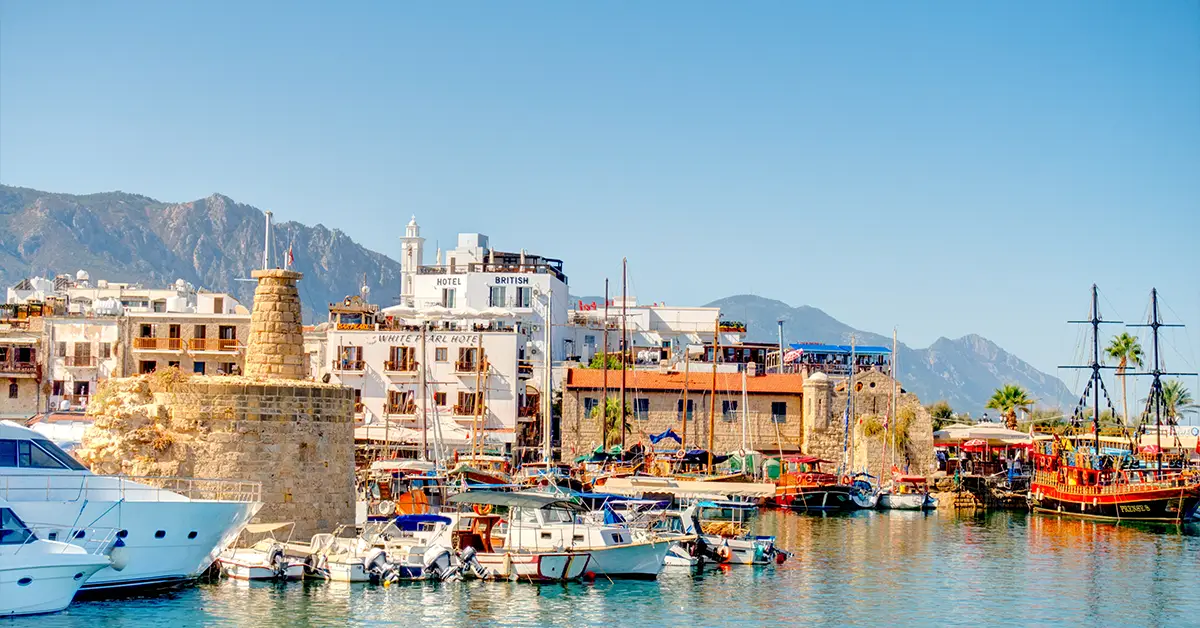
Cyprus, officially the Republic of Cyprus, is an island country in the eastern Mediterranean, about 75 km south of the Turkish coast and about 90 km west of Syria. It is the third-largest and third-most populous island in the Mediterranean, after Sicily and Sardinia. The capital and largest city of Cyprus is Nicosia, while other important cities include Limassol, Larnaca, Paphos and Famagusta.
A member of the European Union since 1 May 2004 and using the euro as its official currency since 1 January 2008, Cyprus serves as a strategic bridge between Europe, Asia and Africa. The country stands out for its developed service economy, high living standards on the Human Development Index and a diverse range of programmes to attract foreign investment.
Message
Overview of Cyprus
Cyprus has an area of 9,251 km², of which about 60% in the south is controlled by the internationally recognised Republic of Cyprus. About 36% in the north has been occupied by Turkey since 1974; this area calls itself the Turkish Republic of Northern Cyprus but is recognised only by Turkey. The rest consists of the UN-controlled buffer zone and two British Sovereign Base Areas at Akrotiri and Dhekelia.
The island’s total population is estimated at about 1.35 million as of 2024, of whom about 920,000 live in the area administered by the Republic of Cyprus. Greek Cypriots are the majority at about 78% of the population, Turkish Cypriots about 18%, and the rest are Maronite, Armenian and Latin communities and foreign settlers.
The two official languages are Greek and Turkish, of which only Greek is an official language of the European Union. English is widely spoken as a legacy of British colonial rule, especially in education, business and tourism. Most Greek Cypriots are Eastern Orthodox Christians, while the Turkish Cypriot community is mainly Sunni Muslim.
The Republic of Cyprus is a unitary presidential republic in which the president is both head of state and head of government. It is also the only EU member state with a fully presidential system of this kind.
Considering a residency programme? The Prosperous Living Investment team assesses your profile free of charge and advises on the pathway that fits your goals.
History of Cyprus
Detailed article:History of Cyprus
The history of Cyprus spans more than 13,000 years, beginning with the first traces of hunter-gatherer settlement. Farming settlements appeared around 8,500 BC, most notably Khirokitia on the south coast, a UNESCO World Heritage Site since 1998. At the end of the second millennium BC, Mycenaeans from Greece settled on the island and laid the foundations of its Greek identity.
Over the following centuries, Cyprus came successively under the control of the Assyrians, Egyptians, Persians, Greeks, Romans, Byzantines, Arabs, the Lusignan crusader kingdom, the Venetians and the Ottoman Empire from 1571 to 1878. Britain then took over the island through the Cyprus Convention of 1878 and made it a crown colony in 1925.
The movement for union with Greece (enosis) grew strongly in the first half of the 20th century, leading to the armed uprising by EOKA that began on 1 April 1955. After four years of conflict, the Zürich-London Agreements of 1959 paved the way for Cyprus to declare independence on 16 August 1960, with Archbishop Makarios III becoming its first president.
Tensions between the Greek and Turkish Cypriot communities erupted in December 1963 and persisted for years afterwards. On 15 July 1974, a coup backed by the Greek military junta overthrew the Makarios government, giving Turkey a pretext to launch an invasion on 20 July 1974. This led to Turkey’s occupation of about 37% of the island in the north and caused mass displacement, with more than 150,000 Greek Cypriots and about 50,000 Turkish Cypriots forced from their homes.
After the events of 1974, the Republic of Cyprus focused on economic reconstruction and international integration. Cyprus officially joined the United Nations in 1960 and the Commonwealth in 1961, and reached its greatest milestone by becoming a member of the European Union on 1 May 2004.
Geography of Cyprus
Detailed article:Geography of Cyprus
Cyprus lies in the northeastern corner of the Mediterranean, at the crossroads of Europe, Asia and Africa. Geographically, the island belongs to West Asia, but geopolitically it is classed as part of Europe. Its 9,251 km² stretch up to about 240 km from northeast to southwest and up to 100 km from north to south, with a coastline of about 640 km.
The terrain of Cyprus is dominated by two main mountain ranges. The Troodos range covers most of the centre and southwest, with its highest peak, Mount Olympus, at 1,952 m. The Kyrenia range, also known as Pentadaktylos, runs more than 100 km along the north coast; it is lower but rugged. Between the two ranges lies the Mesaoria plain, the island’s most important agricultural area.
Cyprus has a typical Mediterranean climate, with hot, dry summers from June to September and mild, wet winters from November to March. Average daytime temperatures on the central plain in July and August are around 29°C, while the Troodos mountains are only about 22°C. Average annual rainfall is about 500 mm, falling mainly in winter. The island is known as the sunniest country in Europe, with more than 300 days of sunshine a year.
Cyprus has rich flora and fauna, with about 12% of the island covered by forest, mainly Aleppo pine, the endemic golden oak (Quercus alnifolia), juniper and cedar. The island is also home to the endemic mouflon and is an important stopover for millions of birds on migration routes between Europe and Africa.
Politics of Cyprus
Detailed article:Politics of Cyprus
Cyprus is a unitary presidential republic in which the president is both head of state and head of government. Under the 1960 Constitution, the president is directly elected by universal suffrage in a two-round system for a 5-year term, with a limit of two terms. The president appoints the Council of Ministers and exercises executive power independently of Parliament.
The current president is Nikos Christodoulides, in office since 28 February 2023 after winning the run-off with 51.9% of the vote. A former Foreign Minister, he ran as an independent candidate backed by centrist and centre-right parties. The next presidential election is expected in February 2028.
The legislature of Cyprus is the unicameral House of Representatives (Vouli ton Antiprosopon), with 80 seats under the Constitution as amended in 1985. Of these, 56 seats are allocated to the Greek Cypriot community and 24 to the Turkish Cypriot community, although the 24 seats have been vacant since 1964 when the Turkish Cypriot representatives left the government. The House is elected by proportional representation in six constituencies corresponding to the six districts of the Republic of Cyprus, for a 5-year term.
The next legislative election is expected on 24 May 2026. The main political parties currently include the centre-right Democratic Rally (DISY) with 17 seats, the left-wing Progressive Party of Working People (AKEL) with 15 seats, the centrist Democratic Party (DIKO) with 9 seats, and the far-right National Popular Front (ELAM) with 3 seats.
The judicial system of Cyprus is based on English common law combined with some civil law elements. The Supreme Court is the highest judicial body, followed by district courts and specialised courts. The judiciary is independent of the executive and legislature under the principle of separation of powers.
Economy of Cyprus
Detailed article:Economy of Cyprus
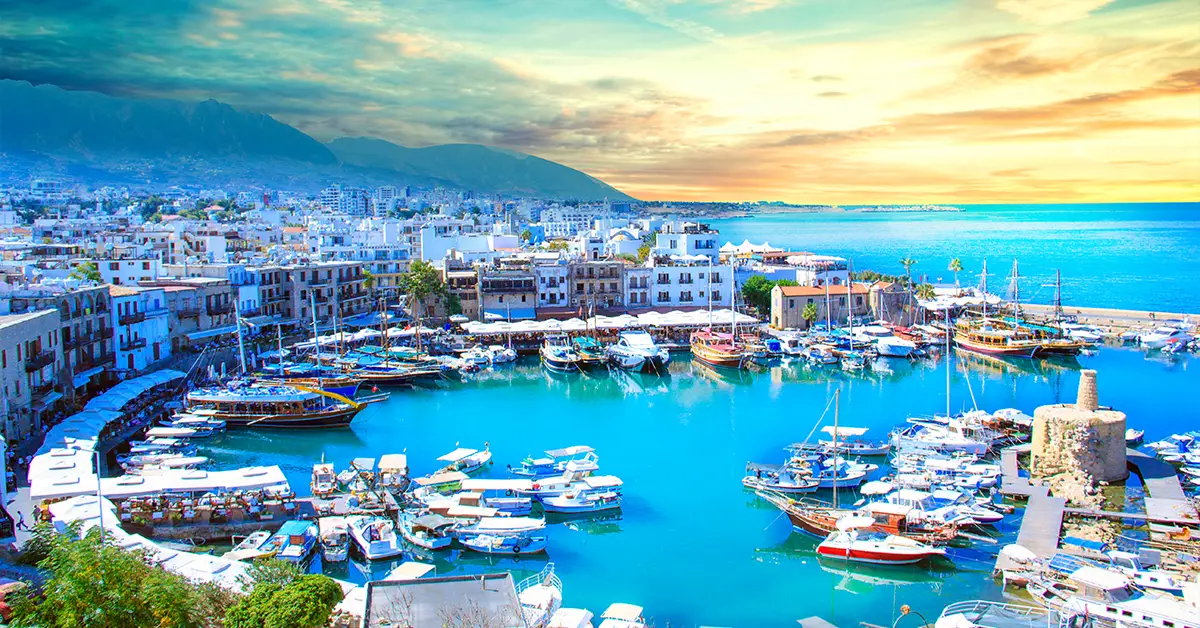
The economy of Cyprus is an open market economy based mainly on services. According to European Commission data updated in 2025, services contribute more than 80% of GDP, industry and construction about 12%, and agriculture only about 1.3%. Key sectors include tourism, shipping, financial services, real estate, and information and communications technology.
Cyprus’s nominal GDP was about $36.3 billion USD in 2024, with GDP per capita at purchasing power parity of about $59,857 USD, among the higher levels in the eurozone. The Cypriot economy grew by 3.4% in 2024 and is forecast by theEuropean Commissionto maintain 3.4% growth in 2025 before easing slightly to 2.6% in 2026. Unemployment fell to a record low of 4.3% in the first half of 2025.
Cyprus’s public finances have improved markedly since the 2013 banking crisis. According to the Central Bank of Cyprus, public debt fell from 113.6% of GDP in 2020 to 65.4% in 2024 and is expected to drop below 50% of GDP by 2028. The state budget posted a surplus of 4.3% of GDP in 2024 and is forecast to maintain surpluses above 3% in the following years.
Tourism is an important economic pillar, contributing about 15% of GDP, with international arrivals reaching record levels in 2024 and 2025. Shipping is also a flagship sector, with Cyprus among the ten countries with the largest merchant fleets in the world. Financial services are thriving thanks to a 12.5% corporate tax rate, one of the lowest in the EU, and a legal system based on English common law.
Cyprus is emerging as a startup hub in the Mediterranean, ranking first in the EU for startup ecosystem growth in 2025 according to the StartupBlink Global Index. The country is also investing heavily in renewable energy and offshore natural gas, with the Great Sea Interconnector power transmission project linking it to the European grid.
Demographics of Cyprus
Detailed article:Demographics of Cyprus
The island’s total population is estimated at about 1.35 million in 2024, of whom about 920,000 live in the area controlled by the Republic of Cyprus. The ethnic composition is about 78% Greek Cypriot, 18% Turkish Cypriot and 4% minority communities, including Maronites, Armenians, Latins and legally settled foreign nationals.
Average population density is about 96 people/km², with two-thirds of the population living in urban areas. Nicosia is the largest city, with about 270,000 residents including its urban area, followed by Limassol with about 240,000, then Larnaca, Paphos and Famagusta. Cyprus also has a relatively young population, with about 28% under 24 and 47% aged 25-54.
Life expectancy was 80.2 years as of 2024, about 77.4 years for men and 83.1 years for women. Adult literacy is close to 100%, reflecting 9 years of compulsory education and public spending on education of 4.7% of GDP in 2022.
Religion holds an important place in Cypriot cultural life. According to the most recent census, about 89% of the population is Eastern Orthodox, nearly 3% Roman Catholic, 2% Protestant/Anglican, nearly 2% Muslim, and the rest follow other faiths or no religion. The Church of Cyprus has deep historical and social influence and played a leading role in the independence movement.
In recent years, Cyprus has welcomed a significant wave of foreign nationals, especially from EU countries, Russia, Ukraine and Southeast Asia. Policies to attract multinational companies to set up on the island have also grown the foreign community working in technology, finance and professional services.
Education in Cyprus
Detailed article:Education in Cyprus
The education system of Cyprus is organised into four main levels: pre-primary, primary, secondary and tertiary. Compulsory education runs from ages 5 to 15, covering one year of pre-primary, six years of primary and three years of lower secondary school. Public education is free at the first three levels and funded by the Ministry of Education, Sport and Youth.
Cyprus has a well-developed private school sector, particularly English-medium international schools following British, American or International Baccalaureate curricula. Many expatriate families and some Cypriot families choose these schools to give their children an international academic foundation and easier access to universities in the UK, the US or Europe.
At university level, Cyprus has three public universities: the University of Cyprus in Nicosia (UCY, founded in 1989), the Cyprus University of Technology in Limassol (CUT) and the Open University of Cyprus. There are also major private universities such as European University Cyprus, the University of Nicosia, Frederick University and many other private institutions. The country is also an attractive destination for international students thanks to competitive tuition fees and English-taught programmes.
Public spending on education reached 4.7% of GDP in 2022, above the EU average. Cyprus has one of the highest shares of university-educated adults in the EU and a well-trained workforce, especially in finance, accounting, law and IT. This is one of the competitive advantages that help the island attract multinational companies to set up regional headquarters.
Culture of Cyprus
Detailed article:Culture of Cyprus
Cypriot culture is a unique blend of Greek, Byzantine, Ottoman, Middle Eastern and Western European influences, forged over more than 9,000 years of history. Cypriot Greek is a distinct dialect with many loanwords from Arabic, Turkish, Italian and English. Orthodox religious festivals, especially Easter, are central to Greek Cypriot community life, while the Turkish Cypriot community maintains traditional Islamic festivals.
Cypriot cuisine is typically Mediterranean, with meze as a recognised symbol of its food culture — dozens of small dishes served with wine. Halloumi, the signature cheese of Cyprus, was granted Protected Designation of Origin status by the European Union in 2021. Other famous dishes include souvlaki, kleftiko, sheftalia, koupepia and loukoumia sweets.
Cypriot folk music shows Greek, Turkish and Arab influences, with traditional instruments such as the violin (fkiolin), lute (laouto), Cypriot flute (pithkiavlin), oud and percussion. Chattista, a form of folk poetry, is often performed at festivals. Nicosia, Limassol and Paphos all have theatres, concert halls and cultural events year-round. Paphos was European Capital of Culture in 2017.
UNESCO has inscribed three World Heritage Sites in Cyprus: the archaeological site of Paphos with its spectacular Roman mosaics, the 9,000-year-old Neolithic settlement of Khirokitia, and the group of nine Byzantine painted churches and a monastery in the Troodos region. The group is famous for Byzantine frescoes preserved intact from the 11th to the 16th century.
International relations of Cyprus
Detailed article:International relations of Cyprus
The Republic of Cyprus has been a member of the United Nations since 20 September 1960, a member of the Commonwealth since 1961 and a member of the European Union since 1 May 2004. It joined the eurozone on 1 January 2008 and is in the process of completing accession to the Schengen Area.
Cyprus holds the rotating Presidency of the Council of the European Union in the first half of 2026, its second after the first in 2012. According to theMinistry of Foreign Affairs of Cyprus, the presidency focuses on priorities including Eastern Mediterranean regional security, the green transition, the digital transition and relations with neighbouring countries.
Relations with Greece are a pillar of Cypriot foreign policy due to the close historical, cultural and linguistic ties between the two countries. Cyprus has also developed strategic relations with Israel and Egypt, particularly in energy and Eastern Mediterranean energy security, through trilateral agreements on offshore natural gas exploration.
The Cyprus problem, stemming from Turkey’s occupation of the north of the island since 1974, remains the biggest diplomatic challenge. The United Nations maintains the UNFICYP peacekeeping force and the Green Line. UN-led reunification talks have been held many times but have not achieved a breakthrough. The international community, including the United Nations and the European Union, still does not recognise the Turkish Republic of Northern Cyprus.
Cyprus – Vietnam relations were established in 1976. The two countries maintain diplomatic relations through the Cypriot embassy in Beijing, which is also accredited to Vietnam, and the Vietnamese embassy in Rome, which is also accredited to Cyprus. Cooperation in the economy, tourism and residency by investment between the two countries continues to grow.
Cyprus residency by investment
Detailed article:Cyprus residency by investment
Cyprus is one of the EU’s standout residency by investment destinations for non-EEA nationals. After the citizenship by investment (CBI) programme was terminated on 1 November 2020 due to legal issues, the permanent residency (PR) by investment programme became the main option for international investors.
Under Regulation 6(2) of the Aliens and Immigration Law, investors can obtain Cyprus permanent residency with a minimum investment of €300,000 EURO in one of the following channels: new residential property, commercial property, share capital in a company operating in Cyprus with at least 5 employees, or AIF/AIFLNP/RAIF investment funds. Additional requirements include a minimum annual income of €50,000 EURO from abroad, a clean criminal record and full health insurance. Learn more aboutCyprus health insurance.
Fast-track processing takes 4 to 8 months. Residency is permanent, with no continuous residence requirement other than visiting Cyprus at least once every two years. After 8 years of legal residence, investors can apply for Cypriot citizenship, subject to Greek language proficiency at B1 level and knowledge of Cypriot culture and the constitution.
Compared with other EU residency by investment programmes, Cyprus has several advantages, such as a competitive investment threshold, a 12.5% corporate tax rate that is among the lowest in the EU, no inheritance tax, a Non-Domicile regime that exempts worldwide income from certain taxes for 17 years, and the shortest path to EU citizenship after 8 years. However, Cyprus is not yet in the Schengen Area, so Cypriot passports and permanent residents do not currently enjoy Schengen visa-free access on that basis.
Summary
Cyprus is an island nation with a strategic location, a long history and a developed service economy in the Mediterranean. As a member of the European Union and the eurozone, the country brings together what international investors look for: political stability, a legal system based on English common law, a favourable business environment, competitive taxes and a high quality of life.
For the Vietnamese community interested in settling in Europe, Cyprus offers flexible options ranging from real estate and business investment to investment funds, with a clear pathway to EU citizenship. For a deeper understanding of each aspect of the island nation, readers can refer to the in-depth articles on the history, geography, politics, economy, demographics, education, culture and international relations of Cyprus.
Accompanying you on your journey in residency investment
The Prosperous Living Investment team advises on pathways, assesses profiles and manages investments transparently for every residency, citizenship and international property objective.
Free profile assessmentWhere life gets prosperous