

The economy of Cyprus is one of the most dynamic in the eurozone, with growth above the EU average for many consecutive years. A member of the European Union since 2004 and a user of the euro since 2008,Cyprushas successfully shifted from a traditional agricultural economy to a modern service economy, with GDP per capita among the highest in Southern Europe.
This article analyses the main pillars of the Cypriot economy, from macroeconomic indicators, leading sectors and a favourable tax system to development prospects for 2025-2027. This is core information for international investors and Vietnamese people interested in residency by investment, starting a business or working in Cyprus.
Detailed article onThe island nation of Cyprus.
Message
Overview of the Cypriot economy
The economy of Cyprus is an open market economy based mainly on services. According to 2024 data fromEuropean Commission, services contribute 80% of GDP and employ 81.4% of the workforce. Industry and construction account for about 12.4% of GDP, while agriculture accounts for only 1.3% of GDP.
Cyprus’s nominal GDP was about $36.3 billion USD in 2024, and GDP at purchasing power parity about $50 billion USD. GDP per capita in 2024 was $53,300 USD at current prices and $59,857 USD at purchasing power parity, the highest in Southern Europe and high among EU countries. This level of GDP per capita is also reflected in a “very high” Human Development Index, ranked 29th out of 191 countries in the UNDP Human Development Report.
Cyprus’s economic growth has been steady in recent years. Real GDP grew 3.4% in 2024 and is forecast to grow 3.4% again in 2025, before easing to 2.6% in 2026 and 2.4% in 2027. The main drivers of growth are domestic consumption, public investment and service exports, especially tourism and information technology.
Unemployment in Cyprus fell to a record low of 4.3% in the first half of 2025 and is forecast by the European Commission to remain at 4.5% in 2026. Inflation fell to close to 1% in 2025 after rising sharply due to energy prices in 2022-2023, and is expected to stabilise at around 2% in 2026-2027.
Considering a residency programme? The Prosperous Living Investment team assesses your profile free of charge and advises on the pathway that fits your goals.
Public finances and the monetary system
Cyprus’s public finances have improved impressively since the 2013 banking crisis. According to the Central Bank of Cyprus, public debt fell from a peak of 113.6% of GDP in 2020 to 65.4% of GDP in 2024, and continued falling to 61.9% of GDP in January 2025.The Cyprus Ministry of Financeaims to bring public debt below 50% of GDP by 2028, one of the fastest debt-reduction paths in the eurozone.
The Cypriot state budget posted a surplus of 4.3% of GDP in 2024 and is expected to maintain surpluses above 3% of GDP in 2025 and 2026. This is a rare performance in the EU, where many countries face persistent budget deficits. The budget surplus allows Cyprus to increase public investment in energy and social projects while maintaining fiscal discipline.
Cyprus joined the eurozone on 1 January 2008, replacing the Cyprus pound. Membership of the eurozone brings exchange rate stability, lower international transaction costs and greater investment appeal. The Central Bank of Cyprus is a member of the European System of Central Banks and takes part in monetary policymaking through the Governing Council of the European Central Bank.
The Cypriot banking system underwent a thorough restructuring after the 2013 crisis. The banking system’s Common Equity Tier 1 (CET1) ratio rose to 24.5% in December 2024, one of the highest in the EU. Non-performing loans (NPLs) have fallen by more than 95% from their peak, reflecting the restoration of a healthy financial system. In 2018, Cyprus regained an investment-grade credit rating from international rating agencies.
Tourism – the first pillar of the Cypriot economy
Tourism is one of the most important pillars of the Cypriot economy, contributing about 15% of GDP and employing about 25% of the workforce when indirect effects are included. In 2024 and 2025, Cyprus set consecutive records for international arrivals, exceeding 4 million a year, an impressive figure compared with the Republic of Cyprus’s population of 920,000.
The leading source markets for Cyprus include the United Kingdom, Israel, Germany, Poland, Greece and the Nordic countries. After relations with Russia changed in 2022, Cyprus diversified its tourism markets towards EU countries, the Middle East and Asia. The peak season runs from May to October, while the low season focuses on cultural tourism, wellness tourism and golf.
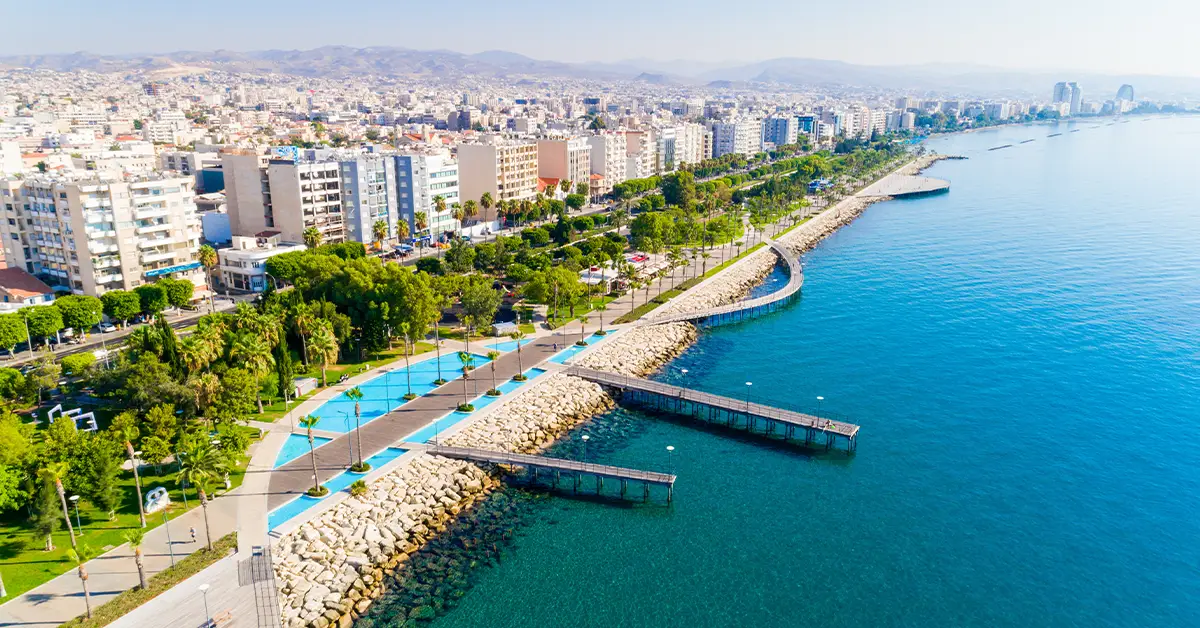
Cyprus has well-developed tourism infrastructure, with two main international airports at Larnaca and Paphos, cruise ports at Limassol and Larnaca, hotels from 3 to 5 stars, resorts and a wide range of restaurants. Highlights include Ayia Napa with its beaches and nightlife, Limassol with its old town and museums, Paphos with its UNESCO heritage, the Troodos mountains with their monasteries and ski area, and the Akamas Peninsula with its unspoilt nature.
The Cypriot government is investing heavily in upgrading tourism quality to increase the value of each visitor rather than just visitor numbers. Major integrated casino projects such as City of Dreams Mediterranean in Limassol opened in 2023 as Europe’s largest integrated casino resort and a new destination attracting high-end visitors. Many 5-star hotel and world-class golf course projects have also been completed or are under construction.
Shipping – the second pillar
Cyprus is one of the world’s largest international shipping centres, contributing about 7% of GDP and generating significant foreign exchange earnings. According to the Cyprus Ministry of Transport, the Cyprus-flagged fleet is the 11th-largest in the world by registered tonnage and the 3rd-largest in the European Union, after Greece and Malta.
The Cypriot maritime sector attracts hundreds of ship management companies, shipping agents, shipbrokers and marine insurers based in Limassol. The city is known as the “Singapore of the Eastern Mediterranean” in the shipping industry. A legal system based on English common law, a favourable tax regime for shipping, experienced professionals and a strategic location are the advantages that attract shipping companies.
Cyprus applies a Tonnage Tax System instead of ordinary profit tax to the shipping industry. Under this system, shipping companies pay tax based on the total tonnage of their fleet rather than actual profits, simplifying tax obligations and increasing competitiveness. The regime has been approved by the European Commission and applies until 2029.
Besides shipping, maritime support services in Cyprus are thriving, including ship repair and maintenance, crew training, maritime legal services and insurance. Maritime universities in Limassol and vocational training centres provide a high-quality workforce for the industry. Cyprus is also a logistics gateway for trade between Europe, the Middle East and Africa.
Financial and business services
Financial services in Cyprus are thriving thanks to three factors: a 12.5% corporate tax rate among the lowest in the EU, a legal system based on English common law, and a network of double taxation agreements with more than 65 countries. Limassol and Nicosia are the two main centres, home to banks, Big Four audit firms, international law firms and investment funds.
After the 2013 banking crisis, the Cypriot banking system was restructured, with Bank of Cyprus and Hellenic Bank as the two leading domestic banks. There are also branches of major international banks such as Société Générale, BNP Paribas, RCB Bank and AstroBank serving corporate and high-end clients. A modern payment system integrated with SEPA and SWIFT supports fast international transactions.
Cyprus is a popular destination for international holding companies and investment funds. More than 200 AIFs, AIFLNPs and RAIFs are registered in Cyprus, with total assets under management exceeding €15 billion EURO. The legal framework for investment funds is harmonised with EU rules through the AIFMD Directive while being more flexible than in many other countries. This attracts fund managers and institutional investors.
For individuals, Cyprus’s Non-Domicile tax regime is one of the most favourable in the EU. Under this regime, foreign nationals who become tax residents of Cyprus can be exempt from tax on foreign-sourced dividends, interest and other passive income for 17 years. Combined with favourable personal income tax treatment for people working in Cyprus earning more than €100,000 EURO a year, this attracts senior executives and international professionals.
Information technology and start-ups
Information and communications technology (ICT) is a standout new growth driver for the Cypriot economy in the 2020s. According to the StartupBlink Global Startup Ecosystem Index, Cyprus was the fastest-growing start-up ecosystem in the EU in 2025, with a 71% increase in the number of start-ups, reaching 305 active start-ups. Cyprus ranked second in the world among countries with populations under 2 million.
Cyprus’s policy of attracting multinational companies to set up headquarters on the island (headquartering policy) has drawn hundreds of technology companies to move their regional or global headquarters there, especially from Israel, Russia, Ukraine, the UK and the US. Big names in fintech, gaming, blockchain and software development all have a presence in Limassol and Nicosia. Cyprus is also one of the few EU countries friendly to digital assets.
The ICT workforce is growing rapidly thanks to policies attracting highly skilled workers from inside and outside the EU. Cyprus’s Digital Nomad Visa, launched in 2021, allows freelancers and remote workers with a monthly income of at least €3,500 EURO to work on the island for 1 year, with the option to renew. It is one of the most flexible Digital Nomad visas in Europe.
The start-up support ecosystem in Cyprus includes incubators such as the IDEA Innovation Center and Chrysalis Leap, universities with technology programmes, and domestic and international venture capital funds. The Cyprus Start-up Visa programme, launched in 2017, allows non-EU entrepreneurs with innovative business ideas to come to Cyprus and apply for residence to develop their businesses.
Energy and real estate
Cyprus is in an important energy transition phase. The discovery of offshore natural gas fields since 2011, notably Aphrodite, Calypso, Glaucus and Cronos, opens up the prospect of becoming an energy producer and exporter. The LNG terminal project at Vasilikos, under construction and expected to be completed in 2027, will allow Cyprus to import and regasify liquefied natural gas.
The Great Sea Interconnector project, linking the Cypriot power grid with Greece and Israel via a 1,208 km subsea cable, is one of the largest energy projects in the EU. It will end Cyprus’s energy isolation, integrate the island into the European electricity market and open the prospect of connecting to the India-Middle East-Europe Economic Corridor (IMEC).
Real estate plays a dual role in the Cypriot economy, as both an investment driver and a channel for attracting foreign investment. Property prices in major cities have risen steadily by 1% to 4% a year since the 2013 crisis, with some areas and luxury segments seeing increases of more than 12% a year. Limassol is the hottest market, with seafront apartment projects, villas and luxury towers.
The permanent residency by investment programme, requiring a minimum investment of €300,000 EURO in real estate or other channels, is an important driver of property demand from non-EU investors. Investors from the EU, the Middle East and Asia are also actively buying property in Cyprus for rental investment or holiday use. Annual rental yields in major cities range from 5.5% to 7.5%.
Outlook and challenges
The outlook for the Cypriot economy in 2025-2027 is broadly positive, with GDP growth forecast above 2.5% a year by the Central Bank of Cyprus. The main drivers include stable domestic consumption, public investment from the EU Recovery and Resilience Facility (RRF), FDI inflows into real estate and ICT, and growing service exports.
However, the Cypriot economy also faces some challenges. Heavy dependence on services, especially tourism and shipping, makes the economy vulnerable to external shocks such as pandemics, geopolitical conflicts or energy price swings. The lessons of COVID-19 and the conflict in Ukraine show the need to diversify revenue sources.
Shortages of skilled labour in some sectors, especially ICT and healthcare, are being addressed through policies to attract foreign workers. However, strong immigration also puts pressure on housing, education and healthcare infrastructure. The government is rolling out affordable housing support programmes and upgrading public services to balance these effects.
The unresolved Cyprus problem remains a long-term geopolitical risk, affecting the ability to fully exploit offshore energy resources and develop infrastructure in the north. However, the Cypriot economy has proven resilient and adaptable through many crises, from the 1974 division and the 2008-2009 global financial crisis to the 2013 banking crisis and the COVID-19 pandemic.
Accompanying you on your journey in residency investment
The Prosperous Living Investment team advises on pathways, assesses profiles and manages investments transparently for every residency, citizenship and international property objective.
Free profile assessmentWhere life gets prosperous