

When speaking of Egypt, one immediately thinks of the North African nation that bridges to the Middle East via the Sinai Peninsula, with the Nile as its lifeblood and Cairo as its capital. It is one of the oldest cradles of human civilisation and the most populous nation in the Arab world.
Contents
Location and role of Egypt
Egypt is located in the northeast corner of Africa, where the continent meets Western Asia. Most of the territory lies in North Africa, but the Sinai Peninsula belongs to Asia, making the country a geographical bridge between two continents. This pivotal location has shaped Egypt’s history, trade, and strategic role for thousands of years.
The country borders the Mediterranean Sea to the north and the Red Sea to the east, controlling the Suez Canal, one of the busiest maritime routes in the world. Thanks to this location, Egypt maintains significant influence in the Arab world and the Middle East–North Africa region.
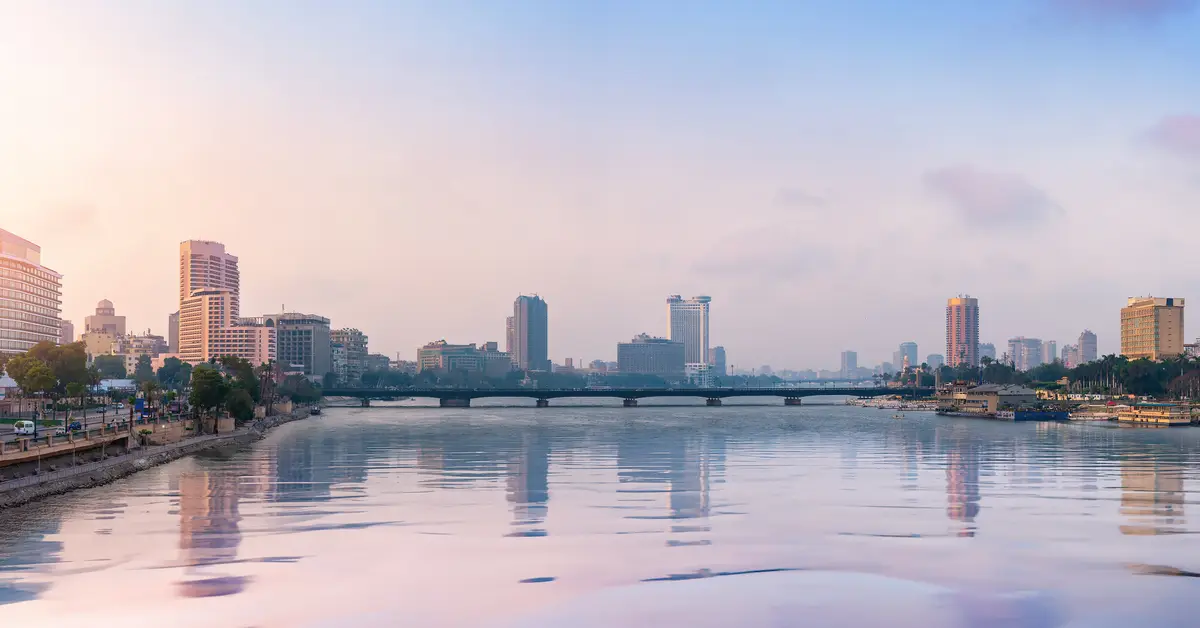
Cairo is one of the largest metropolises in Africa and the Arab world, as well as the political, economic, and cultural centre of the country. To understand each aspect in depth, this overview summarises the main areas before leading to specialised articles.
The official name of the country is the Arab Republic of Egypt. For centuries, this has been a meeting point for trade routes connecting Europe, Africa, and Asia, making the land a convergence point for many civilisations. That transit role remains fully valid in the modern era, especially via the Suez Canal.
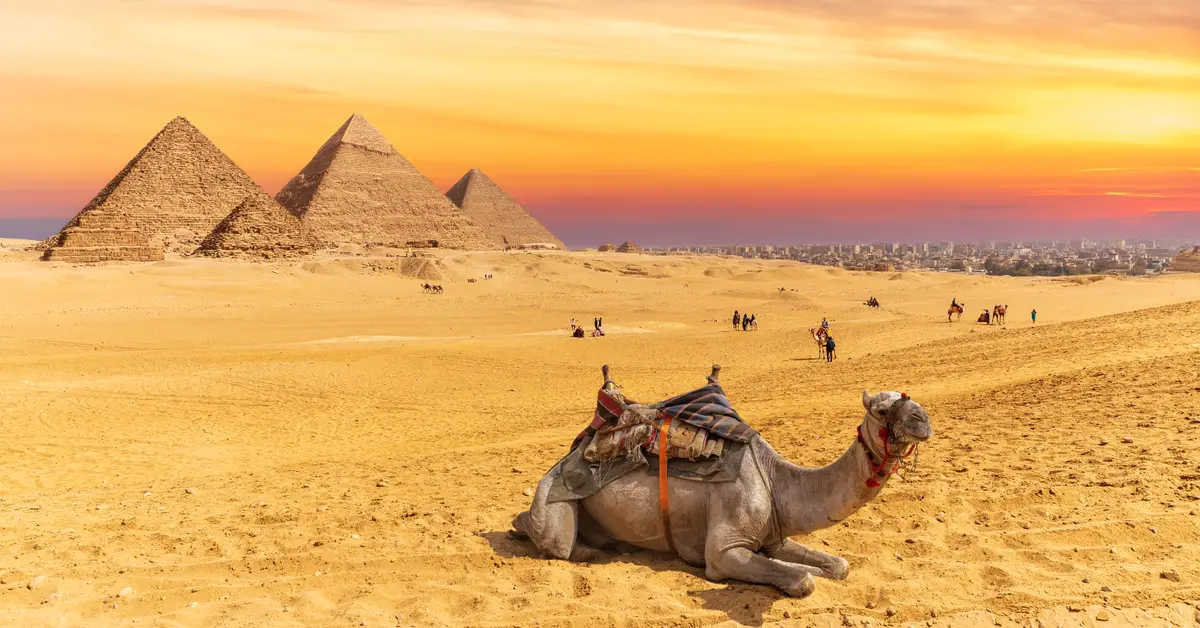
Beyond its geopolitical weight, the country is a symbol of historical depth. The images of pyramids, the Nile, and the desert are deeply ingrained in global consciousness, making Egypt one of the most sought-after destinations and research topics. The following sections will outline geography, history, population, politics, economy, culture, and education.
Considering a residency programme? The Prosperous Living Investment team assesses your profile free of charge and advises on the pathway that fits your goals.
Key data on Egypt
Below are some basic indicators for Egypt, compiled from sources such as the World Bank, the United Nations Development Programme (UNDP), and the national statistical agency. Economic and population data are updated periodically and may change year by year.
- Capital: Cairo
- Area: approximately 1,001,450 km²
- Population: approximately 107 million domestically (end of 2024), estimated at over 116 million including the diaspora
- GDP per capita: approximately US$3,338 (2024)
- Human Development Index (HDI): 0.754 in 2023 (high human development category, ranked 100th globally)
- Currency: Egyptian pound (EGP)
The figures above are for reference at the time of compilation. For official purposes or decision-making, the latest data should be verified with the aforementioned bodies, as GDP, population, and development rankings are subject to annual adjustments.
Geography: the Nile amidst the desert
Detailed article on the Geography of Egypt
The defining feature of Egyptian geography is the contrast between the fertile green corridor along the River Nile and the vast expanse of surrounding desert. Most of the territory consists of arid Sahara desert, comprising the vast Western Desert and the Eastern Desert extending towards the Red Sea.
The River Nile flows from south to north, emptying into the Mediterranean through a fertile, fan-shaped delta. This narrow riverfront strip and the delta host almost the entire population and agricultural activity, whereas the desert remains virtually uninhabited.
The country borders Libya to the west, Sudan to the south, while the Sinai Peninsula bridges into Asia, bordering the Gaza Strip and Israel. The climate is generally hot, arid desert with scarce rainfall, featuring sweltering summers and milder winters in coastal areas.
Population distribution is therefore heavily skewed: inhabited land accounts for only a small fraction of the total land area, with the remainder being desert. This dynamic creates acute pressure on land, housing and infrastructure along the river corridor, driving urban expansion projects into the desert.
Beyond arable land and freshwater, natural resources include petroleum, natural gas and various minerals. The Red Sea region, with its coral reefs and beaches, serves as a vital natural asset closely tied to resort tourism.
- Borders: Mediterranean Sea (north), Red Sea (east), Libya (west), Sudan (south).
- The River Nile and its delta form the primary demographic and agricultural axis.
- The Suez Canal connects the Mediterranean Sea to the Red Sea, serving as a vital maritime shipping route.
Long history from pharaohs to the modern era
Detailed article on the History of Egypt
In historical depth, Egypt spans thousands of years, originating from the ancient civilization along the River Nile. Pharaonic dynasties left behind a monumental legacy of pyramids, temples and hieroglyphics, establishing the country’s enduring global image.
Following the pharaonic era, the territory came under Hellenistic rule during the Ptolemaic dynasty, followed by Rome. From the 7th century, widespread Islamisation took place, leading to successive Islamic dynasties ruling for centuries.
Entering modern history, modernisation drives, the construction of the Suez Canal and the British protectorate era shaped the country’s modern profile. Egypt declared independence in the early 1920s, transitioning to a republic following the mid-20th-century revolution to usher in the contemporary era.
Each historical era has left enduring physical and cultural footprints: pharaonic temples, ancient Coptic churches, mosques and modern-era architecture in Cairo and Alexandria. This layered heritage explains why Egypt’s national identity is both ancient and multifaceted.
Pinpointing precise chronological dates for ancient periods remains an ongoing subject of scholarship given historical records spanning millennia. Consequently, Egyptian history is typically framed across broad, established eras rather than contentious absolute dates.
Egypt’s population and demographics
Detailed article on the Demographics of Egypt
In terms of population size, Egypt is the most populous country in the Arab world, surpassing 100 million people. Egyptian demographics are marked by extraordinarily high density along the River Nile corridor and delta, home to the vast majority of its inhabitants.
Major urban centres such as Cairo, Alexandria and Giza attract significant migration flows, reflecting rapid urbanisation. The population is predominantly Egyptian Arab, alongside Coptic, Nubian, Bedouin and Amazigh communities.
A relatively young demographic profile with a large working-age population presents both economic potential and pressure on employment and public services. Arabic is the official language, with the population divided between a Sunni Muslim majority and a Coptic Christian minority.
Rapid population growth poses long-term challenges for food security, clean water, healthcare and education. The government has repeatedly introduced family planning programmes and regional development initiatives to ease pressure on the congested River Nile corridor.
Beyond the resident population, a sizeable Egyptian diaspora lives and works abroad, particularly in the Gulf states. Their remittances play a vital role in the national economy and household livelihoods.
Egypt’s political system
Detailed article on the Egyptian politics
At the state level, Egyptian politics operates as a republic, where the President is head of state and the Prime Minister is head of government. Legislative power is vested in a bicameral parliament, operating under the constitution adopted in 2014 and subsequently amended.
The administrative system is organised into governorates across the territory, from the densely populated delta to vast desert areas. The military occupies a significant position in state affairs, a defining feature of the country’s modern history.
In foreign affairs, Egypt hosts the Arab League headquarters in Cairo and maintains broad regional and international ties. According to State Information Service of Egypt (State Information Service), the country positions itself as one of the diplomatic centres of the Arab world.
Diverse economy of the Arab world
Detailed article on the the Egyptian economy
In terms of output and income, the Egyptian economy is among the largest and most diversified in the Arab region. Key pillars include Nile valley agriculture, tourism, Suez Canal revenues, overseas remittances, and the oil and gas sector.
In addition, textiles, construction and services contribute significantly to economic activity. The official currency is the Egyptian pound, coded internationally as EGP, which is used for all domestic transactions.
In recent years, the government has implemented numerous reform programmes in partnership with international financial institutions. According to World Bank, the country faces challenges such as inflationary pressure and the need to generate employment for its young population, with specific figures varying across periods.
A notable growth driver is large-scale infrastructure projects, including the construction of the New Administrative Capital east of Cairo. These initiatives aim to relieve urban congestion, attract investment and modernise the civil service, whilst also raising questions regarding costs and public debt.
Overall, the economy benefits from strong domestic market demand driven by a large population, while remaining reliant on foreign-currency streams such as tourism, the Suez Canal and remittances. This diversification helps spread risk, but leaves the country vulnerable to external shocks.
Culture between ancient heritage and modern life
Detailed article on the Culture of Egypt
In terms of identity, Egyptian culture is a blend of ancient civilisational heritage and vibrant contemporary life. Religious traditions, comprising the Sunni Muslim majority and the historic Coptic Christian community, jointly shape customs, festivals and daily life.
The cuisine has a distinctive character with staples such as koshari, ful medames and ta’meya. In the arts, Cairo has long been regarded as the cinema and music capital of the Arab world, radiating influence across the region.
In literature, Nobel laureate Naguib Mahfouz cemented the standing of Egyptian writing. Islamic architecture with historic mosques intertwines with pharaonic monuments, creating a cultural landscape matched in few other places.
Thanks to an early-developing film and television industry, Egyptian Arabic is widely understood across the region and serves as a standard dialect of screen Arabic. This represents significant cultural soft power for the country in the Arab world.
Customs, religious festivities and tight-knit family life remain central to society. The blend of ancient traditions and modern urban life creates a dynamic identity that preserves heritage while continuously evolving.
Education and human resources
Detailed article on the Education in Egypt
Regarding human development, Egyptian education is state-managed with two parallel streams: the secular track and the Islamic-oriented Al-Azhar system. Schooling spans kindergarten, primary and secondary education, culminating in the Thanaweya Amma graduation examination.
At the tertiary level, the country is home to prominent institutions such as Cairo University, Al-Azhar University – one of the oldest academic centres in the world, Alexandria University, and the American University in Cairo. These institutions supply qualified human capital to the economy.
However, the system still faces challenges regarding scale and quality due to a large and young population. Education and vocational training reform programmes are being accelerated to enhance the skills of the future workforce.
Tourism, religion, and regional standing
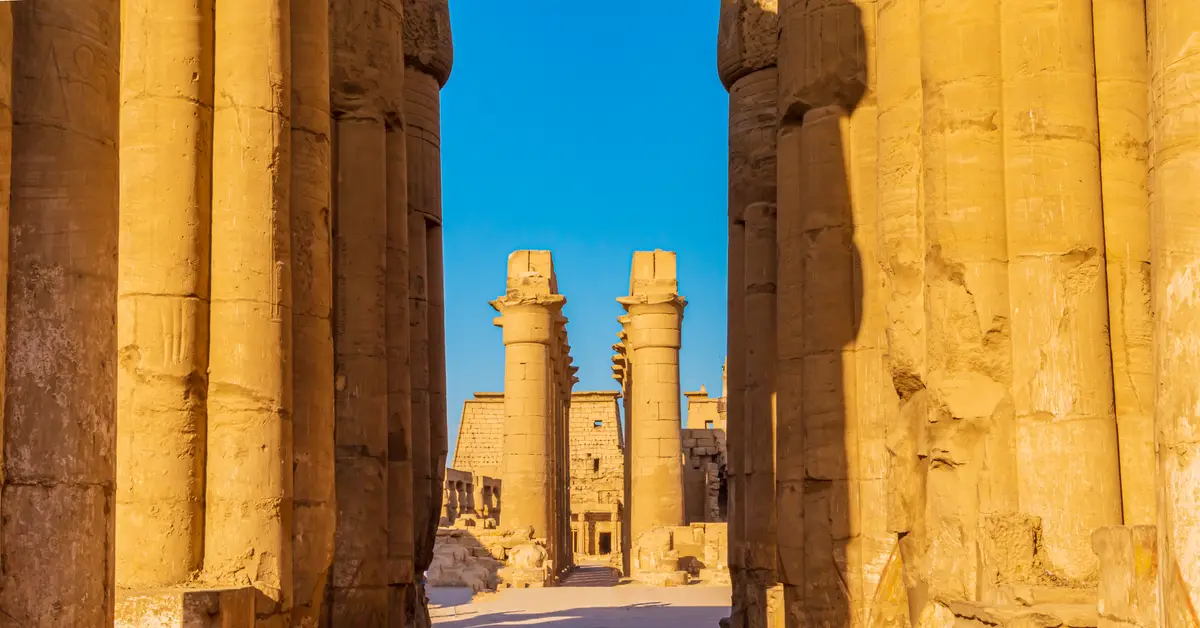
Tourism is one of the country’s signature strengths. The Giza pyramid complex and the Sphinx are world-renowned symbols, alongside monuments along the Nile such as Luxor and ancient temples. According to the State Information Service of Egypt, this heritage is the nation’s core cultural asset.
Regarding religion, Sunni Islam is the faith of the majority of the population, while the Coptic Christian community represents one of the oldest surviving Christian traditions. This coexistence is a vital part of the social fabric.
With its strategic geographical location, large population, and immense heritage, Egypt holds a central role in the Arab world. The nation is both a crossroads of civilizations and a significant diplomatic and economic actor in the Middle East and North Africa.
Investment and citizenship programme
Detailed article on the Egypt citizenship by investment
Beyond traditional aspects, the country has opened up to foreign capital through the Egypt citizenship by investment programme, which was legalized in 2020. This framework allows eligible investors to obtain citizenship through various forms of contributions or investments.
Common forms include non-refundable contributions to the state treasury, real estate purchases, bank deposits, or business investments. Specific thresholds and conditions may change, so it is necessary to check current regulations with the competent authorities.
This programme is linked to the country’s broader economic and legal landscape, reflecting efforts to attract resources and foreign currency. Detailed information regarding conditions, documentation, and procedures is presented in a separate in-depth article.
Accompanying you on your journey in residency investment
The Prosperous Living Investment team advises on pathways, assesses profiles and manages investments transparently for every residency, citizenship and international property objective.
Free profile assessmentWhere life gets prosperous