


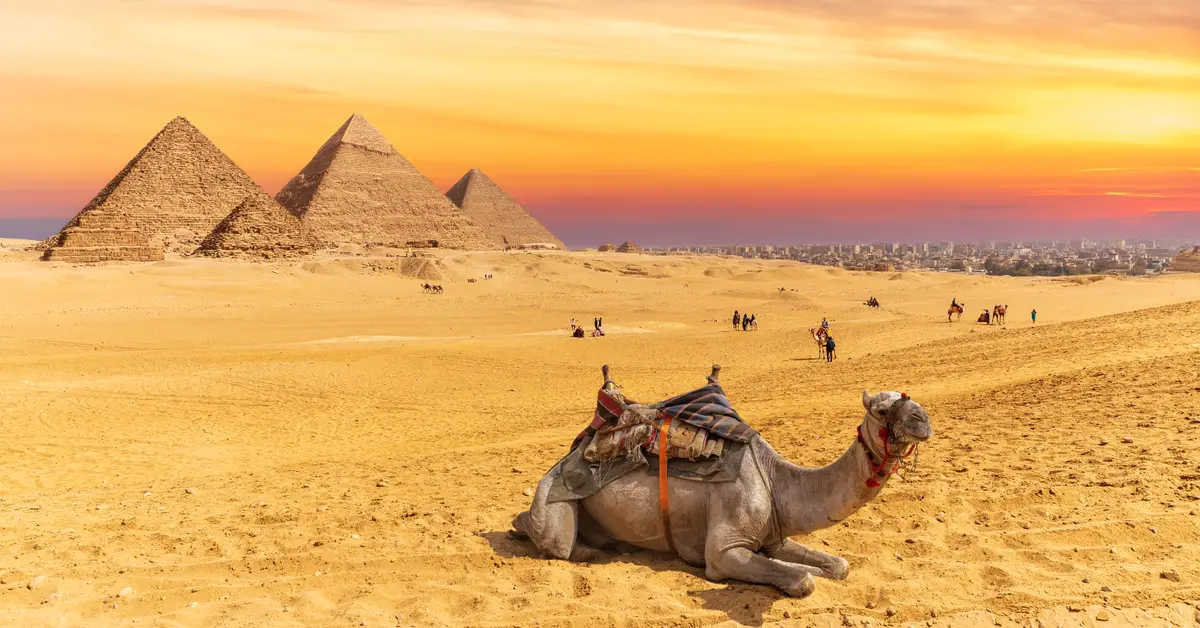
The history of Egypt is one of the most continuous and ancient flows in human history, spanning from the ancient civilization along the Nile to the modern nation with its capital, Cairo. Through pharaohs, Greeks, Romans, Islamic dynasties, and the Ottoman Empire, this land has been continuously reshaped.
Contents
Why the history of Egypt is linked to the Nile
It is difficult to tell the story of this land without starting with the Nile. The river flows from south to north, depositing silt each year on the narrow strip of land on both banks and the delta before emptying into the Mediterranean Sea. It was this fertile strip, surrounded by desert, that nurtured settled agricultural communities very early on.
The ancients clearly distinguished the fertile “black land” along the river from the arid “red land” of the desert. That contrast shaped how they organized their society, beliefs, and power. To fully understand Egypt today, one must look back at how humans early on learned to tame the river’s flood cycle.
Thanks to flood control and irrigation systems, residents along the river accumulated food surpluses. Abundant wealth created the conditions for the emergence of a ruling class, priests, and specialized craftsmen. This was the material foundation for one of the earliest centralized states in history.
Considering a residency programme? The Prosperous Living Investment team assesses your profile free of charge and advises on the pathway that fits your goals.
Ancient Egyptian civilization and the pharaonic dynasties
The most brilliant period in ancient Egyptian history began when Upper Egypt and Lower Egypt were unified under a single monarchy. This formed the pharaonic regime, where the king was both the supreme ruler and held a divine role, acting as a bridge between humans and the gods.
Researchers often divide the ancient history of this land into several major periods, commonly known as the Old Kingdom, Middle Kingdom, and New Kingdom, interspersed with unstable intermediate periods. The specific dates of each dynasty are still debated, so only the sequence and characteristics are mentioned here rather than absolute figures.
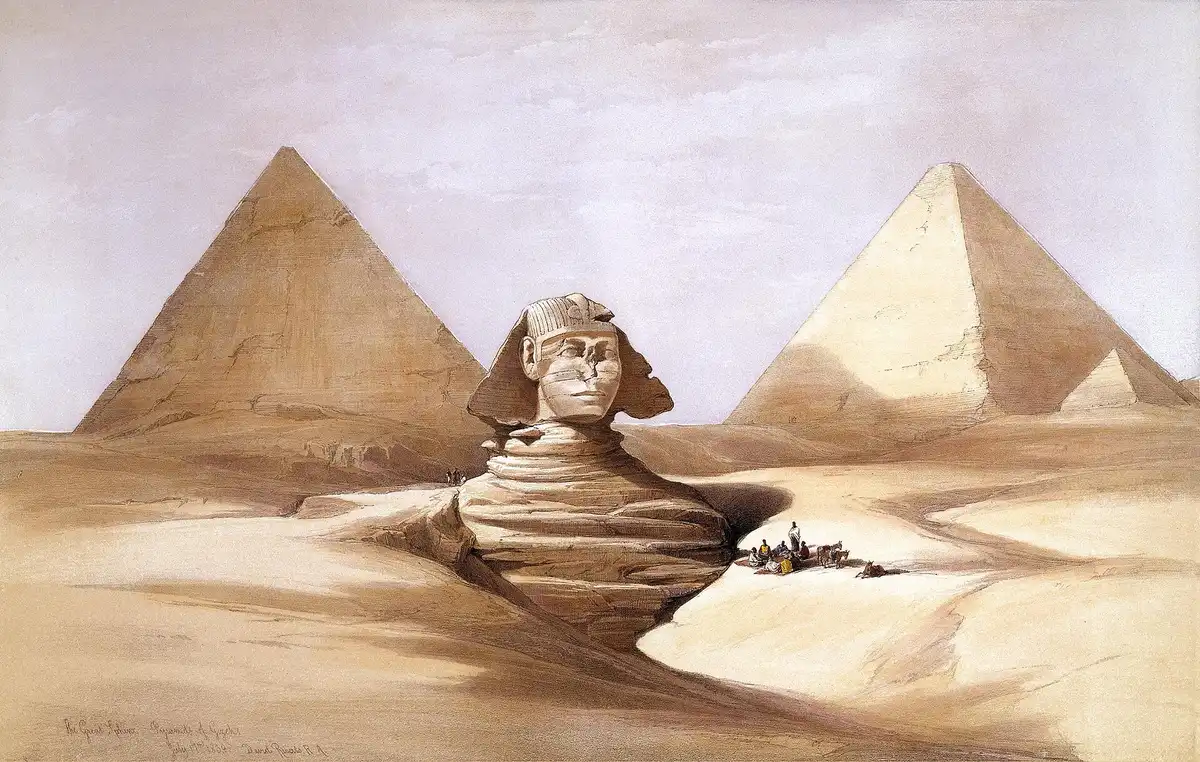
The Old Kingdom is associated with the construction of massive pyramids, exemplified by the Giza pyramid complex near Cairo. These were tombs for the pharaohs, while also demonstrating the incredible organizational, surveying, and architectural skills of the ancients.
During the New Kingdom, Egypt rose to become a regional power, expanding its influence into the Near East and Nubia to the south. Many famous pharaohs belong to this period, along with large-scale temple complexes in the Thebes area, home to the Karnak and Luxor complexes.
A unique spiritual heritage is hieroglyphics, a writing system used for religious and administrative texts. The ancient Egyptians also developed a rich polytheistic faith, concepts of the afterlife, and the practice of mummification, linked to the belief in immortality.
Hellenistic period: the Ptolemaic dynasty and Cleopatra
After many centuries of rise and fall, the land along the Nile fell successively into the hands of external powers, including the Persian Empire. A major turning point came when Alexander the Great of Macedonia conquered the region and laid the foundation for a period deeply influenced by Greek culture.
After Alexander passed away, one of his generals established the Ptolemaic dynasty, ruling for many generations with its center in the Mediterranean city of Alexandria. Alexandria became a famous academic and commercial hub of the ancient world, associated with its legendary library and lighthouse.
The last monarch of this line was Queen Cleopatra, a figure associated with the political upheavals between Egypt and Rome. After her defeat, this land was annexed and became a Roman province, closing a period of autonomy that had lasted for thousands of years.
Under Greek and Roman rule, the indigenous culture did not disappear but blended with new elements. Many temples were still built in the traditional style, while Greek became an important language for administration and commerce.
Egypt under Roman rule and the spread of Christianity
During the Roman period, the Nile Delta was an important breadbasket, providing grain for many cities of the empire. Its geographical location connecting Africa, Asia, and the Mediterranean made it strategically important for the economy and military.
Also in the first centuries AD, Christianity gradually spread and took deep root in the community. This led to the formation of the Coptic Orthodox Church, one of the oldest branches of Christianity, leaving a distinct mark on the religious heritage of this land.
When the Roman Empire split, this region belonged to the eastern part, often called the Byzantine Empire. Language, administration, and religious life gradually took on a Byzantine character, before a new wave of history arrived from the Arabian Peninsula.
The process of Islamization from the 7th century
In the 7th century, Arab armies following Islam entered and annexed this land into the rapidly expanding Islamic world. This was one of the most profound turning points, initiating a process of Arabization and Islamization that lasted for many centuries.
A new administrative center was established near the location of modern-day Cairo, gradually replacing the role of Alexandria. Over time, Arabic became the dominant language, and Islam became the religion of the majority of the population, although the Coptic community still maintained its faith.
This transition took place gradually, not instantaneously. Indigenous, Greco-Roman, and Arab-Islamic elements intertwined, creating a distinct identity that still influences Culture of Egypt the contemporary era.
Islamic dynasties: Fatimid, Ayyubid, and Mamluk
After a period under distant Islamic rulers, the land along the Nile gradually became the center of its own powerful dynasties. One of these was the Fatimid dynasty, under which the city of Cairo was founded and developed into a major metropolis.
Associated with Fatimid Cairo is the construction of al-Azhar, a religious and academic institution that later became an influential centre for Islamic education. This scholarly legacy is still referenced when discussing the region’s intellectual traditions.
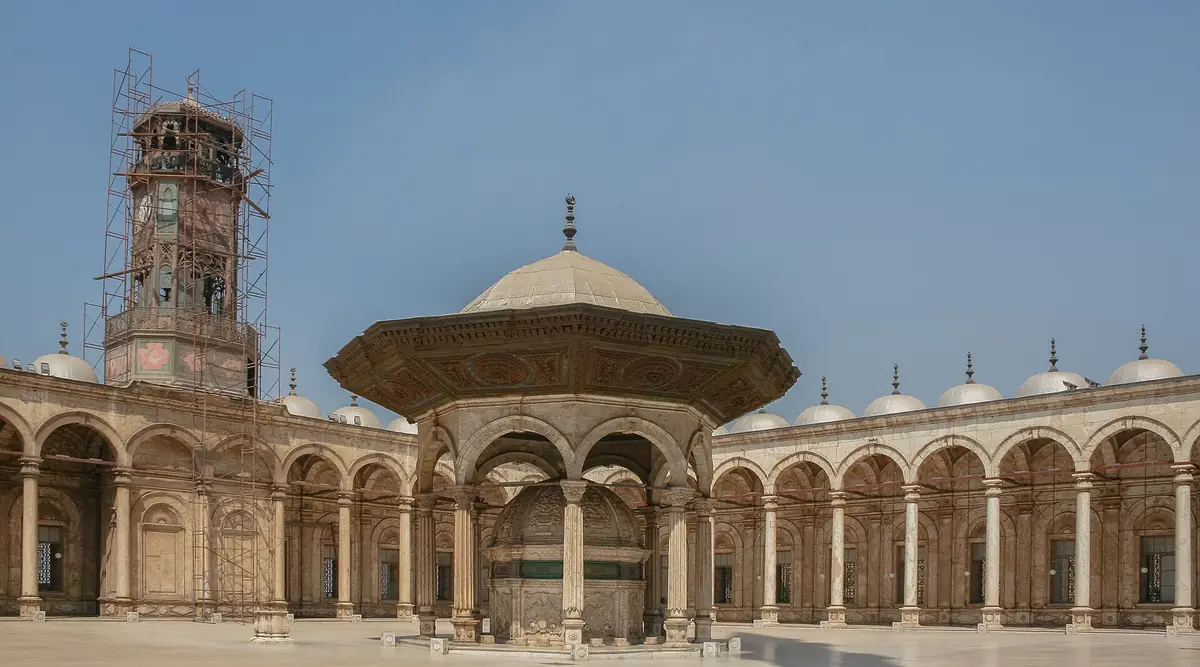
Next came the Ayyubid dynasty, associated with the leader Saladin, who is famous for his conflicts with the Crusaders. This period also left behind many fortified defensive structures, including the Citadel in Cairo.
Power then fell to the Mamluk class, who originated as slave soldiers before rising to rule. Under the Mamluks, Cairo became a vibrant centre of commerce, religion, and architecture, with many mosques and schools featuring distinctive styles.
Successive Islamic dynasties consolidated the region’s position as the heart of the Islamic world. This was also a period that shaped many religious, legal, and artistic values that persist to this day.
The Ottoman period
In the early 16th century, the Ottoman Empire defeated the Mamluks and annexed the region into its vast territory. From then on, the area became an Ottoman province, governed by officials appointed by the court in Istanbul.
Although nominally under Ottoman rule, actual local power sometimes remained in the hands of the remaining Mamluk class. This overlapping of power made the region’s political life complex, with many prolonged internal fluctuations.
Throughout the centuries of Ottoman rule, the land along the Nile remained a vital link on trade routes connecting the Mediterranean with the Red Sea and the Indian Ocean. However, the region’s status gradually changed as European powers expanded their influence.
Muhammad Ali and the modernization process
Entering the 19th century, a particularly influential figure emerged: Muhammad Ali, who rose to power following the chaotic period after the brief French expedition. He is often cited as the founder of the modern state here.
Muhammad Ali implemented a series of reforms in the military, agriculture, industry, and education. He built a modern-style army, encouraged the cultivation of industrial crops such as cotton, and sent people abroad to study new techniques.
Although still nominally part of the Ottoman Empire, under Muhammad Ali and his successors, the region gained increasing autonomy. His dynasty continued to rule for generations, leaving a deep mark on the modernization process.
However, the ambition for rapid development also brought a massive cost burden. Loans from Europe to build infrastructure gradually placed the region in a state of financial dependency, paving the way for intervention by outside powers.
The Suez Canal and European intervention
One of the projects that changed the strategic position of this land was the Suez Canal, connecting the Mediterranean with the Red Sea. This waterway significantly shortened the maritime journey between Europe and Asia, becoming a global trade artery.
The construction of the canal required significant capital and manpower, while also increasing the involvement of European powers in the region’s internal affairs. Financial difficulties caused control of the canal to gradually fall into foreign hands.
The importance of the Suez Canal made it a focal point for power struggles for many decades thereafter. Control of this route was closely tied to the strategic calculations of empires, especially Britain.
British protectorate and independence in 1922
In the late 19th century, Britain established de facto control over the region, partly to protect its interests in the Suez Canal. Although the Ottoman title persisted for a time, British influence increasingly dominated political and economic life.
Nationalist sentiment rose strongly among the populace, leading to movements demanding self-determination. Faced with this pressure, Britain announced the granting of independent status in 1922, making the region a kingdom with a king at its head.
However, the independence of this period was still limited. Britain maintained significant influence in defense matters and especially in its interests in the Suez Canal, causing the conflict between the aspiration for autonomy and the foreign presence to continue to simmer.
The kingdom period witnessed the formation of parliamentary institutions, political parties, and the press. This was also a period when many modern ideological trends were introduced, laying the foundation for major political shifts in the mid-20th century.
The 1952 Revolution and the birth of the republic
The turning point that shaped the modern political landscape came in 1952, when a group of military officers staged a coup, overthrowing the monarchy. This event is often seen as the starting milestone for the republic.
After the revolution, the monarchy was abolished and a republican system was established. A prominent leader in the early period was Gamal Abdel Nasser, who later became president and had a major influence on the entire Arab region.
To better understand how the state apparatus operated after this period, one can refer further to Egyptian politics with the current presidential, governmental, and parliamentary model.
The revolution also opened a period of far-reaching social reform, from land redistribution to expanding the state’s role in the economy. These policies reshaped the social structure in a direction quite different from the kingdom era.
The Nasser era: nationalization of the Suez Canal and Arab nationalism
A major mark under Nasser was the decision to nationalize the Suez Canal, asserting sovereignty over the strategic waterway. This decision led to a serious international crisis, attracting the intervention of many powers.
Nasser was also known as a symbol of Arab nationalism, promoting the spirit of solidarity among countries in the region. His ideology had an influence that extended beyond borders, impacting Middle Eastern politics for many years.
Domestically, the government promoted industrialization and large infrastructure projects, most notably the large dam on the Nile in the south. The goal was to control flooding, expand irrigation, and provide electricity for development.
Contemporary Egypt from the late 20th century to the present
After the Nasser era, the country went through many leaders with adjustments to domestic and foreign policy. These periods witnessed both efforts to open up the economy and challenges regarding society, population, and employment.
In the early 2010s, the region experienced a wave of strong political volatility, leading to many changes in leadership and institutions. This is a sensitive period, so this section only outlines general trends without delving into assessments of parties or individuals.
Entering the recent period, the state has focused on large-scale infrastructure projects, expanding the Suez Canal and developing new urban areas. Cairo remains the political, economic, and cultural centre, and is home to the headquarters of many regional organizations.
Looking back at the entire history of Egypt, one can see a common thread: the ability to absorb and harmonize many cultures, from the pharaonic, Greco-Roman, and Islamic to the modern. It is this depth that creates the nation’s special position in the region and the world.
Historical heritage and the role of conservation organizations
The depth of thousands of years has left a massive treasure trove of heritage, from pyramids, temples, and tombs to ancient citadels and mosques. Many of these sites have global value and attract researchers and tourists from all over.
According to the United Nations Educational, Scientific and Cultural Organization (UNESCO), many sites here have been inscribed as World Heritage, reflecting the outstanding value of successive civilizations. The list and detailed information are published on the official website of UNESCO.
Preserving these heritage sites requires long-term effort, balancing tourism development with the preservation of original values. This is also an important part of how the nation connects its glorious past with the present.
For those who want to learn deeply, historical heritage is not just a tourist destination but also a key to understanding the identity of an entire nation. Each structure carries within it the story of a period in the flow of time.
Accompanying you on your journey in residency investment
The Prosperous Living Investment team advises on pathways, assesses profiles and manages investments transparently for every residency, citizenship and international property objective.
Free profile assessmentWhere life gets prosperous