

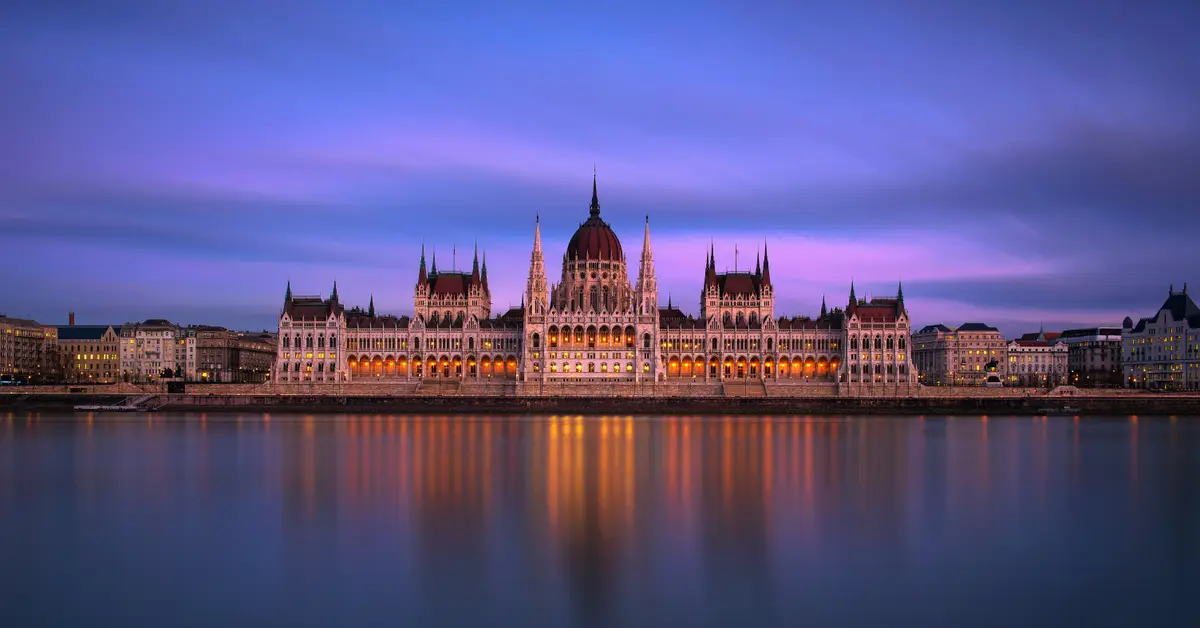
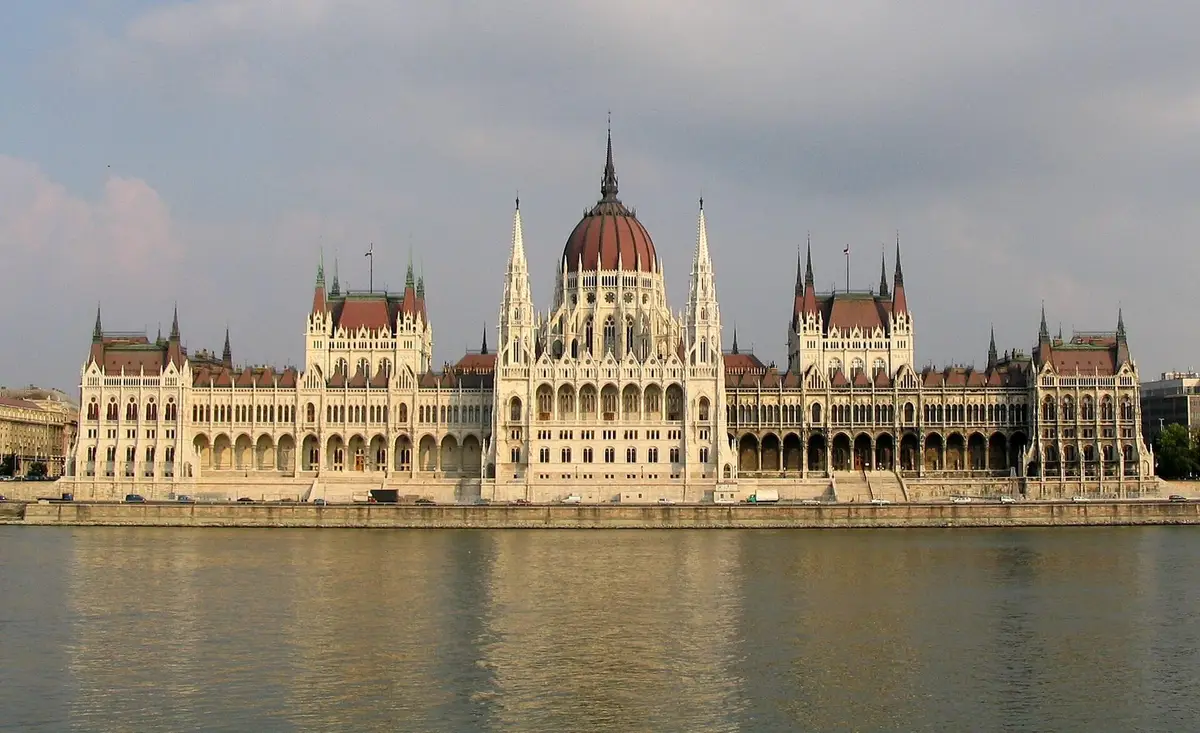
Hungarian politics operate under a parliamentary republic model, with a unicameral National Assembly playing a central role. The head of government is the Prime Minister, while the President is the head of state with functions that are largely ceremonial. The fundamental legal framework is the Fundamental Law, which has been in effect since 2012.
Contents
Overview of the Hungarian political system
Hungary is a parliamentary republic located in Central Europe, with its capital, Budapest, situated on the Danube River. In this model, state power is divided between the legislative, executive, and judicial branches, following the principle of checks and balances. The National Assembly is the highest representative body, directly elected by voters.
When exploring Hungarian politics, the core point to grasp is the distinction between the two top positions. The Prime Minister leads the government and holds the actual executive power of the country. Meanwhile, the President serves as the head of state with functions that are largely symbolic and ceremonial, similar to many other parliamentary republics in Europe.
The current state apparatus is based on the Fundamental Law, the document that serves as the nation’s constitution. Furthermore, Hungary is a member of many important international institutions, which help shape part of its legal and foreign policy framework. To understand the context of the institutional formation, one can refer further to History of Hungary.
Considering a residency programme? The Prosperous Living Investment team assesses your profile free of charge and advises on the pathway that fits your goals.
The 2011 Fundamental Law and constitutional foundation
The current constitutional document of Hungary is the Fundamental Law of Hungary, which was adopted by the National Assembly in 2011 and entered into force on 01/01/2012. This is the foundational act that defines the structure of the state, the fundamental rights and obligations of citizens, and the operating principles of public authorities.
The Fundamental Law replaced the previous constitution, which had its origins in the period before 1989, although it had undergone many extensive amendments during the democratic transition. The enactment of the new document is considered a step in the process of completing the legal framework after the country transitioned to a multi-party democracy and a market economy.
In terms of content, the foundational act establishes Hungary as an independent, democratic state governed by the rule of law, while also recognizing principles such as the separation of powers, the protection of human rights, and the role of law. The document also specifies the procedure for constitutional amendments, whereby changes must be passed by the National Assembly with a special majority.
The unicameral National Assembly and Hungarian legislative politics
The legislative body of Hungary is the National Assembly (Országgyűlés), which operates under a unicameral model. This is the highest state power body, holding the functions of law-making, passing the national budget, and overseeing the government’s activities. In the overall Hungarian political landscape, the National Assembly is the central institution because the executive government is formed from it.
Members of the National Assembly are directly elected for a four-year term. The electoral system combines single-member district voting with national party-list voting, aiming to reflect both local representation and the general support of voters.
Besides its legislative function, the National Assembly also exercises important personnel powers. This body elects the President, the Prime Minister, and several other high-ranking positions within the state apparatus. Detailed information on the organization and activities of the legislative body is published on the portal of The National Assembly of Hungary.
The National Assembly is also where questioning and policy debates between groups of members take place. Through specialized committees, this body participates in drafting and reviewing bills before they are put to a vote at plenary sessions.
The role of the Prime Minister and the government
The Prime Minister is the head of the executive branch and the figure who holds the actual power to run the country. According to the Fundamental Law, the Prime Minister is elected by the National Assembly based on the nomination of the President, usually representing the force that holds the majority of seats in the legislature after an election.
After taking office, the Prime Minister forms the government and selects ministers to oversee different sectors. The government is responsible for planning and implementing national policy, from the economy and foreign affairs to social welfare. The government’s activities are published via the official portal of The Government of Hungary.
A feature of the parliamentary model is that the government must be accountable to the National Assembly. A constructive vote of no confidence is applied, whereby the dismissal of the Prime Minister is usually linked to the nomination of a successor. This mechanism aims for the stability of the executive branch.
The executive branch plays an important role in coordinating resources and directing development. Government policy has a direct impact on the business environment, thereby being closely linked to the Hungarian economy.
The President as head of state
The President is the head of state of Hungary, representing the unity of the nation. Unlike the presidential model, this position in Hungary is primarily ceremonial and symbolic, and does not directly manage the daily work of the government.
The President is elected by the National Assembly for a five-year term. Among the constitutional powers, the President performs the nomination of the Prime Minister for the National Assembly to elect, signs laws into effect, represents the country in foreign relations, and performs several ceremonial state functions.
Although most actual power belongs to the Prime Minister and the government, the President’s role remains important in maintaining the continuity and stability of the institution. In some cases, the President can send a piece of legislation for review before signing it into law, thereby contributing to the general system of checks and balances.
The judicial system and the Constitutional Court
The Hungarian judicial system is organized on the principle of independence, separate from the legislative and executive branches. Courts perform the function of adjudication, resolving civil, criminal, and administrative cases based on current law. The court structure consists of several levels, with a supreme court at the head of the ordinary judicial system.
Besides the ordinary court system, Hungary has a Constitutional Court, which is a separate institution. This body has the task of protecting the Fundamental Law, reviewing the constitutionality of laws and legal documents, and resolving certain types of complaints related to constitutional rights.
The Constitutional Court plays an important role in ensuring that legal regulations are consistent with the constitutional framework. Through the activity of constitutional interpretation, this institution helps shape the boundaries of power between state agencies, supporting the maintenance of the rule of law.
Members of the Constitutional Court are elected by the National Assembly for terms prescribed by law, with requirements regarding legal expertise. The separation between the constitutional review body and the ordinary court system is a common feature in many democratic institutions in continental Europe, aiming to clearly distinguish the function of ordinary adjudication from the function of constitutional control.
The principle of judicial independence is recognized as a pillar of the judicial system. Accordingly, judges adjudicate on the basis of the law and are not subject to interference during the decision-making process, thereby ensuring the objectivity and reliability of judicial activity throughout the system.

Administrative division by counties
Regarding territorial administrative organization, Hungary is divided into counties (megye), which are the traditional regional administrative units of the nation. Additionally, the capital, Budapest, has a special status, organized separately from the county system due to its role as a political, economic, and administrative centre.
Each county consists of many smaller administrative units such as cities, towns, and villages. Local governments are granted self-governing powers in certain areas, serving the needs of the local population.
Local governments are elected by local voters for a term, assuming tasks such as managing public services, infrastructure, and local planning. This mechanism creates a connection between central governance and the practical needs of each area, while also reflecting the multi-level structure of the state apparatus.
Hungary’s county system has a long historical origin, linked to the process of forming the nation’s territorial organization over many periods. Today, the counties are arranged in parallel with regional statistical units used within the general framework of the European Union, serving the work of planning and allocating development resources.
Each county typically has its own representative body and administrative apparatus to coordinate local affairs. The decentralisation between the central, county, and local levels is designed to balance uniform state administration with the self-governance of local communities.
Hungary in the European Union and NATO
Internationally, Hungary has been a member of the European Union (EU) since 2004 and a member of the North Atlantic Treaty Organisation (NATO) since 1999. These two memberships shape a significant part of the country’s domestic and foreign policy.
As a member of the European Union, Hungary participates in the single market and is subject to the bloc’s common legal framework in many areas. The country is also part of the Schengen Area, which allows for the free movement of people across internal borders. However, Hungary still uses its own national currency, the forint, rather than the euro.
Regarding defence and security, NATO membership binds Hungary to the collective defence commitments of the transatlantic military alliance. Furthermore, the country participates in many other international and regional organisations, thereby integrating deeply into global political life.
Membership in multilateral institutions presents both opportunities and obligations for Hungary in coordinating policy with its partners. This is a characteristic aspect of political life in countries belonging to Hungary in particular, and Central Europe in general.
Elections and citizen political participation
Hungary holds parliamentary elections every four years, providing an opportunity for citizens to exercise their fundamental political rights. In addition to national legislative elections, voters also participate in local government elections and elect representatives for Hungary to the European Parliament.
The right to vote is granted to citizens who meet the legal age requirements. Beyond elections, citizens can participate in political life through referendums on certain important issues, according to the procedures and conditions prescribed by law.
Citizen participation, along with the activities of political parties and social organisations, creates a diverse picture of parliamentary democracy. Electoral institutions are operated to ensure the representation and accountability of those entrusted with state power.
Accompanying you on your journey in residency investment
The Prosperous Living Investment team advises on pathways, assesses profiles and manages investments transparently for every residency, citizenship and international property objective.
Free profile assessmentWhere life gets prosperous