


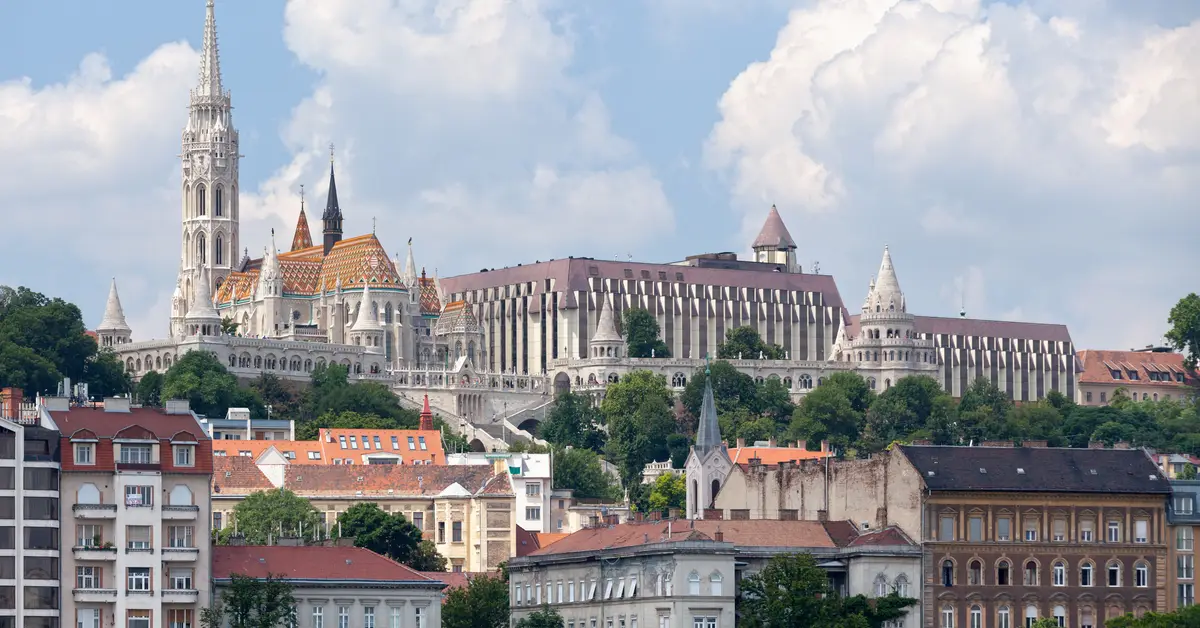
Hungarian culture is a unique intersection of Central European heritage and a distinct Magyar identity, expressed through a unique language, music, the architecture of Budapest, a tradition of thermal baths, and a paprika-rich cuisine that has evolved over centuries.
Contents
Hungarian cultural identity in the heart of Central Europe
Located in the Carpathian Basin, Hungarian culture bears the mark of a people with origins distinct from the majority of their Slavic or Germanic-speaking neighbours. The Magyar people arrived in this region at the end of the 9th century, bringing their own language and customs. Over more than one thousand years, this identity has been persistently preserved.
Its central European location has made Hungary a meeting point for many cultural currents. Ottoman rule, the influence of the Habsburgs, and the socialist era have all left their traces on the architecture, cuisine, and lifestyle. However, Hungarians have always been very conscious of their Magyar roots.
To fully understand this picture, one can place the culture in the broader context of Hungary — a landlocked nation, a member of the European Union, with its capital, Budapest, situated on the Danube. It is this interweaving of tradition and modernity that creates the unique charm of the local culture.
Considering a residency programme? The Prosperous Living Investment team assesses your profile free of charge and advises on the pathway that fits your goals.
The Hungarian language and the unique Finno-Ugric language family
One of the most prominent features of Hungarian culture is its language. Hungarian, or Magyar, belongs to the Finno-Ugric language family, not the Indo-European family like most European languages. Its closest relatives are Finnish and Estonian, although the distance remains significant.
This characteristic makes Hungarian sound unique and difficult to learn for speakers of neighbouring languages. The language uses an agglutinative structure, in which suffixes are connected sequentially to the root word to express grammar. A noun can carry many suffixes in place of prepositions.
The Hungarian alphabet is based on the Latin script but includes many accented vowels and characteristic consonant combinations. The preservation of the language is considered a pillar of national identity. Hungarian is the national language and is closely tied to Demographics of Hungary, where the majority of the population is Magyar.
Classical and folk music in Hungarian culture
Music holds a formal position in the spiritual life of Hungarians. The country has produced great names in world classical music. Franz Liszt (Liszt Ferenc), a 19th-century pianist and composer, is considered one of the musical icons associated with Hungary.
In the 20th century, two composers, Béla Bartók and Zoltán Kodály, painstakingly collected and recorded a treasure trove of folk songs throughout rural areas. They incorporated folk material into academic works and laid the foundation for ethnomusicology. The Kodály method of music education later spread to many countries.
Alongside the classical genre, traditional folk music remains vibrant. The dance house (táncház) movement revives folk dances and songs, attracting large numbers of young people. This is a cultural practice internationally recognised as a model for living heritage preservation.
Roma music also contributes a unique nuance, with string bands that once performed widely in restaurants and at festivals, enriching Hungary’s diverse soundscape.
Today, musical life continues to be vibrant with symphony orchestras, opera houses, and large-scale music festivals. The Hungarian State Opera in Budapest is a long-standing performance space, while many summer festivals bring music to young audiences across the country.
Literature and intellectual contributions
Hungarian literature developed in parallel with national consciousness, especially from the 19th century. The poet Sándor Petőfi is an icon associated with the patriotic movement and the 1848 revolution. His poetry is considered the voice of the aspiration for freedom.
In the 20th century, the Hungarian literary scene continued to have many important writers reflecting historical upheavals. Some works about the experience of war and the totalitarian period have been translated into many languages, bringing Hungarian literature to international readers.
Hungarians are also proud of their scientific and intellectual traditions. Many scientists of Hungarian origin have made significant contributions to mathematics, physics, and other fields on the international stage. The spirit of studiousness is linked to a depth of History of Hungary and a tradition that values knowledge.
Budapest architecture and urban heritage
The capital, Budapest, is a convergence of architectural excellence, formed by the unification of three areas: Buda, Óbuda, and Pest on both banks of the Danube. The city skyline blends many styles, from Baroque and Neoclassical to Art Nouveau.
The Hungarian Parliament Building on the banks of the Danube is one of the most iconic structures, with its massive Neo-Gothic architecture. Buda Castle, Matthias Church, and Fisherman’s Bastion on Buda Hill are also important historical highlights.
The historic centre of Budapest, along with the Danube riverbanks and Andrássy Avenue, is listed as a UNESCO World Heritage site, according to data published on the official website of UNESCO. The city’s metro system is also among the oldest in continental Europe.
Outside the capital, historic towns and villages still preserve traditional architecture, old churches, and folk villages that reflect rural life over many centuries.
The thermal bath tradition characteristic of Hungarian culture
Few nations are as deeply attached to thermal springs as Hungary. Thanks to the abundant geothermal sources located underground, the country possesses many natural hot mineral water sources. The tradition of mineral bathing has become an inseparable part of Hungarian culture.
This practice has roots in the Roman era, was further developed by the Ottomans during their rule, and continued to flourish under the Habsburgs. Budapest is sometimes called the city of spas due to the high density of public baths.
Baths such as Széchenyi and Gellért are famous locations, combining magnificent architecture with relaxation and healing functions. Local people view soaking in hot mineral water as both a health-care habit and an occasion for meeting, chatting, and community relaxation.
This tradition is closely tied to the specific geological conditions mentioned in national geography documents, turning a natural resource into a unique cultural activity.
Hungarian cuisine with the soul of paprika
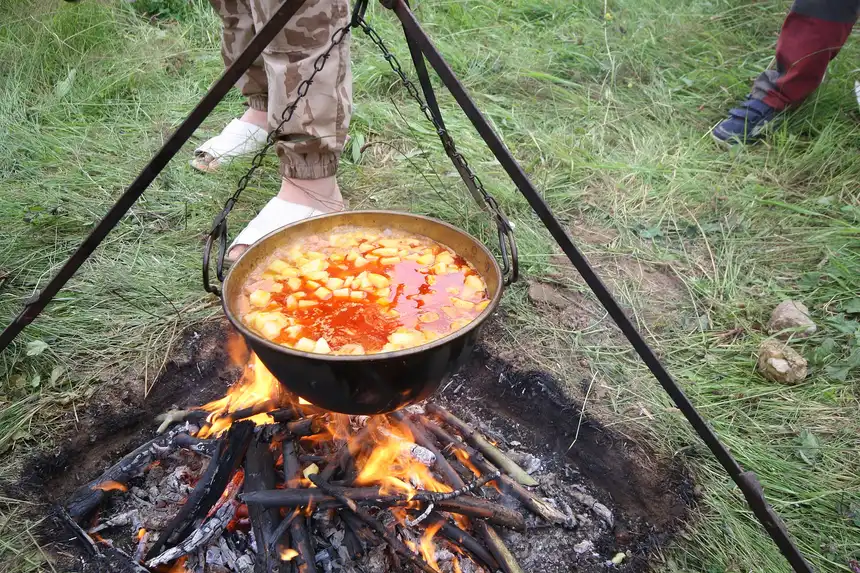
Cuisine is one of the most attractive gateways to exploring Hungarian culture. The soul of this cuisine is paprika — a red chilli powder used widely, bringing characteristic colour and flavour to many dishes. Paprika has become a symbol associated with the Hungarian kitchen.
The most famous dish is perhaps gulyás (goulash), a type of soup or stew made from meat, onions, vegetables, and paprika. Contrary to the common Western understanding, traditional gulyás is usually a thinner soup rather than a thick stew.
A popular street food is lángos, a type of deep-fried dough often served with sour cream and grated cheese. In addition, meat stews like pörkölt and paprikás are also very common in family meals.
Hungary also has a long-standing tradition of winemaking. The Tokaj region is famous for its specialty sweet wine, while many other regions produce diverse red and white wines, contributing to the enrichment of the country’s culinary culture.
Cakes and desserts are also a source of pride for Hungarians. Cakes such as dobos and kürtőskalács chimney cakes roasted over glowing coals often appear during festivals. The pastry shop culture (cukrászda) is linked to the urban habit of enjoying coffee and leisurely conversation.
Festivals, customs, and daily life
Hungarian cultural life is rhythmically adorned with festivals and national anniversaries. Holidays associated with the history of nation-building and milestones in the struggle for freedom are solemnly remembered by the people. These are occasions to evoke national pride.
Major annual cultural and music festivals attract visitors from all over. Easter customs, such as sprinkling water and gifting decorated eggs, remain delightful folk traditions maintained in many regions.
In daily life, Hungarians value family, hospitality, and shared meals. The urban café culture, particularly in Budapest with its historic coffee houses, once served as a meeting place for intellectuals and artists.
Traditional handicrafts such as lace embroidery, ceramics, and wood carving are still preserved in craft villages, reflecting the folk skills and aesthetics passed down through generations.
Internationally recognised folk heritage
Hungary actively preserves and promotes its intangible cultural heritage to the world. Many of the country’s traditional practices have been included in intangible cultural heritage lists, according to information from UNESCO.
Among these is the dance house movement, a model for teaching and preserving folk dance heritage, alongside various craft practices and traditional festivals. These legacies demonstrate the community’s persistent efforts to maintain its identity.
Registration not only signifies recognition but also promotes research, teaching, and the promotion of values for the younger generation. Consequently, traditional cultural values continue to be nurtured and spread.
The synthesis of language, music, cuisine, architecture, and customs has created a culture of great depth, both distinct in identity and open to global exchange.
For those exploring it, Hungarian culture offers many layers of discovery: from a language unlike any of its neighbours, to renowned classical melodies, ancient thermal baths, and the unforgettable flavour of paprika. All blend into a living heritage, continuously passed down and renewed through each generation.
- The Magyar language belongs to the Finno-Ugric family, distinct from its neighbours.
- Classical music is associated with Liszt, Bartók, and Kodály.
- The tradition of thermal bathing is highly concentrated in Budapest.
- Cuisine takes paprika as its soul, exemplified by gulyás and lángos.
Religion, beliefs, and community values
Religion has played a role in shaping many aspects of Hungarian culture throughout history. Since King Saint Stephen I established Christianity as the state religion around the year 1000, faith has been closely linked to national identity and the spiritual life of the people.
The Roman Catholic community accounts for a significant proportion, alongside Protestants, particularly Calvinists and Lutherans. This religious diversity reflects the reform movements and the complex history of the Central European region over many centuries.
Many ancient churches, monasteries, and religious structures have become precious architectural heritage sites, as well as spaces for community life. Life-cycle rituals such as baptisms, weddings, and funerals still retain traditional features cherished by many families.
Although society is increasingly secularised, values associated with family, community cohesion, and hospitality are still highly regarded by Hungarians. These values form a sustainable spiritual foundation for contemporary cultural life.
Sports and national spirit
Sport is a proud part of Hungarian culture and frequently ignites national spirit. The country has a distinguished competitive tradition at the Olympic Games, particularly in sports such as fencing, swimming, canoeing, and water polo.
Water polo is considered one of the sports linked to national pride, with the Hungarian team having achieved many major successes on the international stage. This tradition is partly related to the water and pool culture that is very popular here.
Football also holds a special place in the memories of fans, linked to the golden era of the national team in the mid-20th century. The football legends of that era are still mentioned with reverence.
Traditional and modern sports are not only recreational activities but also occasions for the community to gather, express identity, and bond. Sport thus becomes an indispensable piece of the overall cultural picture.
Accompanying you on your journey in residency investment
The Prosperous Living Investment team advises on pathways, assesses profiles and manages investments transparently for every residency, citizenship and international property objective.
Free profile assessmentWhere life gets prosperous