
United States
California billionaire tax heads to the November ballot as Governor Newsom rejects compromise
A proposed one-off 5% wealth tax on roughly 200 California billionaires has qualified for the November 2026 ballot;…


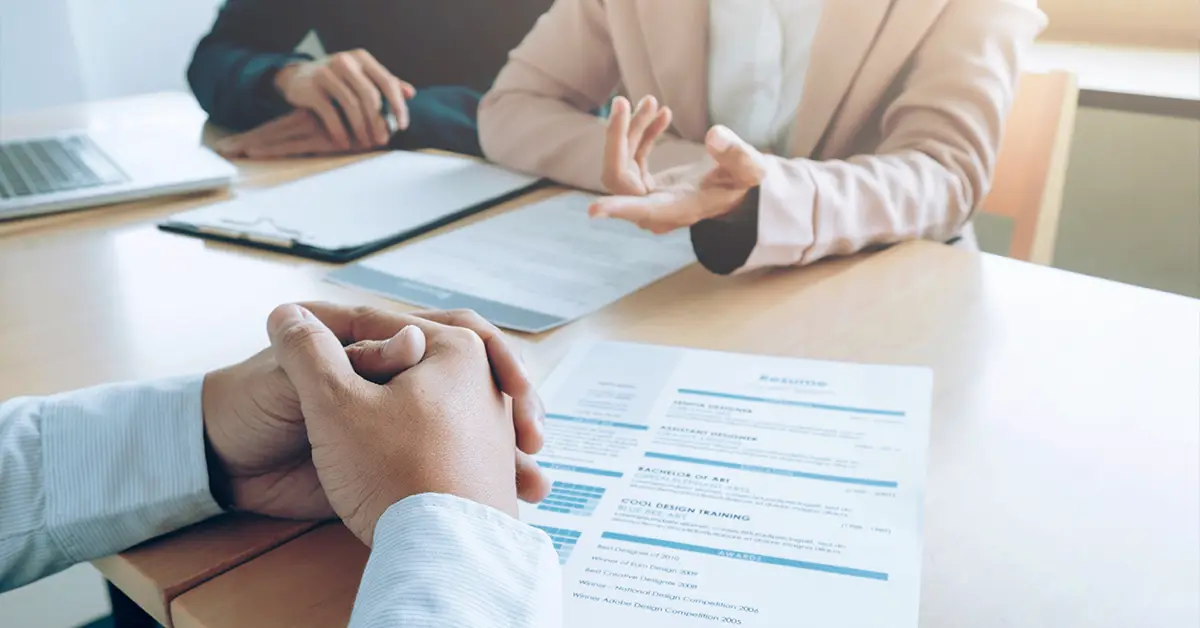
An immigration interview at a United States Embassy or Consulate is a pivotal step determining the outcome of a visa application – whether for a tourist visa (B-1/B-2), student visa (F-1), work visa (H-1B), investor visa (E-2), or family-sponsored immigrant visa (CR-1, IR-1). Many applications are refused not because applicants are unqualified, but because of poor preparation, inconsistent answers or avoidable mistakes during the interview.
This article compiles 10 practical tips to help applicants feel more confident and increase their chances of approval for any United States visa type.
Each visa type has distinct requirements, and consular officers evaluate applications against different criteria. Applicants must understand the visa type they are applying for, the legal eligibility conditions, and what the consular officer wants to verify.
Failing to understand the visa type you are applying for is a fundamental yet common mistake – many applicants cannot explain why they are applying for that specific visa or how the visa programme works.
Considering a residency programme? The Prosperous Living Investment team assesses your profile free of charge and advises on the pathway that fits your goals.
Consular officers face heavy time pressure – each interview typically lasts only 2–5 minutes for non-immigrant visas and 10–20 minutes for immigrant visas. A well-prepared and logically organised application helps applicants project a professional impression and saves time for the officer.
Bring originals and copies of all documents requested in your interview appointment letter. Organise documents in logical order: passport, DS-160 confirmation page, fee receipt, photographs, followed by supporting documents grouped by category (finances, employment, family, purpose of trip). If documents are not in English, prepare certified English translations. Bring additional supporting documents even if not officially requested – such as property deeds, employment contracts, business documents – to have them ready if the officer requests supplementary information.
Honesty is the number one rule in immigration interviews. Consular officers are trained to detect inconsistencies, and any inaccurate information – no matter how minor – can lead to immediate refusal and even a permanent ban for fraud.
Ensure every answer in the interview matches the information declared on your DS-160 form and submitted documents. If your DS-160 states tourism as the purpose of your trip but your interview mentions job hunting, your application will almost certainly be refused.
If you do not know the answer to a question, stating clearly “I am not sure” is far better than guessing or fabricating information. Especially for marriage-based visas, officers will ask detailed questions about the relationship (date of met, circumstances of meeting, daily routines) – both spouses should review timelines and key details to avoid discrepancies.
One of the most common mistakes is talking too much. Consular officers ask specific questions and expect concise, direct answers. Lengthy, rambling explanations or volunteering unrequested information can arouse suspicion or create the impression that the applicant is trying to hide something.
The golden rule: answer the question asked, nothing more and nothing less. If the officer asks “What is the purpose of your trip?”, a good answer is “Tourism, I want to visit New York and Los Angeles for 2 weeks” – there is no need to recount your detailed day-by-day itinerary unless asked further. If the officer wants to know more, they will follow up.
For all non-immigrant visas, this is the most critical factor. The consular officer must be convinced that the applicant will return home after the visa expires – rather than remaining in the United States illegally. “Ties” include every element that binds the applicant to their home country: stable employment, an operating business, property ownership, family (especially a spouse and children remaining behind), financial obligations, career opportunities, and clear future plans in the home country.
Prepare documents to prove these ties: employment contracts, business licences, land titles, payslips, children’s birth certificates, and a letter from your employer confirming your position will be held after your trip. Young, unmarried applicants without significant assets are often perceived as having weaker ties – this group must prepare more thoroughly to compensate.
The officer must be convinced that the applicant has the financial capacity to cover the trip (or stay in the US) without needing to work illegally. Prepare savings books, bank statements for the last 3–6 months, property ownership documents, and payslips or income tax records.
For student visas, if a relative is sponsoring the costs, bring documents proving the sponsor’s financial status and a letter of commitment. For family sponsorship visas, the sponsor in the US must prove their income meets the minimum threshold (125% of the federal poverty guidelines) via Form I-864 (Affidavit of Support). Avoid presenting unusual financial activity – for example, a sudden, large spike in account balance right before the interview raises doubts about authenticity.
First impressions are crucial in an interview that lasts only a few minutes. Your attire does not need to be overly formal, but it should be clean, neat, and appropriate for the context – equivalent to what you would wear to a job interview.
Men should wear a collared shirt, trousers, and closed shoes. Women should wear a shirt or blouse, trousers, or a skirt of modest length. Avoid overly casual clothing (shorts, flip-flops, tank tops), excessive jewellery, or heavy makeup. The goal is to project a serious, reliable image.
Arrive at the Embassy or Consulate at least 15–30 minutes before your appointment time. The entry security process (checking bags and electronic devices) can be time-consuming, and arriving late may cause you to lose your interview slot.
Throughout the interview, maintain a calm, polite, and confident demeanour. Look directly at the officer when answering (natural eye contact), and speak clearly and audibly. Nervousness is natural, but excessive anxiety – stuttering, avoiding eye contact, fidgeting, or wringing your hands – may be interpreted by the officer as a lack of confidence or an attempt to hide something. If you feel stressed, take a few deep breaths before entering the interview room.
Never argue with the consular officer, even if you feel a question is unfair. If your visa is refused, remain calm and ask for the reason for the refusal so you can better prepare for your next application.
Interviews at the United States Embassy are usually conducted in English. If English is not your native language, you should practise communicating in English before the interview – especially by practising answers to common questions.
However, there is one important principle: practise ideas and phrasing, not memorised scripts. Answers that are too fluent and sound like they are being read from a prepared text will cause suspicion. The officer wants to hear natural answers that reflect your genuine thoughts.
If you do not understand a question, ask the officer to repeat or explain it – this is perfectly normal and much better than guessing and answering incorrectly. If your English is too weak, you may request an interpreter at certain consulates.
For non-immigrant visas (tourism, study, work), the officer wants to interview the applicant directly – not parents, spouses, or an impromptu interpreter. Bringing family into the interview room creates a negative impression that the applicant is not capable of presenting their own profile. If the applicant is a minor, parents may wait in the waiting area and only enter to assist if the officer requests.
For marriage-based immigrant visas, both the beneficiary and the sponsor (if present) may be interviewed together or separately, depending on the officer. The interview appointment letter from the National Visa Center (NVC) will list who needs to be present – follow this list exactly.
Although each visa type has its own specific questions, some common questions that applicants should prepare for include: the purpose of the trip or reason for the visa application, the expected duration of stay in the United States, who is sponsoring the costs and how, current occupation and income, plans after the trip ends or after completing the programme, previous international travel history, and family relationships (especially who is remaining in the home country and who is currently in the US).
For student visas, common additional questions include: why you chose this school and field of study, what you will do after graduation, and how English will be useful when you return home. For E-2 investment visas, questions focus on the business: type of business, source of capital, expected number of employees, and development plans. For marriage-based immigrant visas, questions detail the relationship: when and where you met, who introduced you, how many times you have met, and how you communicate.
Besides the 10 tips above, applicants should also avoid several common mistakes.
Submitting fake or altered documents – consular officers have the ability to detect fake documents, and the consequences are very serious: permanent visa refusal under section 212(a)(6)(C) of the Immigration and Nationality Act. Expressing an intention to stay in the US long-term while applying for a non-immigrant visa – for example, saying “I want to find a job in the US” while interviewing for a tourist visa.
Providing too much information that was not asked for – the officer may use any information you provide to evaluate your profile, and unnecessary information can sometimes be detrimental. Forgetting to double-check your DS-160 form before the interview – discrepancies between the application form and interview answers are the biggest “red flag”.
A United States immigration interview is an opportunity for you to prove you are a suitable candidate – it is not an insurmountable barrier. With thorough preparation, an honest attitude, and confidence, most applicants can pass the interview successfully. The most important thing to understand is that consular officers are not looking for reasons to refuse – they are looking for evidence to approve.
A proposed one-off 5% wealth tax on roughly 200 California billionaires has qualified for the November 2026 ballot;…

US employment sponsorship via an employment-based green card can take 3 to more than 15 years. An analysis…
President Trump signed an executive order on 19 May 2026 requiring US banks to screen for signs of…
The Prosperous Living Investment team advises on pathways, assesses profiles and manages investments transparently for every residency, citizenship and international property objective.
Free profile assessmentWhere life gets prosperous
We use analytics cookies (Google Analytics) to understand how this site is used. They stay off until you agree. Privacy policy.