

The H-1B visa

The H-1B visa is a non-immigrant visa in the United States allowing US employers to hire foreign workers in specialty occupations. The visa programmes are administered and delivered by United States Citizenship and Immigration Services (USCIS), an agency of the US Department of Homeland Security (DHS).
Those holding H-1B visa status usually have an initial period of stay of 3 years in the United States. They are permitted a maximum of 6 years of physical presence in H-1B status. After certain milestones in the green card process have been reached, H-1B status may be extended beyond the 6-year limit.
Message
Overview
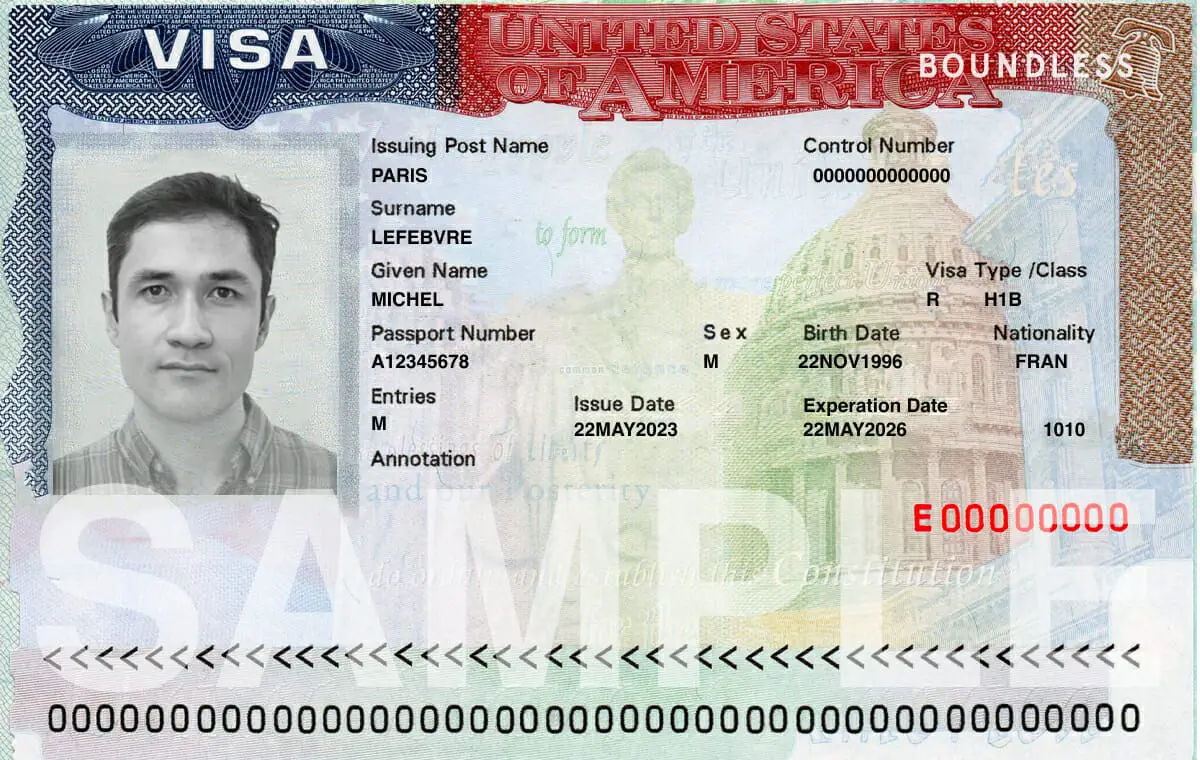
Type: a non-immigrant work visa
Purpose: employment for foreign workers in specialty occupations
Enacted: the Immigration Act of 1990; originating in the H-1 visa of the Immigration and Nationality Act of 1952; amended by the American Competitiveness in the Twenty-First Century Act of 2000 (AC21) and subsequent legislation
Eligibility requirements:
- A bachelor’s degree or higher in a specific specialist field
- A job offer for a specialty occupation
- Employer sponsorship
Duration: initially up to 3 years, extendable to 6 years; may be extended further in certain circumstances (for example, a pending green card application)
Annual limit (cap): new visas/status:
- 65,000 regular cap
- 20,000 additional for those with advanced US degrees
- 1,401 for Chilean nationals (H-1B1)
- 5,400 for Singaporean nationals (H-1B1)
Some employers are cap-exempt, for example institutions of higher education and non-profit research organisations
Extensions/renewals are not subject to the cap
The application process
- (Initially, subject to the cap) The employer submits an electronic registration for the H-1B lottery (introduced in 2020)
- (Initially, subject to the cap) The employer’s registration for a foreign worker is selected
- (All) The employer files a Labor Condition Application (LCA) with the Department of Labor to obtain a certified LCA
- The employer files Form I-129 and supporting documents with United States Citizenship and Immigration Services (USCIS)
- The beneficiary is granted a change of status (within the United States) or uses the approval to apply for a visa at a US embassy/consulate (where abroad; Canadian passport holders do not need a visa)
Dependants: a spouse and unmarried children under 21 are eligible for an H-4 visa
The right to work
- H-1B holders: permitted to work for the sponsoring employer
- H-4 dependants: eligible where the H-1B spouse has an approved I-140 immigrant petition or H-1B status beyond 6 years under AC21
Dual intent: permitted (permanent residence may be pursued)
Oversight: United States Citizenship and Immigration Services (USCIS)
Considering a residency programme? The Prosperous Living Investment team assesses your profile free of charge and advises on the pathway that fits your goals.
The decision to increase the H-1B visa fee
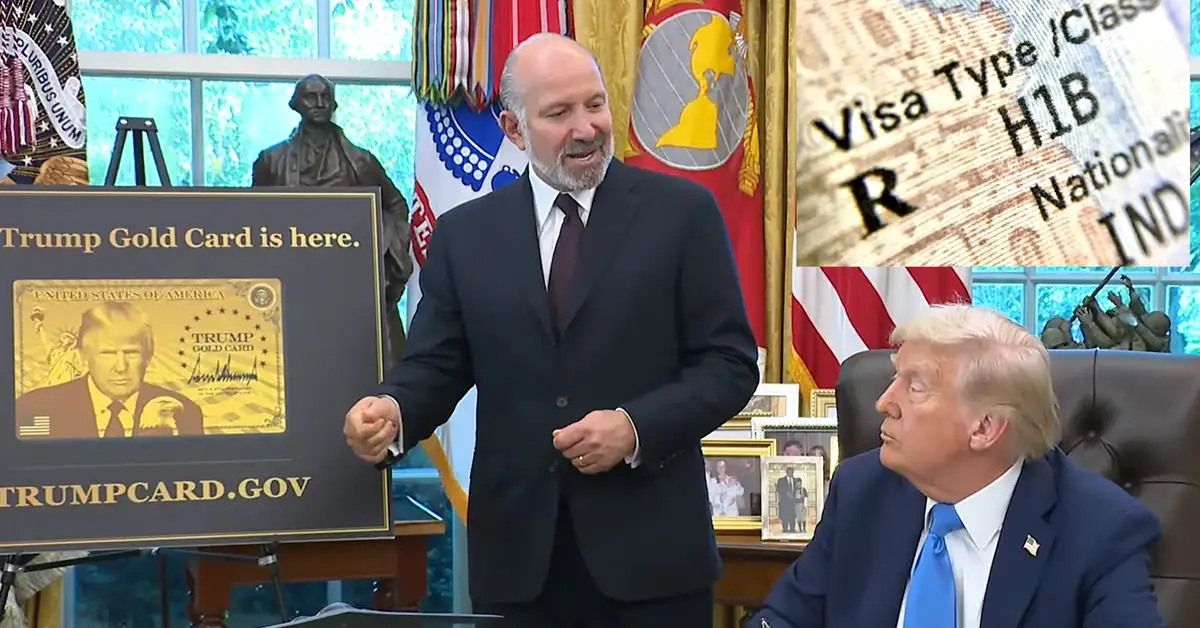
On 19 September 2025, President Donald Trump signed an executive order at the White House, alongside Commerce Secretary Howard Lutnick,applying a new fee of USD 100,000a year for each H-1B visa application. The order took effect on 21 September 2025, but the White House quickly clarified that it applies only to new applications and does not affect current visa holders or those in the fiscal year 2025 lottery.
This brings some comfort to the tens of thousands of foreign workers currently working in the United States, but poses a major challenge for those preparing to apply in future.
The reason behind this decision, according to Mr Trump, is to protect jobs for American workers. In his speech at the ceremony, he stressed that the H-1B programme had been abused by some companies to hire foreign workers at lower wages, thereby competing unfairly with domestic labour. “We must put the interests of American citizens first. Companies want talent? They must pay accordingly,” Mr Trump declared.
Data from 2023 show that Amazon led with more than 11,000 H-1B visas approved, followed by companies such as Cognizant, Infosys and Tata Consultancy Services – many of them headquartered in India. This reinforces Mr Trump’s argument that the programme is “taking away job opportunities from Americans.”
This decision was not entirely unexpected. During the 2024 election campaign, Mr Trump committed to reforming the immigration system, including raising fees and tightening visa programmes such as the H-1B.
This is a continuation of the policies of his first term, when the H-1B visa refusal rate peaked at 15% in 2018 as a result of stricter rules on the definition of a “specialty occupation” and restrictions on placing H-1B workers at third-party companies.
Under President Biden, the refusal rate fell to 2% in 2022, but Mr Trump is now taking a more forceful approach, using financial fees as the main barrier.
The impact on US businesses and foreign workers
The USD 100,000 fee is a considerable financial burden, particularly for large technology companies that depend on the H-1B visa to maintain their workforce.
Corporations such as Amazon, Google and Microsoft, which each hire thousands of H-1B employees a year, may have to spend hundreds of millions of dollars more to maintain their global recruitment strategy.
This may lead to three scenarios: reducing the recruitment of foreign workers, prioritising domestic personnel, or moving part of their operations to other countries such as Canada, India or Ireland, where immigration costs are lower and visa policies more flexible.
For foreign workers, this decision comes as a “shock” to the dream of working in the United States. The H-1B visa has long been the main route for young engineers, programmers and scientists from Asia, particularly India and China, to gain a foothold in the leading technology hubs.
With the new fee, many fear that companies will hesitate to sponsor, particularly for junior or entry-level positions.
However, not everything is negative. Those currently holding an H-1B visa can still extend without incurring the new fee, and large companies may share the cost with employees in order to retain talent.
Moreover, cap-exempt organisations, such as universities and non-profit research institutes, are not affected by this order, creating opportunities for scientists and academics to continue working in the United States.
Reaction
The decision to raise the H-1B visa fee has provoked strongly mixed reactions. Technology associations such as TechNet and the Information Technology Industry Council quickly voiced their opposition, arguing that the new fee will weaken America’s competitiveness in the global race for talent.
“The H-1B visa is the solution, not the problem. It helps us fill the skills gap that American workers have not been able to meet,” a representative from Meta said. Amazon, the company with the largest number of H-1B visas, sent an urgent notice to foreign employees advising them to avoid leaving the United States until clearer guidance is available.
The immigrant community, particularly from India and China, has expressed anxiety on social media platforms such as X. Many have shared personal stories of the difficult journey to obtaining an H-1B visa, and now the new fee may end the dreams of thousands of other young workers. “I spent 5 years studying and working to qualify for the H-1B.
Now a small company like mine cannot pay USD 100,000,” an Indian engineer wrote on X. However, some voices support Mr Trump, arguing that this is a fair way to protect jobs for Americans, particularly against the background of a slight rise in unemployment in some technology sectors in 2025.
In political circles, the H-1B programme has long been a focus of controversy. Some Republican figures, such as former White House adviser Steve Bannon, have called the H-1B “a scam by big tech to replace American workers”.
Meanwhile, technology leaders such as Elon Musk, who himself immigrated to the United States on an H-1B visa, support the programme, arguing that it is the “secret weapon” allowing the United States to maintain its lead in technology. Mr Musk has publicly argued with MAGA members on X, stressing that “global talent is the key factor in America continuing to win”.

Impact and opportunities
In the long term, the decision to raise the H-1B visa fee may bring some indirect benefits to the US economy. By making the programme more expensive, the Trump administration encourages companies to invest in training domestic workers, particularly in technology and engineering fields.
Universities and vocational training programmes may receive further funding to develop the workforce, thereby reducing dependence on foreign labour.
A report from the Pew Research Center shows that the architecture, engineering and surveying sectors – where H-1B accounted for 9% of approved workers in 2023 – face a shortage of domestic personnel, and this may be an opportunity to fill that gap.
However, this also poses challenges. Training domestic workers takes time, while technology companies need personnel immediately to maintain the pace of innovation. If the H-1B fee causes companies to move operations abroad, the United States may lose part of its competitiveness on the international stage.
Canada, with its Global Talent Stream visa programme, has become an attractive destination for technology companies in recent years, and this trend may accelerate.
Advice for interested workers
If you are a foreign worker considering applying for an H-1B visa, here are some steps to take in adapting to the new policy:
- Follow announcements from USCIS: the H-1B visa registration process still takes place in March each year, with the Labor Condition Application (LCA) filing period from 1 April. Check the USCIS website regularly for updates on fees and new rules.
- Look for a strong sponsor: large companies such as Amazon or Google are able to pay the USD 100,000 fee, but smaller companies may hesitate. Prioritise seeking a sponsor with solid financial resources.
- Consider other options: where the H-1B visa becomes too difficult, you may consider other visa programmes, such as the EB-2 National Interest Waiver or investment visas such as the EB-5, although these also carry high costs.
- Consult an immigration lawyer: a lawyer specialising in immigration can help you assess your prospects and prepare your application in the best possible way, avoiding wasted time and money.
For businesses, diversifying the workforce from other countries or investing in internal training will be the long-term strategy for reducing dependence on the H-1B. Companies should also consider making use of cap-exempt organisations, such as universities or research institutes, in order to continue recruiting international talent without incurring the new fee.

Outlook
The decision to raise the H-1B visa fee may face legal challenges in the near future. In 2017, a lawsuit in Oregon against the H-1B lottery system was dismissed, but this time, with an unusually high fee, technology organisations and immigration advocacy groups may litigate to seek a review.
At the same time, Mr Trump also announced the “Trump Gold Card” programme, allowing wealthy individuals to pay USD 1 million to obtain a green card quickly, as an alternative to highly skilled workers. This has sparked controversy over “selling residence rights” and inequality in the immigration system.
Against the background of globalisation and increasingly fierce competition for talent, Mr Trump’s decision to raise the H-1B visa fee is a major gamble. It may protect jobs for Americans, but it also risks pushing companies and talent out of the United States, weakening the country’s position as a technology leader.
Accompanying you on your journey in residency investment
The Prosperous Living Investment team advises on pathways, assesses profiles and manages investments transparently for every residency, citizenship and international property objective.
Free profile assessmentWhere life gets prosperous