

United States
California billionaire tax heads to the November ballot as Governor Newsom rejects compromise
A proposed one-off 5% wealth tax on roughly 200 California billionaires has qualified for the November 2026 ballot;…



American employment sponsorship has fallen into an improbable paradox: while businesses face acute staffing shortages, the employment-based green card process takes anywhere from three to more than fifteen years. By the time an application is approved, the role being recruited for has often ceased to exist. Businesses, academics and economic institutions have criticised the problem for years.
For Vietnamese workers with ambitions to move to the United States, understanding how matters actually stand is essential to making the right choice. This article examines the causes, the official explanations from the immigration authorities, and the more realistic alternative routes.
The backdrop to American employment sponsorship is a deep mismatch between market demand and the pace at which the immigration system operates. The United States faces a staffing shortage forecast to last for years.
According to the United States Bureau of Labor Statistics, there were around 7.4 million job openings in June 2025. Healthcare, hospitality, warehousing, manufacturing and elderly care face acute shortages, with a direct effect on economic activity.
The paradox is that while businesses are desperate for staff, sponsoring a foreign worker for an employment-based green card takes on average three to twelve years, and longer still for Indian and Chinese nationals. The natural question is whether the employer still needs the role by the time the application is approved. That is the core issue this article examines.
Considering a residency programme? The Prosperous Living Investment team assesses your profile free of charge and advises on the pathway that fits your goals.
The most common route for a foreign worker to obtain a green card through employer sponsorship is the EB-2 and EB-3 categories. The process runs through three consecutive stages, each of them time-consuming.
PERM is the first and most time-consuming step. The employer must demonstrate to the United States Department of Labor that no American worker is able, qualified, willing and available to take the job.
The process involves preparing a job description, obtaining a prevailing wage determination, advertising the vacancy across several channels for a prescribed period, reviewing every American applicant and filing the application with the Department of Labor. It takes on average 1.5 to 2 years. If the application is audited, a further six to twelve months may be added.
Once PERM is approved, the employer has 180 days to file Form I-140 with United States Citizenship and Immigration Services. The petition must show that the employer can financially afford the wage offered and that the worker fully meets the education and experience requirements.
The immigration authorities typically process an I-140 in nine to 21 months. Premium processing is available for a fee of US$2,965, with a commitment to respond within 15 working days. However, premium processing only shortens this stage; it does nothing about the bottleneck at the final step.
This is by far the worst bottleneck. The United States issues only around 140,000 employment-based green cards a year, with a per-country cap of 7%, meaning any single country is limited to roughly 9,800 places a year regardless of its population.
That rule creates an enormous backlog for Indian and Chinese nationals, the two countries with the most engineers, doctors and technology staff in the United States. According to the latest United States Department of State Visa Bulletin, an Indian national in the EB-3 category filing in 2026 may have to wait ten to fifteen years before being able to file the final application. End to end, the process takes three to five years for nationals of most countries, and ten to more than fifteen years for Indian and Chinese nationals.
Officially, the Department of Labor and the immigration authorities cite two main purposes to justify the delays in American employment sponsorship. Both revolve around protecting the interests of the domestic workforce.
The first purpose is to protect the American labour market. An employer must show that no American worker is able and willing to take the job before being permitted to hire a foreign national. This has been a core principle of American labour immigration policy since the 1960s.
The second purpose is to protect market wage levels. The employer must pay at least the prevailing wage for a comparable role in the area, to prevent cheap foreign labour from depressing American workers’ earnings. According to official statements fromUnited States Citizenship and Immigration Services (USCIS), thorough vetting is considered necessary to protect the rights of domestic workers, even at a time of evident shortage.
In a great many cases the honest answer is no, or the role has changed beyond recognition. This is precisely the paradox that businesses and economic institutions have criticised publicly for years.
The labour market shifts by the quarter, while the immigration process operates by the year. A business that needed an artificial intelligence engineer in 2024 cannot wait until 2035 to fill the post. By then the technology may have changed, the role may have been automated, or the company may have changed direction entirely.
The requirement that the worker stay in the same role at the same level throughout the wait also creates real problems. An ordinary employee would be promoted several times over five to ten years, yet many are forced to turn down promotion simply to keep their immigration file intact. It is a regrettable waste of talent.
The figures also show a clear pattern of abandonment. According to Department of Labor data for fiscal year 2025, PERM filings fell 37% year on year. Many large technology and financial firms have substantially scaled back their green card sponsorship, a sign that employers are increasingly discouraged, doubting the process will conclude within a commercially meaningful timeframe.
There are several reasons why the American employment sponsorship system remains stagnant despite widespread criticism. Most stem from political deadlock and an outdated structure.
The first is domestic politics. Immigration reform is among the most sensitive subjects in the United States. Congress has passed no comprehensive immigration reform since 1990; for more than three decades there have been only piecemeal adjustments. Both parties use immigration as an electoral instrument rather than addressing the root of the problem.
The second is the outdated shortage occupation list. Schedule A, the list of occupations exempt from the PERM process, now covers only nurses and physiotherapists and has not been updated since 1990, even though the market has been transformed by artificial intelligence, software engineering and biotechnology.
The last is the absence of any flexible assessment mechanism, combined with rigid per-country quotas. No agency continuously assesses actual labour needs in order to adjust the quotas. The 7% per-country limit dates from 1965 and was intended to diversify sources of immigration, but it now creates serious unfairness for nationals of populous countries with large pools of talent.
While the United States remains stuck with a system from the 1970s, Canada and Australia have reformed substantially over the past ten to fifteen years. The contrast throws American stagnation into sharper relief.
Canada introduced its Express Entry system in 2015, using a points mechanism and processing permanent residence applications in around six months in most cases. The system works alongside provincial nominee programmes, allowing local governments to nominate candidates according to actual needs. Canada admits around 500,000 new immigrants a year.
Australia uses a similar points system, combined with a shortage occupation list updated annually. Processing times for skilled visa categories are typically six to twelve months. Both countries maintain shortage occupation lists that are continuously updated in line with the market, something the American system lacks entirely. It is why so much talent is redirecting towards them.
For those with the financial means who would rather not wait on a congested American sponsorship system, there are considerably more efficient alternative routes. Investment and talent-based pathways are becoming the more realistic choice.
The first route is the EB-5 visa: an investment of US$800,000 in a targeted employment area or US$1,050,000 elsewhere, creating ten full-time jobs for American workers. Its advantages are that no employer sponsor is required and that it leads directly to a green card, with processing times considerably shorter than traditional sponsorship. Readers can find full details onresidency by investment in the United Statesto understand how the route works.
The second route is the E-2 visa through a second citizenship, which is more flexible and less costly. An investor can obtain citizenship of Grenada or Türkiye, both of which have E-2 treaties with the United States, and then apply for an E-2 visa to live and do business there. The total cost is usually lower than EB-5, and processing takes only six to twelve months. It is a particularly useful option for nationals of countries with no direct E-2 treaty.
There are also the EB-1 category for individuals of extraordinary achievement and the EB-2 category with a national interest waiver, neither of which requires PERM or an employer sponsor. Workers can file on their own behalf, with shorter processing times. For a fuller picture of entering and settling in the country, it is worth reading aboutentry to the United States.
The American employment sponsorship system was designed not to respond quickly to market needs but to strike a political balance between business interests and pressure to protect domestic workers. The result is a process that in theory protects American workers but in practice slows the economy and drives talent towards competing countries.
For Vietnamese workers with ambitions to move to the United States, the reality is that the traditional sponsorship route is becoming steadily less viable, not only because the wait is so long but because employers are increasingly discouraged. Investment routes are becoming the more realistic option for those with the financial means.
The practical advice is that, rather than staking their future on a process that may take a decade, those who are able should weigh up the investment or talent-based options. To build a route that fits your particular circumstances, it is worth reading more aboutlife in the United Statesand taking professional advice before deciding.
A proposed one-off 5% wealth tax on roughly 200 California billionaires has qualified for the November 2026 ballot;…
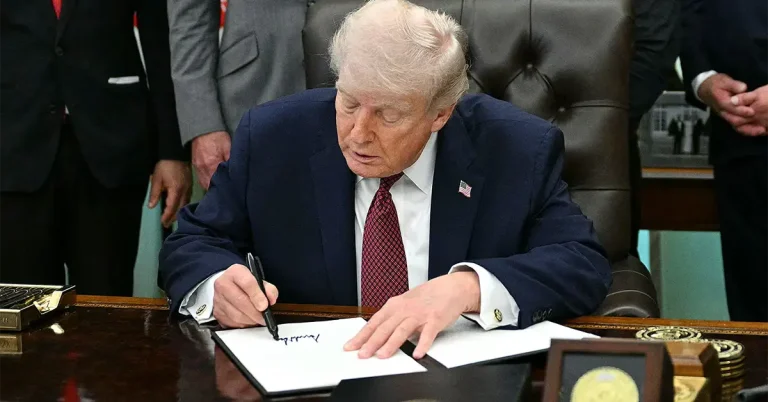
President Trump signed an executive order on 19 May 2026 requiring US banks to screen for signs of…

The US Department of State has released the June 2026 Visa Bulletin, with EB-2 and EB-1 India retrogressing…
The Prosperous Living Investment team advises on pathways, assesses profiles and manages investments transparently for every residency, citizenship and international property objective.
Free profile assessmentWhere life gets prosperous
We use analytics cookies (Google Analytics) to understand how this site is used. They stay off until you agree. Privacy policy.