

Swiss culture

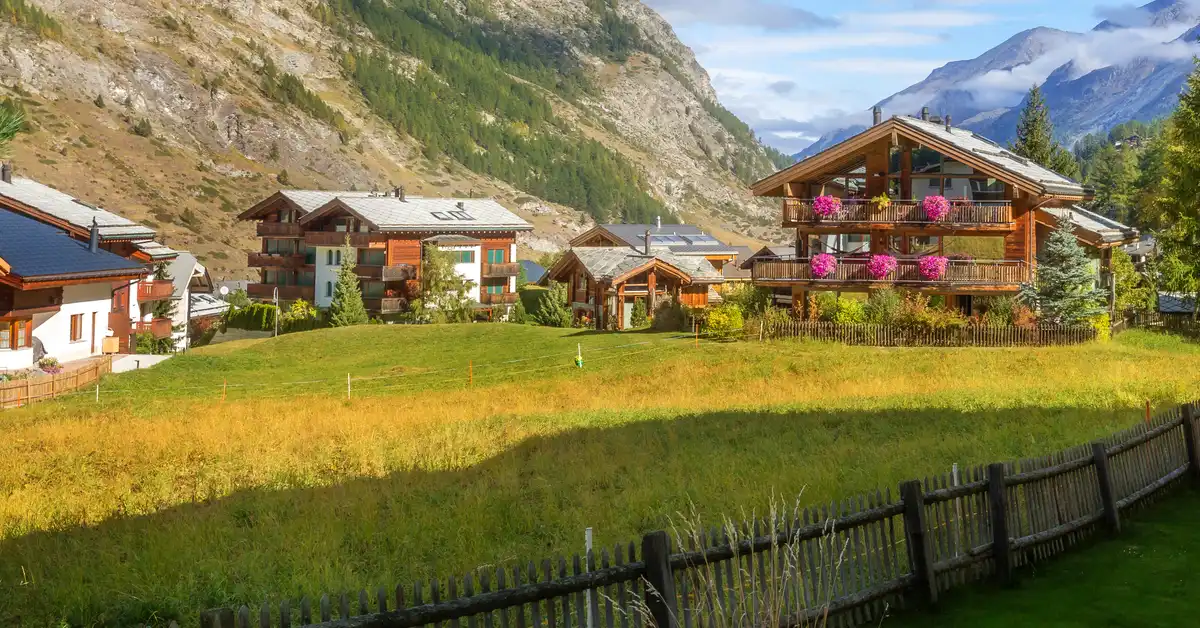
Swiss culture is a rare mosaic in Europe, where four national languages, Alpine folk traditions, renowned cheese cuisine, exquisite watchmaking, and a spirit of neutrality and humanitarianism coexist in a small nation in the heart of Central Europe.
Contents
Four languages and the multicultural identity of Switzerland
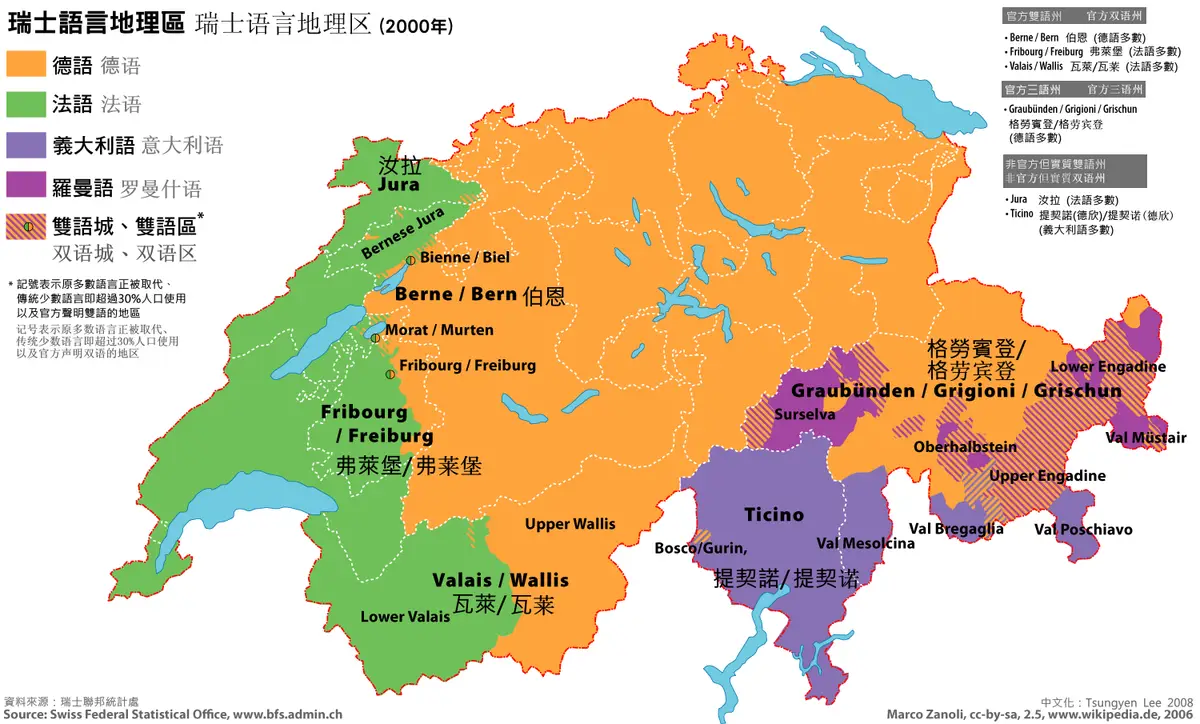
What makes the unique character of Switzerland is first and foremost its linguistic diversity. A country of modest size recognises four national languages: German, French, Italian, and Romansh. Each language is tied to a specific geographical region and cultural heritage, creating overlapping identity zones that the people refer to by familiar names.
The majority of the population speaks German, though not standard German but the Swiss German dialects (Schweizerdeutsch), which are very distinct in daily communication. The western region around Geneva, Lausanne, and Neuchâtel speaks French, often called Romandie. The southern Ticino region and some valleys bordering Italy use Italian.
Romansh is a minority language, preserved only by a small community in the canton of Graubünden. It is an ancient Latin language, protected as part of the national heritage. The coexistence of multiple languages does not cause division but has become a source of pride, reflecting the federal spirit of respecting differences that is deeply rooted in Swiss culture.
Exploring Swiss culture reveals a unique mosaic where four linguistic communities coexist in a small nation. It is this diversity, combined with a strong tradition of local autonomy, that creates the simultaneously unified and rich identity of Swiss culture across each region.
Considering a residency programme? The Prosperous Living Investment team assesses your profile free of charge and advises on the pathway that fits your goals.
Alpine folk heritage
Life in the plateau and the Alps has forged a vibrant folk treasure. Among these, the alphorn is the most recognisable symbol. This is a long wooden horn with a deep, warm sound that echoes through the valleys, once used by herdsmen to communicate and call their cattle from afar.
Yodel, a singing style involving sudden shifts between the chest voice and falsetto, also stems from the tradition of mountain communication. Today, yodel and alphorn are still present in many folk music festivals, performed as a source of pride for mountain communities.
In addition, there are countless seasonal festivals tied to the rhythm of livestock farming. The summer ascent of cows to the mountains and the autumn descent to the valleys, when the cows are decorated with flowers and bells, are occasions for the whole village to gather. Many winter masquerade festivals, as well as rituals to drive away winter and welcome spring, have also been maintained for centuries.
Some folk practices have been recorded in the list of intangible cultural heritage. According to UNESCOpractices such as the art of crafting and performing related to mountain traditions are among the inventoried elements, showing that the value of this folk treasure is recognised internationally.
Swiss cuisine: cheese, chocolate, and more
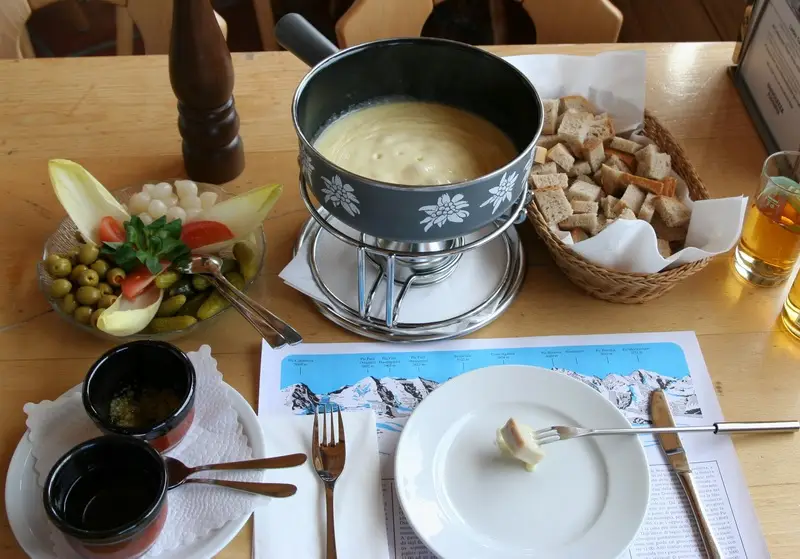
Cuisine is one of the most familiar gateways for the world to know Swiss culture. Most famous is fondue, a dish of melted cheese in a pot placed on a small stove, served with skewered bread. This is a dish of togetherness, often shared around the table on chilly days.
Raclette is also a symbol. The name comes from the action of scraping the layer of melted cheese onto potatoes, pickled cucumbers, and small onions. Along with Gruyère and Emmental, two renowned hard cheeses, dairy products show the central role of dairy farming in daily life.
Swiss chocolate is another achievement. The country is associated with innovations in the chocolate industry, particularly the technique for making smooth milk chocolate and the prolonged refining process that helps create its characteristic smoothness. The tradition of enjoying chocolate has become a part of daily life.
Besides iconic dishes, each linguistic region has its own specialities: the German-speaking region has rösti (grated potatoes) and sausages, the Romandie region is influenced by French cuisine, while Ticino carries a Mediterranean flair with pasta, risotto, and wine. This richness reflects the very multicultural structure of the nation.
Beyond familiar symbols, Swiss cultural life is also expressed through a dense network of museums, international music and film festivals, and winter sports traditions tied to the Alps. Preserving dialects and local customs in each canton helps heritage to be continuously passed down through generations.
Watches and exquisite craftsmanship
When it comes to the precision of human hands, few countries are as closely associated with watchmaking as Switzerland. This tradition flourished in the towns along the Jura mountains and around Geneva, where the professions of jeweller and precision mechanic have converged for centuries.
The phrase “made in Switzerland” on a watch face has long been a global standard for precision and quality. Watchmaking is not just an economic sector but a heritage of skills, taught through vocational schools and craft workshops.
That meticulous spirit also spreads to many other crafts: wood carving in the Brienz region, cowbell making, lace weaving and embroidery in the east, or the production of multi-functional knives. According to UNESCO, some traditional knowledge and craft skills have been recognised as intangible heritage that needs to be preserved.
The bond between Swiss history and craftsmanship shows that the value of skilled labour has been cherished from a very early stage. This foundation contributes to shaping the image of a nation that values precision, persistence, and quality in everything.
Architecture and urban heritage
The old towns of Switzerland are an important part of the cultural heritage. The old town of the capital, Bern, with its long arcades, decorative fountains, and ancient astronomical clock tower, is considered a particularly well-preserved medieval urban complex.
According to UNESCOSwitzerland possesses many world heritage sites, including both cultural and natural heritage. These landmarks stretch from old towns, monasteries, and ancient settlements to mountain landscapes and mountain railways that hold technical value.
Rural architecture also leaves its own mark with wooden chalets featuring sloping roofs, carved balconies, and windows bright with flowers. The image of a wooden house against a backdrop of snowy mountains has become a familiar visual symbol associated with this country.
Beyond their historic heritage, cities such as Zurich, Basel and Geneva are also centres of modern architecture and design, where numerous museums, theatres and contemporary art spaces thrive, demonstrating a culture that balances preservation with innovation.
Neutrality and humanitarian tradition
Neutrality is not merely a political choice but has permeated the cultural consciousness of the Swiss people. Having navigated the major upheavals of Europe, the country has maintained a non-belligerent stance, thereby shaping an identity that prioritises dialogue, reconciliation and stability.
It is upon this foundation that a strong humanitarian tradition has flourished. The Red Cross movement was born in Geneva in the 19th century, originating from the idea of providing relief to those wounded in war regardless of their nationality. Since then, Geneva has become a centre for international humanitarian and diplomatic activity.
Today, the city of Geneva hosts the headquarters of many international organisations and is a frequent venue for global negotiations. This role reinforces the image of a small nation with a significant voice in matters of peace and aid.
The spirit of neutrality and humanitarianism is closely linked to the way the state operates. To gain a deeper understanding of the consensus mechanism and direct democracy behind these values, one may refer to the article on the country’s institutions.
Festivals, sports, and community life
Swiss cultural life is further nurtured by countless festivals and community activities. Each region and canton has its own celebrations: the spring festivals in Zurich, the vibrant multi-day carnival in Basel, or traditional markets rich in local character.
Winter sports are an inseparable part of the local lifestyle. Skiing, snowboarding and mountaineering are tied to the Alpine terrain, while also attracting visitors year-round. Additionally, folk sports such as Swiss-style wrestling are still preserved during major festivals.
Discipline, punctuality and a respect for public order are also traits frequently mentioned when discussing social etiquette. The precisely operated public transport system and clean environment reflect community values cultivated over many generations.
These values are inseparable from the diverse population. The structure Swiss demographics with a significant proportion of foreign residents has added many new nuances to cultural life, from cuisine to contemporary festivals.
Religion, family, and social values
In terms of faith, Christianity, including both Catholicism and Protestantism, has had a profound historical influence on culture and architecture. Many seasonal festivals and local customs still bear religious marks, although the proportion of people with no religion tends to rise in modern society.
Family and local communities play an important role. The spirit of self-governance at the village and cantonal level, which is the core of the federal model, encourages citizen participation in public life. This is a characteristic political culture, linked to the tradition of direct democracy.
Respect for privacy, self-reliance and trust in institutions are highly valued. Alongside this, a consciousness of protecting nature and mountain landscapes is expressed through the residents’ habit of living in harmony with the environment.
In summary, these social values create a culture that is both traditional and open, where regional and linguistic differences are harmonised within a common national identity, based on consensus and mutual respect.
Accompanying you on your journey in residency investment
The Prosperous Living Investment team advises on pathways, assesses profiles and manages investments transparently for every residency, citizenship and international property objective.
Free profile assessmentWhere life gets prosperous