

The Dominica CBI due diligence process

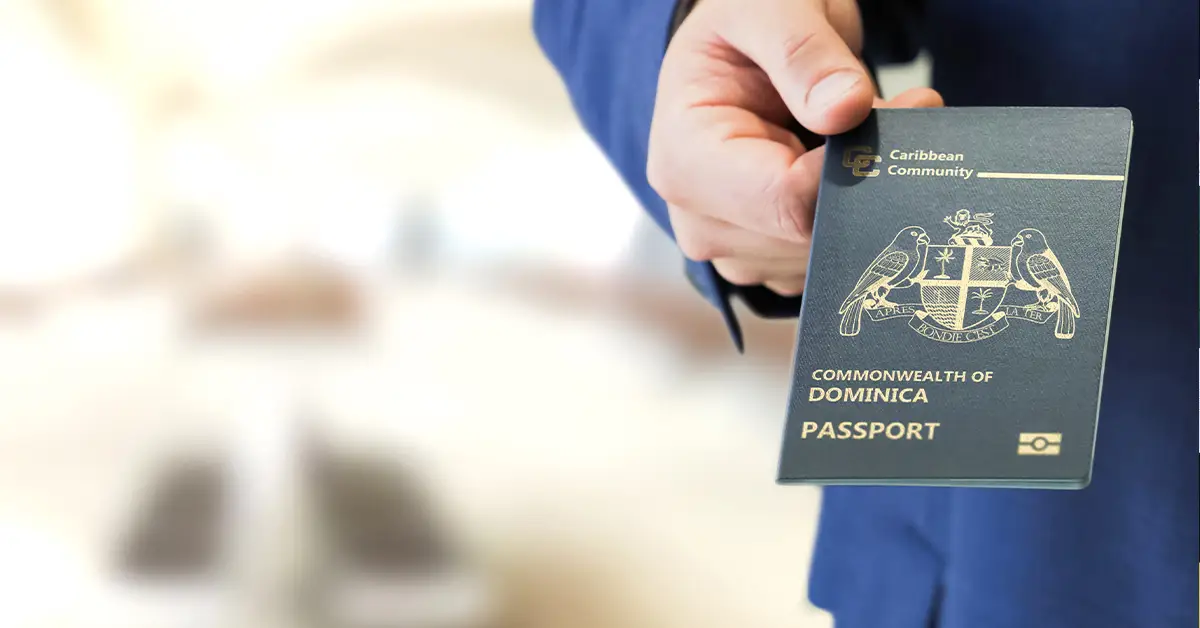
The Dominica CBI due diligence process is one of the most rigorous application vetting processes among citizenship by investment programmes worldwide. The Citizenship by Investment Unit (CBIU) applies a 4-tier due diligence system combined with professional international due diligence providers. The whole process takes 3 to 9 months depending on the complexity of the application.
Understanding each step of the due diligence process helps investors prepare complete applications and avoid common reasons for refusal.Dominicahas significantly tightened due diligence from 2024 to 2026 under pressure from the United States and the European Union, in order to protect the programme’s credibility and maintain visa-free Schengen access.
Detailed article onThe Dominica CBI application process.
Message
The CBIU structure that runs the Dominica CBI due diligence process
The Citizenship by Investment Unit of Dominica (CBIU) is the government agency responsible for running the CBI programme and carrying out the due diligence process. The CBIU was established in 2014 under the Ministry of Finance and operates semi-independently with its own governance. Before 2014, the CBI programme was run by a unit within the Ministry of Finance.
The CBIU has 5 main departments: Application Management, Due Diligence, Legal and Compliance, Finance and Investment, and Communications and Agent Relations. It has about 60 staff, most with experience in banking, auditing, law and financial intelligence.
The CBIU is headed by a Director serving a 5-year term. Senior officials include the Director, the Officer in Charge (Deputy Director), heads of department and senior advisers. As of 2026, Gregory McDougall serves as Officer in Charge and has signed many important decisions on due diligence and passport revocations.
Considering a residency programme? The Prosperous Living Investment team assesses your profile free of charge and advises on the pathway that fits your goals.
Step 1: Submission through an authorised agent
The Dominica CBI due diligence process begins when an investor submits an application through an Authorised Agent licensed by the government of Dominica. As of 2026, the CBIU has licensed about 30 authorised agents in countries around the world. Direct applications not made through an authorised agent are not accepted. This requirement ensures the quality of application intake and the agent’s legal responsibility for the accuracy of the information.
Authorised agents carry out preliminary screening of clients, help prepare applications, translate and notarise documents, and ensure applications are complete and valid before submitting them to the CBIU. Agents are legally liable if they knowingly provide false information or fail to carry out proper preliminary checks. Violations can lead to fines, suspension or permanent revocation of their licence.
The initial application includes the Application Form (Form 1), the Medical Declaration Form (Form 2, for each person over 12), notarised copies of passports translated into English, a police clearance certificate from the most recent country of residence issued within 6 months, biometric photos meeting the standard, proof of source of wealth and proof of funds. A single applicant’s file usually runs to about 40 to 60 pages and can exceed 200 pages for a large family.
Step 2: Tier 1 and 2 checks
After receiving the application from the Authorised Agent, the CBIU carries out Tier 1 checks, verifying that documents are complete and authentic. The intake department checks that all documents are properly notarised, validly translated, that photos meet biometric standards and that all information is in the correct format. Incomplete or incorrectly formatted applications are returned to the agent to be completed within 30 days.
Tier 2 is Basic Due Diligence against public databases. At this stage, the Dominica CBI process includes screening applicants’ names against international lists: Interpol, OFAC (United States), HM Treasury (United Kingdom), the EU Sanctions List, the UN Security Council Sanctions List, Politically Exposed Persons (PEP) lists and commercial databases such as World-Check and Refinitiv. Any match triggers deeper checks.
Tier 1 and 2 checks usually take 2 to 4 weeks and are carried out by the CBIU’s in-house team. Applications that pass this stage move on to Tier 3 and 4 checks with external professional providers. The failure rate at this stage is usually low, under 10%, because problems are usually screened out by the Authorised Agent before submission.
Step 3: Tier 3 checks — enhanced due diligence
Tier 3 checks (Enhanced Due Diligence) are the most important stage of the Dominica CBI due diligence process, carried out by professional international due diligence firms. The CBIU works with 5 accredited providers: BDO, Thomson Reuters CLEAR, Sterling Risk Advisors, S-RM Intelligence and Risk Consulting, and Exiger. Each provider has teams of investigators who are former intelligence officers, international police and compliance experts.
The process includes investigating the applicant’s financial, business, political and social history over the past 10 years. Enhanced due diligence reports usually run to 30 to 80 pages, with detailed analysis of the source of wealth, business and personal networks, major financial transactions, legal disputes and any risks that may arise.
Particularly important is the “Source of Funds” check — the single most critical factor. Applicants must prove the lawful and transparent origin of the money used for the CBI investment. Documents usually required include 5 years of bank statements, business contracts, tax returns, company financial statements (for business owners), inheritance certificates (if inherited) or salary records covering many years. An unclear source of funds is the most common reason for refusal.
Step 4: Tier 4 checks and interview (if required)
Tier 4 checks (Government Due Diligence) are the final stage of the Dominica CBI due diligence process. The CBIU uses Dominican government channels, including the domestic intelligence service and information-sharing agreements with foreign intelligence agencies, to verify information that private providers cannot access. In particular, the CBIU maintains close working relationships with US and UK security agencies.
In complex cases or where there are red flags, the CBIU may require a personal interview with the applicant. Interviews are usually held by video conference, as most applicants do not live in Dominica. Interviews can last 1 to 3 hours and focus on clarifying the source of wealth, the purpose of seeking citizenship and other issues raised in the due diligence report.
See the articleDominica citizenship by investmentfor details of the investment options. After Tier 4 checks are completed, the application is submitted to the Minister responsible for CBI for a final decision. An “Approval in Principle” allows the investor to pay the full investment amount. Once the funds have been received in full, the CBIU issues the official grant of citizenship.
Due diligence fees in the Dominica CBI process
Due diligence fees in the Dominica CBI process follow a tiered structure. The CBIU due diligence fee is $7,500 USD for the main applicant, $4,000 USD for a spouse, $4,000 USD for each dependant over 16 and $0 for children under 16. These fees are non-refundable, even if the application is refused.
The citizenship processing fee is $1,000 USD for the main applicant. The passport fee is $1,200 USD per passport issued. The Certificate of Naturalisation fee is $250 USD per person. The Medical Declaration Form costs $100 USD per person over 12 (covering the cost of examination and certification by a doctor in the country of residence).
For applicants from certain countries or high-risk groups, the CBIU may require Enhanced Due Diligence Plus with an additional fee of up to $25,000 USD per person. Iranian nationals were previously in this group until March 2026, with a fee of $70,000 USD for a family of 4, after which the CBIU suspended processing of Iranian applications except in special cases. Higher fees for high-risk groups reflect the higher actual cost of investigation and the longer process.
Common reasons for refusal
The approval rate in the Dominica CBI due diligence process is about 70% to 80% according to 2024 CBIU data. Common reasons for refusal include: an opaque or unverifiable source of funds (about 35% of refusals), criminal record issues, including minor offences more than 5 years ago (25%), false declarations in the application (15%), links to politicians or internationally sanctioned persons (10%), and other reasons including serious health issues and national security (15%).
Countries with high refusal rates include Iran, Iraq, Afghanistan, Yemen, Syria and North Korea — most of which are or have been subject to restrictions. Countries with high approval rates include China, Vietnam, India, Nigeria, South Africa, Eastern European and Latin American countries. Approval rates also depend heavily on the quality of the authorised agent involved.
Refused applicants have the right to appeal within 60 days of receiving the decision. Appeals are reviewed by the Dominica CBI Appeals Board of 5 independent members. However, the success rate of appeals is fairly low, below 15%, because applications have already been thoroughly vetted. Refused applicants do not receive a refund of due diligence fees and may reapply after 12 months if their circumstances have changed significantly.
Due diligence reforms 2024-2026
From 2024 to 2026, the Dominica CBI due diligence process underwent many important reforms under pressure from the United States and the European Union. The Citizenship by Investment Regulations 2024, issued on 28/6/2024, codified the entire legal framework and added many measures tightening due diligence.
The main reforms include: a ban on name changes within 5 years of receiving citizenship (2023 Regulations), a requirement for authorised agents to provide applicants’ biometric fingerprints (from 2024), reinstatement of a “no acceptance” policy for Iranian nationals (March 2026, with exceptions), stronger checks of applicants’ media and social media presence, and extending checks of business networks to the third degree (family, business partners and their partners).
The revocation of 68 CBI passports for fraud between June 2024 and April 2026 is clear evidence of the effectiveness of these reforms. Most revocations involved Iraqi nationals (the majority) and Iranians (6%), including high-profile cases such as the Shamkhani brothers with links to Iranian politics. The CBIU has also stepped up cooperation with the Financial Action Task Force (FATF) and the OECD on anti-money laundering and counter-terrorist financing initiatives.
Summary of the Dominica CBI due diligence process
The Dominica CBI due diligence process is now ranked among the most rigorous citizenship by investment programmes in the world, with 4 tiers of checks combining technology, international data and a network of professional partners. Due diligence fees from $7,500 USD per person and processing times of 3 to 9 months reflect the real cost of comprehensive vetting.
For investors with transparent profiles, clear sources of funds and clean criminal records, the due diligence process is not a significant barrier. Choosing a reputable authorised agent with CBIU experience and preparing a complete application from the outset are the keys to success. With the 2024 to 2026 reforms, although the process is longer and more demanding, the result is a Dominica passport with more lasting credibility in the long term.
Learn more about the Dominica citizenship by investment due diligence process athere.
Accompanying you on your journey in residency investment
The Prosperous Living Investment team advises on pathways, assesses profiles and manages investments transparently for every residency, citizenship and international property objective.
Free profile assessmentWhere life gets prosperous