

Dominica dual citizenship: legal rules and benefits for CBI investors

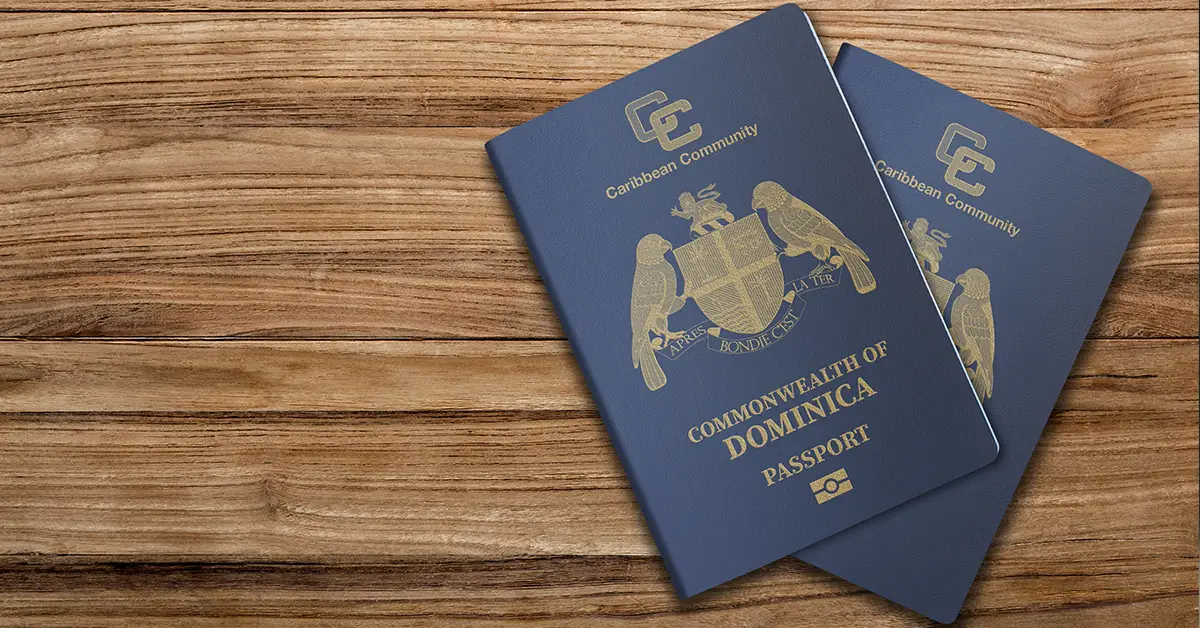
Dominica dual citizenship is permitted without restriction under the 1978 Constitution of the Commonwealth of Dominica and the Citizenship Act of 1978. Dominican citizens can hold the citizenship of one or more other countries at the same time without giving up Dominican citizenship. This is especially attractive for investors in the CBI programme, as they can keep their original citizenship when they acquire Dominican citizenship.
Flexible rules on dual citizenship helpDominicabecome an attractive destination for citizens of countries with weak passports or restricted international travel. This article analyses in detail the legal rules, practical benefits and issues to note regarding dual citizenship.
Message
The legal basis of Dominica dual citizenship
The legal basis for Dominica dual citizenship is found in several instruments. The 1978 Constitution of the Commonwealth of Dominica does not prohibit citizens from holding another nationality, laying the basic legal foundation. Sections 99 to 104 of the Constitution set out the principles on the granting and loss of citizenship and dual citizenship, but no provision requires citizens to renounce another nationality.
The Citizenship Act of 1978 details the procedures and clearly confirms the right to hold dual citizenship. Section 16 of the Act provides: “A person becoming a citizen of another country does not automatically lose their Dominican citizenship”. This applies to all routes to Dominican citizenship, including descent, birth, registration, naturalisation and CBI investment.
The Citizenship by Investment Regulations 2024, issued on 28/6/2024, reaffirm the right to dual citizenship for people who acquire citizenship through the CBI programme. This distinguishes Dominica from countries that tax on the basis of citizenship (such as the United States) or require renunciation of previous nationality (such as China, Japan, Singapore and some Gulf states).
Considering a residency programme? The Prosperous Living Investment team assesses your profile free of charge and advises on the pathway that fits your goals.
Rights and obligations under dual citizenship
People with Dominica dual citizenship have the same full rights and obligations as citizens with a single nationality. They are entitled to a 10-year Dominica passport, visa-free access to 140 to 145 countries including the Schengen Area, unrestricted property ownership and free access to public education and healthcare. Political rights include the right to vote and stand in elections in Dominica.
However, there are some restrictions on dual citizens holding senior political office in Dominica. Specifically, under the Constitution, candidates for the House of Assembly must meet actual residence requirements (5 years before the election) and owe no allegiance to another country. For the office of President, the requirements are similar but stricter. In practice, CBI citizens rarely take part in Dominican politics because they do not live in the country.
In terms of obligations, dual citizens of Dominica must obey Dominican law when living in or passing through Dominica. For non-residents, the main obligations are simply not to break international law in Dominica’s name and not to act against national interests. Dominica has no compulsory military service because it has no standing armed forces.
Benefits for CBI investors
Dominica dual citizenship brings many concrete benefits to investors in the CBI programme. The first and most important is not having to give up one’s original citizenship. Investors from countries such as China, Vietnam, India and Nigeria keep their property ownership, businesses and rights in their home country.
The second benefit is greater freedom of international travel. Citizens of countries with weak passports (Iran, Iraq, Afghanistan, Pakistan, Bangladesh) often face serious difficulties obtaining visas for international travel or business. The Dominica passport offers visa-free access to 140 countries including the Schengen Area and the United Kingdom, solving this problem legally and sustainably.
The third benefit is political insurance and personal security. In situations of political instability, war or economic crisis in their home country, citizens with Dominica dual citizenship can travel to and live in other countries without depending on the approval of their home government. See the articleDominica citizenship by investmentto understand the CBI programme better.
Tax implications of dual citizenship
A common question about Dominica dual citizenship is the tax impact. It is important to remember that Dominica applies residence-based taxation rather than citizenship-based taxation. This means that acquiring Dominican citizenship through CBI does not automatically make an investor a Dominican tax resident liable to pay tax there.
Detailed article onDominica’s tax regime.
A Dominican tax resident is defined as someone physically present in Dominica for at least 183 days in a tax year (1/1 to 31/12) or who has a permanent home in Dominica. Most CBI investors do not meet these criteria and therefore do not pay income tax in Dominica. They continue to pay tax in the country where they are tax resident.
However, some countries tax on the basis of citizenship, most notably the United States and Eritrea. Citizens of these countries must pay tax even if they do not live in their home country. For them, Dominica dual citizenship does not reduce tax obligations in the home country unless they formally renounce that citizenship. Consulting an international tax specialist is essential before any related decision.
Comparing Dominica dual citizenship with other countries
Dominica dual citizenship is similar to that of other Caribbean countries with CBI programmes. Antigua and Barbuda, Saint Kitts and Nevis, Saint Lucia and Grenada all allow unrestricted dual citizenship under their constitutions and citizenship laws. This is a common feature of Caribbean CBI programmes and a key competitive advantage over programmes in other regions.
Compared with the United States, US citizens can hold dual citizenship but must report and pay US tax on their worldwide income. This is a heavy burden for US citizens with a second nationality. Compared with Singapore, Singapore does not allow dual citizenship and requires citizens to renounce other nationalities when acquiring Singaporean citizenship. China and Japan also do not allow dual citizenship under similar conditions.
Compared with EU countries, most EU member states allow dual citizenship (Germany officially since 2024; France, Italy and Spain have always allowed it). Some EU countries, such as Austria and the Netherlands, have certain restrictions. Malta, currently the only EU citizenship programme, allows dual citizenship. However, Malta’s MEIN costs 5 times as much as Dominica’s CBI, at €1,450,000 EUR.
The 5-year name change ban
An important new rule relating to Dominica dual citizenship is the ban on name changes within 5 years of receiving CBI citizenship, introduced in December 2023. The rule aims to prevent CBI passports being misused to conceal identity and change international identities.
Under the rule, people who receive Dominica CBI citizenship from December 2023 onwards may not change their name (including surname and middle names) in their Dominica passport within 5 years of receiving citizenship. This applies both to changing the name in the Dominica passport and to notifying a name change in another passport.
Violating this rule can lead to automatic revocation of Dominican citizenship. As of April 2026, Dominica has revoked 68 CBI passports since June 2024, some of them for breaching this name change rule. The rule does not affect the right to dual citizenship but ensures transparency and prevents abuse.
Travel issues with dual citizenship
People with Dominica dual citizenship need to be aware of some practical issues when travelling internationally. The basic principle is to use the passport of the destination country or the passport that offers the best entitlements at the destination. For example, a Dominica – China dual citizen should use the Dominica passport when travelling to the Schengen Area (visa-free) and the Chinese passport when entering mainland China.
When leaving the home country, use the home country’s passport at the exit checkpoint. When arriving in Dominica or countries that grant visa-free access to Dominica passport holders, present the Dominica passport to benefit from visa-free entry. Presenting both passports at the same time can confuse immigration officers and is unnecessary.
Some countries do not recognise dual citizenship and may require citizens to travel only on that country’s passport. Mainland China is a typical example — Chinese citizens who hold Dominican citizenship may use only their Chinese passport when entering China and cannot enjoy the benefits of the Dominica passport on Chinese territory. Declaring dual citizenship in these countries can lead to legal risks.
Passing citizenship on to the next generation
Dominica dual citizenship can be passed on to the next generation under the Citizenship Act of 1978. A child born anywhere in the world to a Dominican citizen father or mother is automatically entitled to Dominican citizenship by descent (jus sanguinis), regardless of the other parent’s nationality.
For people who acquire CBI citizenship, children born after citizenship is granted automatically receive Dominican citizenship without separate registration. Children born before CBI citizenship was granted can be included in the original CBI application if they are under 30 and financially dependent. After CBI citizenship has been granted, adding children as dependants requires a new application with additional due diligence fees.
For grandchildren (the third generation), citizenship is not passed on automatically in many cases. Citizenship by descent must be registered at a Dominican embassy before the grandchild turns 25 to preserve the right. This rule aims to prevent citizenship from extending over many generations with no real connection to Dominica. Families with long-term plans should register citizenship for their children and grandchildren in good time.
Protecting dual citizenship in times of tension
In 2025 to 2026, US and EU pressure on Dominica’s CBI programme has raised some concerns about the sustainability of Dominica dual citizenship. However, so far there is no sign that Dominica will change its dual citizenship policy, and the 2024 to 2026 CBI reforms do not affect the dual citizenship rights of existing citizens.
The revocation of 68 CBI passports between June 2024 and April 2026 applied only to cases of fraud in the original application and is unrelated to the right to dual citizenship. People who acquired CBI citizenship lawfully continue to enjoy full, unrestricted dual citizenship rights. However, citizens should strictly comply with the 5-year name change ban and other rules to avoid risk.
In special cases, citizens can consult the nearest Dominican embassy for legal assistance. In international crises, Dominican embassies provide diplomatic protection to citizens, including CBI citizens with dual nationality. However, the small size of Dominica’s diplomatic network (only about 8 official missions) is a limitation to bear in mind.
Summary of Dominica dual citizenship
Dominica dual citizenship is one of the most important benefits of Dominica’s CBI programme, permitted by law without restriction and reliably maintained for decades. CBI citizens can keep their original citizenship, enjoy the benefits of both nationalities and plan long-term for their families without facing difficult decisions about renouncing citizenship.
Combined with taxation based on residence rather than citizenship, this creates a favourable structure for international investors. However, everyone should consult tax and legal specialists before making a final decision, especially if they are citizens of countries that tax on the basis of citizenship or prohibit dual citizenship. From 2026 onwards, following international policy developments closely is necessary to preserve the benefits of Dominica dual citizenship.
Find more information on the government website athere.
Accompanying you on your journey in residency investment
The Prosperous Living Investment team advises on pathways, assesses profiles and manages investments transparently for every residency, citizenship and international property objective.
Free profile assessmentWhere life gets prosperous