


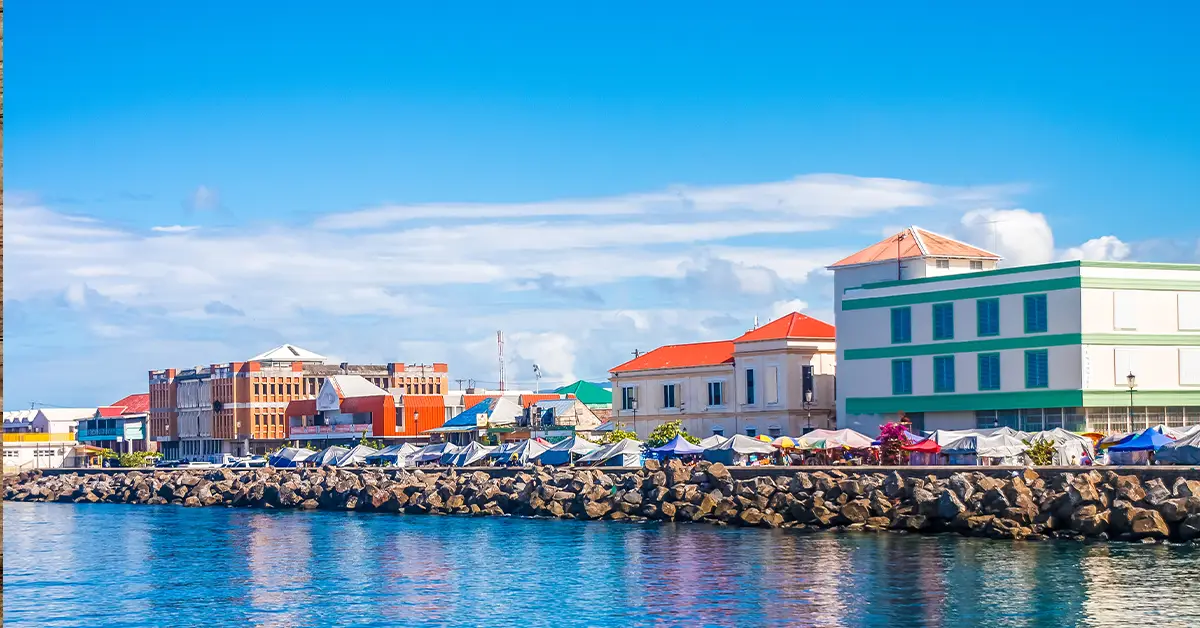
The Dominica CBIU (Citizenship by Investment Unit) is the official government agency managing the Citizenship by Investment Programme of the Commonwealth of Dominica — the oldest CBI programme in the world, operating continuously since 1993. The CBIU was established in 2014 under the Ministry of Finance and operates semi-independently with its own governance. It is the only authority empowered to receive, vet and approve Dominica CBI applications.
As of early 2026, the Dominica CBIU had issued about 34,500 CBI passports to foreign nationals and was the source of revenue equal to 37% of national GDP. Understanding the role and structure of the CBIU helps investors grasp the process and requirements of the CBI programme inDominica, avoiding common mistakes.
Message
History of the Dominica CBIU
Before 2014, Dominica’s CBI programme was managed by a unit within the Ministry of Finance called the CBI Office. This structure was small, had no independent budget and lacked specialisation. Management of the programme was spread across several departments of the Ministry of Finance, leading to low efficiency and difficulty meeting increasingly complex due diligence requirements.
In July 2014, the Dominica CBIU was formally established under the Citizenship by Investment Unit Act 2014. It is a semi-independent body with its own budget, its own leadership and a streamlined decision-making process. The CBIU model was based on Saint Kitts and Nevis — the pioneer in reforming the management of Caribbean CBI programmes.
From 2014 to 2026, the CBIU underwent many important reforms. In 2017, after Hurricane Maria, the CBIU played a central role in raising reconstruction funds through the CBI programme. In 2024, the CBIU issued the CBI Regulations 2024, codifying the entire legal framework. In 2026, under US and EU pressure, the CBIU stepped up due diligence and suspended processing of applications from certain high-risk countries.
Considering a residency programme? The Prosperous Living Investment team assesses your profile free of charge and advises on the pathway that fits your goals.
Organisational structure and leadership
The Dominica CBIU has 5 main departments, each responsible for a specialised area. The Application Management department is the first gateway receiving CBI applications from Authorised Agents and ensuring applications are complete before passing them to the due diligence teams. It also manages the Electronic Application Management System (eAMS) — the CBIU’s digital platform.
The Due Diligence department is the most important, responsible for the 4-tier checks. It has about 25 staff, including investigators, compliance specialists and financial intelligence analysts. Most have backgrounds in banking, auditing or security agencies before joining the CBIU. The Legal and Compliance department handles legal issues relating to the programme, drafts decisions granting or refusing citizenship and manages appeals.
The Finance and Investment department manages CBI cash flows, including due diligence fees, EDF contributions and real estate transactions. It works closely with the EDF to ensure transparency in the use of funds. The Communications and Agent Relations department manages relationships with the 30 authorised agents worldwide, organises industry events and manages the programme’s image.
The Dominica CBIU is headed by a Director serving a 5-year term. Senior officials include the Director, the Officer in Charge (Deputy Director), heads of department and senior advisers. As of 2026, Gregory McDougall serves as Officer in Charge and has signed many important decisions on due diligence and passport revocations during the 2024-2026 reform period.
The main roles of the Dominica CBIU
The Dominica CBIU has 6 main roles in managing the CBI programme. The first is receiving and vetting CBI applications from Authorised Agents. The CBIU carries out 4 tiers of due diligence together with 5 professional international due diligence providers such as BDO, Thomson Reuters CLEAR, Sterling Risk Advisors, S-RM Intelligence and Exiger.
The second role is approving or refusing applications based on the due diligence results. The final decision is signed by the Officer in Charge (Deputy Director) on behalf of the CBIU. For complex or controversial cases, the decision may be referred to the Minister responsible for CBI for approval. The approval rate is 70-80%, with common reasons for refusal including opaque sources of funds, criminal record issues and links to internationally sanctioned persons.
The third role is managing the Authorised Agents system. There are currently about 30 authorised agents worldwide licensed by the CBIU. Authorised agents are the only channel for CBI applications — there is no direct application route. The CBIU is responsible for licensing, supervising and sanctioning these agents. The fourth role is overseeing the EDF, monitoring inflows to the fund and coordinating with the Ministry of Finance on using the money for national projects.
The 4-tier due diligence system
The Dominica CBIU operates a distinctive 4-tier due diligence system that many other CBI programmes have copied. Tier 1 is the Completeness Check carried out by the intake department, ensuring the application includes all required documents. This tier usually takes 1 to 2 weeks.
Tier 2 is Basic Due Diligence against public databases such as Interpol, OFAC, the EU Sanctions List, the UN Sanctions List, World-Check and Refinitiv. These are mainly automated checks and take 2 to 3 weeks. Any match triggers deeper Tier 3 checks.
Tier 3 is Enhanced Due Diligence carried out by international due diligence providers. Enhanced due diligence reports usually run to 30 to 80 pages, with detailed analysis of the applicant’s financial, business, political and social history over the past 10 years. This tier takes 6 to 12 weeks and is the longest stage of the whole process.
Tier 4 is Government Due Diligence using Dominican government channels, including the domestic intelligence service and information-sharing agreements with foreign intelligence agencies. This tier applies to complex applications or those with red flags from earlier tiers. See the articleDominica citizenship by investmentto understand the programme better.
Authorised Agents
The Dominica CBIU manages a network of about 30 Authorised Agents worldwide, the only channel for Dominica CBI applications. To become an authorised agent, companies must meet strict criteria, including at least 5 years’ experience in investment migration, a team of lawyers and certified compliance specialists, minimum financial capacity of $500,000 USD and passing CBIU vetting.
Authorised agents are licensed for renewable 3-year terms. During the term, the CBIU regularly checks agents’ activities through quarterly reviews and random inspections. Breaches of standards can lead to warnings, suspension or permanent revocation of the licence. Between 2024 and 2026, the CBIU revoked the licences of 3 agents for serious breaches of preliminary due diligence rules.
The role of authorised agents includes: initial consultations with clients, preliminary eligibility screening, helping prepare complete and accurate applications, translating and notarising documents, submitting applications through the eAMS, tracking progress and liaising with the CBIU during due diligence. Agents are legally liable if they knowingly provide false information to the CBIU.
Reform regulations 2024-2026
From 2024 to 2026, the Dominica CBIU carried out many important reforms under pressure from the United States and the European Union. The Citizenship by Investment Regulations 2024, issued on 28/6/2024, codified the entire legal framework and added many measures tightening due diligence.
The first major reform was raising the minimum investment from $100,000 USD to $200,000 USD under the CARICOM Investment Migration Memorandum 2023. The second was the ban on name changes within 5 years of receiving CBI citizenship (2023 Regulations). The third was requiring authorised agents to provide applicants’ biometric fingerprints from 2024.
The fourth and most notable reform was the March 2026 Memorandum signed by Officer in Charge Gregory McDougall, suspending processing of applications from Iranian nationals from 24/3/2026 unless they meet three strict conditions. This was a response to the investigations into the Shamkhani brothers and US pressure over Iran’s use of CBI passports to evade international sanctions.
Revocation of CBI passports
The Dominica CBIU has the power to revoke CBI passports if fraud is found in the original application or rules are breached after citizenship is granted. Between June 2024 and April 2026, the CBIU revoked 68 CBI passports for various reasons. This is one of the largest waves of revocations in the history of Caribbean CBI.
Analysis of the revocations shows that most involved Iraqi nationals (the majority) and Iranians (6%). High-profile cases include the Shamkhani brothers, who have links to Iranian politics. Abolfazl Shamkhani’s citizenship was revoked on 27/3/2026 and Hossein Shamkhani’s in August 2025. These two cases attracted international attention and were an important factor pushing the CBIU to suspend the processing of Iranian applications.
The CBI passport revocation process involves: detecting a breach through investigation or information from international agencies, notifying the person concerned and the authorised agent involved in the original application, reviewing responses and explanatory evidence, issuing a revocation decision and updating Interpol’s Stolen and Lost Travel Documents database. People whose citizenship is revoked can appeal within 60 days, but the success rate is low.
International cooperation and transparency
The Dominica CBIU maintains close cooperation with many international organisations to protect the programme’s credibility. The CBIU is a member of the Investment Migration Council (IMC) and complies with its Code of Ethics. The CBIU also cooperates with the Financial Action Task Force (FATF) on anti-money laundering and counter-terrorist financing initiatives.
In the Caribbean, the CBIU coordinates with its counterparts in Antigua and Barbuda, Saint Kitts and Nevis, Saint Lucia and Grenada through the CARICOM framework. In 2023, the 5 countries signed the CARICOM Investment Migration Memorandum, harmonising the minimum investment at $200,000 USD and certain due diligence standards. It is the most important reform in the history of Caribbean CBI.
On transparency, the CBIU publishes an Annual Report within 6 months of the end of the financial year. The report is audited by an independent international audit firm (PwC, EY or KPMG) and published on the Ministry of Finance website. It includes: the total number of applications received during the year, approval and refusal rates, total revenue collected, allocation of EDF funds to projects and an assessment of due diligence effectiveness.
Contact details and official website
To contact the Dominica CBIU directly, citizens and investors can visit the official website at www.cbiu.gov.dm. It is the only official source of information on Dominica’s CBI programme, providing legal documents, an up-to-date list of authorised agents, approved real estate projects and information on the latest reforms.
However, note that the CBIU does not provide direct advice to individual clients. All enquiries and applications must be submitted through an Authorised Agent. Trying to contact the CBIU directly may result in a reply asking you to work through an agent. This policy protects professionalism and ensures the quality of application intake.
The CBIU’s headquarters is in Roseau, the capital of Dominica. The office has bilingual English and French support staff and is open Monday to Friday, 8 am to 4 pm local time (UTC-4). The website has a contact form for general matters such as reporting fraud, complaints about authorised agents or technical issues. Replies usually take 7 to 14 working days.
Summary of the Dominica CBIU
The Dominica CBIU has become a model for managing CBI programmes that many countries have learned from over more than 10 years of independent operation. Its structure of 5 specialist departments, 4-tier due diligence system and network of 30 authorised agents worldwide provide a solid foundation for running the world’s oldest CBI programme.
From 2024 to 2026, the CBIU faced its greatest challenge since its creation, with reform pressure from the United States and the EU. The revocation of 68 CBI passports and the suspension of Iranian applications demonstrate its commitment to protecting the programme’s credibility. The future of the Dominica CBIU in 2026 to 2030 will depend on its ability to balance maintaining CBI revenue with meeting the ever-stricter due diligence demands of international partners.
Find more information on the government website athere.
Accompanying you on your journey in residency investment
The Prosperous Living Investment team advises on pathways, assesses profiles and manages investments transparently for every residency, citizenship and international property objective.
Free profile assessmentWhere life gets prosperous