

Dominica CBI real estate investment

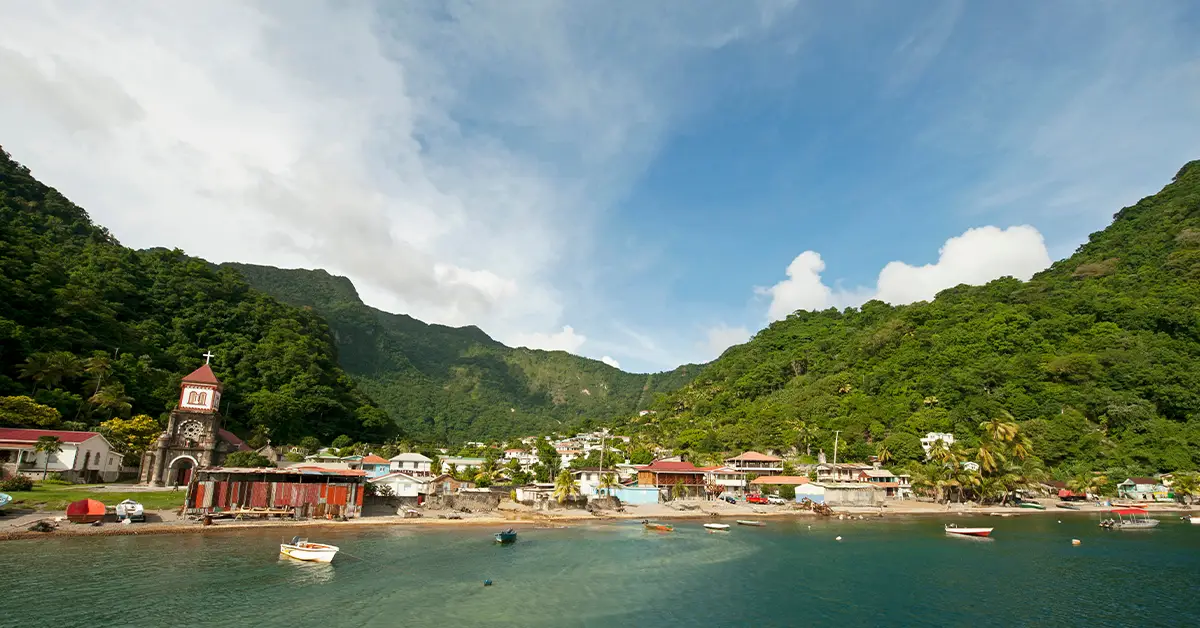
Dominica CBI real estate investment is the second option in the island nation’s citizenship by investment programme, alongside a contribution to the EDF. The minimum investment is $200,000 USD in a real estate project approved by the CBIU (Citizenship by Investment Unit), with the condition that the property be held for at least 3 years before it is sold to a second buyer. As of 2026, about 15 active projects are approved for the CBI programme.
This option suits investors who want both citizenship and an asset that can be sold to recover their capital. See the articleDominicafor an overview of the country. Dominica CBI real estate investment accounts for about 25-30% of CBI applications each year, with the rest choosing the EDF option.
Message
The legal framework for Dominica CBI real estate investment
Dominica CBI real estate investment is governed mainly by the Citizenship by Investment Regulations 2024, issued on 28/6/2024. These regulations replace earlier instruments and codify the entire process from project approval to transactions and resale. Some important provisions are also included in the Citizenship Act 1978 and Dominica’s real property legislation.
The minimum investment for Dominica CBI real estate is $200,000 USD, applied uniformly to single applicants and families. This threshold has been standardised in line with the CARICOM Investment Migration Memorandum 2023. The minimum holding period is 3 years from completion of the transaction before resale to a first buyer who is not a Dominican citizen.
For investors buying property through the CBI programme, the additional requirement for an Alien Land Holding Licence is usually waived or greatly simplified. Registration fees and stamp duty still apply under the general rules, totalling about 7% of the transaction value (5% stamp duty plus other fees).
Considering a residency programme? The Prosperous Living Investment team assesses your profile free of charge and advises on the pathway that fits your goals.
Eligible types of property
Not every property in Dominica qualifies for the CBI programme. Dominica CBI real estate investment applies only to projects individually vetted and approved by the CBIU. Project approval is a complex process with many criteria relating to the developer’s capacity, financial plan, economic impact and construction standards.
There are 4 main types of property approved for Dominica CBI. The first is luxury resorts with international brands such as Cabrits Resort & Spa Kempinski (in operation), Anichi Resort (under construction), Tranquility Beach Dominica (completed) and Secret Bay (a boutique luxury resort). Investment is usually in the form of “fractional ownership”, priced from $200,000 USD for a 1/52 share of a resort.
The second type is international-brand hotels in strategic locations, especially near Wesley Airport, due for completion in 2027. The third type is villas and detached houses of 200 to 800 m², usually freehold. The fourth type is gated community projects with integrated services including security, healthcare and leisure.
Notable approved projects
As of 2026, notable projects for Dominica CBI real estate investment include Cabrits Resort & Spa Kempinski at Prince Rupert Bay, operating since 2019 under a management contract with Kempinski, the European luxury hotel brand. Fractional shares are priced from $220,000 USD, including 2 weeks’ stay at the resort each year.
Anichi Resort & Spa at Picard, Portsmouth, is a 4-5 star project managed by Marriott International, expected to be completed in late 2026. The minimum investment is $200,000 USD for a fractional share. Tranquility Beach Resort at Salisbury is a boutique project completed in 2018 with 50 villas priced from $350,000 USD to $1.2 million USD.
Secret Bay Resort in Portsmouth is a high-end boutique project with only 7 detached villas, named among the “World’s Best Resorts” by National Geographic in 2023. Investment starts at $850,000 USD for a complete villa or $400,000 USD for a share. The Sterling Investment Hotel and Conference Centre in Roseau is developing the capital’s first 5-star hotel and office complex. The Jungle Bay Resort project on the east coast is an eco-resort based on a wellness tourism model.
The application process for Dominica CBI real estate investment
Detailed article onThe Dominica CBI application process.
The Dominica CBI real estate investment process has 7 main steps. Step 1: Choose a suitable project from the CBIU-approved list through an Authorised Agent. Step 2: Pay a 10% deposit (usually $20,000 USD to $50,000 USD) to reserve a place in the project. Step 3: Submit the CBI application with proof of deposit and a preliminary agreement with the developer.
Step 4: Standard CBI due diligence takes 4 to 9 months. Step 5: After receiving Approval in Principle, pay the full property price into the developer’s escrow account. Step 6: Register ownership at the Dominica Land Registry, paying 5% stamp duty and registration fees. Step 7: The CBIU grants citizenship and passports after confirming the transaction has been completed.
The whole process from deposit to receiving a passport usually takes 6 to 12 months. See the articleDominica citizenship by investmentto learn more about the overall CBI process. Buyers should note that the deposit may not be refundable if the CBI application is refused, so checking the application thoroughly before paying a deposit is very important.
Fees and ancillary costs
Dominica CBI real estate investment has a more complex cost structure than theEDF option. Besides the minimum property value of $200,000 USD, investors must pay: CBIU due diligence fees of $7,500 USD for the main applicant and $4,000 USD per dependant over 16; a citizenship processing fee of $1,000 USD for the main applicant; a passport fee of $1,200 USD per person; and CBI real estate due diligence fees of about $35,000 USD to $50,000 USD per family.
Stamp duty is 5% of the transaction value, payable by the buyer. The property registration fee is 0.5% of the value, the Land Registry fee is about $500 USD, and legal fees are about 1% to 2% of the transaction value. Total transaction costs on top of the purchase price are usually 6-8% of the property value.
Annual holding costs include property tax of 0.25% to 0.5% of the registered value, common area fees in gated projects or resorts of about $2,000 USD to $8,000 USD a year depending on size, and resort fees for fractional ownership of usually $1,000 USD to $3,000 USD a year. Property insurance against hurricanes and earthquakes costs about 1% to 2% of the value a year.
Returns and rental potential
The return potential of Dominica CBI real estate investment depends heavily on the type of project, location and management. For fractional ownership at luxury resorts, developers usually guarantee rental returns of 3% to 5% of the value a year for the first 3 years, after which returns float with actual revenue. This is a guarantee mechanism to attract investors.
For detached villas, rental returns are usually higher but require active management. Average occupancy is 50% to 70% in the high season (December-April) and 20% to 30% in the low season (May-November), with nightly rates of $150 USD to $500 USD depending on quality. Net rental income (after management costs of 25% to 35%) is about 3% to 6% of the property value a year.
The long-term trend for capital appreciation is positive. Holiday property in Dominica rose in value by an average of 30-50% between 2018 and 2024 after recovering from the impact of Hurricane Maria. The opening of Wesley Airport in 2027 is expected to push prices up a further 20-40% over the following 5 years due to greater tourism capacity and international accessibility.
Risks and considerations
Dominica CBI real estate investment carries some risks to consider. Natural disaster risk is the biggest, with tropical storms every year and severe Category 5 hurricanes capable of causing total losses. Hurricane Maria in 2017 caused damage equivalent to 226% of GDP and severely damaged many property projects. Hurricane insurance is essential and expensive, at 1% to 2% of the value a year.
Market risks include the possibility of falling asset values during a global economic crisis or a decline in the appeal of the Dominica passport. US and EU pressure on the CBI programme in 2025 to 2026 has raised concerns about falling application numbers. However, CBI due diligence reforms have been made and visa-free Schengen access remains in place, so this risk is contained.
Developer risk includes the possibility that a project is not completed on time or is of poor quality. The CBIU vets developers and requires financial commitments, but some projects have been delayed in the past. Choosing projects with reputable developers experienced in the Caribbean and international management partners (Kempinski, Marriott, Hilton) is the main way to reduce risk.
Exit strategy after 3 years
After holding the property for the required minimum of 3 years, Dominica CBI real estate investors can dispose of it in several ways. Option 1: Sell to a new CBI applicant at the same $200,000 USD minimum. The CBI rules allow property to be transferred between CBI participants rather than having to be sold back to the developer.
Option 2: Sell to a non-CBI buyer, provided the buyer obtains an Alien Land Holding Licence at a fee of 10% of the property value. This can make the price less attractive to buyers outside the CBI programme. Option 3: Sell to an ordinary Dominican citizen, although the small domestic market limits this option for high-end property.
For fractional ownership at resorts, developers often offer buyback programmes at guaranteed prices under certain conditions. This provides better liquidity than detached villas. However, buyback prices are usually 10% to 20% below market prices, so many investors choose to sell on the open market or hold the asset long term to benefit from appreciation.
Summary of Dominica CBI real estate investment
Dominica CBI real estate investment is a suitable option for investors who want to combine the benefits of citizenship with ownership of a sellable asset. An investment of $200,000 USD in approved projects such as Cabrits Kempinski, Anichi Marriott or Secret Bay offers a chance to enter the Caribbean luxury resort segment with medium- to long-term return goals.
The opening of Wesley International Airport in 2027 is a positive factor boosting demand for tourism and holiday property. Together with the 2024 to 2026 CBI due diligence reforms, Dominica CBI real estate investment remains an attractive investment channel with well-controlled risks. Choosing reputable projects and working with experienced authorised agents are the keys to a successful investment.
Learn more about Dominica citizenship by investment through real estate on the government website athere.
Accompanying you on your journey in residency investment
The Prosperous Living Investment team advises on pathways, assesses profiles and manages investments transparently for every residency, citizenship and international property objective.
Free profile assessmentWhere life gets prosperous