

Cyprus citizenship through Category F: the 8-year path from permanent residence to naturalisation

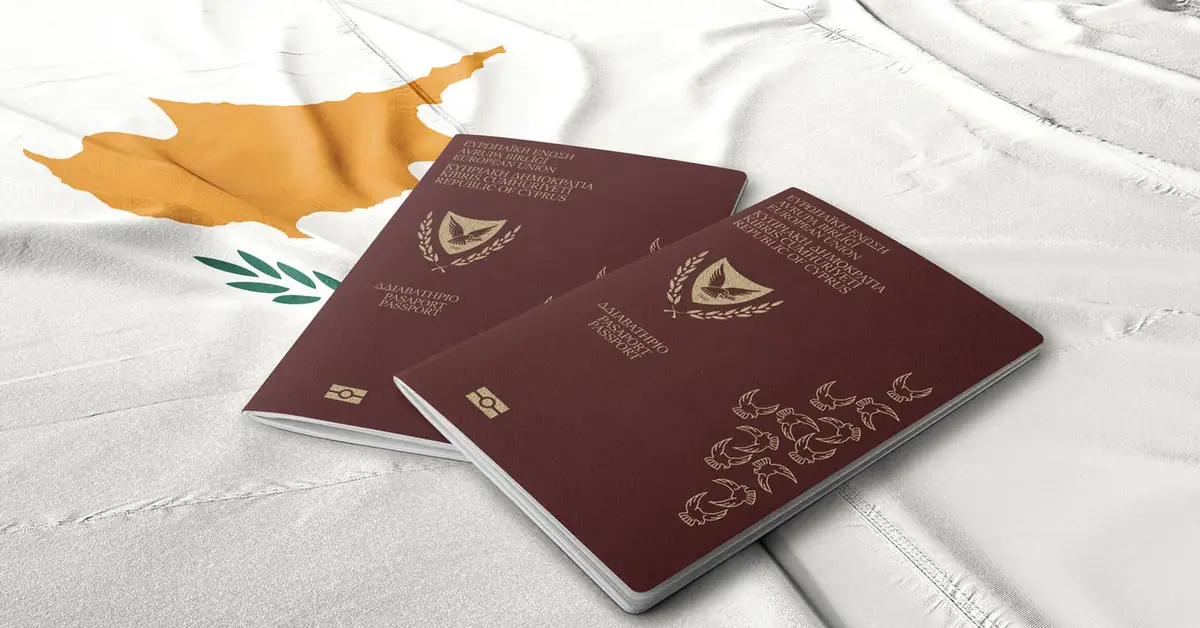
Cyprus citizenship through Category F is the naturalisation route for holders of Permanent Residence Category F after 8 years of legal residence on the island. It is neither fast nor easy, but it is the most capital-efficient way to obtain an EU passport without investing 300,000 EUR under category 6.2. This article analyses in full the requirements, the actual timeline, the Greek B1 requirement, the M127 procedure and the challenges Vietnamese HNWIs need to know about before committing to this long-term strategy.
Message
Overview of the Category F path to Cyprus citizenship
Permanent Residence Category Fis a passive-income permanent residence category for foreigners with enough income from abroad to live inCyprus. Unlike the 6.2 fast track, which requires a 300,000 EUR real estate investment, Category F has a very low income threshold — 9,568 EUR a year for the main applicant, plus 4,613 EUR for each dependant.
After receiving Category F PR, the permit holder has the right to live in Cyprus indefinitely without renewal, needing only to visit Cyprus at least once every 2 years to maintain the status. This is an attractive starting point but not enough for a passport — Category F does not automatically lead to citizenship.
To move from Category F PR to citizenship, the applicant must actually accumulate 8 years of physical residence in Cyprus, reach B1 level in Greek and pass the Cyprus social and political knowledge test. Only then is the applicant eligible to submit Form M127 for naturalisation. For the overall 7+1 year framework applying to all categories, see the detailed Cyprus citizenship pathway.
Legal basis
This route is based on the Civil Registry Law 1(I)/2002, whose most important amendment is Law 149(I)/2023, effective from 19/12/2023. The new rules have reshaped the residence standards and Greek language requirements for all naturalisation applicants.
The 2023 amendment divides applicants into three groups with different residence requirements: the general group (8 years in total, comprising 7 years within the previous 10 years + 12 continuous months), highly skilled professionals at foreign-interest companies with A2 Greek (5 years in total), and highly skilled professionals with B1 Greek (4 years in total).
Category F holders almost always fall into the general 8-year group — because Category F prohibits working in Cyprus, they cannot qualify under the highly skilled professional route unless they switch to another permit.
Who it suits
Cyprus citizenship through Category F suits three specific groups. The first is retirees or semi-retirees with stable passive income — pensions, dividends, deposit interest, rent — who are ready to actually settle in Cyprus long-term for 8+ years.
The second is HNWIs with a limited budget (less than 300,000 EUR excluding VAT to buy property) but high passive income and time. They accept a capital-for-time trade-off: saving the 300,000 EUR investment in exchange for 8 years of actual residence.
The third is families with school-age children who want their children to study at international schools in Cyprus and obtain EU citizenship after 8 years. Schools in Limassol and Nicosia are of high quality at a much lower cost than in the UK or the US.
Considering a residency programme? The Prosperous Living Investment team assesses your profile free of charge and advises on the pathway that fits your goals.
Actual residence requirements for the citizenship path
The biggest difference between maintaining Category F PR and obtaining citizenship lies in the physical residence requirement. A common mistake among Vietnamese investors is thinking that “having Category F PR → automatic naturalisation after 8 years”. The reality is much more complicated.
The 7+1 year rule under Law 149(I)/2023
Under the Civil Registry Law 149(I)/2023, in force since 19/12/2023, general-group naturalisation applicants must meet two residence conditions at the same time: 12 continuous months immediately before submitting Form M127, plus 7 years of legal residence within the 10 years preceding that 12-month period.
Specifically, if applying on 01/05/2034, the applicant must have lived continuously from 01/05/2033 to 30/04/2034 (12 months) and have accumulated 7 full years of residence between 01/05/2023 and 30/04/2033.
During the final 12 continuous months, the applicant may be absent for a maximum of 90 days in total. Absences of more than 90 days break the 12 months and the count must start again from scratch — a major risk that must be tightly controlled.
How “days of residence” are counted
Counting days of residence follows specific rules that are easy to get wrong. The day of arrival in Cyprus counts as 1 day in Cyprus, and the day of departure counts as 1 day outside Cyprus. So a 7-day trip does not count as a full 7 days of residence — only 6 days (excluding the departure day).
Time spent studying in Cyprus does NOT count towards years of residence for naturalisation. This controversial rule disadvantages families whose children attend university in Cyprus and want to naturalise after graduating.
The 7 years of residence need not be continuous and can be broken up, as long as they add up to 2,555 days within the 10-year period before the final 12 months. However, each period of residence must be covered by a valid permit (Category F, a work permit or another category).
The conflict between Category F and the residence requirement
This is the biggest surprise for many investors. The Category F permit does not require continuous residence — holders only need to visit Cyprus once every 2 years. However, to qualify for citizenship, they must actually reside for the full 7+1 years.
This means Category F holders who live mainly in Vietnam and visit Cyprus only once every 2 years will NOT be able to naturalise after 8 years — because they will not have accumulated enough days of residence. Many people who bought Category F just for an “EU back-up” without actually settling have ended up in this situation.
To qualify for citizenship, you must spend at least 60% of your time (about 220 days a year) in Cyprus over the previous 7 years, plus near-continuous residence in the final year. This is a major lifestyle commitment that needs careful consideration before choosing this route.
The Greek language requirement at B1 level
The Greek language requirement is the biggest technical barrier for Vietnamese people wanting to naturalise in Cyprus. B1 level under the Common European Framework of Reference for Languages (CEFR) requires the ability to communicate independently in everyday situations in Greek.
What B1 level means in practice
According to Common European Framework of Reference for Languagesof the Council of Europe, B1 (Intermediate) level requires the ability to: understand the main points of standard texts on familiar topics; handle most situations while travelling in a country where the language is spoken; produce simple, coherent texts on familiar topics; and describe experiences, events, dreams and hopes and briefly give reasons for opinions and plans.
Applied to Greek B1: applicants need to read Cypriot newspapers, write simple official emails, communicate at a hospital or public office, recount events and express personal views. This is a genuinely usable level, not a “smattering”.
For people starting Greek from zero, reaching B1 usually takes 600–800 hours of active study. Vietnamese learners without a good foundation in Latin-script languages or English will take longer — the Greek alphabet is completely different and the grammar is complex.
The two official certifying bodies
Only two bodies are officially recognised to issue B1 certificates for naturalisation. The first is the Greek Language Centre of the Hellenic Republic, through the Examination Service of the Directorate of Higher Education of the Ministry of Education, Sports and Youth. The second is the School of Modern Greek at the University of Cyprus.
The exam has four parts: listening, reading, writing and speaking. It takes about 3.5 hours in total. The exam fee is about 80–120 EUR per attempt. Results are recognised indefinitely — a B1 certificate obtained in 2032 can still be used for an M127 application in 2034.
B1 certificates from other institutions (such as Cambridge or private international Greek language centres) are not recognised by Cyprus for naturalisation. This is worth noting, because many people study online through these centres but ultimately still have to sit the exam in Cyprus or Greece.
Exemptions from the B1 requirement
Two groups are exempt from the B1 certificate requirement: people with a secondary school diploma from a school whose main language of instruction is Greek, and people with a university degree from a programme taught entirely in Greek.
Vietnamese families who want to use this exemption can consider having their children attend upper secondary school or university at a Cypriot public school (taught in Greek). This suits families with children aged 12–16 who move to Cyprus with their parents — exempting the children from B1 while helping them integrate socially.
The parents themselves must still take the B1 exam unless they fall under the two exemptions above. For Vietnamese adults, there is almost no way around this requirement — they must invest 1–2 years in active Greek study.
The Cyprus social and political knowledge test
Besides Greek, applicants must pass the test on the Basic Elements of the Contemporary Political and Social Reality of Cyprus with a minimum score of 60%. This is a new requirement of Law 149(I)/2023, replacing the old assessment through interviews without clear standards.
Exam content
The exam is organised by the Examination Service of the Cyprus Ministry of Education. Questions cover: Cyprus’s political system (the structure of the Republic, the role of the President, the House of Representatives, the Council of Ministers); modern Cypriot history; core social values (democracy, pluralism, EU integration); the reunification of Cyprus and relations with Northern Cyprus; and relations with Greece, Turkey and the EU.
The exam is conducted in Greek — a double barrier, as applicants must both have B1 and understand complex political and social content in Greek. The study materials provided by the Ministry of Education run to about 100–150 pages.
Most applicants need 3–6 months of serious study to pass this exam, even those with solid B1. The exam fee is about 50 EUR per attempt, and it can be retaken if failed.
How to prepare effectively
The most effective approach is to study B1 and Cyprus civic knowledge in parallel during the final 18–24 months before applying. Many Greek language centres in Cyprus offer integrated “Citizenship Preparation” courses covering both.
The University of Cyprus and some private language schools in Limassol and Nicosia offer 6-month intensive courses taking learners from A2 to B1 + civic knowledge. Course fees are about 2,500–4,000 EUR in total.
Applicants can join cultural tours, read local Cypriot newspapers (such as the English-language Cyprus Mail and the Greek-language Phileleftheros) and attend community events — all of which build real understanding rather than rote learning from textbooks.
The Form M127 application process
Form M127 is the official application for naturalisation on the basis of long-term residence. It is a complex legal document with a long list of attachments, requiring 6–12 months of preparation before submission.
The complete file
According to the official announcement of theCivil Registry and Migration Department of the Cyprus Ministry of the Interior, the M127 file includes the following groups of documents:
Personal documents: Form M127 signed before a Registrar of Court or Consular Officer; copies of all passport pages (old and current passports) showing Cyprus entry and exit stamps; a detailed list of arrival and departure dates prepared by the applicant; 2 recent passport photos stamped by the local Muhtar.
Proof of residence: property purchase or lease contracts in Cyprus; rent or mortgage payment receipts; electricity and water bills covering 7+ years proving actual residence; Cyprus bank account statements.
Proof of finances: evidence of income (salary, pension, dividends, rent); income tax returns in Cyprus and the country of tax residence; bank account statements for the last 12 months.
Proof of character: Cypriot and Vietnamese criminal record certificates (the Vietnamese one must be consularly legalised or apostilled); birth certificate; marriage certificate (if any); name change certificate (if any).
Educational certificates: the Greek B1 certificate; the certificate of passing the Civic Knowledge test; legalised academic qualifications.
Publicity requirement: 2 notices published on 2 consecutive days in Cypriot newspapers announcing the applicant’s intention to naturalise.
Legalising Vietnamese documents
All Vietnamese documents (birth certificate, marriage registration, criminal record certificate, qualifications) must be legalised and translated into English or Greek to Cypriot standards. Until 11/09/2026, the current process is three-step consular legalisation through the Consular Department of Vietnam’s Ministry of Foreign Affairs and the Cyprus Embassy in Bangkok (Thailand, as Cyprus has no embassy in Vietnam).
Vietnam deposited its instrument of accession to the Apostille Convention on 31/12/2025. The Convention officially enters into force for Vietnam on 11/09/2026. After that date, the process will be reduced to a single Apostille step issued by the Consular Department, fully replacing the old three-step chain.
Applicants submitting M127 before 11/09/2026 must use the traditional three-step process. Applicants submitting after that date benefit from the simplified Apostille process, saving 4–6 weeks and cutting costs by 50–60%.
Fees and where to apply
The Form M127 application fee is 500 EUR + 2 stamps of 8.54 EUR each (17.08 EUR in total). If the application is approved, the applicant pays a further 500 EUR on receiving the Certificate of Naturalisation.
Applications are submitted at the local District Administration Offices — Limassol, Nicosia, Larnaca, Paphos or Famagusta depending on where the applicant lives. Some applications can be submitted to the central Civil Registry and Migration Department in Nicosia.
Applicants must sign Form M127 in person before a Registrar of Court — a lawyer cannot sign on their behalf. However, a lawyer can prepare the entire file and follow up on processing after submission.
Processing time and interview
Processing time is the biggest weakness of the Category F path to Cyprus citizenship. Unlike the 4–5 year fast track for highly skilled professionals, which has a statutory maximum processing time of 8 months, general-group applicants have no fixed processing deadline.
In practice, 2–3 years of processing
According to actual data from March 2026, general-group M127 applications take 2–3 years on average to process, with some complex cases taking 3–4 years. This is a significant period on top of the preceding 8 years of residence — the actual total journey can reach 10–12 years.
Reasons for slow processing: a large number of applications, strict background checks on non-EU nationals and a shortage of processing staff at the Civil Registry and Migration Department. The Council of Ministers makes the final decision — there is no SLA commitment on timing.
While the application is pending, the applicant must still maintain legal residence in Cyprus (renewing Category F if needed). Leaving Cyprus for too long during this period may be seen as a “lack of intention to reside” and damage the application.
Interview with immigration officers
Most M127 applicants are invited to an in-person interview with immigration officers at the District Administration Office. The interview lasts 30–60 minutes, in Greek or English at the officer’s discretion.
The interview covers: actual residence history, work and sources of income, reasons for wanting Cypriot citizenship, knowledge of Cypriot culture and future plans. Its main purpose is to verify the “intention to reside” — that the applicant genuinely wants to live in Cyprus long-term, not just get a passport and leave.
Answers should be clear, consistent with the file submitted and show a genuine connection with Cyprus (owning a home, having friends, understanding the culture, planning to stay). Applicants whose profile shows a “too-Vietnamese lifestyle” — spending only the legally required number of days in Cyprus — often face suspicion and slower processing.
Obligations after receiving citizenship
Obtaining Cypriot citizenship marks the end of an 8–12 year journey, but also the start of some new legal obligations. The two most important for Vietnamese HNWIs are military service for sons and the decision about Vietnamese nationality.
Military service for male citizens
Cyprus maintains compulsory military service for male citizens. Under current rules, men who have newly acquired citizenship by naturalisation are required to serve:
- Aged 18–26: 6 months of service, enlisting within 2 years of receiving citizenship. If late, an extra 2 months must be served (8 months in total).
- Aged over 26: 3 months of service. If late, an extra 2 months must be served (5 months in total).
This is an important factor for families with sons in these age groups. Many Vietnamese families have postponed registering their sons’ citizenship until after the age of 26 to reduce the length of service.
Conscripts are called up every July at the nearest military camp. A 1–2 year deferral can be requested for study or health reasons, but there is no full exemption.
Dual citizenship with Vietnam
Vietnam restricts dual citizenship under the amended 2008 Law on Nationality. Vietnamese people who voluntarily acquire another nationality may lose Vietnamese nationality, except in special cases where the President permits them to keep dual nationality.
In practice, many Vietnamese people have acquired Cypriot citizenship without declaring renunciation of Vietnamese nationality and continue to use both passports. However, this is a legal grey area — Vietnam does not recognise dual citizenship but does not actively pursue it either.
Cyprus fully recognises dual citizenship. People acquiring Cypriot citizenship are not required to renounce their original nationality. The final decision rests with the applicant, weighing the legal risks on the Vietnamese side against the practical benefits of a Cypriot passport.
Rights of Cypriot citizenship
After acquiring citizenship, applicants enjoy the full rights of EU citizens: freedom to travel, live and work in the 27 EU countries; freedom to do business within the EU; access to EU public health and education systems; and diplomatic protection by Cyprus and the EU in third countries.
The Cypriot passport gives visa-free or visa-on-arrival access to about 175 countries, including the whole EU/EEA, the UK, Canada (eTA), the US (ESTA), Australia, Japan, South Korea and most of Asia except China. The difference between Vietnamese and Cypriot passports in mobility and international business opportunities is huge — this is the biggest practical benefit that leads Vietnamese HNWIs to pursue this 8–12 year journey.
Comparison with other routes
To understand the true value of the Category F path to Cyprus citizenship, it needs to be placed in the context of the other options open to Vietnamese HNWIs. Each route has its own trade-offs between capital, time, residence requirements and certainty.
Compared with the 6.2 fast track
Permanent Residence 6.2 requires a 300,000 EUR real estate investment + income of 50,000 EUR a year. The citizenship path after 6.2 is also 8 years of actual residence — no different from Category F. For a detailed comparison of the two categories, see the articleCyprus 6.2 vs Category F.
This means 6.2 and Category F share the same naturalisation path and differ only in initial capital. 6.2 issues the permit faster (2 months compared with 8–12 months for Category F) and has the advantage of a real estate asset. Category F saves capital but requires stable passive income and usually a smaller property purchase for actual residence.
For HNWIs with a budget of 300,000 EUR or more who want to manage a real estate investment, 6.2 is the clear choice. Category F is better suited to retirees with high passive income who do not want to lock up large amounts of capital.
Compared with the 4–5 year highly skilled professional route
The highly skilled professional route at foreign-interest companies is shortened to 4–5 years. It is the fastest route to Cypriot citizenship, applying to employees of tech, shipping and BFU companies earning more than 2,500 EUR a month.
However, this route requires a genuine employment contract with an eligible company. Vietnamese HNWIs who invest passively do not qualify — they must actually work and pay social insurance in Cyprus.
Some Vietnamese families combine routes: parents through Category F (investment + residence) and children through the highly skilled professional route after graduating from university — using the 4–5 year path for the children and the 8-year path for the parents.
Compared with Caribbean CBI
Cyprus citizenship through Category F takes 8–12 years in practice and requires physical residence. By contrast, Caribbean CBI programmes (Saint Kitts and Nevis, Dominica, Antigua, Grenada, Saint Lucia) grant citizenship within 4–6 months for a donation of 200,000 USD or more or a real estate investment of 200,000–400,000 USD, with no residence requirement.
Caribbean CBI is fast and does not lock in a lifestyle, but the passport’s value is much lower — no freedom of movement in the EU and no access to EU health and education systems. Cyprus offers an EU passport, allowing you to live and work in any EU country — far superior mobility and business opportunities.
Vietnamese HNWIs often combine the two: Caribbean CBI as a quick Plan B and Cyprus for long-term EU integration. The two strategies are not mutually exclusive and together create a strong passport portfolio.
Summary and next steps
Cyprus citizenship through Category F is the most capital-efficient way to obtain an EU passport through Cyprus residency by investment, but it comes with a long-term lifestyle commitment of 8–12 years. It is not an option for those seeking a “fast EU passport” — it is a strategy for people ready to genuinely integrate into Cypriot society.
Three key factors determine the success of this route: genuinely sufficient physical residence (not just on paper), a truly usable B1 level of Greek, and patience with 2–3 years of processing after 8 years of residence. Without any one of these three factors, the route will fail.
The next step for Vietnamese HNWIs considering this route is an honest assessment: are you ready to spend 60% of your time in Cyprus every year for 8 consecutive years? Can you learn Greek to B1 level within 2 years? Is your current passive income enough to support life in Cyprus throughout this period? Answering these three questions frankly before starting is the most important thing. See our other analyses ofCyprus residency by investmentfor a full picture of the alternative routes before deciding.
Accompanying you on your journey in residency investment
The Prosperous Living Investment team advises on pathways, assesses profiles and manages investments transparently for every residency, citizenship and international property objective.
Free profile assessmentWhere life gets prosperous