


The history of Paraguay (capital Asunción) is a long journey from indigenous Guaraní communities, through the Spanish colonial period with Jesuit missions, to independence in 1811 and the profound upheavals of the 19th and 20th centuries before entering the democratic era.
Contents
Guaraní inhabitants and the land before the colonial period
Before Europeans set foot in the region, the land that is now Paraguay was inhabited by indigenous communities, most notably the Guaraní. They were a group of people speaking languages belonging to the Tupi-Guaraní family, living in villages along rivers and cultivating crops such as maize, cassava, and potatoes.
The Guaraní did not create a centralised empire like the Inca in the Andes. Instead, they organised themselves into many semi-sedentary communities, attached to the forests and rivers. This way of life later deeply influenced the nation’s culture and language.
The Guaraní heritage is a core component of the national identity. To this day, the Guaraní language is widely spoken alongside Spanish, a rare feature in Latin America and a testament to the vitality of indigenous heritage throughout history.
Considering a residency programme? The Prosperous Living Investment team assesses your profile free of charge and advises on the pathway that fits your goals.
The arrival of the Spanish and the birth of Asunción
During the first half of the 16th century, Spanish expeditions entered the Río de la Plata basin to find a route into the continent and search for wealth. While travelling upstream, they established a trading post and fort at a strategic location on the Paraguay River.
Asunción was founded in 1537 and quickly became an important Spanish administrative centre in the South American interior. For a long time, the city served as a springboard for expeditions and a base for expanding colonial power to the south and east.
Unlike many other regions of the Americas that were rich in precious minerals, this area lacked large gold and silver mines. Consequently, the colonial economy relied heavily on agriculture, livestock, and indigenous labour, which early on shaped a society blending Spanish and Guaraní elements.
Jesuit missions in the history of Paraguay
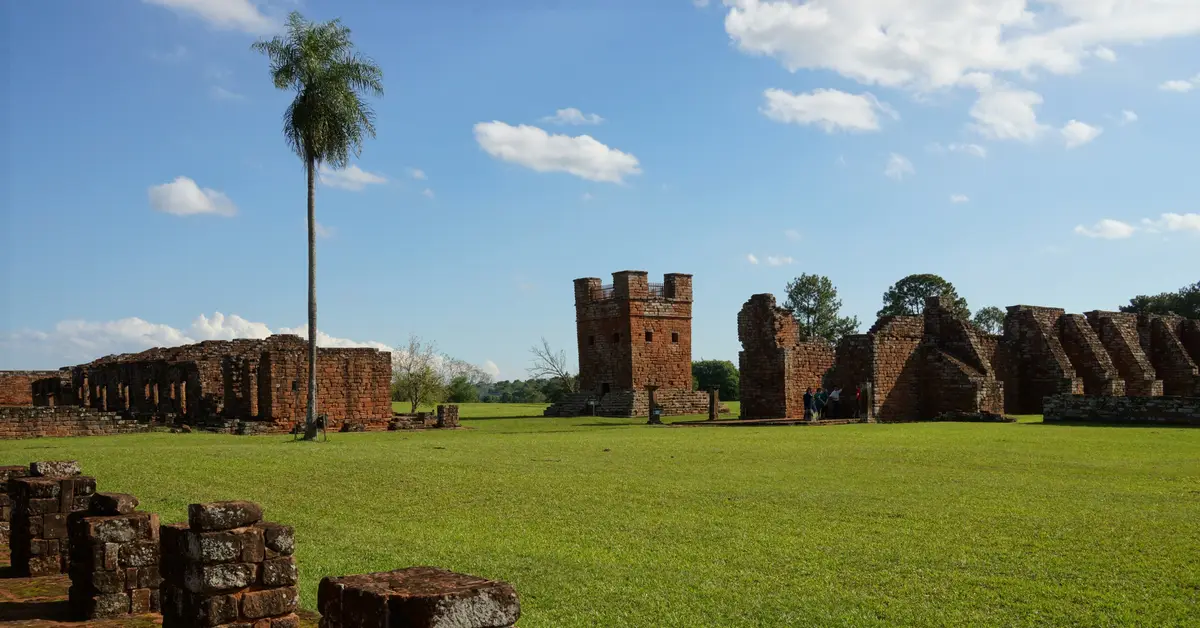
A unique chapter in Paraguay’s colonial history is the emergence of missions established by the Jesuits, often called reducciones. Beginning in the early 17th century, Jesuit priests gathered many Guaraní communities into organised settlements.
In these missions, the Guaraní learned Catholic doctrine while continuing to use their native language and maintaining many aspects of indigenous life. The settlements developed agriculture, crafts, music, and architecture, creating a social model that was unique compared to the rest of the colony.
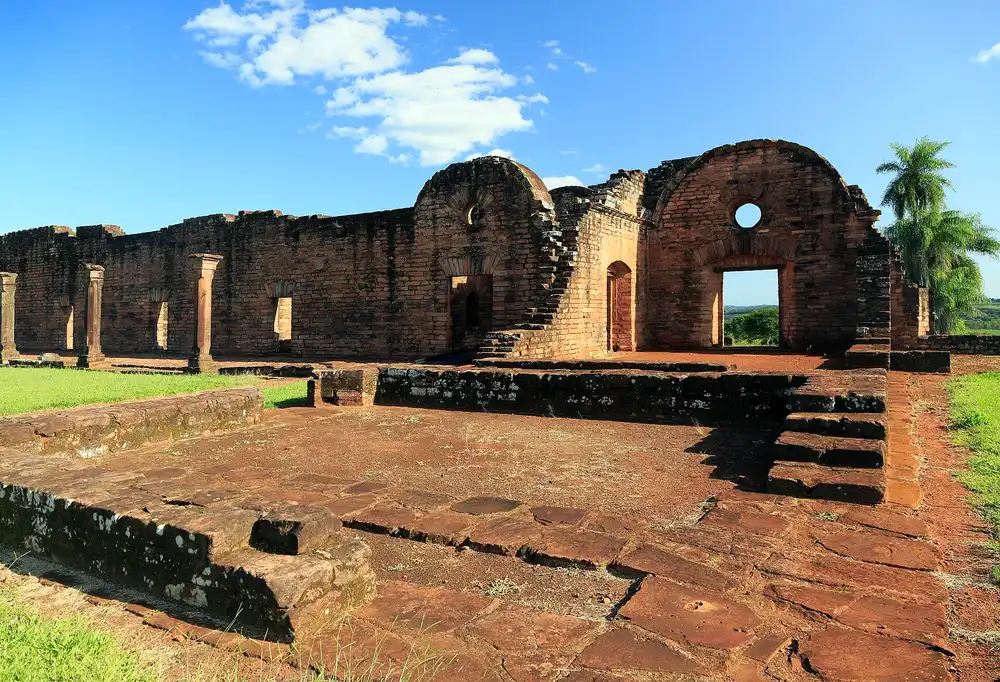
This model existed until the Jesuits were expelled from Spanish crown territories in the second half of the 18th century, causing many missions to gradually decline. Nevertheless, their legacy remains clear. Several mission complexes in Paraguay have been recognised as World Heritage sites by UNESCO.
These ruins are not only architecturally significant but also symbols of the encounter between two cultures. They reflect how faith, language, and social organisation intertwined during a critical period of the colonial era.
The road to independence in 1811
In the early 19th century, a wave of demands for independence spread across Spanish colonies in the Americas, as the Spanish motherland weakened due to turmoil in Europe. The Río de la Plata region became the epicentre of major political movements.
The people in Asunción and the surrounding areas did not want to be controlled by Buenos Aires after central power faltered. In 1811, Paraguay declared its separation from both Spain and the influence of Buenos Aires, marking the birth of an independent nation.
The 1811 independence event was a foundational milestone. From this point, Paraguay began its journey to determine its own destiny, although the path ahead was filled with challenges regarding institutions, the economy, and relations with larger neighbouring countries.
The period of the first leaders after independence
After gaining independence, Paraguay experienced a period shaped by powerful rulers. The first leader with overwhelming influence was José Gaspar Rodríguez de Francia, who held power for many years with a centralised and closed approach.
Under his rule, the country pursued a policy of relative isolation from the outside world, limiting trade and foreign intervention while consolidating state power. This approach helped maintain de facto independence but also left Paraguay detached from the region.
After Francia, the López family took power and steered the country towards greater economic openness and modernisation. This period saw efforts to build infrastructure, a military, and a state apparatus, laying the foundations for a stronger Paraguay but also leading to major tensions with neighbouring countries.
War of the Triple Alliance (1864–1870)
One of the most tragic and pivotal events in Paraguay’s history is the War of the Triple Alliance, which took place from 1864 to 1870. In this war, Paraguay had to face a coalition of three large neighbours simultaneously: Brazil, Argentina, and Uruguay.
The war lasted for many years and left devastating consequences. Paraguay suffered human and material losses that historians consider extremely heavy, with the majority of the male population killed and the economy nearly exhausted. This is considered one of the bloodiest wars in South American history.
The consequences of the war went far beyond the military sphere. The territory was reduced, the population declined severely, and society fell into a prolonged crisis. The country’s demographic structure and way of life were upended, leaving deep wounds in the collective memory of many generations.
After the war, Paraguay entered a difficult period with an urgent need for recovery in all aspects. This event remains a central theme when reflecting on the formation of the nation’s modern state.
Reconstruction period at the end of the 19th century
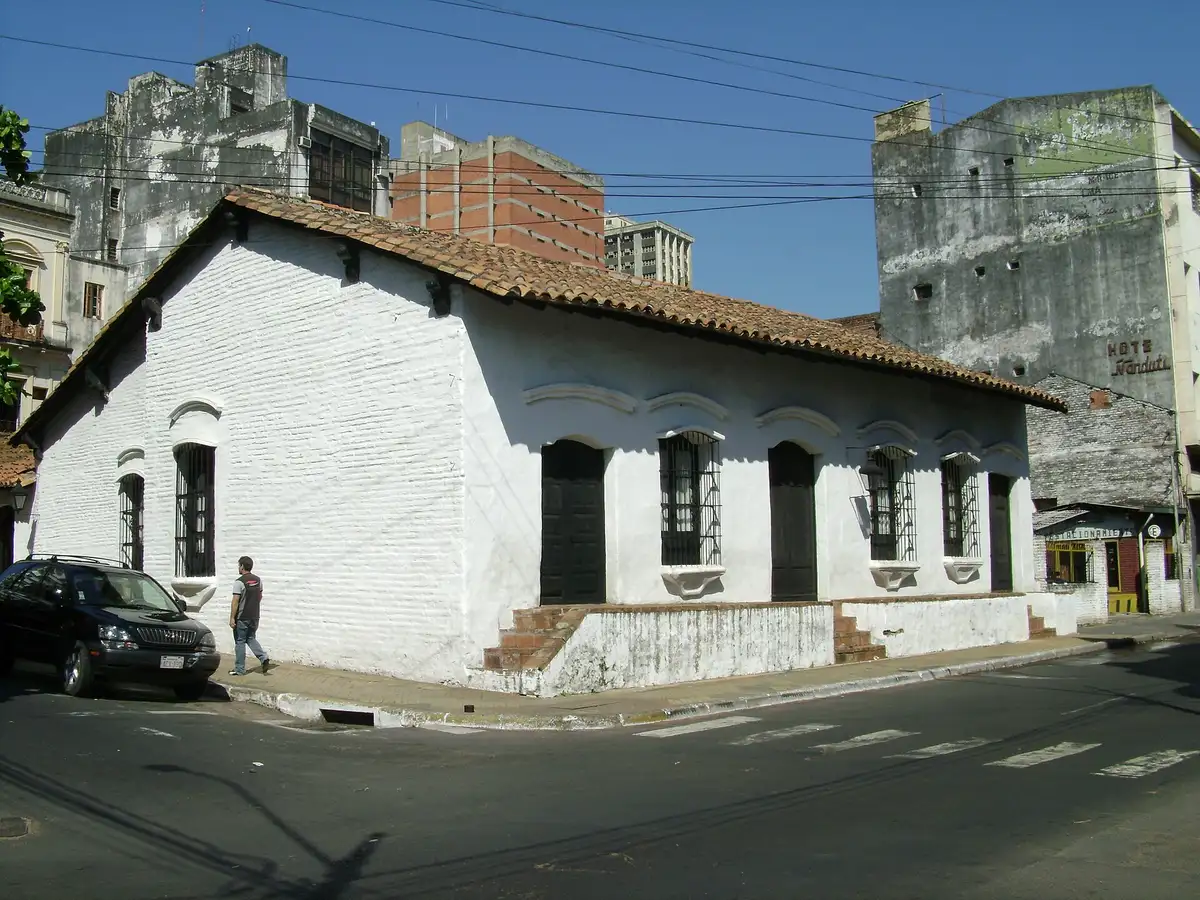
After the War of the Triple Alliance, Paraguay faced the heavy task of rebuilding a nearly broken country. The population had dropped sharply, many areas were abandoned, and the economy needed to be rebuilt almost from scratch.
During the final decades of the 19th century, the country gradually stabilised politically, although it still experienced many fluctuations and power struggles between factions. Attracting immigrants and expanding agriculture and livestock became key directions for recovery.
The reconstruction period laid the groundwork for the formation of key political parties, which still influence political life today. Although the recovery process was slow and uneven, it was a necessary transition for Paraguay to enter the 20th century.
Chaco War with Bolivia (1932–1935)
In the 20th century, Paraguay was again drawn into another major conflict: the Chaco War with Bolivia, which took place from 1932 to 1935. The war broke out due to a sovereignty dispute over the vast, arid Gran Chaco region located to the west.
The Chaco region was believed to have resource potential and strategic significance for both countries. The war took place in harsh natural conditions, with water shortages and rugged terrain, causing many difficulties for soldiers on both sides and leaving significant losses.
At the end of the war, Paraguay gained control of most of the disputed Chaco region, according to subsequent arrangements. This was an important territorial victory, helping to shape the country’s western border as it exists today.
Although it brought positive territorial results, the Chaco War also left a burden on human resources and the economy. The experience of the war continued to affect internal political life in the following years.
Dictatorship and democratic transition period
For most of the second half of the 20th century, Paraguay’s political life was dominated by a long period of rule under a dictatorship. Power was highly centralised, political freedoms were restricted, and the state apparatus was closely tied to a ruling party.
This period lasted for several decades and only ended in the late 1980s, when the dictatorial regime was overthrown. This event paved the way for a transition to a more democratic and pluralistic system.
A key institutional turning point came in 1992, when Paraguay adopted a new constitution that laid the foundation for a democratic republic. This constitution established the separation of powers, civil rights, and a framework for elections and political activity.
The democratic transition did not proceed perfectly smoothly but went through many challenges, tensions, and political crises. However, it remains a foundational milestone for the country’s current system. You can learn more about the state structure in the article on Paraguay’s politics.
Paraguay in the modern era
Entering the 21st century, Paraguay has continued to consolidate its democratic institutions and integrate more deeply into South America. The country is a member of regional cooperation organisations and maintains relations with many neighbouring countries as well as partners around the world.
Economically, the country relies heavily on agriculture, livestock farming, and the abundant hydroelectric power generated by its major rivers. These characteristics have deep historical and geographical roots, tied to how the nation was formed and developed through various eras.
The legacy of past periods, from Guaraní culture to wars and reconstruction, remains present in the contemporary identity. The coexistence of the Guaraní and Spanish languages is a vivid testament, linked to Paraguay culture today.
Overall, the history of this landlocked nation is a story of resilience in the face of adversity. To better understand the general picture, readers can refer to the overview of the country of Paraguay.
Accompanying you on your journey in residency investment
The Prosperous Living Investment team advises on pathways, assesses profiles and manages investments transparently for every residency, citizenship and international property objective.
Free profile assessmentWhere life gets prosperous