
Thessaloniki Property: Greece's Second City with an €800,000 Golden Visa Threshold

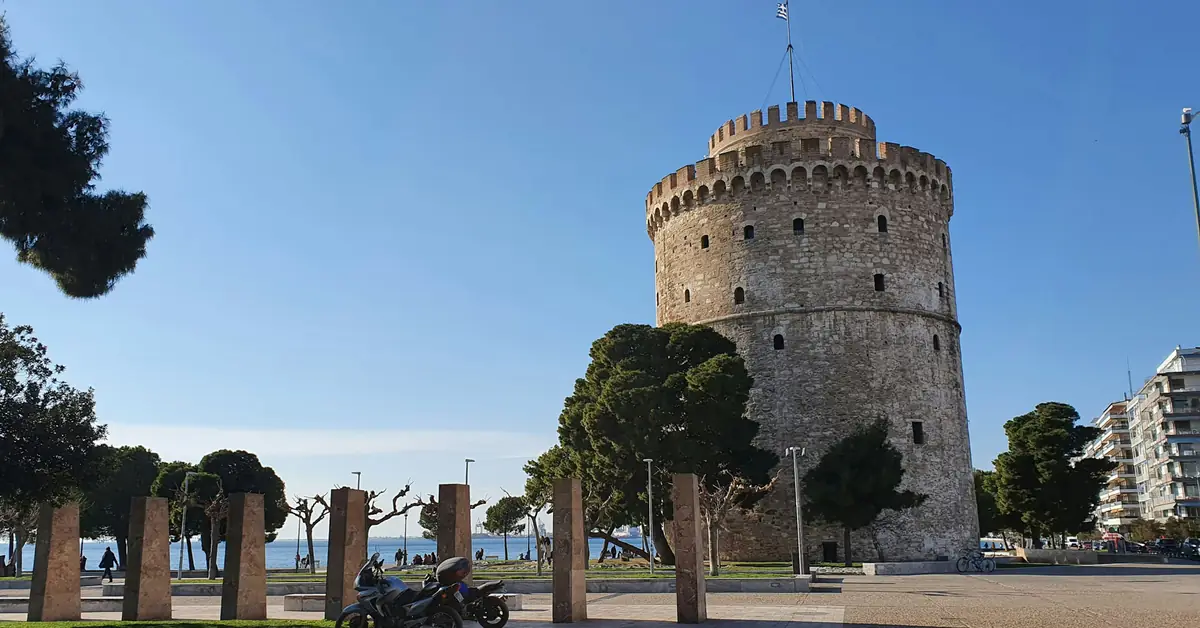
Thessaloniki property is the second most important residential market segment after Athens on the investment map of Greece. As the largest city in northern Greece, a Balkan trade gateway hub and a UNESCO heritage city, Thessaloniki combines Byzantine historical character with modern urban infrastructure that is transforming rapidly since the metro line officially began operating at the end of 2024 and completed its Kalamaria extension in February 2026.
Under Law 5100/2024, effective from 31 March 2024, the entire Regional Unit of Thessaloniki was placed in Zone A of the Greece Golden Visa programme, with a minimum investment threshold of €800,000 on a single property — the same tier as Athens, Mykonos and Santorini. However, the price per m² here is only half to two-thirds that of Athens, opening up the chance to own a larger apartment or villa on the same Golden Visa budget. This article analyses the area’s characteristics, price levels and investment considerations for Vietnamese investors weighing up Thessaloniki.
Message
Overview of the Thessaloniki property market
Thessaloniki has a central municipality population of around 320,000 and a metropolitan population of around 1.1 million — the second largest in Greece after metropolitan Athens (3.7 million). The city stretches along the Thermaic Gulf, running from the Port of Thessaloniki in the west to Kalamaria and Mikra in the south-east, with its urban centre around Aristotelous Square and the Nikis Avenue waterfront.
Thessaloniki’s urban structure is divided into clearly defined functional districts. Kentro (City Centre) is the central commercial-residential district, combining neoclassical buildings with mid-rise apartments from the 1960-1980 period. Ano Poli (Upper Town) is the hillside UNESCO heritage district with Byzantine city walls and old houses. Kalamaria is the upscale seafront district in the south-east, likened to “the Glyfada of Thessaloniki”. Toumba and Charilaou are middle-class residential districts to the east. Nea Krini, Aretsou and Mikra form the newly developing belt driven by the metro extension.
According to data from the Hellenic Statistical Authority (ELSTAT), the municipality of Thessaloniki has a population density of around 18,000 people/km², nearly as high as central Athens. Its standout demographic feature is the highest proportion of university students in Greece — Aristotle University of Thessaloniki (AUTH), with more than 88,000 students, is the largest university in Greece and the largest in South-East Europe. This is the core factor behind Greece’s most stable long-term rental demand.
Thessaloniki is also a logistics gateway hub between Greece and the Balkan peninsula. The Port of Thessaloniki — Greece’s second-largest container port — is currently being expanded. Macedonia International Airport (SKG) continues to add long-haul international routes. The combination of transport infrastructure, a major university and its Balkan gateway position gives it a more diversified economic structure than Greece’s tourist cities.
Considering a residency programme? The Prosperous Living Investment team assesses your profile free of charge and advises on the pathway that fits your goals.
The impact of the new metro line and urban infrastructure
The Thessaloniki metro officially began operating on 30 November 2024 after nearly 20 years of construction — the most significant infrastructure event in Greece in a decade. The five-station Kalamaria extension then opened in February 2026, connecting the upscale south-eastern coastal districts to the centre in just 15-20 minutes. Before the metro, getting around central Thessaloniki depended entirely on buses and taxis, with frequent traffic congestion.
The “Metro Effect” on property has already been marked. According to market data referencing the Bank of Greece and Spitogatos indices, the Kalamaria, Aretsou, Nea Krini and Mikra districts recorded price growth of 10-15% in the 2024-2025 period alone after the metro opened. The areas around the Sintrivani and University stations in the centre also rose 8-12% over the same period.
Alongside the metro, Thessaloniki is undergoing a comprehensive infrastructure upgrade. Macedonia Airport expanded its international terminal in 2024 to a capacity of 14 million passengers a year. The Port of Thessaloniki has been privatised and is rolling out a container terminal expansion through to 2027. The New Waterfront has been redesigned into a 3.5km public space, turning the Nikis Avenue-Megalou Alexandrou axis into a benchmark location for the premium property market.
Notably, Thessaloniki is also seeing a wave of technology investment, with multinational corporations setting up R&D centres in pharmaceuticals and high technology. This is generating a new source of rental demand — young, high-income professionals — alongside the traditional university student community.
Thessaloniki property market price levels
Thessaloniki property prices stand out for the wide gap with Athens despite both being placed in the €800,000 Zone A. According to the urban residential price index published by the Bank of Greece , the average asking price across Thessaloniki ranged from €2,300-€2,625/m² in early 2026, recording growth of 9.38% in 2024-2025 — faster than even Athens.
Price variation between districts is pronounced. Kalamaria is the most upscale district, priced at €3,500-€4,500/m², with some sea-view penthouses exceeding €5,000/m². Nikis Avenue (the central waterfront) is priced at €4,000-€5,500/m² for units overlooking the Thermaic Gulf — the city’s luxury segment.
Kentro (City Centre) around Aristotelous Square is priced at €2,500-€3,500/m². The Ano Poli UNESCO heritage district is priced at €1,800-€3,000/m² depending on the building’s condition — many units need renovation under conservation rules. Toumba and Charilaou (middle-class residential districts) are priced at €1,800-€2,500/m², serving the student community and young families.
The newly developing Aretsou, Nea Krini and Mikra districts are priced at €2,500-€3,500/m², rising quickly since the metro extension opened. These districts are assessed as having the best appreciation potential over the next 5 years, as the metro effect has not yet been fully priced in.
To reach the €800,000 Zone A threshold under Law 5100/2024, investors have several flexible options in Thessaloniki. A newly built 180-220m² penthouse in Kalamaria typically trades at €700,000-€900,000. On Nikis Avenue, a 150-180m² luxury sea-view apartment falls in the €800,000-€1 million range. In the City Centre, an €800,000 budget can buy a 250-300m² premium apartment or newly built maisonette — roughly double the floor area of the same budget in Plaka or Kolonaki, Athens.
A direct comparison: with the same €800,000, an investor can buy 100-110m² in Kolonaki, Athens, or 130-150m² in Glyfada, Athens, but can reach 180-250m² in Kalamaria, Thessaloniki. This is the factor behind Thessaloniki’s positioning as the “Athens value alternative” for the Zone A segment.
Resident profile and rental yields
Thessaloniki’s resident base is diverse and stable. Kalamaria and Nikis Avenue attract the local upper class, Balkan businesspeople, well-off retirees and some of the Greek diaspora returning from the United States and Germany. Kentro is home to mid-to-senior professionals, senior civil servants and Aristotle University faculty. Toumba and Charilaou serve middle-class families and the long-term student community (PhD and postdoc students).
The community of more than 88,000 students at Aristotle University is Thessaloniki’s most reliable source of rental demand. Unlike seasonal, tourism-linked universities, AUTH sustains continuous rental demand for 9-10 months a year, with 1-3 year long-term leases common. In addition, more than 5,000 international students (mainly from Germany, France, the Balkan countries and China) create a premium rental segment with rents 20-30% higher than for domestic students.
Thessaloniki rental yields rank among the highest in Greece. According to market analysis referencing the Bank of Greece index, the average gross yield city-wide reaches 5-6% per year — above the Athens average. The central area near Aristotle University achieves the highest yield of 5.5-6.5%, particularly for 35-55m² studio and one-bedroom units serving students. Kalamaria has a yield of 4-5% (reflecting its higher purchase prices).
The average long-term rent in Thessaloniki is around €10.4/m²/month — only slightly below the Athens average. A 100-120m² unit in Kalamaria typically rents for €1,000-€1,300/month. In the centre, a unit of the same size rents for €900-€1,200/month. The vacancy rate is close to zero during the academic year (September to June).
Important note: under the new rules, Golden Visa property in Thessaloniki is banned from short-term (Airbnb-type) rental. Violations lead to visa revocation and a €50,000 fine. Investors must run a long-term rental model — which fits naturally with Thessaloniki’s student-professional demand structure.
Ancillary Costs and Taxes on Ownership
Transaction costs for buying property in Thessaloniki are equivalent to Athens. Transfer tax of 3.09% applies to resale units. Newly built units are exempt from 24% VAT under the Greek government’s extension through to 31 December 2026. Notary fees are 0.8-1.2%, Land Registry fees 0.475-0.575%, and agent commission 1-2% (VAT included).
Notably, ENFIA in Thessaloniki is 30-50% lower than in Athens. According to market analysis referencing the ENFIA calculator from the Greek Tax Authority (AADE), a 150-180m² unit in Kalamaria typically incurs ENFIA of €350-€600/year. The same size unit in Glyfada, Athens incurs ENFIA of €600-€900/year. This is a significant long-term cost advantage for investors holding the asset.
Building management fees (koinochrista) in Thessaloniki are also lower than in Athens — averaging €250-€500/year for premium apartments. Total transaction and ownership costs in Thessaloniki are typically 25-35% lower than in Athens, making it the most cost-efficient option for Zone A investors.
A note on legalising Vietnamese documents when buying Greek property: before 11 September 2026, legal documents had to go through a three-step consular legalisation process. After this date, the Apostille Convention officially takes effect in Vietnam, simplifying Land Registry registration procedures in Thessaloniki as well as opening a bank account.
The Golden Visa office in Thessaloniki has a shorter queue than Athens. According to data from the Greek Ministry of Migration and Asylum, biometric appointments in Thessaloniki are typically issued within 1-2 months, whereas Athens ranges from 3-5 months. This is an advantage for investors who need to complete their application quickly.
Appreciation potential and risks
The appreciation potential of Thessaloniki property is assessed as positive over the medium to long term. Price growth of 8-10% in 2026 is forecast to outpace Athens (4-6%), driven by three main factors: the Kalamaria metro effect, the emergence of high-tech R&D centres, and limited new supply in central districts.
The segment with the greatest appreciation potential is the newly extended Kalamaria-Aretsou-Nea Krini-Mikra belt. After the metro was completed in early 2026, this area is forecast to grow a further 12-18% over the next 24 months. The Ano Poli UNESCO heritage district also has potential thanks to its stock of old buildings suitable for renovation — a good fit for the €250,000 Zone C route.
Thessaloniki’s main risks fall into three points. First, the Thessaloniki market is much smaller than Athens — annual transaction volumes are lower, resulting in exit liquidity that is 30-50% slower than in Athens. Second, the foreign investor community in Thessaloniki still consists mainly of Bulgarian, German and Israeli buyers — far smaller than Athens’ diverse international community. Third, after the Golden Visa threshold was raised to €800,000 Zone A from March 2024, small-to-mid Golden Visa capital shifted towards other Zone B areas, slowing price growth in the mid-tier segment.
Even so, the underlying fundamentals — the largest university in South-East Europe, the Balkan gateway port, and technology investment — still ensure a resilient demand structure and sustainable long-term growth. Thessaloniki suits investors with a 7-10 year horizon rather than short-term speculation.
Considerations when weighing up the Thessaloniki segment
The Thessaloniki property segment suits investors who prioritise a lower entry price at the same Golden Visa Zone A threshold and are willing to accept lower liquidity than Athens. Kalamaria is the most upscale choice for a coastal lifestyle residence. Nikis Avenue offers a central, sea-view trophy asset. Kentro suits yield-focused investors capitalising on Aristotle University’s student rental demand. Aretsou-Nea Krini-Mikra suits medium-to-long-term investors capitalising on the metro effect.
For families seeking genuine long-term residence, Thessaloniki has the advantage of a cost of living 25-30% lower than Athens, a quieter environment, and a university community that lends the city a youthful urban atmosphere. However, Thessaloniki has fewer international schools than Athens (mainly Pinewood American International School, Anatolia College and German School Thessaloniki) — families with young children need to assess their education options before deciding.
Before deciding, investors need to weigh Thessaloniki’s better value for money against Athens’ greater market depth. A comparison with the central Athens segment — Plaka, Kolonaki, Syntagma, Athens Riviera Glyfada, Voula, Vouliagmeni or the Piraeus port district will help identify the optimal segment for each investor’s personal goals.
Summary
Thessaloniki property is placed in the same €800,000 Zone A as Athens under Law 5100/2024, but its price per m² is only half to two-thirds as much — making Greece’s second-largest city an appealing “Athens value alternative” for the premium Golden Visa segment. The Kalamaria metro effect in early 2026, the emergence of technology R&D centres, and resilient demand from 88,000 Aristotle University students underpin an outlook for 8-10% annual price growth — faster than Athens.
Rental yields of 5-6% a year, ENFIA 30-50% lower than Athens, and a shorter Golden Visa queue are three clear cost-and-time advantages. However, a smaller market than Athens and the short-term rental ban on Golden Visa property are two risks to weigh. The specific choice between Kalamaria, Nikis Avenue, Kentro or Aretsou depends on lifestyle and yield objectives. Detailed information on Greece’s geography and the Greek economy will add a macro perspective to the decision to invest in the Thessaloniki segment.
Accompanying you on your journey in residency investment
The Prosperous Living Investment team advises on pathways, assesses profiles and manages investments transparently for every residency, citizenship and international property objective.
Free profile assessmentWhere life gets prosperous