

Piraeus Property: Athens's Port District and Options for Golden Visa Investors

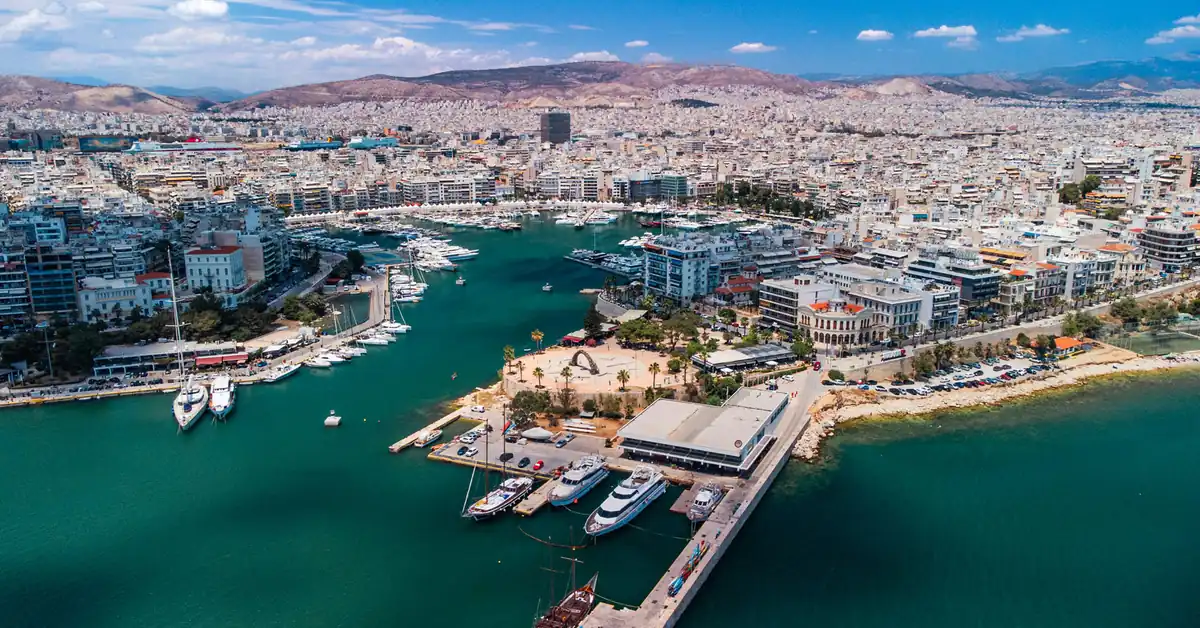
Piraeus real estate has been the fastest-growing segment of Attica during 2019-2025, with cumulative price growth of up to 84% and a peak of 28% in 2024 alone. This largest port in the Mediterranean lies 8 km southwest of central Athens, combining a thousand-year maritime heritage with large-scale urban redevelopment driven by Chinese investment and national infrastructure projects.
Piraeus falls under Zone A of the Greece Golden Visa programme, with a minimum investment threshold of €800,000 on a single property. However, it is one of the few areas Greece that still has many commercial-to-residential conversion projects meeting the €250,000 Zone C threshold — opening two different routes to the Golden Visa for the same location. This article analyses the area’s characteristics, market prices, rental yields, and investment considerations for Vietnamese investors weighing up Piraeus.
Message
Overview of the Piraeus property market
Piraeus is an independent municipality with a population of around 168,000, the third-largest city in Greece and the largest maritime economic hub in the Eastern Mediterranean. The Port of Piraeus handles more than 5 million TEU of containers a year, ranking among the top five container ports in Europe, and welcomed almost 1.7 million cruise passengers in 2024 — making Piraeus the main departure point for travellers heading to the Cyclades, Crete, Rhodes and the Saronic Gulf.
Greater Piraeus comprises four linked municipalities: central Piraeus, Keratsini-Drapetsona, Korydallos and Nikaia-Agios Ioannis Rentis. Central Piraeus itself is divided into distinct functional zones: the Port Area, Kastella Hill, Pasalimani-Microlimano, Freattyda, Akti Themistokleous and the northern inner-city districts.
Unlike Athens’s traditional districts, Piraeus has the character of a layered port city — a maritime and logistics economy at its base, a middle-income and Piraeus University student population in the middle, and, at the top, the premium Kastella and Microlimano areas with marina and Saronic Gulf views. This layering creates a very wide price range, from €1,500 EURO/m² (older, unrenovated inner-city districts) to €5,000 EURO/m² (Kastella Hill and Pasalimani luxury).
A notable demographic feature is the multicultural community that has grown up around the port and the University of Piraeus (Greece’s largest specialist maritime economics university). Residents include international seafarers, university students, logistics staff, and a Chinese community that has grown strongly since the wave of port investment by Chinese state-owned enterprises began in 2009.
Considering a residency programme? The Prosperous Living Investment team assesses your profile free of charge and advises on the pathway that fits your goals.
Geographic location and transport infrastructure
Piraeus occupies a strategic location — both as Athens’s sea gateway and as a direct link into the Attica and Athens Riviera urban network. Piraeus is only 8 km from Syntagma, a 20-25 minute journey by metro or 30 minutes by car. Eleftherios Venizelos Airport is 35 km away, a 45-55 minute journey via Metro Line 3 (extended to Piraeus in 2022).
The Piraeus transport network is one of the biggest improvements of the past decade. Metro Line 1 (Green) runs from Piraeus through central Athens up to Kifissia in the north. Metro Line 3 (Blue) was extended to Piraeus in 2022 — giving a direct link to the international airport and the whole of northern Attica. The city tram network connects Piraeus with Glyfada and the Athens Riviera.
The Suburban Railway (Proastiakos) serves Piraeus with services to central Athens, the airport and, further afield, Patras in the Peloponnese. The inner-city port system comprises three main ports: the main container port (handling maritime freight), the passenger port (cruise and ferry services to the islands), and D-Marin Zea Marina (a megayacht marina).
The road network links Piraeus to the Riviera via Posidonos Avenue, to central Athens via Piraios Avenue, and to western Attica via the Schisto corridor. The transport-infrastructure improvements of 2020-2025 — combining Metro Line 3, the upgraded Zea Marina and the Piraeus ring road — have been a key driver of the sharp rise in Piraeus property prices over the same period.
The impact of Chinese investment and the wave of urban redevelopment
Chinese investment in the Port of Piraeus through the state-owned COSCO group began in 2009 and peaked in 2016-2020, when the group acquired a 67% operating stake in the port. This investment turned Piraeus from a local port into a leading Mediterranean logistics hub, bringing with it new jobs in logistics, shipping and port services.
The knock-on effect of Chinese investment on the property market is clear. Piraeus’s Chinese community has grown from a few hundred in 2010 to an estimated 8,000-10,000 in 2025. The Nikaia-Agios Ioannis Rentis area has become a hub for Chinese families, accompanied by supporting infrastructure (supermarkets, restaurants, bilingual schools). Property prices in these areas have risen fast — Peristeri (next to Piraeus) recorded a 42.3% increase after the metro extension in 2021.
Piraeus’s urban-redevelopment wave is now gathering pace. Piraeus Tower — Greece’s second-tallest building, built in 1974 and left vacant for nearly 50 years — has just been reactivated and brought back into use in 2024-2025. The €150 million EURO Piraeus Gate project is turning a former industrial area into a new 85,000 m² complex with residential, office, restaurant and retail space.
Alongside this, commercial-to-residential conversion projects are booming in Piraeus. This is a distinctive feature of the area — many old office buildings, warehouses and commercial premises in the port district are being converted, meeting the Greek Ministry of Migration and Asylum’s €250,000 EURO Golden Visa Zone C route. Piraeus has one of the highest numbers of conversion projects in Athens, opening up opportunities for investors with a limited budget.
Piraeus property market price levels
Average property prices in Piraeus run 30-40% below central Athens and the Athens Riviera. According to the the Bank of Greece urban-area house price index and 2025-2026 reference market analysis, the average asking price across Piraeus ranges from €2,500-€3,000 EURO/m².
Prices vary sharply by area within the Piraeus property market. Kastella Hill is the most premium area, with Saronic Gulf views, averaging €4,000-€5,000 EURO/m². Some penthouses with Microlimano marina views exceed €6,000 EURO/m². Pasalimani-Microlimano is the marina district with an affluent resident community, priced at €3,500-€4,500 EURO/m².
Central Piraeus around the town hall and the University of Piraeus is priced at €2,500-€3,500 EURO/m², serving middle-income residents and student lets. Akti Themistokleous (the western seafront road) is priced at €3,000-€3,800 EURO/m². Freattyda (the south-western beach district) is priced at €2,800-€3,500 EURO/m².
The older, unrenovated inner-city districts (northern Piraeus, Korydallos, Nikaia) have the lowest prices, at €1,500-€2,500 EURO/m² — this is also where most of the commercial-to-residential conversion projects meeting the €250,000 EURO Golden Visa Zone C threshold are concentrated.
To reach the €800,000 EURO Zone A threshold, investors have several options. A 150-180 m² luxury apartment in Kastella Hill typically trades for €700,000-€900,000 EURO. In Pasalimani-Microlimano, a 180-220 m² unit falls in the range of €700,000-€1 million EURO. In central Piraeus, an €800,000 EURO budget can buy a 250-300 m² unit or a newly built maisonette — a significantly larger floor area than the same budget would buy in Plaka, Kolonaki or Vouliagmeni.
Two routes to the Golden Visa: €800,000 EURO Zone A and €250,000 EURO conversion
Piraeus is one of the few areas of Athens to offer two different routes to the Greek Golden Visa at once, giving investors across a range of budgets more flexibility.
The €800,000 EURO Zone A route applies to the purchase of a single residential property of at least 120 m². It suits investors who want to own a lifestyle apartment in Kastella, Pasalimani or central Piraeus, whether for genuine residence or as a lifestyle asset. Note the new rule: the property must be a single asset — several smaller units cannot be combined to reach the threshold.
The €250,000 EURO Zone C route applies to commercial-to-residential conversion projects or the renovation of listed heritage buildings. Piraeus has a rich stock of old commercial and industrial buildings thanks to its character as a port city — making it a bright spot for conversion projects. The process requires the conversion to be completed before the Golden Visa application is filed, and the renovation to be completed before the first five-year renewal.
The choice between the two routes depends on the investor’s objective. The €800,000 EURO Zone A route suits investors who prioritise full control (choosing a specific unit, location and design) and want genuine residence. The €250,000 EURO Zone C route suits investors focused on optimising cost, willing to buy into an already-structured project (typically with professional management and a rental guarantee), and placing more weight on obtaining the visa than on personalised ownership.
One point deserves particular attention: the success of the €250,000 EURO conversion route depends heavily on the project’s legal standing, the developer’s ability to complete on schedule, and whether the change-of-use permit has been fully granted. This is the biggest legal risk with this route.
Resident profile and property yields in Piraeus
Piraeus’s resident base is diverse and clearly layered. Kastella Hill and Pasalimani attract Greece’s upper class and maritime business owners, along with affluent retirees seeking sea views. Freattyda and Akti Themistokleous serve mid-to-senior professionals working at the port and in Athens. Central Piraeus has a community of University of Piraeus students, logistics workers, and Chinese, Vietnamese and Pakistani families, forming a multicultural community.
Piraeus property rental yields are among the highest in Attica, ahead of even Marousi-Halandri and the Riviera. According to reference market analysis based on the Bank of Greece index, the average gross yield across Piraeus reaches 5-6.5% per year. The central area near the University of Piraeus achieves the highest yield, at 6-7.5%, thanks to steady rental demand from students and logistics workers. Kastella Hill yields 4-5% (reflecting its higher purchase price).
Average long-term rents in Piraeus run at around €11-€13 EURO/m²/month — close to central Athens and the Riviera despite purchase prices being 30-40% lower. A 100-120 m² unit in central Piraeus typically lets for €1,100-€1,400 EURO/month. Notably, Piraeus ranked among the five most expensive areas of Greece for rents at the end of 2024 — reflecting rental demand growing faster than supply.
Piraeus’s price-growth potential is rated favourably over the medium to long term. Phase 2 of the Piraeus Gate project, completion of the Piraeus Tower project, the expansion of the container port and the development of Zea Marina will continue to push prices up. However, after the sharp rise of 2019-2024, growth is expected to settle at a more sustainable 4-7% per year for 2026-2030 — no longer the double digits seen previously.
Ancillary costs and points to note when owning property in Piraeus
Transaction costs for buying property in Piraeus are similar to other segments of Greece. Transfer tax of 3.09% applies to older properties. New-build units and units converted from commercial to residential use are exempt from 24% VAT under the Greek government’s extension through 31 December 2026.
Notary fees range from 0.8-1.2%, Land Registry fees from 0.475-0.575%, and agent’s commission 1-2% (VAT included). Total transaction costs added to the purchase price typically come to around 7-10% for older properties and 5-6% for new ones.
Annual property tax (ENFIA) is based on the area’s zone value and is collected by the Greek Tax Authority (AADE) A 130-150 m² unit in Kastella or Pasalimani typically incurs ENFIA of €400-€700 EURO/year. Central Piraeus has lower ENFIA, ranging from €250-€500 EURO/year for a unit of the same size. Building-management fees (koinochrista) average €300-€600 EURO/year.
For conversion projects under the €250,000 EURO route, investors should note additional costs: professional management fees (typically 5-10% of annual rental income), pool-management fees where applicable, and the cost of updating the change-of-use permit ahead of the first Golden Visa renewal after five years.
A note on legalising Vietnamese documents when buying property in Greece: before 11 September 2026, legal paperwork had to go through the three-step consular legalisation process. After this date, the Apostille Convention officially takes effect in Vietnam, simplifying Land Registry registration procedures in Piraeus.
Points to consider when weighing investment in the Piraeus segment
The Piraeus property segment suits two distinct groups of investors. The first: yield-focused investors seeking strong rental cash flow combined with the price-growth potential of a redeveloping area. The second: investors willing to take the €250,000 EURO conversion route to optimise the cost of the Golden Visa, typically prioritising obtaining the visa over personalised ownership.
The preferred area also differs for each group. Kastella Hill and Pasalimani-Microlimano suit premium investors seeking sea views and an affluent community. Central Piraeus and Freattyda suit yield-focused investors. Nikaia, Korydallos and northern Piraeus are where most €250,000 EURO conversion projects are concentrated.
Piraeus’s main risks fall into three areas. First, as a port city, some areas suffer noise and air pollution — a site visit before buying is essential. Second, the wide price gap between premium and older districts can easily cause confusion without proper advice — not every location in Piraeus has strong potential to hold its value. Third, the €250,000 EURO conversion route carries project legal risk if the developer fails to complete on schedule.
Before deciding, investors should weigh their long-term usage plans. Comparing this with the central Plaka, Kolonaki, and Syntagma segments, Athens Riviera Glyfada, Voula, Vouliagmeni and the northern suburbs of Marousi, Kifissia and Halandri will help identify the optimal segment for personal goals and the Golden Visa profile.
Summary
Piraeus property is the only segment in Athens offering two routes to the Greek Golden Visa at once — €800,000 EURO Zone A for a single residential unit and €250,000 EURO Zone C for commercial-to-residential conversion projects. Cumulative price growth of 84% over 2019-2024, together with the momentum of urban redevelopment through the Piraeus Tower and Piraeus Gate projects and Chinese investment, has turned Piraeus from an old port district into Attica’s hottest-growing segment.
Rental yields of 5-6.5% per year, higher than in the luxury segments, combined with diverse rental demand from University of Piraeus students, logistics workers and a multicultural community, make Piraeus an attractive yield-focused choice. However, its character as a port city and the legal risks of conversion projects call for careful due diligence and expert advice. Detailed information on Greece’s geography and the Greek economy will add a macro perspective to help with investment decisions in the Piraeus port segment.
Accompanying you on your journey in residency investment
The Prosperous Living Investment team advises on pathways, assesses profiles and manages investments transparently for every residency, citizenship and international property objective.
Free profile assessmentWhere life gets prosperous