

Central Athens Real Estate: Plaka, Kolonaki and Syntagma for Golden Visa Zone A

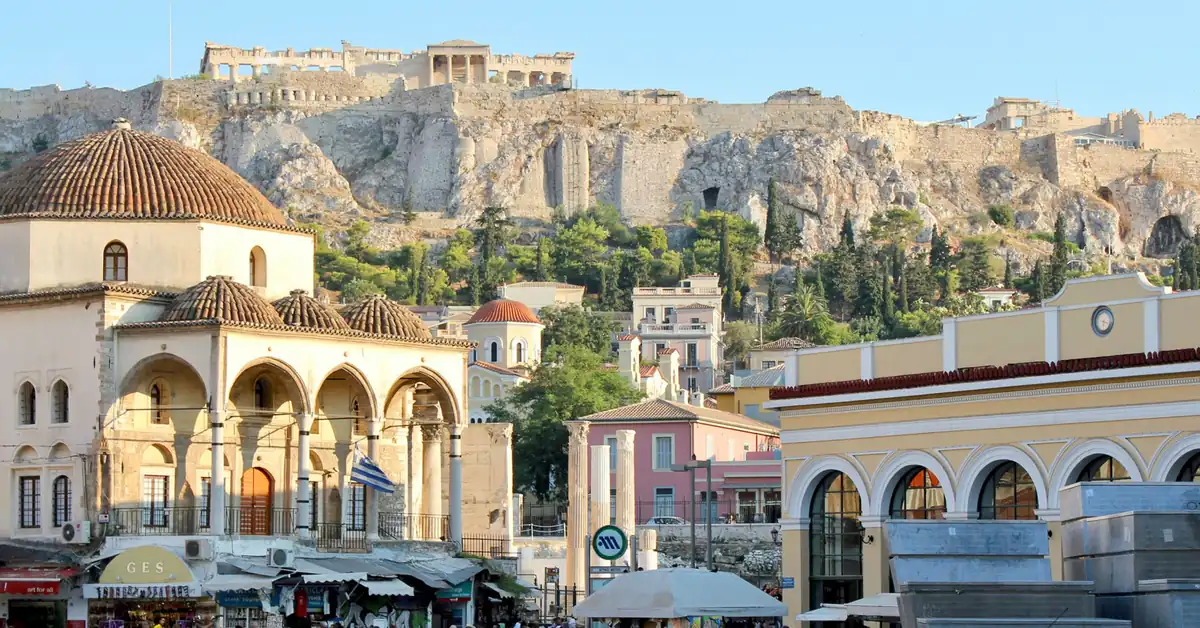
Central Athens real estate is the most premium segment of the capital’s housing market Greece, comprising the three iconic districts of Plaka, Kolonaki and Syntagma. This is also the core area falling within Zone A of the Greece Golden Visa programme, with a minimum investment threshold of €800,000 applying to each individual property. Unlike the coastal or northern suburban areas, the central district has a dense historic urban fabric, high commercial density, and a strictly limited apartment stock due to heritage-conservation rules.
Amid a strong recovery in the Athens property market after the sovereign debt crisis, these three districts have seen continuous double-digit price growth from 2018 to 2024. This article analyses the geography, infrastructure, price levels and investment potential of Plaka, Kolonaki and Syntagma — giving Vietnamese investors an objective view before considering the central segment for a Golden Visa application.
Message
Overview of the Central Athens Property Market
Central Athens covers about 10 km² around Syntagma Square, stretching west to the foot of the Acropolis hill and east to Lycabettus hill. Administratively, the three districts of Plaka, Kolonaki and Syntagma sit entirely within the Municipality of Athens, within Zone A under the Golden Visa zoning map issued by the Greek Ministry of Migration and Asylum.
Plaka is the oldest district, lying at the foot of the Acropolis with cobbled streets and 19th-century neoclassical architecture. Kolonaki lies northeast of Syntagma, stretching to the foot of Lycabettus, and is regarded as the capital’s oldest upmarket district. Syntagma is the central political square, home to the Hellenic Parliament building and the interchange between metro Line 2 and Line 3.
According to data from the Hellenic Statistical Authority (ELSTAT), the Municipality of Athens now has a population of about 643,000, with the central area accounting for around 30% of the city’s total apartment stock. Population density here is among the highest in the EU, ranging from 18,000 to 20,000 people/km².
The urban fabric of the three districts each has its own character. Plaka’s housing stock consists mainly of small apartments in 2-4 storey buildings from the 1950s-1970s, typically 30-70 m². Kolonaki has neoclassical and Art Nouveau buildings with larger apartments, usually 80-150 m², including many penthouses with Lycabettus views. Syntagma combines high-rise commercial office buildings with newly built luxury apartments near the square.
Considering a residency programme? The Prosperous Living Investment team assesses your profile free of charge and advises on the pathway that fits your goals.
Transport Infrastructure and Public Amenities
Plaka, Kolonaki and Syntagma are the best-connected areas in Greece. The Athens metro system converges here across all three main lines. Line 1 (Green) passes through Monastiraki, next to Plaka. Line 2 (Red) and Line 3 (Blue) interchange at Syntagma — the busiest station in the whole system. The Evangelismos station on Line 3 serves Kolonaki, about a one-minute metro ride from Syntagma.
Besides the metro, the three districts have a dense network of buses, trolleybuses and taxis. Eleftherios Venizelos International Airport is 40 minutes from Syntagma by metro Line 3, or 35 minutes via the Attiki Odos motorway. Piraeus port, the gateway to the Aegean islands, is 25 minutes from the centre by metro.
Public amenities are densely concentrated in the central area. Tertiary public hospitals, including Evangelismos, Hippokratio and Aretaieio, all lie within a 1.5 km radius of Syntagma. The National and Kapodistrian University of Athens, the oldest university in Greece, has its main campus on Panepistimiou, a 5-minute walk from Syntagma. The National Technical University of Athens also has its historic lecture halls in the centre.
The network of international schools serving foreign investors’ children is concentrated mainly in the northern suburbs and the Riviera, not in the central area. This is a point families with young children should note when considering Plaka, Kolonaki or Syntagma as an actual place of residence rather than purely an investment asset.
Central Athens Property Price Levels
Central Athens property prices vary markedly between the three districts. According to the urban housing price index published by the Bank of Greece , apartment prices in Athens rose by about 80-95% over 2015-2025, with the central segment leading the recovery.
Kolonaki holds the most expensive position in the inner city, with an average price of around €6,000 to €6,500/m² at the start of 2026. Penthouses with Lycabettus or Parliament views can reach €8,000-€10,000/m². Syntagma has a wide price range from €3,500 to €5,500/m², depending on distance from the square and the building’s condition; newly built luxury apartments right by Syntagma can exceed €5,000/m².
Plaka falls into a distinct price category because of its old housing stock and heritage-conservation rules. Apartments needing renovation or without an Acropolis view range from €2,500 to €3,500/m². Renovated properties with an Acropolis view or on central streets such as Adrianou can reach €4,000 to €6,000/m². A few rare units with a Parthenon-sunset view trade above €7,000/m².
To meet the Zone A threshold of €800,000 on a single property of at least 120 m² (under the new rules from the Greek Ministry of Migration and Asylum), investors need to set a realistic budget. A 120 m² unit in Kolonaki at the average price comes to around €720,000-€780,000, close to the threshold but possibly needing 130-140 m² to be sure of reaching it. In Syntagma, a newly built 130-150 m² unit typically reaches the €800,000 mark. In Plaka, reaching €800,000 for a single unit is quite difficult because of the limited stock of large apartments.
Resident Profile and Rental Demand
The resident profile of the three districts reflects distinct socioeconomic characteristics. Kolonaki has been an address for Athens’s elite since the 19th century. Today the district concentrates embassies, diplomats, business people and senior professionals. The resident community is stable and conservative, with little turnover. This is why Kolonaki has the lowest vacancy rate in the inner city — a good-quality property rarely stays vacant for more than 30 days.
In recent years, Plaka has gradually lost its character as a long-term residential area. Pressure from the tourism market has pushed most apartments into short-term rental through online platforms. Even native Athenians report that Plaka and the area around Monastiraki-Syntagma now have almost no apartments left for long-term local rental.
Faced with over-tourism, the Greek government imposed a ban on new short-term rental registrations in districts 1, 2 and 3 of the Municipality of Athens — covering the whole of Plaka, Kolonaki, Syntagma, Koukaki and Exarchia — in effect from 1 January 2025 through the end of 2026. This decision was announced together with a six-measure housing package at the end of 2025.
Syntagma has the most mixed resident profile. Part of it is young professionals working in banking, law and finance concentrated around the square. The rest is foreign investors using their apartment as a legal address for the Golden Visa without residing there regularly.
Rental Yield and Price-Growth Potential
Rental yields for central Athens property vary by price segment. According to market analyses referencing Bank of Greece indices combined with actual rental data, Kolonaki achieves an average gross yield of about 3.5% to 4% per year — lower than the general level because of its high purchase price. However, a near-zero vacancy rate and the city’s best price resilience in a downturn make Kolonaki a property regarded as defensive.
Plaka once achieved a 5-6% yield before the short-term rental ban, thanks to visitor traffic around the Acropolis. After the ban, yields fell to 3-4% under the long-term rental model, although long-term rents around the Acropolis area remain high because of the limited housing stock. Syntagma maintains an average yield of 4-4.5% thanks to a diverse tenant mix of offices, postgraduate students and foreign professionals.
On price-growth potential, Bank of Greece historical data show the three central districts appreciating 2-3 percentage points a year faster than the Athens average during the recovery cycle. However, the growth pace has slowed since 2025 because of the high base and pressure from short-term rental restrictions. Forecasts from Eurostat and research institutions point to price growth of about 4-6% per year for 2026-2028 in the central segment.
Ancillary Costs and Taxes on Ownership
When owning central Athens property, investors need to budget for costs beyond the purchase price. Transfer tax currently stands at 3.09% for resale apartments. For newly built units, the Greek government has extended the 24% VAT exemption through 31 December 2026 — a factor worth noting when weighing a new purchase against a resale.
Notary fees range from 0.8-1.2% of the transaction value. Land Registry fees are around 0.475-0.575%. Broker commission is usually 1-2% (VAT included). Total transaction costs added to the purchase price usually come to around 7-10% for resale apartments and lower for new units due to the VAT exemption.
The annual property tax (ENFIA), collected by the Greek Tax Authority (AADE) , applies according to the area’s zone value. A 120-150 m² unit in Kolonaki or Syntagma typically incurs ENFIA of around €500-€800 per year. Building management fees (koinochrista) average €300-€600 per year depending on the building’s size and condition. For older buildings in Plaka without a lift, the fee is lower, but individual renovation costs are higher.
Note on legalising Vietnamese documents: before 11 September 2026, the legal file for a Vietnamese investor buying Greek property had to follow a three-step consular legalisation process. After this date, the Apostille Convention officially took effect in Vietnam, simplifying the procedure.
Points to Note When Considering the Central Segment
The central Athens segment suits investors who prioritise price resilience and address prestige over high yield. Kolonaki is the safest choice for a defensive asset, but requires a large budget and inherently accepts a low yield. Plaka carries symbolic value but faces policy risk (the short-term rental ban) and a scarce supply of large apartments meeting the €800,000 threshold. Syntagma balances entry price, yield and liquidity — suiting investors who need a clear central address for their Golden Visa file.
The choice between these three districts also depends on the intended use. If an investor needs a legal address for the Golden Visa and is willing to leave the apartment vacant most of the time, Kolonaki and Syntagma are stable choices. For genuine long-term residence with a family with young children, the northern suburbs or the Athens Riviera suit better because of their international schools and living space. If the goal is optimal rental cash flow, up-and-coming areas such as Koukaki, Pangrati or Kypseli offer higher yields even though they lie outside the heritage core.
Before deciding, investors should weigh the area’s characteristics overall against the investment threshold of the Golden Visa Zone A programme and their long-term usage plan. Comparing this with other price segments such as Athens Riviera hay the northern suburbs will help identify the optimal option for the application and personal goals.
Summary
Central Athens property, represented by the three districts of Plaka, Kolonaki and Syntagma, is the most expensive and most iconic segment on the Greek Golden Visa map. Plaka carries heritage value but faces pressure from short-term rental policy. Kolonaki stands firm as a defensive asset with a stable diplomatic and business community. Syntagma is the balance point between liquidity, yield and address prestige.
With the €800,000 threshold applying to Zone A under the new rules, investors need a budget for at least around 130-150 m² of quality apartment to meet the programme’s requirement. The specific choice depends on the goal — price resilience, cash flow or personal use — and should be weighed within the overall picture of the capital’s other segments. Detailed information on Greece’s geography and the Greek economy will add a macro perspective for an investment decision in the central Athens segment.
Accompanying you on your journey in residency investment
The Prosperous Living Investment team advises on pathways, assesses profiles and manages investments transparently for every residency, citizenship and international property objective.
Free profile assessmentWhere life gets prosperous