

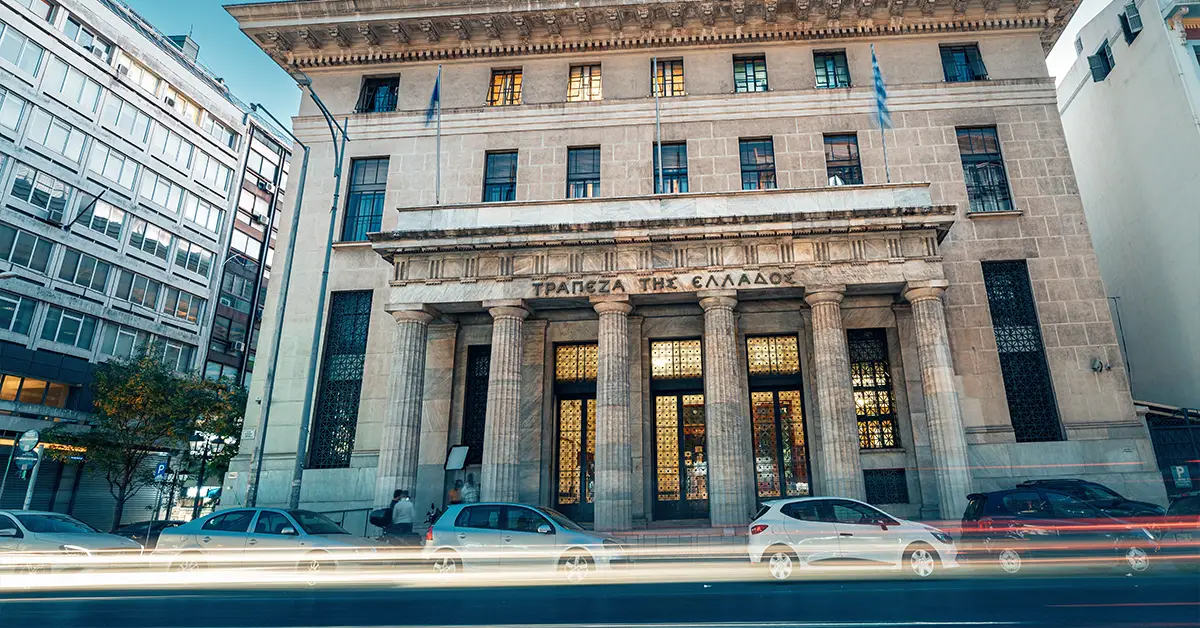
The Greek economy enters 2026 in a very different position from a decade ago. After the worst sovereign debt crisis any developed country has been through since the war, this Southern European nation has become one of the fastest-growing economies in the European Union, with GDP growth of around 2% a year since 2023.
This analysis sets out the current structure of the Greek economy, its pillar sectors, the fiscal position, the labour market and the medium-term outlook to 2027. The data is drawn from theEuropean Union’s Economic and Financial Affairs directorate, the Bank of Greece and the International Monetary Fund (IMF).
Message
The scale and general character of the Greek economy
Greece is the 16th largest economy in the European Union and the 11th in the eurozone. The Greek economy has a nominal GDP of around USD 250 billion, with GDP per capita of around USD 23,966 nominal and USD 41,188 at purchasing power parity (PPP) as at 2024.
The structure of the Greek economy leans heavily towards services. Around 80% of GDP comes from services, 16% from industry and only 4% from agriculture. This reflects Greece’s standing as a developed country, but also points to a structural weakness: a high dependence on tourism and shipping, two sectors vulnerable to external shocks.
The Greek economy has been a European Union member since 1981 and joined the eurozone in 2001. This membership brings a double advantage. On one hand, Greece enjoys monetary stability, access to a single market of 450 million people and enormous EU funding packages. On the other, the country must comply with strict fiscal discipline and regular supervision from Brussels, particularly since the crisis period of 2010–2018.
Considering a residency programme? The Prosperous Living Investment team assesses your profile free of charge and advises on the pathway that fits your goals.
From sovereign debt crisis to remarkable recovery
The sovereign debt crisis beginning in 2009 was one of the most serious events of the 21st century for the Greek economy. Real GDP fell by more than 25% from its 2008 peak to its 2016 trough, unemployment reached 27.9% in June 2013, and youth unemployment touched 64.9%. Public debt as a share of GDP shot up to a peak of around 210% in 2020 after the Covid-19 pandemic delivered a further blow, with GDP contracting 9.2%.
The recovery became clearly visible from 2021. After growing 8.7% in 2021 (the post-pandemic rebound effect), the Greek economy maintained steady expansion of 5.5% in 2022 and around 2.1% a year over 2023–2025 — well above the eurozone average.
Three simultaneous recovery drivers created the turning point. Years of structural reform began to bear fruit through cutting red tape, digitising public services and stabilising the banking sector. Funds from the EU’s Recovery and Resilience Facility (RRF) disbursed tens of billions of euros. And market sentiment improved after Greece was restored to investment grade in 2023.
On the IMF’s assessment in its Article IV report published in March 2026, public debt as a share of GDP fell by around 10 percentage points in 2025 alone, down to around 145% — the lowest in more than a decade.
The pillar sectors of the Greek economy
Tourism — the biggest driver
Tourism is the sector making the largest direct and indirect contribution to the Greek economy. Greece is consistently among the 10–15 most visited countries in the world. Tourism revenue from January to July 2025 reached EUR 12.1 billion, up 12.5% on the same period the previous year and a new record.
A distinctive feature of Greek tourism is the dominance of island tourism. The Greek islands accounted for around 11% of all visits in global island tourism in 2024. Santorini, Mykonos, Crete and Rhodes are the most searched destinations in the European summer.
The government’s “Tourism 2030” strategy aims to extend the season beyond the traditional summer months, while developing niche markets such as wellness tourism and tourism for remote workers. The knock-on effect of tourism goes far beyond direct revenue: the sector employs hundreds of thousands of workers and drives investment in rental property, part of the reason theGreece Golden Visaattracts international investors through the property channel.
Shipping — first in the world
Shipping holds first place in the world and is one of the most enduring pillars of the Greek economy. The fleet owned by Greek shipowners accounts for around 15–20% of total global shipping capacity, including nearly a quarter of the tanker market and 17.2% of dry bulk carriers. The sector contributes an estimated 6% of GDP and employs 160,000–200,000 people.
Its strength lies in a long maritime tradition combined with the business experience of shipowning families such as Onassis, Niarchos, Livanos and Latsis. The ship management offices are concentrated in Piraeus (on the edge of Athens) and along Kifisia, forming a complete cluster with financial, legal, insurance and broking services alongside.
Even so, most ships fly foreign flags (Malta, Liberia, the Marshall Islands) for tax reasons, meaning the sector’s direct tax contribution to the Greek budget is smaller than its size. The government has negotiated voluntary contributions several times, but the matter remains contentious domestically.
Renewable energy — an emerging pillar
Since 2023, renewable energy has overtaken fossil fuels to become the largest source of electricity in Greece. More notably, the Greek economy has been a net electricity exporter for two consecutive years, showing that domestic generation now exceeds consumption.
Natural conditions are strongly supportive: the highest solar intensity in Europe, steady Mediterranean and Aegean winds, and the ability to build large solar farms on arid land. Investment from the EU’s RRF has accelerated the rollout of smart grid infrastructure, large-scale battery storage and offshore wind projects.
The renewable energy sector has a double role: reducing dependence on energy imports (the source of most of the trade deficit) while opening up the chance to export electricity to the Balkan countries. It is one of the sectors attracting the most visible FDI over 2023–2025.
Agriculture and processing industry
Although contributing only 4% of GDP, agriculture retains an important role in exports and social stability in the Greek economy. Olive oil, olives, wine, feta cheese and Greek yogurt are products with high international recognition. Greece is one of the world’s three largest olive oil producers, alongside Spain and Italy.
The processing industry centres on food, tobacco, textiles, chemicals, metals and oil refining. This sector accounts for around 16% of GDP and is growing on the back of new investment in pharmaceuticals and the defence industry. On EY’s 2025 FDI survey, 48% of the businesses surveyed said they planned to establish or expand operations in Greece within the year.
The labour market and incomes
The labour market is one of the most remarkable recovery stories in the Greek economy over the past 5 years. Unemployment fell from 27.9% in 2013 to 8.2% in October 2025 — the lowest since 2009. The Bank of Greece reports that total employment continued to rise slightly in the first quarter of 2025, concentrated in construction, trade, tourism and professional services.
Even so, Greek unemployment remains above the EU average with a considerable gender gap. Male unemployment stands at 6.2%, while female unemployment is 11.3% as at February 2026 — the highest in the EU. The causes comprise low female labour market participation, a skills gap, and the residue of long-term unemployment.
Average wages are rising quickly. The EU forecasts Greek wages per worker rising an average of 3.6% a year over 2025–2027, driven by minimum wage rises, reduced social security contributions and the personal income tax reform package announced at the end of 2025. This is a positive signal for household purchasing power, but also poses a labour cost challenge for businesses.
Public finances and public debt
The fiscal picture of the Greek economy has turned around completely from the crisis years. The primary budget surplus reached 4.4% of GDP in 2025, slightly down from 4.7% in 2024 but still among the highest in the EU. The government has committed to maintaining a primary surplus of around 2.5% of GDP in the years ahead.
Public debt as a share of GDP has fallen sharply from its peak of 210% in 2020 to around 145% at the end of 2025 on estimates by theInternational Monetary Fund. European Commission forecasts show the figure falling below 140% by 2027 and by around a further 20 percentage points by 2028.
The structure of the debt is an important stabilising factor for the Greek economy. Most of it carries highly favourable terms (long grace periods, long maturities, deferred interest), 100% of central government debt is at fixed rates, and the cash buffer exceeds 15% of GDP. Short-term refinancing pressure is very low, although long-term sustainability risks remain.
Inflation, consumption and investment
Inflation in the Greek economy stayed fairly high through the post-Covid period, ranging from 2–4% for nearly three years. The third quarter of 2025 marked a turning point as domestic price pressure eased: inflation fell to 1.8% in September 2025 from 3.1% a month earlier — among the lowest in the EU at the time.
Household consumption remains the main driver of growth, accounting for the largest share of GDP and changing little over two decades. The “free-spending” characteristic of Greek consumers reflects both consumer culture and the reality that the shadow economy still exists to a degree within the Greek economy.
Gross Fixed Capital Formation in the Greek economy rose 6.5% year on year and 7.4% quarter on quarter in the second quarter of 2025, reaching 16.6% of GDP — the highest in 15 years. Most investment is still concentrated in property, but manufacturing and technology are gradually catching up. According to the IMF, investment growth is one of the most enduring features of the current economic cycle.
International trade and the balance of payments deficit
The Greek economy’s current account deficit narrowed to 5.7% of GDP in 2025, helped by improved terms of trade and lower interest costs. Even so, the figure remains relatively large because of strong import demand, particularly for energy and capital goods.
Greek exports concentrate on five main groups: refined oil products (re-exported after refining), pharmaceuticals, food, metals and shipping (services). The main export markets are the EU countries, Turkey, the United States and several Middle Eastern countries. Greece’s trade openness (total exports plus imports over GDP) is higher than in many EU countries of similar size, reflecting the role of tourism and shipping as “invisible exports”.
The impact of United States tariffs on EU goods is a new risk factor. According to the OECD, direct trade links between Greece and the United States are relatively limited, so the initial impact is moderate. However, the indirect impact through EU supply chains and the shipping sector may be more considerable.
The outlook to 2027 and the main risks
The consensus forecasts from the European Commission, the OECD and the IMF show the Greek economy continuing to expand over the next three years. The European Commission forecasts GDP growth of 2.1% in 2025, 2.2% in 2026 and easing slightly to 1.7% in 2027 as the RRF funding ends. The IMF expects inflation to move gradually towards 2.4% by 2027, with unemployment continuing to fall.
The main positive factors for the Greek economy comprise: sustained FDI inflows (Greece ranked 2nd for FDI attractiveness in EY’s 2025 survey), record public investment, the personal income tax reform in force from 2026, and strong momentum in the energy transition. In addition, the new fiscal reform package combining cuts to personal income tax, property tax and VAT with rises in pensions and public sector pay creates a boost to consumption.
The medium-term risks to the Greek economy fall into four groups. First, labour productivity remains below the EU average and, together with population ageing, explains more than 80% of the real GDP gap against the 2008 peak. Second, high dependence on tourism leaves the economy vulnerable to geopolitical crises, natural disasters or a pandemic.
Third, public debt, though falling, remains high and requires continuous fiscal discipline for years to come. Fourth, gender inequality in the labour market and infrastructure lagging behind demand remain weaknesses to be addressed.
The Greek economy from an international investor’s viewpoint
For foreign investors, the Greek economy today has three clear attractions. One is eurozone membership providing monetary stability and access to the single market. Two is a favourable policy towards foreign investment, including the Golden Visa programme for property with a threshold of EUR 250,000 – 800,000 depending on the area. Three is the path of falling debt and improving credit ratings, creating conditions for a lower cost of capital on projects.
Vietnamese people interested in Greece usually approach it through three main channels: property investment combined with the Golden Visa for European residence rights; naturalisation through long-term residence and theGreek citizenshiptest; or moving the family tolife in Greeceas retirees or remote workers. Each channel has different financial, tax and administrative requirements and needs careful thought before deciding.
Summary
The Greek economy has come through nearly a decade of crisis and is in its most sustained recovery since the start of the 21st century. GDP is growing around 2% a year, unemployment is at its lowest since 2009, public debt is falling faster than expected and FDI is flowing in strongly. The traditional pillars of tourism, shipping and agriculture remain central, while renewable energy and processing industry are emerging as new growth drivers.
However, the recovery has not erased the structural weaknesses: public debt remains high, labour productivity is below the EU average, the population is ageing and dependence on tourism persists. For foreign investors, Greece is currently a story of “falling risk, rising potential” — a market worth watching over 2026–2030.
The next step
To learn more about the investment and settlement opportunities in Greece against the background of the recovering Greek economy, see PLI’s related articles on the residence-through-property-investment programme, the citizenship examination process and the true cost of living. Each channel has its own legal, tax and documentary requirements, so careful research before choosing is essential.
Accompanying you on your journey in residency investment
The Prosperous Living Investment team advises on pathways, assesses profiles and manages investments transparently for every residency, citizenship and international property objective.
Free profile assessmentWhere life gets prosperous