
North Athens Suburban Property: Marousi, Kifissia and Halandri for International Families

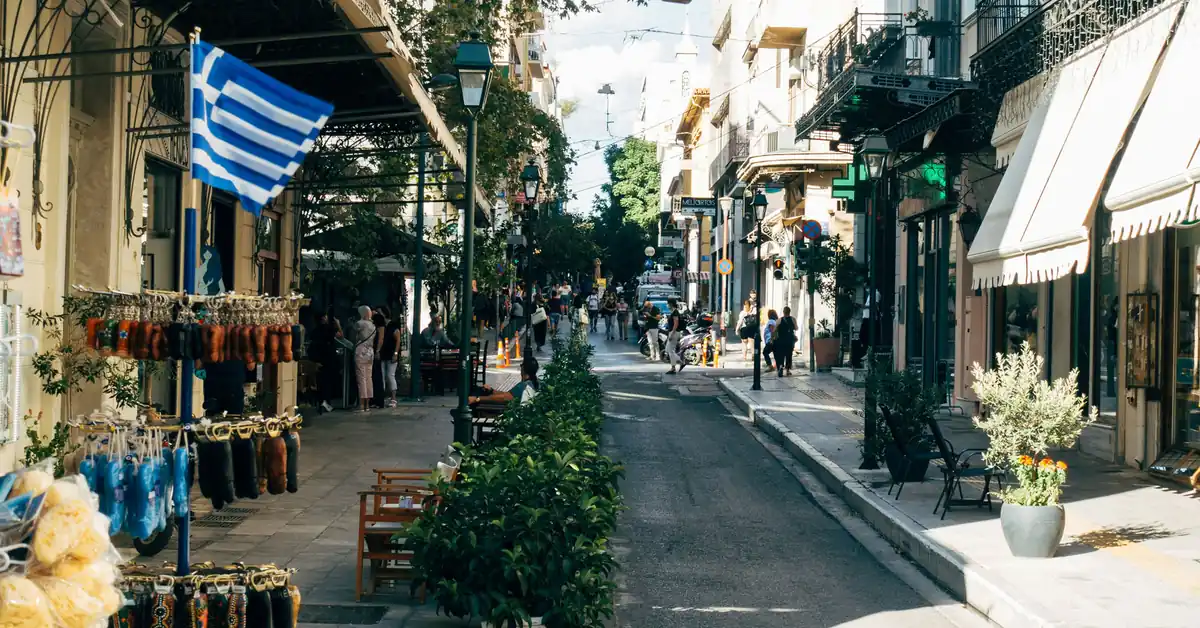
North Athens suburban property is the capital’s clearest family-oriented residential market segment Greece, represented by the three areas of Marousi, Kifissia and Halandri. Unlike the central or coastal segments, these three areas stand out for their long-established international school system, low population density and extensive green space — key factors for investors with families who want to reside long term in Athens.
All three areas lie within the Administrative Region of Attica, and therefore fall under Zone A of the Greece Golden Visa programme, with a minimum investment threshold of €800,000 on a single property. However, the price per m² in the North is considerably lower than in the centre or the Athens Riviera, opening up the opportunity to own a larger property — suited to families with young children — within the same Golden Visa budget.
Message
North Athens Suburban Property Market Overview
North Athens suburbs stretch from the boundary of the municipality of Athens up to the foothills of Mount Penteli and Parnitha, and include the main municipalities of Marousi (Maroussi), Kifissia (Kifisia), Halandri (Chalandri), Psychiko, Filothei, Vrilissia, Agia Paraskevi, Melissia, Pendeli and Ekali. The three areas covered in this article — Marousi, Kifissia and Halandri — combine a corporate business hub (Marousi), a long-established upscale area (Kifissia) and a stable family residential area (Halandri).
Distinct from the city centre and the Riviera, the North has a low-rise urban structure. Most of the housing stock is detached houses, two-to-three-storey maisonettes, and apartments in low-rise buildings of 4-6 floors. Average population density is 4,000-7,000 people/km² — only a third of central areas such as Plaka or Kolonaki.
According to data from the Hellenic Statistical Authority (ELSTAT), the combined population of the three municipalities of Marousi, Kifissia and Halandri is around 220,000. The standout demographic features are the highest proportion of households with children in Athens, household income among the highest in Greece, and the densest diaspora-expatriate community in Athens.
This is also the area that concentrates a full ecosystem for international families: leading private hospitals, a network of multilingual international schools, large shopping centres and a connected park system. This combination creates a distinct buyer profile — not trophy investors as in Vouliagmeni, but families who want to actually reside long term in Athens.
Considering a residency programme? The Prosperous Living Investment team assesses your profile free of charge and advises on the pathway that fits your goals.
The International School System — the Area’s Key Factor
Athens’ international school system is concentrated almost entirely in the North, making it the only real option for international families who need an IB, British, American or European curriculum. Halandri is home to the American Community Schools (ACS Athens) — Greece’s oldest international school, founded in 1945, now with students from over 60 nationalities on the American Curriculum plus IB Diploma.
Kifissia is home to the International School of Athens (ISA) — the only IB Continuum World School in Athens, offering all three IB programmes from pre-school through to Year 12. Alongside it, St. Catherine’s British School, with its main campus in Lykovrysi/Kifissia, serves the British and international community with the National Curriculum for England plus IGCSE and IB Diploma.
Marousi is home to the Deutsche Schule Athen (DSA) — Greece’s oldest German school, teaching in German and bilingual German-Greek. Doukas School in Marousi serves students on both the Greek national curriculum and the IB Diploma. In addition, the Lycée Franco-Hellénique Eugène Delacroix, with its French-language programme, also has its main campus in the North.
International school fees range from €7,000-€22,000 per year depending on year group and school. The parent community is mostly multinational professionals working in Athens, Greek diaspora families returning from the United States and Northern Europe, and the diplomatic corps. This is precisely why property prices in the North remain stable despite cyclical fluctuations — demand driven by education is inelastic and rarely falls.
Transport Infrastructure and Urban Amenities
North Athens transport infrastructure rests on three main lines. Metro Line 3 (Blue) runs from the centre through Halandri and extends to Eleftherios Venizelos International Airport. Halandri, Doukissis Plakentias and Pallini stations serve the Halandri and Vrilissia communities directly. The Suburban Railway (Proastiakos) connects Kifissia to central Athens and the airport at a frequency of every 30 minutes.
Marousi is the North’s most important infrastructure hub, home to the Athens 2004 Olympic Stadium and The Mall Athens shopping centre — Greece’s second-largest shopping centre. Marousi metro station (Line 1, Green) connects directly to Piraeus port to the south and Kifissia to the north. The Attiki Odos motorway runs through Marousi, giving quick access to the airport (15-20 minutes) and the Riviera coastline (30-35 minutes).
The new Line 4 metro, currently under construction (expected completion 2029), will add a cross-connection between Marousi-Galatsi-Vyronas-central Athens, forecast to push Marousi property prices up by a further 5-10% over 2027-2030. Historical data shows that after the metro extension to Peristeri in 2021, prices there rose by 42.3% — evidence of the metro effect on prices.
The high-quality healthcare network includes Hygeia Hospital (Marousi), Erikos Dynan (Marousi) and Mitera Maternity Hospital (Marousi) — all top private hospitals in Greece with international-standard services. The Mall Athens, Golden Hall and Avenue Mall shopping centres meet everyday shopping needs. Central Kifissia and Halandri Center are boutique-café-restaurant districts serving the resident community.
North Athens Suburban Property Price Levels
North Athens suburban property prices fall in Athens’ mid-to-upper tier. According to the urban area housing price index published by the Bank of Greece and market analysis for reference year 2025-2026, Athens North has an average asking price of €3,323/m², with a 6.81% increase in 2024-2025.
There is a clear split between the three areas. Kifissia leads the North with an average price of €3,704/m² in early 2026, up 3.8% on the previous year. The Politia, Kefalari and Nea Kifissia districts command higher prices — new-build apartments of 140-160 m² typically trade at €450,000-€700,000, and detached villas of 300-500 m² on plots of 1,000-4,000 m² are listed at €1.5-€5 million.
Marousi has an average price of €2,800-€3,280/m², with areas near The Mall Athens and Golden Hall commanding 10-15% higher prices. A new 130-150 m² apartment in Marousi typically trades at €400,000-€500,000. A two-storey maisonette of 200-250 m² falls in the €600,000-€900,000 range. Marousi has the most diverse stock of apartments suited to the €800,000 Golden Visa budget in the North.
Halandri has an average price of €3,134-€3,416/m², recording a 4.2-7% increase in 2024-2025. Halandri Center and West Halandri (near ACS Athens) command the highest prices in the area, ranging from €3,500-€4,500/m². A 130-150 m² apartment in Halandri Center typically trades at €450,000-€600,000.
To meet the €800,000 Zone A threshold set by the Greek Ministry of Migration and Asylum, investors have several flexible options in the North. An €800,000 budget can buy: a new-build apartment of 220-250 m² in Marousi, a detached villa of 200-250 m² in Halandri on a plot of 400-600 m², or a premium apartment of 200-220 m² in Kifissia. This floor area far exceeds what the same budget can buy in Plaka or Vouliagmeni — a key factor for families with young children.
Resident profile and rental yields
The resident profile of North Athens is markedly different from the centre and the Riviera. Since the 20th century, Kifissia has been home to Greece’s elite, business people and politicians. Today, the area attracts multinational company CEOs, senior diplomatic staff, and diaspora families returning from the United States and the United Kingdom.
Marousi is a corporate hub, home to over 80 headquarters of multinational corporations operating in Greece. Residents are mainly mid-to-senior level professionals, finance and technology employees, and many young families. Notably, the DSA German school’s parent community is densely concentrated in Marousi and the surrounding area.
Halandri has the most diverse resident mix, combining middle-class Greek families, an American-British community around ACS Athens, and a sizeable number of Asian professionals (from China, South Korea and Japan) working at multinational offices in Marousi.
Rental yields in the three North areas are among the higher end compared with luxury segments. According to market analysis referencing the Bank of Greece index, Marousi achieves an average yield of 4.5-6% per year — ahead of Kolonaki (3.5%) and Vouliagmeni (3.5-3.8%). Kifissia yields 4-5% and Halandri 4.5-5.5%. The main reason is a considerably lower purchase price while rents stay relatively stable thanks to inelastic demand from international school parents and corporate professionals.
Long-term rents in the three areas average €11-€14/m²/month. A 130-150 m² unit in Marousi typically rents for €1,500-€2,000/month. In Kifissia and Halandri, a unit of the same size rents for €1,700-€2,300/month. Tenants are mostly international families signing 2-5 year leases — the vacancy rate is close to zero during the school enrolment season (June-September each year).
Ancillary Costs and Taxes on Ownership
Transaction costs for buying property in North Athens are comparable to other Greek segments. A 3.09% transfer tax applies to resale properties. New-build properties are exempt from 24% VAT under the Greek government’s extension in force until 31 December 2026 — an important factor since the North has many new-build projects serving international family demand.
Notary fees range from 0.8-1.2%, Land Registry fees from 0.475-0.575%, and agency commission 1-2% (VAT included). Total transaction costs added to the purchase price typically fall around 7-10% for resale properties and 5-6% for new-build properties exempt from VAT.
Annual property ownership tax (ENFIA) is calculated based on the area’s zone-value, and is the Greek Tax Authority (AADE) tax. A 150-200 m² unit in Marousi or Halandri typically incurs ENFIA of €500-€800 per year. Kifissia has higher ENFIA due to a higher zone value, ranging from €700-€1,100 per year for a unit of the same size. Building management fees (koinochrista) for premium units in the North are typically €400-€700 per year.
For detached villas on their own plot — common in Kifissia and Halandri — ENFIA costs are considerably higher because the land value is also taxed. A 350 m² villa on a 1,000 m² plot in Kifissia has ENFIA ranging from €1,500-€2,500 per year. Investors should budget for pool, garden and outsourced security maintenance, typically an extra €3,000-€8,000 per year for a premium villa.
A note on legalising Vietnamese documents when buying property in Greece: before 11 September 2026, legal documents had to go through a three-step consular legalisation process. After this date, the Apostille Convention officially takes effect in Vietnam, considerably simplifying the process for property purchase documents and Land Registry registration in Athens.
Points to Note When Considering Investment in the North Segment
The North Athens suburban property segment suits investors with families with young children best, who prioritise actually residing long term in Athens alongside high-quality international education. Kifissia is the most premium choice, with community prestige and detached villas with large gardens. Marousi is the most balanced area between affordable purchase price, a diverse stock of Golden Visa-eligible apartments and urban amenities (mall, Olympic stadium, corporate offices). Halandri is optimal for families who prioritise ACS Athens (American) or Athens College.
The choice between these three areas depends on educational priorities. If a family is oriented towards the American curriculum and the IB Diploma, Halandri is the top choice thanks to the location of ACS Athens. For the British curriculum (IGCSE, A-Level), Kifissia with St. Catherine’s British School is the optimal choice. For the German or French curriculum, Marousi, close to the Deutsche Schule Athen and the Lycée Franco-Hellénique, is the right fit.
Before deciding, investors should also weigh the long-term impact of the Line 4 metro (completing 2029) on Marousi. Areas adjoining the new line have the fastest price growth potential over the next 5-7 years. Compare with the central Plaka, Kolonaki, and Syntagma segments hay Athens Riviera Glyfada, Voula, Vouliagmeni will help identify the optimal segment for personal goals and the Golden Visa profile.
Summary
North Athens suburban property, represented by the three areas of Marousi, Kifissia and Halandri, is Athens’ standout segment for international families. Price per m² is 30-50% lower than the centre or the Riviera, yet for the same €800,000 Golden Visa budget, investors can own twice the floor area — suited to families with young children who actually reside there.
The key factor that makes the North a competitive destination is its international school ecosystem (ACS, ISA, St. Catherine’s, DSA, Lycée Franco-Hellénique), Greece’s top private hospitals and a stable, dense multinational community. Rental yields of 4-6% per year are higher than luxury segments thanks to inelastic demand from international school parents. The specific choice among the three areas depends on educational priorities and urban infrastructure. Detailed information on Greece’s geography and the Greek economy will add a macro perspective to investment decisions in Athens’ international family segment.
Accompanying you on your journey in residency investment
The Prosperous Living Investment team advises on pathways, assesses profiles and manages investments transparently for every residency, citizenship and international property objective.
Free profile assessmentWhere life gets prosperous