


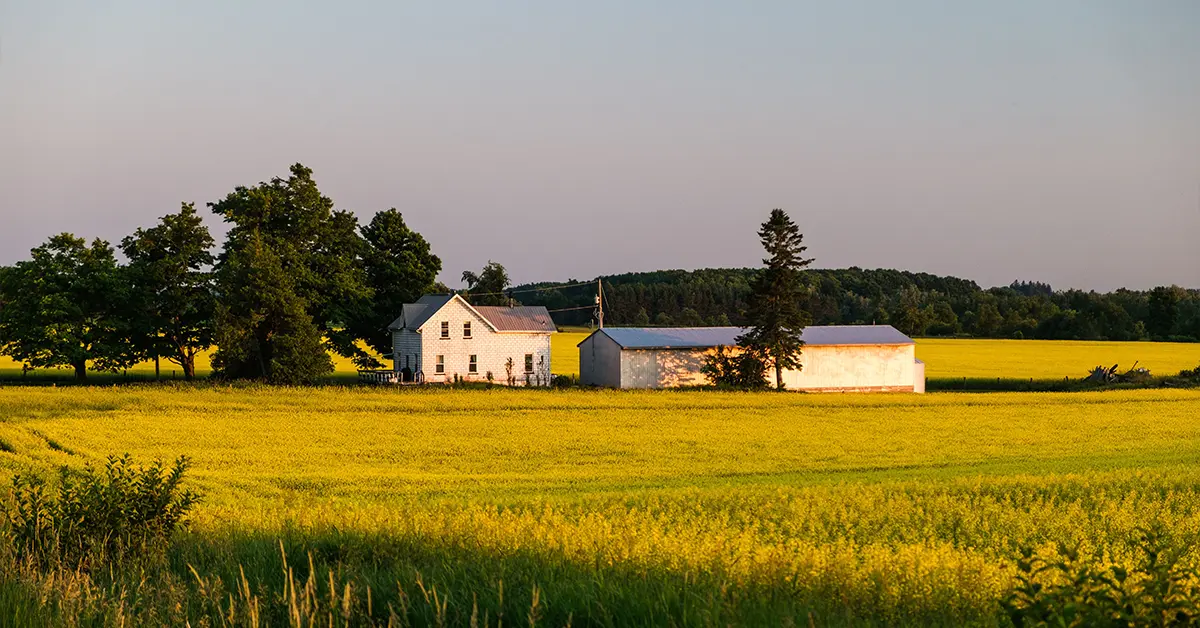
Canada’s agriculture and agri-food sector is a vital component of the Canadian economy and contributes more than CAD 110 billion each year to the country’s gross domestic product.
The Agri-Food Immigration Pilot (AFIP) existed to give eligible temporary foreign workers in this sector a pathway to Canadian permanent residence. It accepted up to 2,750 applications each year.
As of 13 February 2025, the Agri-Food Immigration Pilot (AFIP) has closed. The pilot was planned from the outset to run for only five years and will not return in 2026.
Contents
Overview of the AFIP
The Agri-Food Immigration Pilot (AFIP) was not only an immigration initiative; it also reflected Canada’s commitment to promoting cultural diversity and community inclusion. Beyond supporting workers, Canada invests heavily in education programmes for immigrant children, helping them adapt quickly to the Canadian school system through free language classes and community cultural activities.
In addition, the Canadian government encourages immigrant families to take part in sustainable development projects, such as tree planting or local fairs, in order to build relationships with local residents. Smaller Canadian communities, such as those in rural Ontario or British Columbia, often hold annual welcome events at which newcomers can introduce their traditional cuisine.
Canada is also expanding healthcare support programmes for immigrants, including free health centres in rural areas that make medical services easier to access. These initiatives not only improve quality of life but also build a diverse and harmonious society.
Considering a residency programme? The Prosperous Living Investment team assesses your profile free of charge and advises on the pathway that fits your goals.
Occupations
The eligible occupations and industries under the Agri-Food Immigration Pilot (AFIP) were:
- Meat processing.
- Retail butchers.
- Industrial butchers.
- Food processing labourers.
- Harvesting labourers in year-round mushroom production and greenhouse crop production.
- General farm workers in year-round mushroom production, greenhouse crop production or livestock raising.
- Farm supervisors and specialised livestock workers in meat processing, year-round mushroom production, greenhouse crop production or livestock raising.
Requirements
Applicants with work experience in the occupations above also had to meet the following eligibility requirements to be considered for Canadian permanent residence under the Agri-Food Immigration Pilot (AFIP).
- 12 months of full-time, non-seasonal work experience in Canada withinTemporary Foreign Worker Program (TFWP)in one of the eligible occupations.
- Canadian Language Benchmark (CLB)level 4 in English or French.
- An educational qualification equivalent to Canadian secondary school or higher obtained abroad.
- A permanent job offer for full-time, non-seasonal work in Canada, outside Quebec, at or above the prevailing wage.
Two-year LMIA for employers
Eligible employers in the meat processing sector using the pilot were granted an LMIA valid forLabour Market Impact Assessment (LMIA)two years.
To qualify, meat processors had to present a plan to help their temporary foreign workers obtain permanent residence.
Unionised meat processors needed a letter of support from their union, and non-unionised meat processors had to meet additional requirements to ensure that the labour market and immigrant workers were protected, in accordance withImmigration, Refugees and Citizenship Canada (IRCC).
Read more about the Agri-Food Immigration Pilot (AFIP) on the government websitehere.
Accompanying you on your journey in residency investment
The Prosperous Living Investment team advises on pathways, assesses profiles and manages investments transparently for every residency, citizenship and international property objective.
Free profile assessmentWhere life gets prosperous