

Dominica citizenship

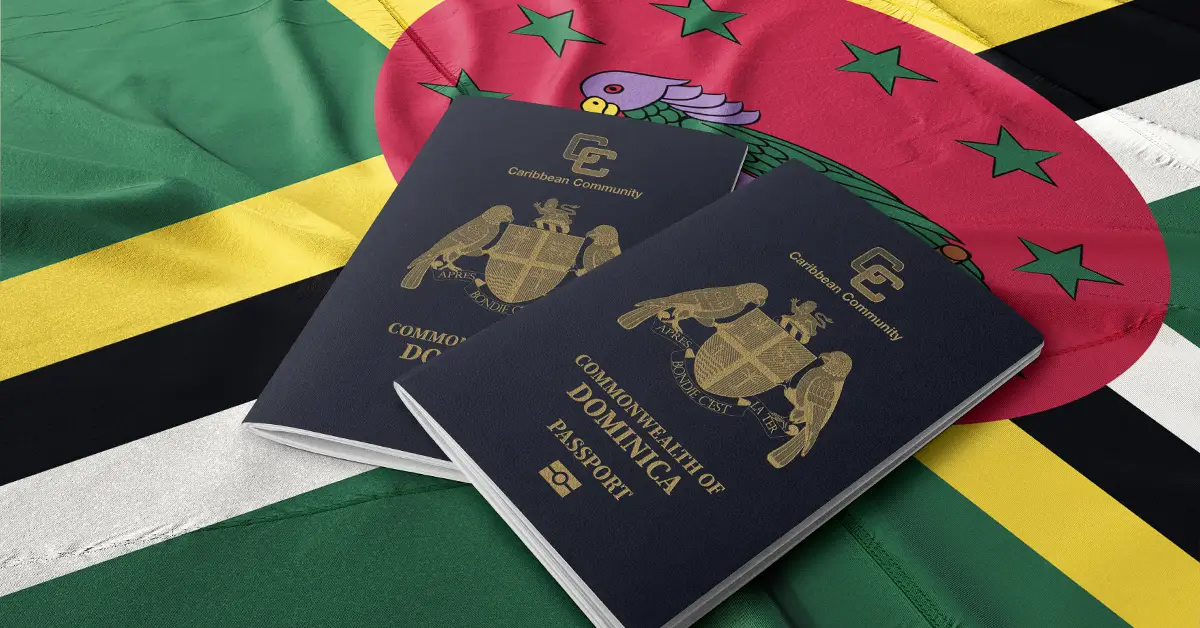
Dominica citizenship can be acquired through 5 main routes: by descent (jus sanguinis), by birth (jus soli), by registration, by naturalisation and through the Citizenship by Investment (CBI) Programme. The legal framework is set out in the Citizenship Act of 1978 and the 1978 Constitution of the Commonwealth of Dominica, including the CBI Regulations 2024 issued on 28/6/2024, which replaced the previous regulations.
Understanding the routes to Dominica citizenship helps those interested choose the pathway that suits their personal circumstances.Dominicais the only island nation in the Caribbean that allows unrestricted dual citizenship combined with the oldest CBI programme in the world, operating continuously since 1993.
Message
The legal framework governing Dominica citizenship
The 1978 Constitution of the Commonwealth of Dominica and the Citizenship Act of 1978 are the two main legal instruments governing Dominica citizenship. Sections 99 to 104 of the Constitution set out the basic principles on the granting and loss of citizenship and dual citizenship. The Citizenship Act details the procedures, conditions and rights of citizens.
Section 101 of the Constitution specifically empowers Parliament to make laws on granting citizenship to people who do not qualify through the ordinary routes. This is the legal basis for the Citizenship by Investment (CBI) Programme launched in 1993. Sections 8 and 20 of the Citizenship Act cover citizenship by descent and by registration.
The Citizenship by Investment Regulations 2024, issued in June 2024, codify the entire legal framework for the investment programme, replacing previous rules scattered across several instruments. The regulations strengthen due diligence and set stricter requirements on the source of funds, criminal records and transparency.
Considering a residency programme? The Prosperous Living Investment team assesses your profile free of charge and advises on the pathway that fits your goals.
Citizenship by descent and by birth
Dominica citizenship by descent (jus sanguinis) is the most common automatic route for people with a Dominican citizen father or mother. A child born anywhere in the world is automatically entitled to citizenship if one of their parents is a Dominican citizen at the time of birth. Registration is done at the nearest Dominican embassy or consulate.
Citizenship by birth (jus soli) applies to every child born in Dominica, regardless of the parents’ nationality. Dominica is one of the few Caribbean countries that still applies unrestricted jus soli. Children born on ships or aircraft registered in Dominica are also considered born in Dominica. The number of foreign children born in Dominica is very low because of the small population and the few visitors who give birth on the island.
Children legally adopted by Dominican citizens are also automatically granted citizenship. International adoption is governed by the 1993 Hague Convention, to which Dominica has been a party since 2002. Citizenship by descent and by birth does not require complex registration procedures or fees.
Citizenship by registration
Registration is the route to Dominica citizenship for certain groups with a special connection to the country. Spouses of Dominican citizens can apply for registration after 3 years of marriage and ordinary residence in Dominica during that time. The process involves proving a legal marriage, a clean criminal record and that the marriage is genuine and not entered into to obtain citizenship.
People born abroad with Dominican grandparents can register under special conditions if their parents did not register citizenship by descent for them in time. This applies to descendants of the large waves of emigration to the United Kingdom, the United States and Canada in the 1950s and 1960s. Registration must be completed before the person turns 25 to minimise other requirements.
Widows of deceased Dominican citizens can register for citizenship if they have lived in Dominica for at least 5 years after their husband’s death. This rule aims to protect the rights of immigrant widows connected to Dominica through marriage. Registration fees in these special cases are usually $500 USD to $2,000 USD, and the process usually takes 6 to 12 months.
Citizenship by ordinary naturalisation
Ordinary naturalisation is the route for foreign nationals living long-term in Dominica who do not fall into other special categories. The main requirements are at least 7 consecutive years of legal residence in Dominica with total absences of no more than 18 months, an intention to live in Dominica permanently after naturalisation, sufficient knowledge of English, a clean criminal record and a stable source of income.
Applicants for naturalisation must pass a written test of knowledge about Dominica, covering geography, history, the Constitution, the political system and basic culture. The test is held 4 times a year at the Attorney General’s Office in Roseau. After passing, applicants must swear an oath of allegiance to Dominica and its Constitution at an official ceremony presided over by the President or the Attorney General.
The naturalisation fee is about $1,500 USD for the main applicant and $750 USD for each dependant. The process from application to grant of citizenship usually takes 12 to 24 months depending on the complexity of the case. The approval rate for ordinary naturalisation is fairly high, above 90%, because the strict requirements screen out ineligible applicants from the outset.
Citizenship through the Investment Programme (CBI)
Detailed article onThe Dominica CBI application process.
The Citizenship by Investment (CBI) Programme is the fastest and most internationally famous route to Dominica citizenship. Established in 1993, Dominica’s CBI is one of the oldest programmes in the world and had granted about 34,500 passports to foreign nationals by early 2026. See the articleDominica citizenship by investmentfor details on how to take part in the programme.
There are two main investment options. The first is a non-refundable contribution to theEconomic Diversification Fund (EDF)of at least $200,000 USD for a single applicant or $250,000 USD for a family of 4, plus due diligence and government fees from $75,000 USD per person. The second is a real estate investment of at least $200,000 USD in a government-approved project, with the condition that it be held for at least 3 years before resale.
CBI due diligence usually takes 3 to 9 months depending on the complexity of the application. The Citizenship by Investment Unit (CBIU) carries out 4-level due diligence covering identity, criminal record, source of wealth and checks against international databases, including Interpol, OFAC and financial intelligence units. The approval rate for CBI applications is about 70% to 80%, with rejections mainly related to criminal records or unclear sources of funds.
Find more detailed information on the government website athere.
Dual citizenship and loss of citizenship
Dominica citizenship allows unrestricted dual citizenship. Dominican citizens can hold the citizenship of one or more other countries at the same time without giving up Dominican citizenship. This is an important attraction for CBI investors, as they can keep their original citizenship when they acquire Dominican citizenship.
People who acquire citizenship automatically or by naturalisation after holding another nationality also keep dual citizenship unless the other country requires them to renounce Dominican citizenship. Some countries require citizens to renounce other nationalities on naturalisation (for example China, Japan and some Gulf states); this is a rule of those countries, not of Dominica. Children born with dual nationality to Dominican citizen parents keep unrestricted dual citizenship.
Dominica citizenship can be lost in the following cases: voluntary renunciation by formal written declaration submitted to the Minister of Foreign Affairs, deprivation of citizenship for treason or seriously harming national interests, or revocation of CBI citizenship for fraud in the application. Between June 2024 and April 2026, Dominica revoked 68 CBI passports for fraud or false declarations, most of them held by Iraqi and Iranian nationals.
The passport and freedom of travel
The Dominica passport is valid for 10 years and can be renewed indefinitely. All citizens granted Dominican citizenship are entitled to the latest biometric passport with an embedded electronic chip meeting ICAO standards. Passports are issued at the Attorney General’s Office in Roseau or at Dominican embassies and consulates abroad.
The Dominica passport gives visa-free or visa-on-arrival access to 140 to 145 countries and territories as of 2026. Key destinations include Europe’s Schengen Area (90 days in any 180), the United Kingdom (6 months), Hong Kong (90 days), Singapore (30 days) and most of Central and South America.
However, the passport’s standing has come under pressure since late 2025, as the United States cut the validity of visas for Dominicans from 10 years to just 3 months in early 2026 and the EU warned that it could suspend visa-free Schengen access. Although visa-free Schengen access remains in place, CBI investors need to follow policy developments among the major partners closely in order to plan accordingly.
Rights and obligations of citizens
Dominican citizens enjoy full political, economic and social rights under the Constitution. Political rights include the right to vote at all levels (from age 18), the right to stand for elected office (the House of Assembly, parish councils), the right to join political parties and freedom of expression. People newly granted citizenship by naturalisation or CBI can stand for the House of Assembly after 7 years of actual residence in Dominica.
Economic and social rights include unrestricted property ownership and access to free public education, public health services, social security and social insurance. Citizens have the right to work anywhere in the CARICOM Single Market and Economy (CSME), including Trinidad and Tobago, Barbados, Jamaica, Guyana and other member states. This is an important benefit for citizens seeking work or business opportunities in the region.
The main obligations of Dominican citizens are to obey the law, pay taxes (for tax residents), serve on juries when summoned, and respect and protect the Constitution, the natural environment and the national cultural heritage. Dominica has no compulsory military service because it has no standing armed forces, only a police force responsible for internal security.
Summary of Dominica citizenship
Dominica citizenship is a valuable legal asset, with 5 main routes ranging from automatic citizenship by descent to CBI for international investors. A solid legal framework based on the 1978 Constitution, the Citizenship Act of 1978 and the CBI Regulations 2024 ensures transparency and protects citizens’ rights. Unrestricted dual citizenship and access to the CARICOM labour market give investors significant advantages.
In 2025 to 2026, challenges from the United States and the EU over the CBI programme have pushed the government to carry out many reforms tightening due diligence. Although this pressure may affect the value of the passport in the short term, the reforms will help maintain the credibility and sustainability of Dominica citizenship in the long term.
Accompanying you on your journey in residency investment
The Prosperous Living Investment team advises on pathways, assesses profiles and manages investments transparently for every residency, citizenship and international property objective.
Free profile assessmentWhere life gets prosperous