

EB-5 tax obligations after the green card: A guide for Vietnamese investors

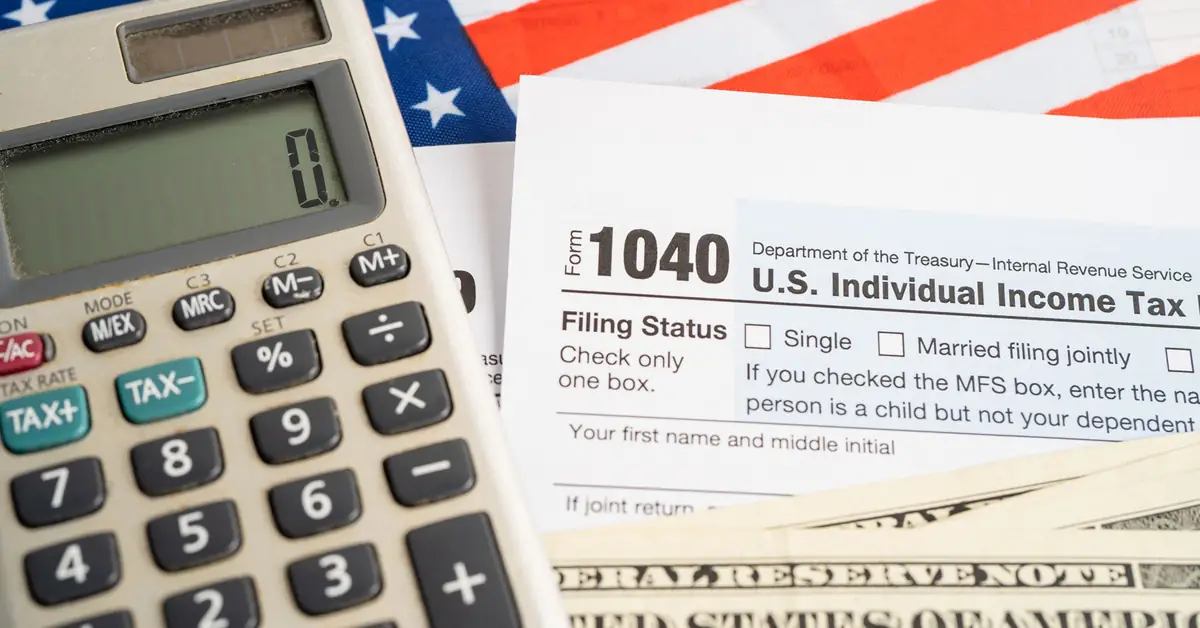
Tax obligations after an EB-5 green card are a topic most Vietnamese investors only look into in depth after already receiving a conditional green card — often too late to optimise their asset structure. When an Visa EB-5 investor becomes a US permanent resident, they simultaneously become a US Tax Resident and incur an obligation to declare worldwide income, not only income earned in the United States.
Alongside income tax obligations, investors must also comply with a range of foreign asset reporting requirements such as FBAR (Foreign Bank Account Report) and FATCA (Foreign Account Tax Compliance Act). Violating these requirements can lead to heavy fines and, in some cases, affect the United States permanent resident card.
The article examines in detail the tax obligations after an EB-5 green card and the accompanying benefits — from worldwide income and mandatory reporting forms to tools for avoiding double taxation and legal risks to avoid. This is a reference overview for Vietnamese investors with an EB-5 file, to be read before in-depth consultation with a CPA or US tax attorney.
The information in this article is for reference only regarding US tax regulations at the time of publication, and does not constitute individual tax or legal advice. Each investor’s tax situation depends on their sources of income, asset structure, country of residence and many other factors. Investors must consult a CPA (Certified Public Accountant) or a licensed US Tax Attorney before making any tax-related decision.
Message
When you become a US Tax Resident
According to guidance from the US Internal Revenue Service (IRS)an EB-5 investor becomes a US Tax Resident under the Green Card Test — on any day of the calendar year that an individual holds a valid green card, that individual is treated as a tax resident for the entire tax year.
The residency starting date is usually the first day of physical presence in the United States as a permanent resident:
– If the green card is obtained domestically through Adjustment of Status (AOS) — the starting date is the day Form I-485 is approved
– If the green card is obtained through consular processing — the starting date is the first day of entry into the United States on an immigrant visa
The first year of holding a green card is usually filed as a “Dual-Status Return” — the part of the year before becoming a tax resident declares only US-source income; the part after becoming a tax resident declares worldwide income. Form 1040 is used for the resident portion, with Form 1040-NR attached as a statement for the non-resident portion.
Important note: the number of days physically present in the United States during the year does NOT affect a permanent resident’s tax residency. Unlike holders of non-immigrant visas, who must meet the Substantial Presence Test, a permanent resident is a tax resident regardless of whether they live in the United States, as long as they hold a valid green card.
Considering a residency programme? The Prosperous Living Investment team assesses your profile free of charge and advises on the pathway that fits your goals.
Worldwide income — the core EB-5 post-green-card tax obligation
This is the biggest difference between a US permanent resident and a permanent resident of most other countries in the world.
A US Tax Resident must declare and pay tax on worldwide income — covering all sources of income, regardless of where they arise:
Employment income: salary, bonuses, commissions, and self-employment income earned in the United States and any other country — including Vietnam.
Business income: profit from a business in the United States, a business in Vietnam, an offshore company, freelance work or consulting.
Investment income: interest from bank deposits (both in Vietnam and the United States), dividends from shares, capital gains from securities, and income from bonds — regardless of where they arise.
Real estate income: rental income from property in Vietnam, the United States and any other country.
Other income: inheritance, gifts (subject to a tax-free threshold), trust income and cryptocurrency income.
The main tax filing form is Form 1040 — Individual Income Tax Return. Permanent residents may NOT file Form 1040-NR (Non-Resident). Filing Form 1040-NR while holding a green card can be regarded as a declared intent to abandon permanent residence and can affect the green card.
Federal tax rates follow a progressive scale from 10% to 37% (2026), plus state tax depending on the state of residence (from 0% in Florida, Texas and Nevada… to 13.3% in California). Permanent residents receive the same deduction benefits as US citizens, including the Standard Deduction, the Child Tax Credit and various state-specific deductions.
FBAR — reporting foreign financial accounts
FBAR (Foreign Bank Account Report) is a reporting requirement independent of tax filing, issued under the Bank Secrecy Act rather than the Internal Revenue Code.
According to FinCEN guidance, if the aggregate value of all foreign financial accounts exceeds US$10,000 at any point during the calendar year, the permanent resident must file FinCEN Form 114 through the BSA E-Filing system.
Accounts that must be reported include:
– Bank accounts (savings, current)
– Securities and brokerage accounts
– Mutual fund accounts
– Insurance contracts with cash value
– Any financial account at a financial institution outside the United States — including in Vietnam
The US$10,000 threshold applies on an aggregate basis — if an investor holds 3 accounts in Vietnam of US$5,000 each, the total of US$15,000 exceeds the threshold and all 3 accounts must be reported.
Deadline: 15 April each year, with an automatic extension to 15 October. FBAR is filed separately, not with Form 1040.
FBAR penalties are severe:
– Non-willful violations: up to US$10,000 per account per year
– Willful violations: up to US$100,000 or 50% of the account value, whichever is higher
– Serious cases can lead to criminal prosecution
FATCA and Form 8938 — reporting financial assets
Unlike FBAR (which reports accounts), FATCA requires reporting of specified foreign financial assets using Form 8938, attached to Form 1040.
Form 8938 reporting thresholds under the IRS (2026):
| Status | Living in the United States | Living outside the United States |
|---|---|---|
| Single | Total > $50,000 at year-end or > $75,000 at any point during the year | Total > $200,000 at year-end or > $300,000 at any point during the year |
| Married Filing Jointly (MFJ) | Total > $100,000 at year-end or > $150,000 at any point during the year | Total > $400,000 at year-end or > $600,000 at any point during the year |
Assets that must be reported: foreign financial accounts, interests in foreign corporations, interests in foreign contracts, and interests in foreign financial instruments.
FATCA penalties: up to US$10,000 for initial failure to file, up to US$50,000 for continued failure to file after IRS notice, plus a 40% penalty on unpaid tax attributable to undisclosed assets.
For Vietnamese EB-5 investors with significant assets in Vietnam (commercial real estate, business shares, large savings accounts), Form 8938 is often a requirement to address as early as the first tax year.
Form 5471 — reporting foreign corporations
Many Vietnamese EB-5 investors continue to hold shares in a Vietnamese business after receiving their green card. This situation requires particular attention, as it can trigger a Form 5471 obligation.
According to the IRS, a US Person who owns 10% or more (by capital or voting rights) of a foreign corporation must file Form 5471 attached to Form 1040. Form 5471 requires detailed disclosure of the ownership structure and finances of the foreign company, and of transactions with US Persons.
The starting penalty for Form 5471 is US$10,000 per unfiled form, plus additional penalties for failing to provide information specifically requested by the IRS.
For EB-5 investors who own a business in Vietnam, this is often one of the most complex aspects of first-year tax filing — requiring consultation with a CPA specialising in international tax from the preparation stage onward.
Tools for avoiding double taxation
Because a US Tax Resident must declare tax on worldwide income, but that income may also be taxed in the country where it arises, the IRS provides two main tools to avoid double taxation:
Foreign Earned Income Exclusion (FEIE) — Form 2555: allows the exclusion of up to US$132,900 (2026) of foreign earned income from US taxable income. The FEIE applies only to earned income (salary, self-employment income) — NOT to investment income (interest, dividends, capital gains, rental income). To qualify, an investor must meet one of two tests: the Bona Fide Residence Test (genuine residence abroad for the entire tax year) or the Physical Presence Test (physical presence abroad for at least 330 days within any 12 consecutive months).
Important note: the FEIE requires living outside the United States — if an EB-5 investor spends most of their time in the United States to maintain green card status, they will not qualify for the FEIE.
Foreign Tax Credit (FTC) — Form 1116: allows a credit for tax already paid to a foreign country against tax owed to the IRS. The FTC applies more broadly than the FEIE — it covers investment income too, and does not require living outside the United States. However, the FTC is only a credit, not an exclusion — if the US tax rate is higher than the foreign rate, the investor still owes the difference.
For Vietnamese EB-5 investors with substantial income in Vietnam, the FTC is usually a more effective tool than the FEIE, because Vietnam already taxes personal income at rates from 5% to 35%. However, the United States and Vietnam have no formal double taxation agreement (DTA) as of 2026 — this creates a number of complex situations that must be handled through each country’s domestic law.
Tax and social security benefits
Alongside these obligations, EB-5 investors also receive a range of tax and social security benefits similar to those of US citizens:
Standard Deduction: the standard deduction for 2026 is around $15,000 USD (single) and $30,000 USD (married filing jointly), updated annually for inflation.
Child Tax Credit: $2,000 USD for each qualifying child under 17, partially refundable.
Earned Income Tax Credit (EITC): support for low- to moderate-income families that meet specific conditions.
Mortgage Interest Deduction: a deduction for interest on a primary mortgage, subject to a cap on the loan balance.
Retirement Account Contributions: the right to contribute to a Traditional IRA, Roth IRA or 401(k) with the same tax advantages as citizens.
Social Security and Medicare: permanent residents pay Social Security tax (6.2%) and Medicare tax (1.45%) on income earned in the United States. After accumulating 40 work credits (roughly equivalent to 10 years of work), a permanent resident becomes eligible for Social Security retirement benefits and Medicare health cover once they reach the qualifying age.
For EB-5 investors close to retirement age, accumulating the full 40 work credits before retiring is an important part of planning — this can be achieved through part-time employment or self-employment in the United States.
Exit Tax — when giving up the green card
Many EB-5 investors, after holding a green card for some time, decide to give up their status and return to Vietnam. This is a situation that can trigger the Exit Tax — one of the most complex points in the US tax system.
According to the IRS, a “Long-Term Resident” (an LPR for 8 or more of the last 15 years) who gives up their green card (via Form I-407) must file Form 8854 and may be subject to the Exit Tax under the “covered expatriate” regime if they meet one of three criteria:
- Net worth ≥ $2,000,000 USD at the time of expatriation
- Average annual income tax ≥ $211,000 USD (2026, over the preceding 5 years)
- Unable to certify full tax compliance for the preceding 5 years
A covered expatriate must pay Exit Tax on a mark-to-market basis — all assets are treated as sold at fair market value on the day before expatriation, with tax charged on unrealised gains above the $910,000 USD exemption threshold (2026).
For EB-5 investors with substantial assets in Vietnam (real estate that has appreciated significantly, business shares that have grown in value), the Exit Tax can be a significant cost if they decide to give up their green card after 8 years. This is why comprehensive tax planning from the outset — including the possibility of exit — is an important matter to discuss before even receiving the conditional green card.
Tax planning before becoming a US Tax Resident is an in-depth topic that will be covered in a separate article.
Compliance risks and their effect on the green card
Beyond financial penalties, failing to meet post-green-card EB-5 tax obligations can seriously affect immigration status:
Filing Form 1040-NR while holding a green card: USCIS may treat this as a declaration of intent to abandon LPR status. In Form N-400 cases US naturalisation, USCIS typically requests tax transcripts for the most recent 3-5 years.
Failing to file taxes for several years: affects the Good Moral Character assessment — a core requirement of Form N-400.
Tax evasion or wilful tax violations: may constitute an aggravated felony under US immigration law, leading to deportation and a bar on re-entry.
Wilful FBAR/FATCA violations: beyond fines, these can lead to criminal prosecution for tax fraud.
According to updated 2026 reports, USCIS is tightening its vetting of permanent residents’ financial records, particularly for N-400 applications. Tax compliance has become an inseparable part of an immigration record.
Practical advice for EB-5 investors
For Vietnamese investors currently in the EB-5 process or who have already received a conditional green card, several practical steps should be taken early:
Before receiving the green card:
– Consult a CPA specialising in international tax as soon as the I-526E is approved
– Draw up an inventory of existing assets in Vietnam: real estate, business shares, savings accounts, securities
– Consider lawful tax planning steps before becoming a US Tax Resident
The first tax year after the green card:
– Prepare the Dual-Status Return carefully, clearly separating the periods before and after becoming a tax resident
– File Form 8938, Form 5471 (if applicable) and FBAR in full
– Make use of the FTC for tax already paid in Vietnam
In subsequent years:
– Monitor the FBAR and Form 8938 thresholds every year
– Track changes in the value of assets in Vietnam and convert them to USD at the appropriate exchange rate
– Keep complete tax transcripts for future N-400 purposes
Summary
Post-green-card EB-5 tax obligations are among the most complex parts of the US residency journey, particularly for Vietnamese investors with substantial assets in Vietnam. The concept of worldwide income, together with FBAR, FATCA and Form 5471 reporting requirements and the Exit Tax, calls for thorough preparation and ongoing compliance.
The benefits that come with this — the Standard Deduction, the Child Tax Credit, the FTC/FEIE tools for relieving double taxation, and Social Security and Medicare after 10 years — are the reward for compliance. However, non-compliance can lead to heavy fines and affect both green card status and a future N-400 application.
PLI’s immigration experts recommend that every EB-5 investor consult a CPA or Tax Attorney licensed to practise in the United States before even receiving the conditional green card. Tax planning from the pre-residency stage allows for optimising asset structures, reducing the first year’s tax burden and avoiding long-term legal risk. The cost of consulting a tax professional is a worthwhile investment compared with the risk of mishandling a complex cross-border tax filing alone.
This article summarises general information on US tax regulations at the time of publication. It is not personal tax or legal advice. Investors should consult a CPA or Tax Attorney licensed to practise in the United States before making any decision relating to their personal tax obligations.
Accompanying you on your journey in residency investment
The Prosperous Living Investment team advises on pathways, assesses profiles and manages investments transparently for every residency, citizenship and international property objective.
Free profile assessmentWhere life gets prosperous