

Economy of Antigua and Barbuda

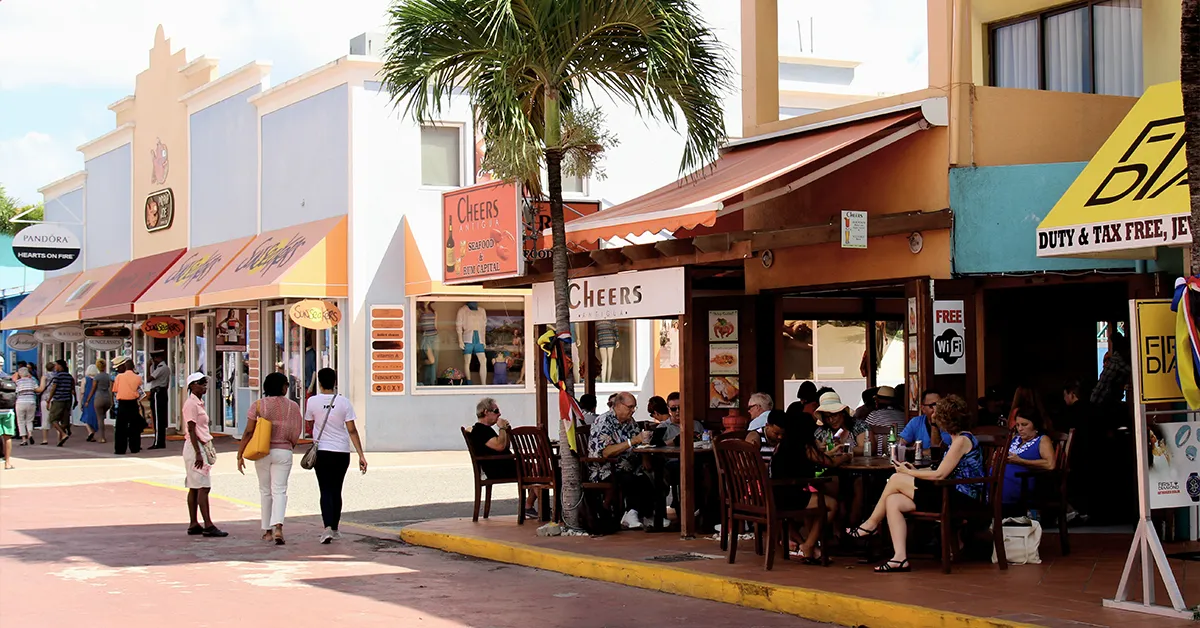
The economy of Antigua and Barbuda is a small market economy overwhelmingly dominated by services. According to World Bank and IMF data, gross domestic product (GDP) in 2024 was about $2.2 billion USD, with GDP per capita estimated at $21,326 USD — one of the highest in the Eastern Caribbean. The World Bank classifies the country as a high-income economy, and the United Nations lists it as a Small Island Developing State (SIDS).
The economic structure depends heavily on tourism, which contributes directly and indirectly about 60% of GDP. Other important sectors include construction, financial services, government services and the Citizenship by Investment Programme launched in 2013. The economy of Antigua and Barbuda recovered strongly from the COVID-19 crisis — which cut GDP by almost 19% in 2020 — and surpassed pre-pandemic levels in 2024 with growth of 4.3% according to IMF estimates. This article analyses the main components and trends of the economy in detail.
Detailed article onthe country of Antigua and Barbuda.
Message
Macroeconomic overview
Nominal GDP of Antigua and Barbuda was about $2.2 billion USD in 2024, according to World Bank data. GDP per capita at purchasing power parity (PPP) was about $25,337 USD in 2022 and has continued to rise in subsequent years. The small size of the economy reflects a population of about 100,000 and an economic structure dependent on services.
Real GDP growth in recent years was as follows:
- 2020: -19% (recession caused by the COVID-19 pandemic)
- 2021: 6.6% (initial recovery)
- 2022: 9.5% (strong recovery as tourism returned)
- 2023: 4.2–4.3% (continued growth)
- 2024: 4.3% according to the IMF (the government estimates 6%)
- 2025: 3% theo IMF
- 2026: 5% according to the government’s budget estimates
The IMF forecasts growth will stabilise at about 2.5% over the medium term as the special factors of the recovery period fade. Inflation has fluctuated significantly: from 3.3% in December 2023 it rose to a peak of 7.3% in January 2024, then fell to 1.2% in 2025 — mainly because of lower shipping costs. The high inflation of 2024 reflected rising communications prices and increases in indirect taxes.
Public debt has fallen significantly, from 100% of GDP in 2020 to 67% of GDP in 2024 — the result of nominal GDP growth and budget improvements. However, gross financing needs remain high, at about 10% of GDP over the medium term, because of substantial arrears to both domestic and external creditors (including the Paris Club). According to theIMF’s 2025 Article IV report, resolving these arrears is key to broadening the country’s access to financing.
Considering a residency programme? The Prosperous Living Investment team assesses your profile free of charge and advises on the pathway that fits your goals.
Tourism — the main pillar
Tourism is the main driver of the economy of Antigua and Barbuda, contributing about 60% of GDP according to research by the World Travel & Tourism Council (WTTC). Some sources put the figure as high as 85% when spillover effects through transport, retail and construction are fully counted. The sector provides direct and indirect employment for about a third of the workforce.
Antigua is widely promoted with the slogan “365 beaches — one for every day of the year”. Visitors come mainly from the United States (about 35–40%), the United Kingdom, Canada and continental Europe. Stay-over arrivals number about 270,000–300,000 a year, while cruise passengers reach 700,000–1,000,000.
Luxury resorts are densely concentrated around the natural bays, serving affluent travellers. Major hotel brands present include Jumby Bay (Oetker Collection), Hermitage Bay, Sandals, Hodges Bay and many other 5-star resorts. The country is one of the traditional luxury destinations of the Eastern Caribbean and hosts Antigua Sailing Week — one of the largest sailing events in the Western Hemisphere.
Two special events boosted growth in 2024: the 4th International Conference on Small Island Developing States (SIDS), held in May 2024, and co-hosting the 2024 T20 Cricket World Cup. These events helped push GDP growth above initial forecasts.
Sector structure
The structure of the economy of Antigua and Barbuda reflects the typical features of a small service-dependent island state:
- Services: about 80% of GDP, including tourism, financial services, retail trade, transport and telecommunications
- Industry and construction: about 17–19% of GDP, mainly construction (resorts, infrastructure, housing), small-scale export assembly and rum production
- Agriculture: only about 1–2% of GDP because of limited fresh water and farmland
Construction
Construction is the largest industry and plays an important role in periods of economic recovery. Foreign direct investment (FDI) is concentrated in hotel construction, especially luxury resorts in attractive coastal locations. In 2025, construction activity picked up again after slowing in 2024 due to lower materials imports. The IMF forecasts government capital spending will rise to about 3.5% of GDP in 2025, from 1.3% in 2024.
Financial services
The financial sector includes commercial banks, international banks, insurance companies and non-bank financial institutions. The financial system is regulated by theEastern Caribbean Central Bank (ECCB), which serves all 8 member states of the Eastern Caribbean Currency Union. According to the IMF, the financial system of Antigua and Barbuda is generally stable and liquid, with the banks’ non-performing loan ratio below the 5% prudential threshold since late 2024.
Offshore financial services were once an important sector but have shrunk significantly since the late 1990s under international pressure on anti-money laundering and financial transparency. The country now complies with Financial Action Task Force (FATF) standards and has been removed from the EU’s list of “tax havens” in recent reviews.
Agriculture
Agriculture plays a modest role because of limited water, farmland and labour. The main products include the Antigua black pineapple — a native variety famous for its sweetness — sugar cane, maize, sweet potatoes, watermelons and tropical fruit and vegetables. Most produce serves the domestic market or supplies the tourism industry (rum and beverages). Agricultural output is hampered by periodic droughts and Atlantic hurricanes.
Fishing plays a small cultural and economic role. The main products are spiny lobster, mackerel, tuna and conch. Some of the catch is exported to neighbouring Caribbean markets, and some serves domestic consumption and resort restaurants.
The citizenship by investment programme
The Citizenship by Investment Programme (CBI), launched in 2013 under the Baldwin Spencer government, is an important source of foreign exchange and government revenue. According to the IMF, inflows from the programme contribute about 1% of GDP a year to the state budget, and possibly more in years with many applications. The programme is managed by the Citizenship by Investment Unit (CIU) under the Office of the Prime Minister.
The programme currently offers 4 investment options: a contribution to the National Development Fund (NDF), investment in approved real estate, a business investment and a contribution to the University of the West Indies Fund (UWIF). The minimum investment for the most popular option (NDF) rose from $100,000 USD to $230,000 USD in August 2024 at the request of the European Union to protect the integrity of Schengen visa access. A physical residence requirement of 30 days within the first 5 years after receiving citizenship also applies.
In December 2025, US President Donald Trump issued an executive order restricting B-1/B-2, F, M and J visas for citizens of Antigua and Barbuda from 01/01/2026, citing concerns about the programme’s transparency. In early 2026, the two sides reached a preliminary agreement to maintain entry rights for those who already held valid visas before that date. This development may affect the programme’s appeal in the long term. Details of the current investment options are set out in the articleAntigua and Barbuda Citizenship by Investment.
Currency and the banking system
The official currency of Antigua and Barbuda is the Eastern Caribbean Dollar (XCD), the common currency of the 8 members of the Eastern Caribbean Currency Union (ECCU): Antigua and Barbuda, Dominica, Grenada, Saint Kitts and Nevis, Saint Lucia, Saint Vincent and the Grenadines (plus Anguilla and Montserrat — British territories). The XCD is issued by the ECCB, headquartered in Saint Kitts.
The XCD is pegged to the USD at 2.7 XCD = 1 USD, a rate maintained since 1976. This fixed rate creates a predictable financial environment for businesses and investors and helps anchor inflation. However, the ECCU’s common monetary policy limits the ability of Antigua and Barbuda to respond independently to country-specific economic shocks.
The banking system of Antigua and Barbuda consists of international commercial banks, domestic banks and credit unions. The major banks include Antigua Commercial Bank, ECAB (Eastern Caribbean Amalgamated Bank), Royal Bank of Canada, CIBC FirstCaribbean and Republic Bank. Growth in bank credit to the private sector fell from 12.5% in 2024 to below 5% in 2025 — reflecting a shift to a slower recovery phase.
Budget and fiscal policy
The government budget of Antigua and Barbuda has improved significantly since the COVID-19 crisis. The primary fiscal balance moved from deficit to surplus, reaching 4% of GDP in 2024 and almost 5% of GDP in 2025 according to the IMF. Prime Minister Gaston Browne’s ABLP government has implemented measures to increase tax revenue and control recurrent spending.
The main sources of revenue include:
- Antigua and Barbuda Sales Tax (ABST): a VAT equivalent, with a standard rate of 17% and a reduced rate of 15% on some goods
- Import duties and customs: a large share of the budget, because the economy is highly dependent on imports
- Property tax: the tax base was broadened in 2024, especially for high-end real estate
- CBI contributions: an informal but important source of revenue from the citizenship by investment programme
- Excise duties: on alcohol, tobacco and legal cannabis (applied from 2024)
The country does not levy personal income tax — a notable feature reflecting the fiscal tradition of small Caribbean island states and attracting foreign investment. Reintroducing personal income tax has been recommended by the IMF but not accepted by the government.
International trade and foreign direct investment
The merchandise trade balance of Antigua and Barbuda is persistently in deficit because the country relies heavily on imports of food, energy, machinery and consumer goods. The deficit is offset by a services surplus — mainly from tourism — together with FDI inflows and transfers from the CBI programme. The current account deficit narrowed to 7% of GDP in 2024 but widened again to about 11.5% of GDP in 2025 as construction-related imports rose and tourist arrivals levelled off.
Main trading partners according to consolidated import and export data:
- Exports: the United States, Trinidad and Tobago, the United Kingdom and other CARICOM countries
- Imports: the United States (40–50% of the total), China, the United Kingdom and other CARICOM countries
The main exports include refined petroleum products (West Indies Oil Company — WIOC), boats, small furniture and some handicrafts. In April 2025, the government of Antigua and Barbuda completed the acquisition of WIOC from the West Indies Oil group — a strategic move to control the energy supply chain. Antigua and Barbuda is a member of the CARICOM Single Market and Economy (CSME), which allows free movement of goods, services and certain categories of workers within the region.
Employment and the labour force
According to data from the Antigua and Barbuda Social Security Board, registered employment rose from 47,996 in 2023 to 49,915 in 2024, with total wages paid reaching $1.8 billion XCD (about $670 million USD). The government expects an additional 2,000 jobs in 2025, concentrated in tourism and construction. The unemployment rate hovers around 7–9%, with youth unemployment significantly higher.
The labour force numbers about 50,000 people, distributed by sector as follows (estimates):
- Services (tourism, retail, finance, government): about 75–80%
- Construction and manufacturing: about 15–18%
- Agriculture and fishing: about 3–5%
The minimum wage is adjusted periodically. In the 2023 election, the UPP proposed raising the minimum wage to EC$10 an hour. Social insurance arrangements include a compulsory contributory social security system, a public pension scheme and workplace accident insurance. Vocational training has been expanded through the One Stop Employment Centre programme and skills development projects to meet the needs of tourism and new technology sectors.
Challenges and outlook
The economy of Antigua and Barbuda faces several structural challenges:
- Dependence on tourism: creates vulnerability to global economic shocks, epidemics and shifts in traveller preferences
- Climate change: hurricanes, rising sea levels and water scarcity threaten key sectors
- Small size: limits diversification and economies of scale
- Arrears: need to be resolved to broaden access to financing
- International pressure on CBI: threatens an important source of revenue
However, the IMF assesses the medium-term outlook positively. Favourable factors include steady FDI inflows into the hotel sector, improved air connectivity, a new cruise port facility, continued structural reforms to raise productivity, and the transition to a green economy. Diversification into more transparent financial services, information technology and renewable energy are development directions the government is prioritising.
Economy of Antigua and Barbuda — a summary
The economy of Antigua and Barbuda is a small high-income economy based on tourism and services, with a structure typical of a Caribbean island state. The rapid post-pandemic recovery, improved fiscal position and citizenship by investment programme provide a solid financial foundation for the decades ahead. GDP per capita, declining public debt and steady FDI show the effectiveness of current economic development policy.
Even so, vulnerability to climate disasters, dependence on tourism and international pressure on the citizenship by investment programme pose real risks to the long-term outlook. The ability to diversify the economy, invest in climate-resilient infrastructure and keep the citizenship by investment programme competitive will be key to the future.
Accompanying you on your journey in residency investment
The Prosperous Living Investment team advises on pathways, assesses profiles and manages investments transparently for every residency, citizenship and international property objective.
Free profile assessmentWhere life gets prosperous