

United States
California billionaire tax heads to the November ballot as Governor Newsom rejects compromise
A proposed one-off 5% wealth tax on roughly 200 California billionaires has qualified for the November 2026 ballot;…


Two major U.S. immigration regulations are in the final stages of the federal review process and are likely to impact hundreds of thousands of international students as well as technical workers.
According to specialized legal sources, the U.S. Department of Homeland Security (DHS) submitted the final rule to abolish “Duration of Status” (D/S) to the Office of Management and Budget (OMB) on 5 May 2026. In parallel, the U.S. Department of Labour is seeking public comment on a regulation to increase the prevailing wage applicable to H-1B visas and other employment visa categories.
According to Bloomberg Law, the final rule, identified as RIN 1653-AA95, was submitted to the Office of Information and Regulatory Affairs within the OMB on 5 May 2026. This is the final step before the regulation is published in the Federal Register and takes effect.
The regulation applies to 3 non-immigrant visa groups: F (academic students), J (international exchange), and I (foreign information media representatives). According to NAFSA: Association of International Educators and analysis by Fragomen, the final rule is expected to retain “most or all” of the content of the original proposal published on 28 August 2025.
Key content of the proposed regulation:
F-1 students and J-1 exchange visitors will be admitted for a fixed period, equal to the length of the programme according to Form I-20 or DS-2019, but not exceeding 4 years. Language courses are limited to a maximum of 24 months. Those requiring a longer stay must apply for Form I-539 an extension of status, including biometrics, to U.S. Citizenship and Immigration Services (USCIS).
The grace period after F-1 graduation will be reduced from 60 days to 30 days. Graduate students are prohibited from changing majors during their studies. Students who have completed a programme in the United States may only continue to a higher level — they may not study at the same or a lower level (e.g., if they already hold a master’s degree, they cannot pursue a second master’s).
Considering a residency programme? The Prosperous Living Investment team assesses your profile free of charge and advises on the pathway that fits your goals.
According to a DHS announcement, the reason for the change is to strengthen the integrity of the 3 visa programmes, enhance the screening process for applicants, and bring these programmes into alignment with the legal system. This is a revival of a similar regulation proposed by the first Trump administration in 2020 — which was withdrawn by the Biden administration in July 2021.
According to the Center for Immigration Studies, government data recorded 2,134 individuals who entered the United States under F non-immigrant status between 2000-2010 (16-26 years ago) who were still in valid F-1 status as of April 2026. DHS argues that the D/S regime makes it difficult for the agency to determine when non-immigrants begin to accrue unlawful presence — which is critical for applying the 3-year and 10-year re-entry bars under the Immigration and Nationality Act.
After the OMB completes its review, the regulation will be published in the Federal Register and will take effect 30-60 days after publication. According to ICEF Monitor, the regulation could apply to students enrolling in September 2026. Current students wishing to extend their programme beyond the limit will have to apply for review.
According to PIE News, higher education institutions are warning of a significant increase in workload, which could cause further backlogs in visa processing and reduce the attractiveness of the United States to international students. New international enrolment has decreased by 17% in the most recent academic year.
The US Department of Labor on 27 March 2026 published a proposed rule titled “Improving Wage Protections for the Temporary and Permanent Employment of Certain Foreign Nationals in the United States”. The rule aims to adjust prevailing wage thresholds for employers sponsoring foreign workers under the H-1B, H-1B1, E-3, and PERM.
The proposed rule uses Occupational and Employment Wage Statistics (OEWS) data for positions without union representation. If enacted, the changes will have significant financial impacts on employers sponsoring employment visas across multiple industries – including cap-exempt H-1B universities and non-profit research institutions.
The specific impact may vary depending on job location, classification, and geographic region. According to legal analyses, salary thresholds for non-union positions are generally expected to rise. The public comment period for the rule runs until 26 May 2026.
According to a Bloomberg article on 8 May 2026, the Trump administration wants to increase H-1B hiring costs for United States employers. The new prevailing wage rule is part of a series of measures affecting the H-1B programme, following the transition of the H-1B lottery to a salary-weighted selection mechanism in 2025.
Regarding the Duration of Status rule, the final content will only be known when published in the Federal Register. According to Fragomen, the rule is expected to significantly increase the volume of non-immigrant status extension applications filed with USCIS, exacerbating existing processing backlogs.
Regarding the prevailing wage rule, the final content will be published by the Department of Labour after the comment period closes and public comments are analysed. Both rules are likely to face legal challenges after taking effect, based on the precedent of similar immigration rules during the first Trump term.
A proposed one-off 5% wealth tax on roughly 200 California billionaires has qualified for the November 2026 ballot;…

US employment sponsorship via an employment-based green card can take 3 to more than 15 years. An analysis…
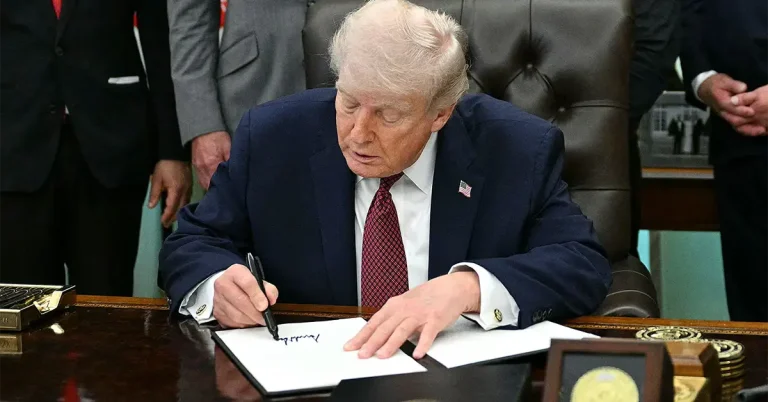
President Trump signed an executive order on 19 May 2026 requiring US banks to screen for signs of…
The Prosperous Living Investment team advises on pathways, assesses profiles and manages investments transparently for every residency, citizenship and international property objective.
Free profile assessmentWhere life gets prosperous
We use analytics cookies (Google Analytics) to understand how this site is used. They stay off until you agree. Privacy policy.