

Form I-539, the application to extend or change nonimmigrant status

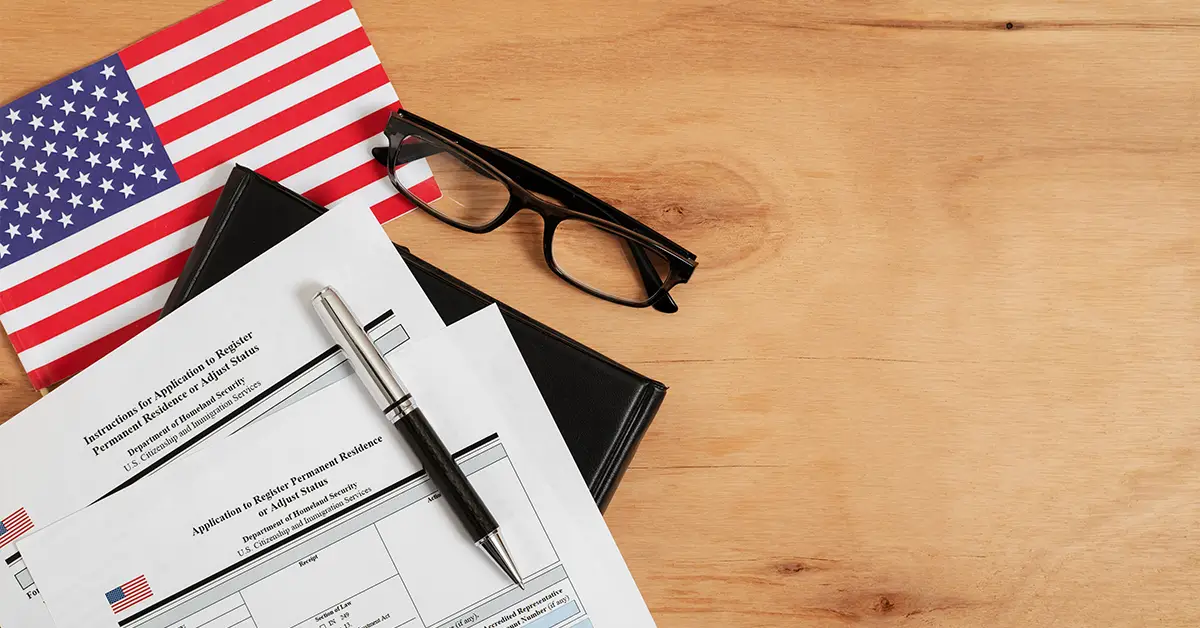
Form I-539 is the official form issued byUnited States Citizenship and Immigration Services (USCIS)allowing foreign nationals in the United States on a non-immigrant visa to apply to extend their stay or change to another non-immigrant category without leaving the country. It is an important tool helping holders of tourist, student and dependant visas maintain lawful status when their original plans change. Understanding Form I-539 correctly helps applicants avoid the serious consequences of overstaying.
Message
What Form I-539 is
Form I-539 (full name: Application to Extend/Change Nonimmigrant Status) serves two main purposes. The first is applying for an extension of stay within the same current non-immigrant category. The second is applying for a change of status to another non-immigrant category — for example moving from a B-2 tourist visa to an F-1 student visa.
A less well-known secondary purpose is reinstatement for F-1 or M-1 students who have breached the conditions for maintaining status. In that case, Form I-539 is filed together with an updated Form I-20 from the institution.
Form I-539 must be clearly distinguished from other applications. Form I-539 is NOT used to apply for a green card — that requires Form I-485Adjustment of Status (AOS). Form I-539 also does NOT grant the right to work — those needing a work permit must fileForm I-765separately where eligible.
Access Form I-539 online athere.
Considering a residency programme? The Prosperous Living Investment team assesses your profile free of charge and advises on the pathway that fits your goals.
Who may file Form I-539
Those eligible to file Form I-539 are foreign nationals in the United States on certain specific non-immigrant visa categories, comprising:
- Tourists or short-term business visitors on aUnited States B-1/B-2 visa.
- F-1 and M-1 students and F-2 and M-2 dependants.
- J-1 cultural exchange visitors and J-2 dependants (with certain restrictions).
- The spouse and children of an H-1B visa holder (in H-4 status).
- The spouse and children of an L-1 visa holder (in L-2 status).
- The spouse and children of an E-1, E-2 or E-3 treaty investor.
- K-3 visa holders (the foreign spouse of a United States citizen) and K-4 holders.
- Certain other special categories such as R-2 (the dependant of an R-1 religious worker).
The categories that may NOT use Form I-539
Certain non-immigrant categories must use Form I-129 (Petition for a Nonimmigrant Worker) instead of Form I-539 to extend or change status. Specifically, principals in the E-1, E-2, E-3, H-1B, H-2A, H-2B, H-3, L-1, O-1, O-2, P-1, P-2, P-3, Q-1, R-1 and TN categories. The dependants of these categories still use Form I-539 as normal.
In addition, certain categories are not eligible to extend or change status in the United States, comprising the C, D, K-1, K-2, S, TWOV, WT and WB visas. Those in these categories who want to stay longer must leave the United States and apply for a new visa from their home country.
The basic conditions for approval
To have a chance of USCIS approval, Form I-539 applicants must meet all of the following conditions:
- Having been lawfully admitted to the United States on a non-immigrant visa valid at the time of entry.
- Still being within the lawful period of stay permitted at the time of filing (by the date on Form I-94, NOT the date on the visa stamp in the passport).
- Not having breached the conditions of the current visa category — for example, not having worked unlawfully.
- Not having committed an offence or a serious immigration violation that removes eligibility to apply to extend or change status.
- Having a proper reason and specific evidence for the extension or change of status.
Particularly important: the actual expiry date of the permitted stay is the one on theForm I-94, the arrival and departure recordand not the date on the visa stamp in the passport. These two dates are usually different, and confusing them is one of the most common errors leading to refusal.
The Form I-539 fee
The Form I-539 fee depends on the filing method (online or paper) and several other factors. Filing online usually costs less than filing on paper. Certain special categories — such as the dependants of a CNMI E-2 investor — may be exempt from the fee.
Most applicants must also pay a biometrics fee. Those aged 14 to 79 usually pay the biometrics fee and attend a fingerprinting appointment at an Application Support Center, while children under 14 and those over 79 are usually exempt.
Since 01/01/2026, USCIS has applied an annual fee adjustment mechanism indexed to inflation under Public Law 119-21. Applicants should check the latest fee schedule on theUSCIS Filing Feespage before filing, because USCIS will reject an application filed with a missing or incorrect amount.
USCIS no longer accepts payment by personal cheque, business cheque, money order or cashier’s cheque for most paper applications. Applicants use Form G-1450 to pay by credit card or Form G-1650 for an ACH transfer from a United States bank.
The documents to prepare
The specific documents vary by category and purpose, but the standard set for every I-539 application comprises:
- A fully completed and signed Form I-539. Where dependants are included, a Form I-539A must also be filed for each of them.
- The application fee and the biometrics fee (where applicable).
- A copy of the passport biographic page, and the page bearing the visa stamp or United States entry stamp.
- A copy of Form I-94 (both front and back, or the electronic I-94 printout from the United States Customs and Border Protection (CBP) website).
- Evidence that the current non-immigrant status is still valid.
- Documents evidencing the reason for the extension or change of status.
The supporting documents vary considerably by category. B-2 tourists applying for an extension need a letter explaining the reason (for example medical treatment, a family event, an extended tour), evidence of self-support and a return ticket or plan to leave the United States. F-1 students need an updated Form I-20 from their institution. H-4, L-2 and E dependants need evidence of their relationship to the principal (marriage certificate, birth certificate) and evidence that the principal is maintaining lawful status.
USCIS provides a separate checklist for each category on the official Form I-539 page. Applicants should check the relevant checklist carefully before filing to avoid refusal for missing documents.
When to file Form I-539
The most important rule is to file BEFORE the expiry date on Form I-94. USCIS recommends filing at least 45 days before the expiry date to make sure the application is received in time. The earliest filing is 6 months before the expiry date — anything earlier will be rejected.
Filing on time brings important legal protection. Those who file on time may remain in the United States in a period of “authorized stay” while USCIS processes the application, even where the I-94 expires before a decision is made. For an extension in the same category, applicants may stay up to 240 days while awaiting the outcome.
Filing late — even by a single day — usually leads to immediate refusal, unless the applicant can prove “extraordinary circumstances” beyond their control under 8 CFR §214.1(c)(4). Overstaying also carries serious consequences:
- Overstaying by 180 days or more: a 3-year bar on entering the United States after leaving.
- Overstaying by 1 year or more: a 10-year bar on entering the United States.
- Loss of eligibility to apply for adjustment of status and many other immigration benefits in future.
The Form I-539 filing process
The filing process comprises the following basic steps:
- Identify the category and filing method:Applicants establish whether their current category is eligible to use the I-539 or must use the I-129. They also decide whether to file online or on paper. USCIS allows online filing for most of the common categories comprising B-1, B-2, F-1, F-2, M-1, M-2, J-1, J-2, H-4, L-2, E-1/E-2/E-3 dependants and certain others.
- Complete the file:Complete Form I-539 in full, together with Form I-539A for each dependant. Attach all the supporting documents on the checklist for the category.
- Pay the fee:Online, payment is made directly through the USCIS account by credit card or United States bank transfer. On paper, Form G-1450 or G-1650 is used.
- File the application:File online through a USCIS account or send the paper application to the corresponding lockbox listed on the USCIS Form I-539 Direct Filing Addresses page.
- Track it and attend the biometrics appointment:On receiving the application, USCIS sends Form I-797C Receipt Notice as confirmation. Where biometrics are required, the applicant receives an appointment notice for the nearest Application Support Center.
- Receive the outcome:USCIS sends the approval or refusal decision by post or through the online account. Where approved, this comes with Form I-797 Approval Notice bearing a new I-94 number stating the new status and period of stay.
Important points while the application is pending
While USCIS processes Form I-539, applicants must comply with the conditions of their current visa category. The important restrictions to note:
Applicants may NOT work unless the current category permits it or they hold a separate EAD. Working without permission while waiting is a serious immigration violation and will lead to immediate refusal.
Students awaiting a change of status from B-2 to F-1 may NOT begin their course until USCIS approves it and grants the new F-1 status. Studying while waiting is treated as a breach of B-2 conditions.
Leaving the United States while the application is pending usually leads USCIS to treat it as abandoned and refuse it — with no refund of the fee. Those who need to travel abroad urgently should consult an immigration lawyer before leaving.
Why an I-539 application is usually refused
Some common reasons for Form I-539 refusal comprise:
- Filing after the expiry date on the I-94 without good reason.
- Missing documents evidencing the reason for the extension or change of status.
- Confusing the visa stamp expiry date with the I-94 expiry date.
- Breaching the conditions of the current visa category before or during the wait — for example working unlawfully.
- Choosing the wrong form — using the I-539 instead of the I-129 for H-1B, L-1 or O-1 categories.
- Leaving the United States while the application is pending.
- Insufficient proof of self-support during the period of extension applied for.
- The applicant showing a clear immigrant intent (for example applying for repeated extensions on a B-2 visa).
Practical advice
Form I-539 applicants can considerably increase their approval rate by attending to the following points.
First, check the actual expiry date on the I-94 at i94.cbp.dhs.gov immediately after entry and note it exactly. This is the real deadline, not the visa expiry date. Set reminders 90, 60 and 45 days before the expiry date to allow time to prepare the file.
Second, file online rather than on paper where the current category permits. Online filing costs less, the Receipt Notice arrives almost immediately, and the system checks the mandatory fields automatically. TheUSCIS i539onlinepage lists all the categories permitted to file online.
Third, prepare a detailed cover letter for each case. USCIS assesses an application on the evidence as a whole, not only the fields on the form. A clear cover letter with a specific timeline, the reason for the change of plan, and evidence of ties to the home country (assets, work, family) considerably strengthens the case.
Finally, for complex cases — such as moving from B-2 to F-1 after a long period in the United States, repeated B-2 extensions, or F-1 reinstatement after a violation — applicants should consult an experienced immigration lawyer. Refusal rates in these cases are high and the consequences of overstaying are very serious.
Conclusion
Form I-539 is an important legal tool helping non-immigrant visa holders maintain lawful status in the United States when their original plans change. Understanding who is eligible, preparing documents appropriate to the category, and meeting the filing deadline are the three factors that decide approval.
Most importantly, applicants need to remember the actual expiry date on the I-94 and file at least 45 days before it. Filing on time not only improves the chances of approval but protects the applicant from the risk of overstaying — a violation that can lead to a bar on entering the United States for years. For those building a long-term United States settlement plan, maintaining continuous lawful status is an indispensable foundation for the immigration steps that follow.
Accompanying you on your journey in residency investment
The Prosperous Living Investment team advises on pathways, assesses profiles and manages investments transparently for every residency, citizenship and international property objective.
Free profile assessmentWhere life gets prosperous