

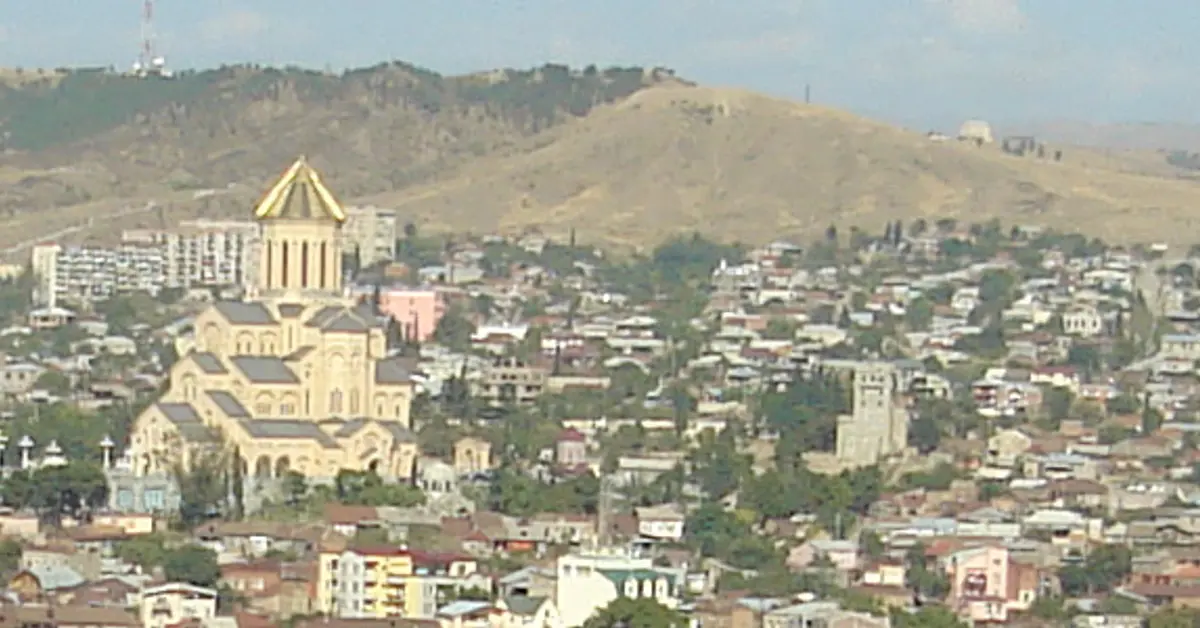
The country of Georgia is a nation located in the Caucasus region, at the crossroads of Eastern Europe and Western Asia, with Tbilisi as its capital. It is necessary to clearly distinguish this country from the U.S. state of Georgia. This article provides an overview of the geography, history, institutions, and life there.
Contents
Which country is Georgia?
First, it is necessary to clarify a point that often causes confusion. When mentioning the country of Georgia, many people think of the state of Georgia in the southeastern United States. However, in this article, Georgia is a sovereign, independent nation located in the Caucasus region. These are two completely different entities that only share the same name in English.
The country of Georgia has the native name Sakartvelo (საქართველო), meaning the land of the Kartli people. This name reflects the ethnic origin and long-standing identity of the local inhabitants. In Vietnamese, this country is also phonetically transcribed as Gru-di-a or Gruzia, following the usage from the Soviet era.
In terms of status, it is a republic situated between the Black Sea to the west and the majestic Caucasus Mountains to the north. Consequently, this nation is often seen as a hinge point between Europe and Asia, possessing a unique blend of cultural characteristics.
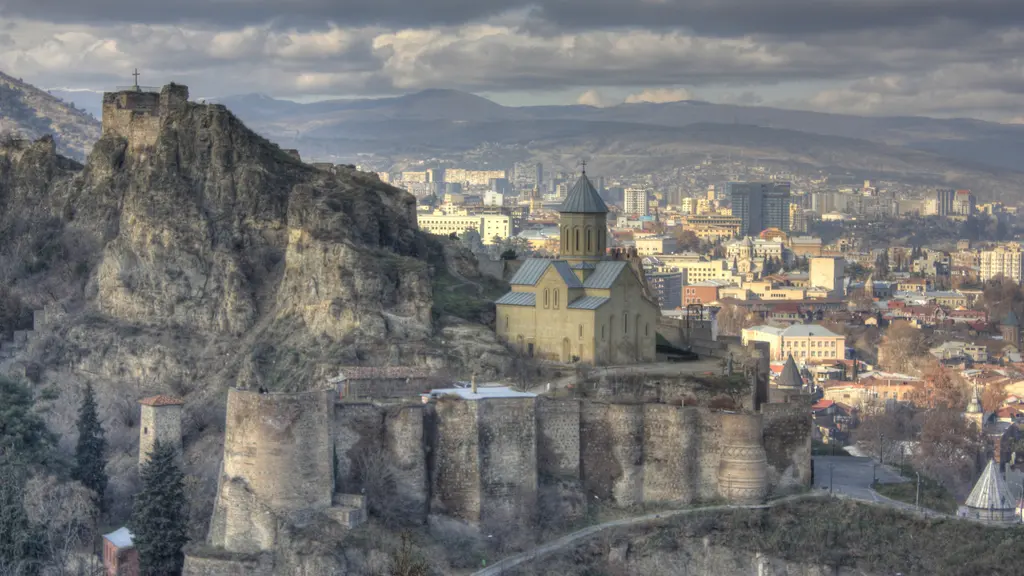
The Old Town and Narikala Fortress in the capital city of Tbilisi, Georgia.
Considering a residency programme? The Prosperous Living Investment team assesses your profile free of charge and advises on the pathway that fits your goals.
Geographical location and overview of the country of Georgia
The country of Georgia is located south of the Caucasus range, bordering the Russian Federation to the north and northeast, Türkiye and Armenia to the south, Azerbaijan to the southeast, and the Black Sea to the west. This location makes the nation an important trade bridge between civilisations. The total area of this country is approximately 69,700 km², which is much smaller than Vietnam.
The terrain here is primarily mountainous, with the Greater Caucasus range in the north and the Lesser Caucasus range in the south. Interspersed are fertile river valleys and plains, where the population and agriculture are concentrated. The Shkhara peak, at over 5,000 metres, is considered the highest point in the country.
The country’s climate is quite diverse due to its complex terrain. The Black Sea coastal region has a humid subtropical climate, while the high mountain regions are cold year-round. Readers can learn more in the article geography of Georgia to understand the characteristics of each region.
- Area: approximately 69,700 km².
- Borders: Russia, Türkiye, Armenia, Azerbaijan, and the Black Sea.
- Capital: Tbilisi, located on the banks of the Kura (Mtkvari) River.
A brief history of the Caucasus nation
The history of this region spans thousands of years, with ancient kingdoms such as Colchis and Iberia existing since antiquity. Georgia was one of the earliest nations to officially adopt Christianity, around the fourth century. This event has profoundly shaped the national religious and cultural identity to this day.
The golden age of the unified kingdom occurred in the eleventh and twelfth centuries, under the reigns of King David the Builder and Queen Tamar. However, the nation subsequently experienced centuries of fragmentation and influence from neighbouring empires such as Persia, the Ottoman Empire, and Russia.
In 1991, the nation declared independence following the dissolution of the Soviet Union. The following decades witnessed significant political shifts and reforms. To fully understand this progression, we invite you to read our in-depth article on the history of Georgia.
Political system and government structure
Georgia is a parliamentary republic. Under the Constitution, executive power is primarily concentrated in the government led by the Prime Minister, while the President serves as the head of state with largely ceremonial functions. The legislative body is the Parliament of Georgia, which consists of elected members.
The country’s legal system is based on the civil law tradition. Several Organic Laws govern core matters such as the organisation of the courts and elections. According to information from the Government of Georgia, the state apparatus is clearly divided between the branches of power.
Furthermore, the nation’s foreign policy has leaned strongly towards Western integration in recent years. The issue of breakaway regions remains a sensitive topic in domestic politics. Interested readers may refer to the additional article Georgian political system.
Economy and business environment
The national economy has transitioned significantly from a centrally planned model to a market economy since 1991. Key sectors include services, tourism, agriculture, transport, and energy. The currency is the lari, denoted as GEL; for example, a fee might be listed as 1,000 GEL (Georgian lari).
For many years, the country has been known for reforms aimed at simplifying business registration procedures and reducing corruption. According to data from the National Statistics Office of Georgia (Geostat), the gross domestic product has maintained a growth trend for most of the recent years.
A favourable geographical location helps the nation serve as a transport corridor for energy and goods between the Caspian region and Europe. Tourism also contributes significantly to foreign currency earnings. For a complete picture, please see the article the Georgian economy.
Population and language
The nation’s population is estimated at nearly 4 million people. The majority of residents are native Georgians, alongside minority communities such as Azerbaijanis, Armenians, Russians, and other groups. Population density is highly concentrated in the capital, Tbilisi, and major cities such as Batumi and Kutaisi.
The official language is Georgian, a Kartvelian language with a unique alphabet. The Mkhedruli script of the Georgian language is recognised by UNESCO as an intangible cultural heritage. Additionally, Russian and English are used in certain contexts.
Regarding religion, the majority of the population follows the Georgian Orthodox Church, a branch with a profound influence on social life. The population structure and demographic trends are analysed in detail in the article demographics of Georgia.
Culture, cuisine, and heritage
The local culture is famous for its hospitality, polyphonic music, and long-standing winemaking tradition. In fact, this nation is often cited as one of the cradles of viticulture and winemaking in the world. The method of fermenting wine in qvevri clay vessels has been recognised by UNESCO as heritage.
Local cuisine is rich with signature dishes such as khachapuri (cheese bread) and khinkali (steamed meat dumplings). Traditional feasts called supra, presided over by a toastmaster known as a tamada, clearly demonstrate the spirit of community. Furthermore, folk dances and songs are also a source of national pride.
The nation possesses many UNESCO World Heritage sites, including ancient churches and historic districts. These values are presented in more detail in the article culture of Georgia.
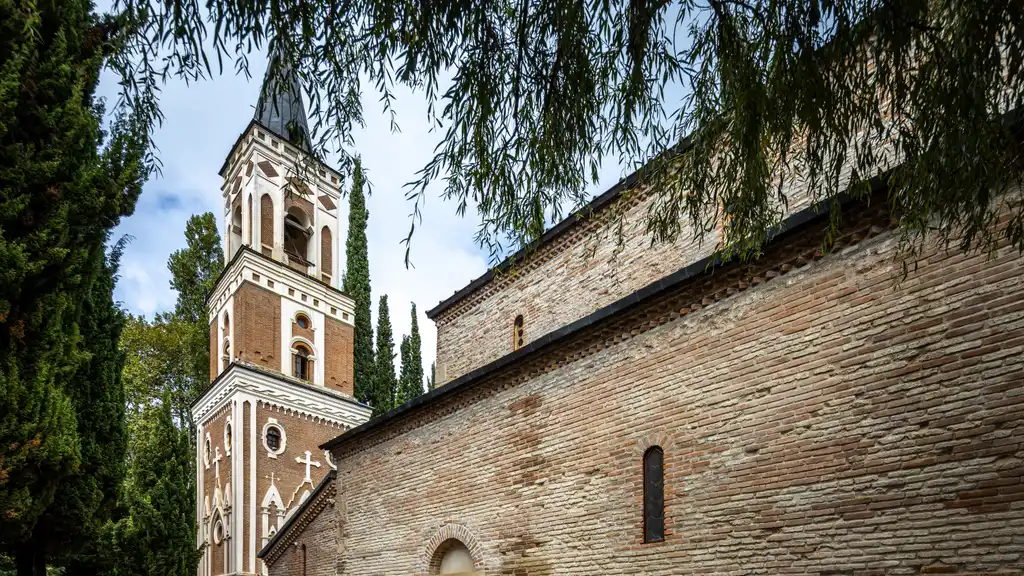
Towns and characteristic mountain landscapes of Georgia.
Education and academic life
The national education system is organised into several levels, from preschool and primary to university. The country has a long academic tradition, with Tbilisi State University being one of the oldest higher education institutions in the Caucasus region, established in 1918.
In recent years, several universities, particularly in the medical sector, have attracted international students thanks to English-taught programmes. Doctors, PhD holders, and masters trained here participate in many areas of society. However, the quality between institutions still varies.
The state has also gradually reformed the curriculum to align with European standards. Detailed information on education levels and policies is summarised in the article education in Georgia.
Tourism and notable destinations
Tourism is one of the nation’s fast-growing sectors, thanks to its diverse natural landscapes and rich cultural heritage. The capital, Tbilisi, attracts visitors with its old town, sulphur baths, and eclectic architecture. The city of Batumi on the Black Sea coast is famous for its beaches and vibrant nightlife.
High mountain regions such as Kazbegi and Svaneti attract those who love hiking, skiing, and exploring ancient villages. Additionally, the Kakheti region in the east is the centre of wine production, where visitors can tour traditional wine cellars. This diversity makes the nation suitable for many types of tourism.
In Kazbegi specifically, the Gergeti Trinity Church, perched precariously at the foot of a snow-capped mountain, is an iconic image that often appears in tourism publications. Meanwhile, the Kakheti region is associated with wine towns such as Telavi and Sighnaghi, where traditional winemaking is still preserved through many generations.
In Tbilisi, visitors often visit the Narikala fortress, the old town, and the cobbled slopes leading to panoramic viewpoints of the city. Batumi has the appearance of a modern seaside metropolis, with a coastal boulevard and many new architectural works. The contrast between destinations creates a rich experience for the journey of discovery.
Furthermore, a relatively open visa policy for many nationalities also contributes to boosting international visitor numbers. Accommodation and transport infrastructure continue to be upgraded at key destinations.
Daily life and cost of living
Compared to many European countries, Georgia is generally considered to have a relatively affordable cost of living. Rent, food, and transport in major cities are generally lower than the Western European average, although this gap has gradually narrowed in the centre of Tbilisi due to high demand. Specific spending depends on lifestyle and area of residence.
Urban life in Tbilisi is quite dynamic, with a system of cafes, traditional markets, and modern shopping areas intertwined. Public transport includes the metro, buses, and ride-hailing services, making travel within the city relatively convenient. In rural areas, the pace of life is slower and more connected to agriculture.
Many foreigners choose this place for long-term living or remote work, partly thanks to the residency procedures and a relatively open environment. However, the average income of local people is still modest compared to the European Union, and the disparity between urban and rural areas remains clear.
Overall, the combination of reasonable costs, diverse nature, and hospitable culture creates a unique appeal. Nevertheless, those intending to stay long-term should still carefully research medical services, banking, and legal regulations before making a decision.
International status and foreign relations
On the international stage, the nation has pursued a path of Western integration for many years. It is a member of the United Nations, the Council of Europe, and many regional organisations. Relations with the European Union and NATO are the focus of foreign policy pursued by many successive governments.
The aspiration to join the European Union and NATO has been established as a long-term orientation, reflecting a desire to move closer to the Western community. This process is incremental and depends on various domestic and international factors. It is also a frequent topic of discussion in internal political life.
Relations with the Russian Federation are sensitive, particularly regarding unresolved territorial sovereignty issues in breakaway regions. Simultaneously, the country maintains economic and energy cooperation channels with many regional partners. Consequently, balancing foreign policy remains a complex challenge.
Its location on strategic transport routes further increases the country’s regional importance. Several investment and residency programmes, such as the special merit citizenship of Georgia, also reflect efforts to open up to international capital flows.
Key statistics about the country of Georgia
Below are some basic indicators for Georgia, compiled from sources such as the World Bank, the United Nations Development Programme (UNDP), and the national statistics agency. Economic and population data are updated periodically and may change annually.
- Capital: Tbilisi
- Area: approximately 69,700 km²
- Population: approximately 3.7 million
- GDP per capita: approximately US$9,194 (2024)
- Human Development Index (HDI): 0.844 in 2023 (very high category, ranked 57th globally)
- Currency: lari (GEL)
The figures above are for reference at the time of compilation. For official purposes or decision-making, the latest data should be verified with the aforementioned bodies, as GDP, population, and development rankings are subject to annual adjustments.
Is Georgia a country or a US state?
There are two entities with the same name in English. One is the independent country in the Caucasus with its capital Tbilisi, and the other is a state in the south-eastern United States. This article refers to the Caucasus country, not the US state.
Which city is the capital of this country?
The capital is Tbilisi, on the banks of the Kura (Mtkvari) river in the country's south-east. It is the largest political, economic and cultural centre, home to most of the urban population as well as many ancient historical sites.
What language do local people speak?
The official language is Georgian, part of the Kartvelian language family with its own unique alphabet. Russian and English are also used to some extent, especially in tourism and among certain communities.
What currency is used in this country?
The official currency is the lari, with the international code GEL. One lari is divided into 100 tetri. The currency is issued and managed by the country's central bank and is used in all domestic transactions.
Why is this country considered a bridge between Europe and Asia?
The country lies between the Black Sea and the Caucasus mountains, bordering both Europe and Asia geographically and culturally. This gives it a blended identity and makes it an important trade and transport corridor between the two continents.
Accompanying you on your journey in residency investment
The Prosperous Living Investment team advises on pathways, assesses profiles and manages investments transparently for every residency, citizenship and international property objective.
Free profile assessmentWhere life gets prosperous