


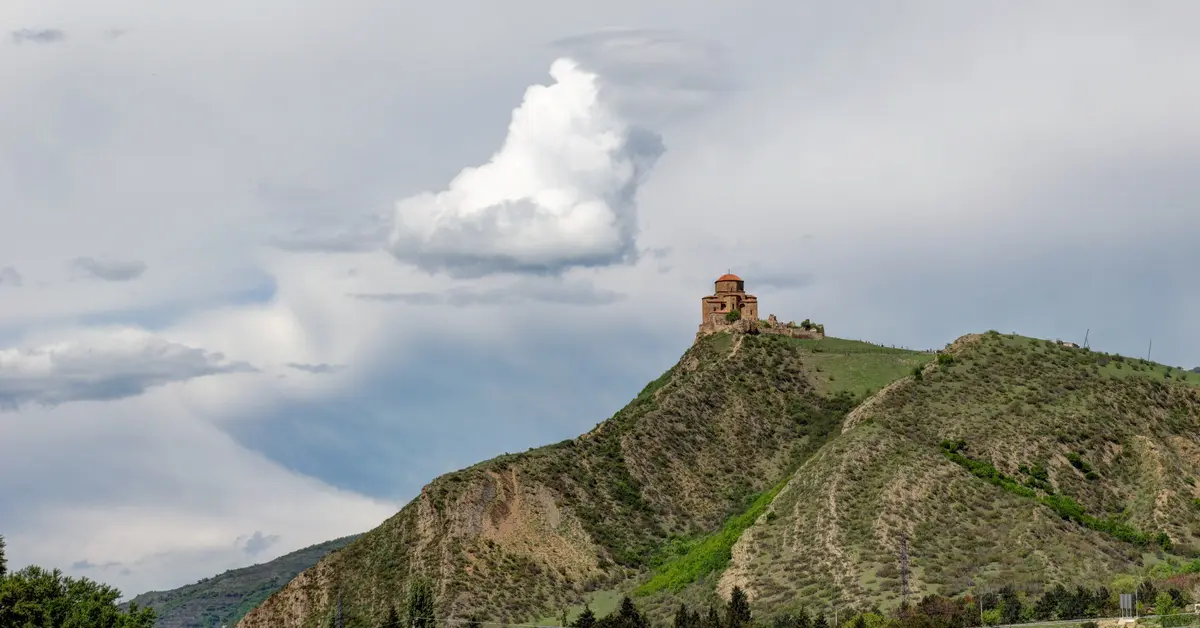
The history of Georgia spans thousands of years, from ancient kingdoms on the shores of the Black Sea to the independent nation in the Caucasus today. It is the story of a small but resilient people who, despite being surrounded by major empires many times, have maintained their own identity.
Contents
Overview of Georgian history through the ages
Understanding the history of Georgia helps explain the identity, religion, and geopolitical position of this Caucasus nation. The flow of Georgian history stretches from ancient kingdoms, through the medieval golden age and centuries under imperial rule, to modern independence after 1991.
Before delving into each period, one should have an overall view of Georgian history as a continuous flow. This country is located in the Caucasus, right at the intersection of Europe and Asia, where many civilisations and empires have passed. Therefore, the story of Georgia is both a story of identity and a story of survival among major powers.
That historical flow can be divided into successive stages. First are the ancient kingdoms of Colchis and Iberia, followed by the turning point of adopting Christianity in the 4th century. Next is the brilliant medieval golden age, followed by a period of fragmentation under imperial pressure, and then the era of annexation by Russia and the Soviet Union.
Finally, there is the modern chapter, which opened when Georgia declared independence in 1991. Each period has left its own layer of sediment in culture, religion, and politics. By looking at it this way, the reader can easily follow why such a small nation has such incredible historical depth.
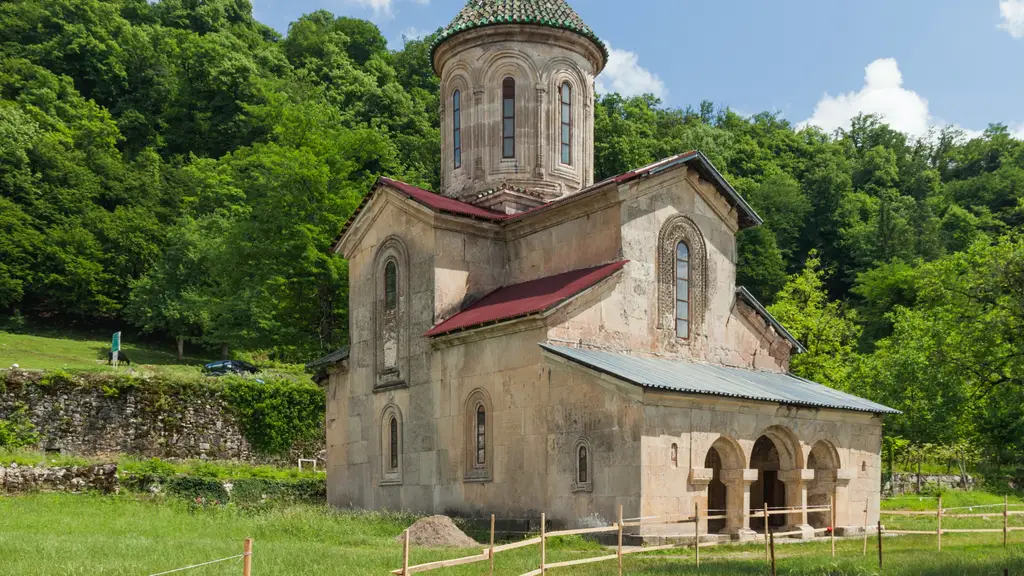
Ancient religious structures reflect the depth of Georgian history.
Considering a residency programme? The Prosperous Living Investment team assesses your profile free of charge and advises on the pathway that fits your goals.
The ancient kingdoms of Colchis and Iberia
The land of modern-day Georgia was once the site where two important ancient states were formed. In the west, near the Black Sea, was the kingdom of Colchis, associated with the Greek legend of the Golden Fleece and the journey of Jason and the Argonauts. This land was famous for its rich resources and was a bustling trading point with the ancient Greek world.
In the east, the kingdom of Iberia (or Kartli by its native name) gradually rose around the area that is now the capital Tbilisi. This was the country of Georgia in its nascent form, where the Kartli people laid the foundation for their national identity. These two kingdoms reflect the position at the crossroads of Europe and Asia that Georgia has held throughout its history.
These two states did not exist in isolation but were influenced from many sides. Colchis had close ties with Greek city-states along the Black Sea, while Iberia was closer to the Persian world in the east. This cultural interweaving helped the Georgian people gain early exposure to both major civilisations of the ancient world.
It was on this foundation that the Georgian language and unique script gradually formed. Although there are many gaps in the records of the early days, researchers all acknowledge this as the root of a sustainable identity. From Colchis and Iberia, the concept of a unified Kartli community began to be nurtured, laying the first brick for subsequent dynasties.
Adoption of Christianity in the 4th century
A major turning point in Georgian history occurred in the 4th century, when the kingdom of Iberia officially adopted Christianity as its state religion. According to tradition, the conversion is attributed to Saint Nino, a female missionary who is still deeply revered by the Georgian people today.
This event not only changed spiritual life but also shaped the entire national culture. Christianity became a bond for the community, especially during periods when it was surrounded by Islamic empires. As a result, Georgia is one of the earliest countries in the world to adopt Christianity, and religious identity became a sustainable pillar of the nation.
Following the conversion, a network of churches and monasteries gradually sprang up across the Georgian land. These structures were not only places of worship but also centres of scholarship, preserving manuscripts and nurturing art. Thanks to this, the Georgian script was used more widely, binding religion to the preservation of the national language.
The Church also played an important political role for many centuries. Whenever secular power weakened before neighbouring empires, the Christian faith became a support that helped the community unite. It can be said that the adoption of Christianity in the 4th century became the spiritual foundation for almost every subsequent stage of this nation.
The medieval golden age under David IV and Tamar
After many centuries of division and external pressure, Georgia entered its most unified and prosperous period. King David IV, often called David the Builder, strengthened the army, reformed the administration, and led the kingdom out of Seljuk rule. His reign opened a new era for the nation.
The peak came under Queen Tamar, who reigned in the late 12th and early 13th centuries. Under her rule, Georgia expanded its influence, the economy flourished, and the arts blossomed. This was also the period that saw the birth of the famous epic poem by Shota Rustaveli. This period is remembered by the Georgian people as a brilliant golden age, a legacy associated with the entire culture of Georgia modern.
The strength of the kingdom during this period lay not only in its military might but also in its culture and scholarship. Monasteries became centres of translation and philosophy, while church architecture reached a level of exquisite refinement. Many structures representative of this era were later recognised by the world as precious heritage of humanity.
The golden age also left a vivid collective memory in the consciousness of the Georgian people. The images of David IV and Queen Tamar are recalled as symbols of a truly prosperous and independent era. That very memory later became a source of inspiration for national revival movements whenever the country fell into division or subjugation.
Fragmentation and the Mongol and Timur invasions
The golden age did not last forever. From the 13th century onwards, Georgia endured successive waves of invasion, beginning with the hooves of the Mongol cavalry sweeping across the Caucasus. These attacks depleted resources and forced Georgian kings to submit in order to retain a degree of autonomy.
Before it could recover, the kingdom faced the devastating campaigns of Timur (Tamerlane) in the late 14th and early 15th centuries. Many towns and churches were destroyed and the population dispersed, causing severe collapse in the economy and administration. Continuous external pressure eroded the unity once achieved under David IV and Tamar.
Consequently, the kingdom gradually fractured into numerous small principalities and domains. Each region was ruled by a noble family or local king, often vying for influence against one another. This fragmentation made Georgia increasingly vulnerable to the rising empires surrounding it.
Nevertheless, even in this dark period, the Georgians did not lose their identity. Their language, religion and memory of the golden age continued to be preserved through monasteries and local communities. This very resilience enabled the nation to survive and enter new trials between two powerful Islamic empires.
Between the Ottoman and Persian empires
In the following centuries, the land of Georgia became a battleground for influence between two mighty empires: the Ottoman Empire in the west and Persia in the east. These two powers repeatedly interfered in the internal affairs of the Georgian principalities, imposing tribute and demanding submission.
The Georgians had to manoeuvre skillfully between these two pincers to survive. At times, local kings leaned towards Persia, while at other times they sought compromise with the Ottoman Empire, depending on the shifting balance of power. This flexibility helped some regions retain relative autonomy, albeit at the cost of heavy concessions.
The strategic geographical location in the Caucasus was both a trade advantage and a burden, turning Georgia into a permanent battleground for empires. Trade routes connecting Europe with the East passed through here, ensuring the land was constantly coveted. Every war between the Ottoman Empire and Persia left trails of devastation across the small Georgian kingdoms.
Facing relentless pressure from the two Islamic empires, the Georgian ruling class began to seek another patron. A Christian Russia, rising in the north, gradually became an attractive option. This geopolitical calculation would open a new turning point, leading Georgia into a completely different chapter of its history.
Annexation by the Russian Empire
Facing relentless pressure from Persia and the Ottoman Empire, Georgian kings sought support from Christian Russia. This step led to the Russian Empire gradually annexing Georgian lands in the early 19th century, ending the independence of native dynasties.
Under Russian rule, Georgia underwent profound administrative, economic and social changes. Roads, urban areas and industry developed, yet political autonomy was almost nonexistent. This period sowed the seeds for a wave of nationalism as Georgian intellectuals began nurturing aspirations to restore their nation’s identity and self-determination.
The annexation took place gradually over several decades as each Georgian territory fell to Russia in turn. The native nobility was integrated into the new ruling system on one hand, while losing their traditional independent status on the other. Tbilisi subsequently became an important Russian administrative centre in the Caucasus.
Alongside the loss of autonomy, this period also brought significant cultural and educational developments. New-style schools, journalism and printing flourished, helping modern ideas spread among intellectuals. These very individuals later played a leading role in the movement for self-determination when historical opportunity arose.
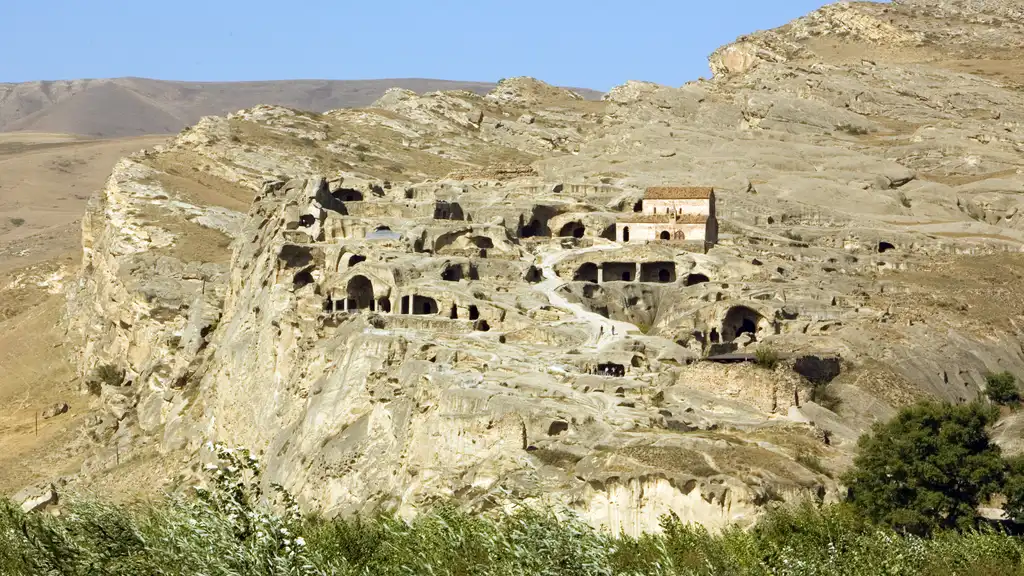
Ancient monuments linked with Georgia’s history across the centuries.
The Democratic Republic of Georgia 1918–1921
When the Russian Empire collapsed amid the turmoil of the late 1910s, the Georgians seized the opportunity to restore their independence. In 1918, the Democratic Republic of Georgia was born, marking the first time in centuries that the country had a modern state run by Georgians themselves.
Although it existed for only a short time, this fledgling republic laid the foundations for many progressive ideas. The government pursued a democratic model, enacted a constitution and strove to build representative institutions. This was regarded as an important political experiment in modern Georgian history.
However, the international circumstances at the time were extremely unfavorable for a newly independent small nation. The Caucasus remained a site of contested influence among major powers, while the internal strength of the republic was fragile. Military and economic challenges made it difficult for the government to stand firm for long.
By 1921, Bolshevik forces advanced and the Democratic Republic of Georgia was dismantled. Despite its collapse, this period left a significant spiritual legacy, becoming a symbol of the aspiration for independence and democracy. Decades later, the memory of the first republic was reawakened as Georgia once again turned towards freedom.
The Soviet period in the 20th century
After the independent republic was abolished in the early 1920s, Georgia was incorporated into the Soviet Union. From then on, the country became a constituent republic of the Soviet Union for the majority of the 20th century, subject to centralized administration from Moscow.
The Soviet period left a complex imprint. On one hand, industrialization, education and infrastructure expanded significantly. On the other hand, the population endured strict political control and periods of repression. Notably, Soviet leader Iosif Stalin (Stalin) was born in Georgia. Despite living under a centralized regime, Georgians quietly preserved their language, religion and unique traditions.
For decades, the Georgian economy was tightly integrated into the broader Soviet network. Agriculture, particularly wine production and fruit growing, alongside domestic tourism, played vital roles. Nevertheless, all major decisions remained dependent on centralized planning, severely limiting local economic autonomy.
Towards the end of the 20th century, national spirit in Georgia surged strongly. Intellectuals and students increasingly and openly expressed their aspirations for freedom, language and identity. As the Soviet Union entered a period of perestroika and decline, demands for independence in Georgia became fervent, signaling a major turning point drawing near.
Independence in 1991 and initial challenges
When the Soviet Union dissolved, Georgia declared independence on 9 April 1991, opening a completely new chapter in the nation’s history. This event realized the aspiration for freedom that had smoldered for decades under Soviet rule.
However, the early years of independence were tumultuous, marked by political instability, economic hardship and conflicts in breakaway regions such as Abkhazia and South Ossetia. The situation grew more complex as the country plunged into civil war and fierce internal power struggles in the early 1990s.
The young nation had to build democratic institutions while facing the heavy legacy of the Soviet era. The transition to a market economy encountered numerous obstacles, yet it also laid the foundation for a modern state. These upheavals profoundly shaped social life and Georgian political system in the decades that followed.
Despite difficulties, the early independence period also demonstrated the resilience of the Georgian people. State institutions were gradually rebuilt, and political life stabilized step by step after years of chaos. It was upon this challenging foundation that the country prepared to enter a powerful wave of reforms at the start of the 21st century.
The Rose Revolution and the 2008 conflict
A major turning point came in 2003 with the event commonly known as the Rose Revolution. This was a wave of peaceful protests that led to a change in leadership and paved the way for a far-reaching reform programme. The event is regarded as a milestone that firmly directed Georgia towards the West.
Following the revolution, the new administration stepped up the fight against corruption, modernised the administrative machinery and reorganised the police force. Numerous measures helped to improve the business environment and restore public trust. The direction of integration with Europe and Western institutions was increasingly asserted.
However, relations with Russia became tense, particularly around the breakaway regions of Abkhazia and South Ossetia. In 2008, a short but intense armed conflict broke out, leaving severe political and territorial consequences. This event further deepened the rift between Georgia and Russia.
The 2008 conflict became a defining landmark for Georgia’s foreign policy in the subsequent years. The country became even more steadfast in its path towards the West, while the issue of the breakaway regions remained unresolved. This is one of the most complex chapters in contemporary Georgian history.
Post-Soviet Georgia and the path towards the West
Entering the twenty-first century, Georgia strived for reform and drew closer to the West. The country pursued institutional modernisation, the fight against corruption and tourism development, taking advantage of its natural landscapes and long-standing cultural heritage. Relations with Russia remained tense, particularly around the disputed territories.
Georgia’s rich historical heritage is recognised worldwide, with many religious sites and ancient towns included in the conservation list of UNESCO. Today, this Caucasus nation continues to balance its traditional identity with its aspirations for integration, writing a story that has spanned thousands of years of ups and downs.
In recent decades, tourism has become a vital driver for the economy. Visitors are drawn to ancient monasteries, the majestic Caucasus mountains and a long-standing winemaking tradition. Global interest in Georgia’s heritage also helps to elevate the country’s standing on the cultural map.
- Institutional reform and the fight against corruption after the 2000s.
- Tourism development based on cultural and natural heritage.
- Prolonged tense relations with Russia around the breakaway region.
- The orientation towards deeper integration with Europe.
Is Georgia a country or a US state?
In this article, Georgia refers to the independent country in the Caucasus, bordering the Black Sea, with Tbilisi as its capital. It is entirely distinct from the US state of Georgia. The country of Georgia has its own history spanning thousands of years, together with its own distinctive culture and language.
When did Georgia adopt Christianity?
According to tradition, the kingdom of Iberia in eastern Georgia adopted Christianity as its state religion in the 4th century, largely thanks to Saint Nino. This makes Georgia one of the earliest countries in the world to adopt Christianity as its official religion.
Under which reign did Georgia's golden age take place?
Georgia's medieval golden age is linked to King David IV, who consolidated and unified the kingdom, and Queen Tamar, who reigned in the late 12th and early 13th centuries. This was a period when the country expanded its influence, the economy flourished and the arts and literature blossomed.
When did Georgia gain independence from the Soviet Union?
Georgia declared independence on 9 April 1991, as the Soviet Union collapsed. The early post-independence years were difficult, marked by political instability, civil war, economic hardship and conflict in the breakaway regions of Abkhazia and South Ossetia, before the country gradually stabilised and reformed.
What was the 2003 Rose Revolution?
The Rose Revolution was a wave of peaceful protests in 2003 that led to a change in leadership and paved the way for sweeping reforms in Georgia. The event is seen as a milestone that drove the country's fight against corruption, institutional modernisation and strong pivot towards the West.
Why was Georgia often fought over by major empires?
Georgia occupies a strategic position in the Caucasus, at the crossroads of Europe and Asia, close to major trade routes. This position made the country a target for empires such as the Mongols, the Ottomans, Persia and later Russia, turning Georgia into a frequent battleground.
Accompanying you on your journey in residency investment
The Prosperous Living Investment team advises on pathways, assesses profiles and manages investments transparently for every residency, citizenship and international property objective.
Free profile assessmentWhere life gets prosperous