



The demographics of Georgia reflect the profile of a Caucasus nation with a modest population of approximately 3.7 million, characterised by a declining population trend and prolonged migration waves. This article provides an objective analysis of the country’s population structure, ethnicity, language, and religion.
Contents
Overview of Georgia’s demographics
When exploring the demographics of Georgia, the first thing to understand is the relatively small population size. This Caucasus nation has approximately 3.7 million people, a modest figure compared to many of its neighbours in the region. This is also a fundamental difference between the country of Georgia and more populous nations.
The demographic picture of Georgia cannot be separated from its post-Soviet context. After gaining independence in the early 1990s, the country underwent profound economic and social changes. As a result, the population fluctuated significantly, and many people left their homeland in search of opportunities abroad.
Furthermore, the terrain and history have caused an uneven distribution of the population. Most people are concentrated in the valleys, plains, and around the capital, Tbilisi. Meanwhile, many high-mountainous areas remain sparsely populated.
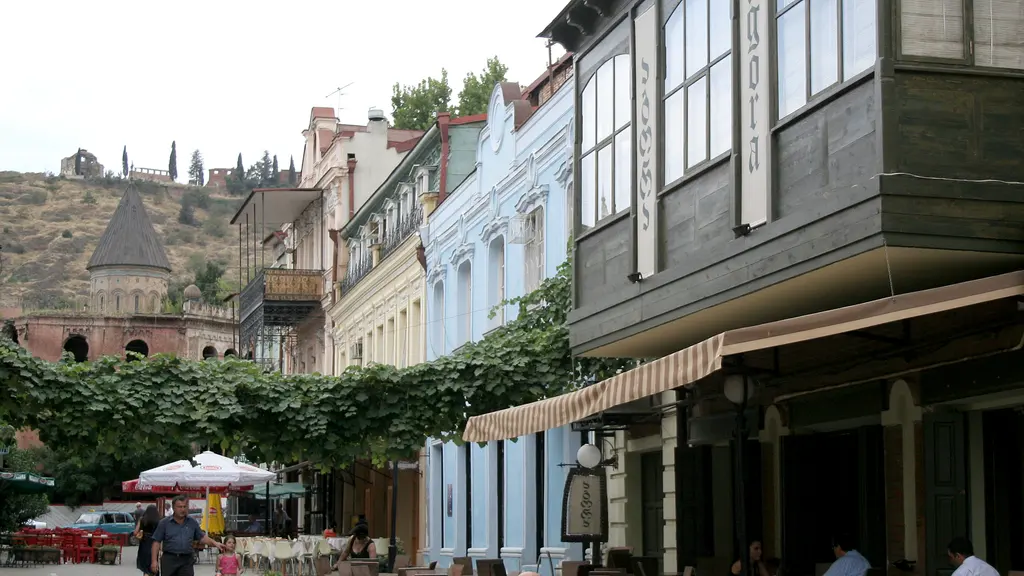
Urban life in Tbilisi reflects the demographics of Georgia.
Considering a residency programme? The Prosperous Living Investment team assesses your profile free of charge and advises on the pathway that fits your goals.
Population size and trends
The population of Georgia is approximately 3.7 million, though this figure has not remained constant over the years. In reality, the country’s population has tended to decline slightly during many periods. The main reasons are low birth rates combined with significant emigration.
One factor that complicates Georgian population statistics is the existence of breakaway regions. Specifically, Abkhazia and South Ossetia are outside the de facto control of the central government. Therefore, demographic data for these regions is often not fully reflected in national figures.
Due to these specific circumstances, many absolute figures should be interpreted with caution. Rather than focusing on a single, perfectly precise point, readers should look at the overall trend. That trend is a population stabilising at nearly 4 million, with downward pressure from birth rates and migration.
Official population data is published and updated periodically by the National Statistics Office of Georgia. This is the most reliable authority for the country’s demographic indicators.
- Estimated population: approximately 3.7 million, near the 4 million mark.
- Main trends: low birth rate, emigration.
- Statistical note: Abkhazia and South Ossetia are outside de facto control.
Migration and its impact on population structure
Migration is one of the most prominent features of modern Georgian demographics. After the collapse of the Soviet Union, many Georgians sought work abroad. Popular destinations include Russia, several European Union countries, and neighbouring markets.
This wave of migration has had a dual impact on the population structure. On one hand, it has reduced the domestic population over several periods. On the other hand, remittances from workers abroad have become an important economic resource for many families.
In contrast to the outward flow, Georgia has also attracted some inward migration in recent years. Tourists, workers, and foreign residents choose the country for its reasonable cost of living and relatively open environment. However, this immigration flow is not yet large enough to reverse the overall population trend.
Urbanisation and the role of Tbilisi
Urbanisation clearly shapes the distribution of the population in Georgia. The majority of the population lives in urban areas, with the capital, Tbilisi, being the largest city and the centre of politics and the economy. This city accounts for a significant proportion of the country’s population.
Besides Tbilisi, several other cities play an important role in the population network. These include Batumi on the Black Sea coast and Kutaisi in the west. These centres attract internal migrants from surrounding rural areas.
The characteristics geography of Georgia of the terrain, with many high mountain ranges, help explain the population concentration. The rugged mountains limit farming and settlement, pushing the population towards the valleys and plains. Consequently, the disparity in population density between regions is quite large.
The trend of migration from rural to urban areas continues. Young people often leave their hometowns to find work, education, and services in cities. As a result, many rural areas face ageing and gradual depopulation over time.
Families and households
Family structure is a less-noticed but important slice of Georgian demographics. Traditional households here are usually relatively large, with multiple generations living together. This model is more common in rural areas, where family ties remain very strong.
However, household size has tended to shrink over time. Urbanisation and modern lifestyles have led many households to shift to a nuclear family model. In large cities, smaller households are becoming increasingly common.
Regarding marriage, Georgians generally still value family and kinship. The age of marriage has tended to rise, especially among young urbanites pursuing education and careers. This is a social shift commonly seen in many developing countries.
The birth rate is a key factor shaping the future of the population. The birth rate in Georgia is generally low, insufficient to sustain strong natural population growth. Combined with migration, this is why the country’s population is under downward pressure.
Nevertheless, the extended family network still plays an important role in social security. Many families rely on mutual support between generations, especially when a member is working far away. This factor partially compensates for changes in household size.
The Georgian diaspora
The Georgian diaspora is an indispensable part of the demographic picture of Georgia. After decades of migration, a significant number of people of Georgian descent now live and work abroad. They form a network of expatriates spread across many countries.
Expatriate destinations have varied according to different historical periods. Russia has long been home to many Georgians due to Soviet-era ties. In addition, many choose European Union countries, Türkiye, and other markets for employment.
Remittances from the diaspora play a significant economic role for many households. The funds sent home help cover living expenses, education and small domestic investments. For a medium-sized economy, this influx of remittances is highly meaningful.
Beyond their economic value, the diaspora act as cultural and social bridges. They maintain their language, beliefs and Georgian customs far from home. At the same time, these ties help promote the country’s image to the outside world.
Migration flows also present domestic workforce challenges. The departure of many young people and skilled workers can place pressure on the labour market. This is a balancing act that many high-migration countries must face.
Regional population distribution
Regional population distribution shows distinct disparities across the map of Georgia. The population is densely concentrated in valleys, river plains and around major urban centres. Conversely, higher-altitude regions have a much lower population density.
The urban-rural divide is a notable feature. Urban areas attract residents due to jobs, services and educational opportunities. Meanwhile, many rural areas face gradual population decline and an ageing demographic structure.
The high mountainous regions of the Greater and Lesser Caucasus mountain ranges are usually the most sparsely populated. Harsh living conditions, difficult transport and limited farming mean few people settle permanently. Some high-altitude villages even face the risk of gradually being abandoned.
In contrast, the eastern plains around Tbilisi and the western Black Sea coastal strip are much more populated. Favourable climates, arable land and more developed infrastructure are factors that attract residents. This is also where the majority of the nation’s economic activity is concentrated.
This distributional imbalance has long-term consequences for development policy. Balancing regions and retaining populations in rural and mountainous areas is a considerable challenge. The trend towards urban migration generally continues over time.
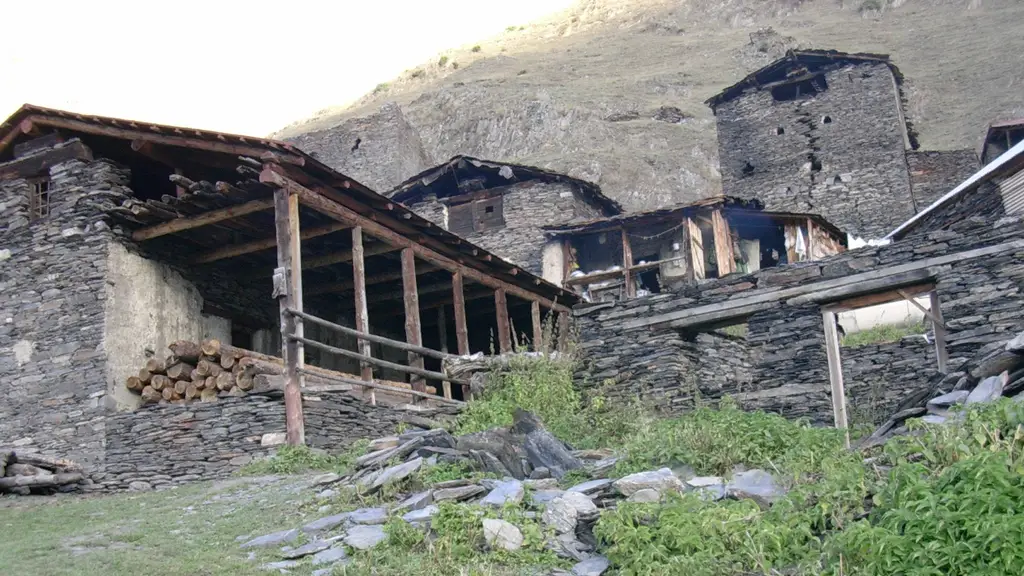
The rural community within Georgia’s demographic landscape.
Ethnic composition of Georgia
Ethnic composition is an important slice when analysing Georgian demographics. Georgians make up an overwhelming majority, at around 86% of the population. This is an indigenous group with a long-standing cultural identity, language and history in the Caucasus region.
Alongside the majority group, the country has several notable minority communities. The two largest minorities are usually Azerbaijanis and Armenians. They are concentrated in specific regions, tied to a long history of residence in the area.
Additionally, Georgia has smaller communities such as Russians along with some other ethnic groups. These communities contribute to a diverse population picture. Even so, their share of the total population is relatively modest.
It should be noted that separatist regions also affect statistical ethnic structures. The population composition in Abkhazia and Nam Ossetia is not fully reflected in figures controlled by the central government.
- Georgians: the majority group, accounting for about 86% of the population.
- Large minorities: Azerbaijanis and Armenians.
- Smaller communities: Russians and several other ethnicities.
Language and script
Georgian is the official language and the mother tongue of the majority of the population. This language belongs to the Kartvelian language family, a distinct linguistic group of the Caucasus. It is unrelated to neighbouring Indo-European or Turkic languages.
The most distinctive feature is the unique Georgian script, which is entirely different from the Latin or Cyrillic alphabets. This writing system is tied to national cultural identity and has been preserved over many centuries. This is one of the factors helping identify the country’s culture.
Among minority communities, some other languages are used alongside in daily life. People of Azerbaijani, Armenian or Russian descent usually maintain their mother tongue. Russian is still understood to a certain extent, particularly among older generations due to historical context.
Religion and spiritual life
Religion plays a central role in Georgia’s spiritual life and demographics. Georgian Orthodoxy is the overwhelmingly dominant religion among the population. The Orthodox Church is closely linked with national history and identity.
Besides the majority religious group, the country has minority religious communities. Most notably, the Islamic community is typically concentrated in certain regions and linked with specific ethnic groups. This is the second-largest faith by scale.
Additionally, the Armenian Apostolic Church is present within the Armenian community in Georgia. This religious diversity reflects the long-standing cultural cross-current of the Caucasus region. Overall, religious communities coexist within society.
Age structure, life expectancy, and education
Regarding age structure, Georgia exhibits the characteristics of a gradually ageing society. Low fertility rates mean the proportion of older people tends to increase over time. At the same time, the migration of young people abroad also helps shift the population pyramid.
Life expectancy for Georgian citizens is relatively high compared to the region. Healthcare systems and living conditions have gradually improved over recent decades. This is a positive indicator in the nation’s human development picture.
Georgia’s human development indicators are tracked by the United Nations Development Programme via the Human Development Index. Besides life expectancy, education level is also an important pillar. The system education in Georgia has a tradition of valuing education and high literacy rates.
Combined, the factors of life expectancy, education and living standards paint a society in transition. Although challenges regarding population decline and migration remain, human development foundations still show many noteworthy bright spots.
Notes on interpreting demographic data
When consulting Georgian population data, readers should remain cautious. First, absolute numbers change with each survey and estimate. Therefore, sticking to qualitative trends is usually safer than a specific exact milestone. The most official and reliable statistical source is the National Statistics Office of Georgia (Geostat), the agency that publishes census results and mid-term estimates.
Second, the existence of separatist regions leaves national statistics lacking in coverage. Data on Abkhazia and Nam Ossetia is usually kept outside the central statistical system. This creates a gap to note when comparing different sources.
Finally, official sources and reputable international organisations should be prioritised. The National Statistics Office along with United Nations agencies provide more reliable data. This approach helps make the demographic picture accurate and objective.
What is Georgia's current population?
Georgia's population is around 3.7 million, close to the 4 million mark. The figure varies between statistical periods and is affected by a low birth rate and outward migration, so it should be read as a trend rather than a fixed number.
Which ethnic group forms the majority in Georgia?
Ethnic Georgians make up an overwhelming majority, at around 86% of the population. Significant minority groups include Azerbaijanis and Armenians, along with smaller communities such as Russians and other ethnicities in the Caucasus region.
What is the main religion in Georgia?
Georgian Orthodoxy is the majority religion, closely tied to national identity. There are also Muslim communities and followers of the Armenian Apostolic Church, reflecting the region's long-standing religious diversity in the Caucasus.
Why is Georgia's population declining?
The population decline is mainly due to a low birth rate combined with prolonged outward migration since the Soviet era. Many workers have moved to Russia and Europe, putting downward pressure on the domestic population over several periods.
How do the breakaway regions affect population statistics?
AML and KYC are the anti-money-laundering and know-your-customer regulations that form the compliance foundation applied by every residency- and citizenship-by-investment programme.
Accompanying you on your journey in residency investment
The Prosperous Living Investment team advises on pathways, assesses profiles and manages investments transparently for every residency, citizenship and international property objective.
Free profile assessmentWhere life gets prosperous