

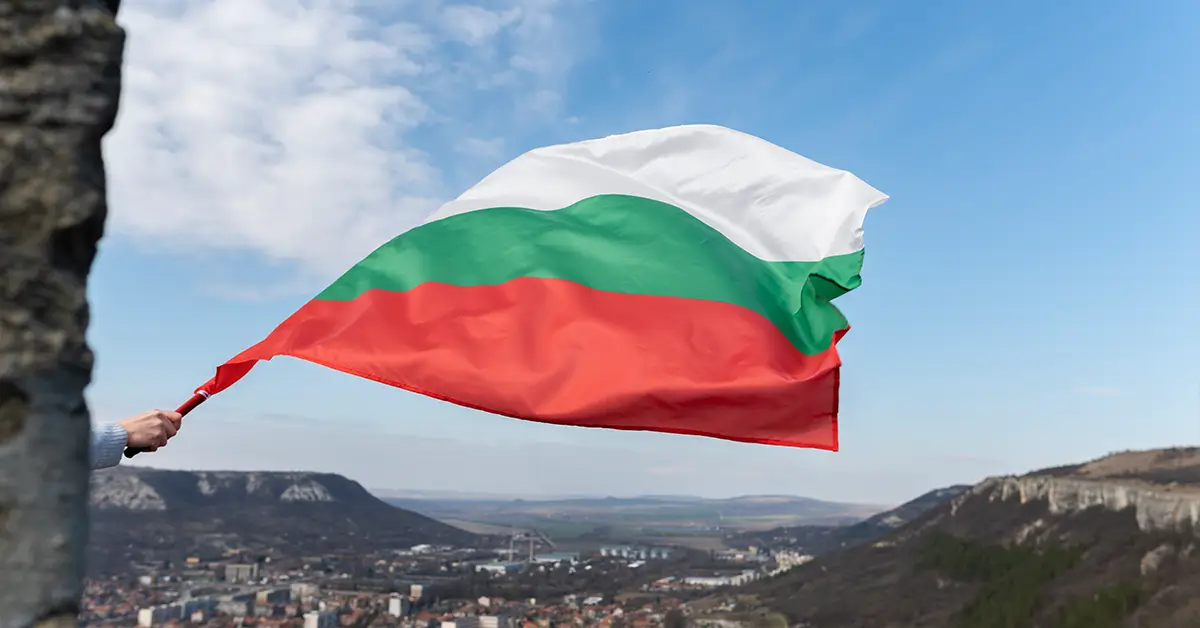
Bulgaria’s international relations are shaped by its full membership of the European Union (since 2007) and NATO (since 2004), together with full accession to the Schengen Area from 2025 and the eurozone from 01/01/2026. After 35 years of transition from the communist era, Bulgaria has completed its Western integration — becoming a full EU member state with a strong commitment to liberal democratic values and NATO collective security.
For foreigners considering settling inBulgaria, understanding the country’s international standing is important for assessing its political environment, security and economic opportunities. This article analyses in detail its core memberships (EU, NATO, Schengen, eurozone), its strategic partners (the United States, Germany, France),relations with Russia and China, its regional role in the Balkans and, in particular, its bilateral relations with Vietnam.
Message
Four membership pillars — EU, NATO, Schengen, eurozone
Bulgaria’s international relations revolve around four core memberships that define the country’s geopolitical identity. The first pillar is the European Union — Bulgaria joined on 01/01/2007 after almost a decade of negotiations and reforms. It was the biggest political and economic event since the 1989 transition. As an EU member, Bulgaria has 17 MEPs in the European Parliament, one Commissioner in the European Commission and voting rights in the Council of the EU.
The second pillar of Bulgaria’s international relations is the North Atlantic Treaty Organization (NATO) — Bulgaria joined on 29/03/2004, almost three years before the EU. Joining NATO represented a decisive geopolitical shift — Bulgaria had belonged to the Warsaw Pact during the communist period. According toNATO, Bulgaria has contributed to many missions — Afghanistan, Iraq, Kosovo, Bosnia — and hosts US military bases at Novo Selo, Bezmer and Aitos under a 2006 bilateral agreement.
The third pillar is the Schengen Area — Bulgaria became a full member on 01/01/2025 after a 14-year wait. Before that, Bulgaria had joined Schengen partially (air and sea borders only) from 31/03/2024. Full membership removed land border controls with Romania, Greece and other EU countries — simplifying trade and travel in the region and strengthening Bulgaria’s international relations.
The fourth pillar is the eurozone — Bulgaria joined on 01/01/2026, becoming the 21st member of the euro area. The fixed exchange rate is 1 EUR = 1.95583 BGN. It is the biggest economic event in the 19 years since EU accession and a highlight of Bulgaria’s international relations. Joining the eurozone completes Bulgaria’s Western integration and reinforces its commitment to strict fiscal discipline under the EU Stability and Growth Pact.
Considering a residency programme? The Prosperous Living Investment team assesses your profile free of charge and advises on the pathway that fits your goals.
Strategic partners — the United States, Germany, France
Bulgaria’s international relations have three core strategic partners. The United States is the most important security partner outside the EU. Under the 2006 Defence Cooperation Agreement, the United States operates 4 military facilities in Bulgaria — Novo Selo (joint training), Bezmer (air force), Aitos (logistics depot) and Graf Ignatievo (shared air base). This is an important long-term security commitment to Southeastern Europe.
Bulgaria is waiting to join the US Visa Waiver Program (VWP) — negotiations are in their final stage, with completion expected in 2026. The B-1/B-2 visa refusal rate for Bulgarian citizens fell to 6.02% in 2024 — close to the 3% threshold required under US law. Once the VWP takes effect, Bulgarian citizens will be able to enter the United States via ESTA like German, French and British citizens — further strengthening Bulgaria’s international relations with the United States.
Germany is the most important economic partner. Bulgaria–Germany trade reached 11 billion EUR in 2024 — Germany is Bulgaria’s largest importer. About 270,000 Bulgarians live in Germany — the largest Bulgarian diaspora community in the EU. German corporations (Bosch, Siemens, BMW, Continental) invest heavily in Bulgaria, especially in automotive and electrical equipment manufacturing. This is an important element in the structure of Bulgaria’s international relations.
France is a strategic military and political partner. France supported Bulgaria’s accession to NATO and the EU, and was one of the largest EU countries backing its accession to Schengen and the eurozone. French–Bulgarian military cooperation includes equipment procurement agreements (Leclerc tanks, with Rafale aircraft under negotiation). The French community in Bulgaria numbers about 5,000 — mainly business people, students and retirees.
A complex relationship with Russia
Bulgaria–Russia relations are one of the most complex issues in Bulgaria’s international relations. History has created deep emotional ties — Russia liberated Bulgaria from the Ottomans in 1878 and was an ally during the communist period of 1944–1989. Many Bulgarians have an emotional attachment to Russian culture and language. However, since 1989 Bulgaria has decisively chosen the Western path.
After the 2022 Ukraine crisis, Bulgaria–Russia relations fell to their lowest point since the Cold War, marking a turning point in Bulgaria’s international relations. Bulgaria expelled 70 Russian diplomats in 2022–2024 and closed the Russian consulates in Ruse and Varna. Bulgaria has also supplied weapons to Ukraine — mainly ammunition and armoured vehicles — though not publicly. This is a major change in relations with Russia.
However, energy dependence on Russia persists — especially for natural gas and nuclear power (the Kozloduy nuclear power plant has historically used Russian fuel). Bulgaria is diversifying its energy sources — gas from Azerbaijan via the TANAP/TAP pipelines, imported LNG, and agreements with the US firm Westinghouse for nuclear fuel. Reducing dependence on Russia is a strategic priority.
The Russian and Belarusian community in Bulgaria numbers about 30,000–50,000 people — growing significantly after 2022 because of the wave of emigration from Russia. This community causes domestic political tension — some Bulgarians have security concerns, while the Russian community contributes significantly to the real estate and consumer markets in Sofia, Plovdiv and on the Black Sea coast.
The Western Balkans and relations with China
Bulgaria plays an important role in the Western Balkans within the framework of its international relations. As a full EU and Schengen member, Bulgaria is a gateway connecting the Western Balkan countries (Serbia, North Macedonia, Albania, Bosnia, Kosovo, Montenegro) with the rest of the EU. Bulgaria supports EU enlargement to the Western Balkans — especially North Macedonia and Albania — despite some bilateral disputes with North Macedonia over history and language.
Bulgaria–North Macedonia relations are complicated by disputes over history and national identity. Bulgaria regards Macedonian as a dialect of Bulgarian, and the history of the First Bulgarian Empire includes the territory of present-day North Macedonia. In 2022, Bulgaria used its veto to delay North Macedonia’s EU negotiations. This is one of the most complex issues in Bulgaria’s international relations in the region.
Relations with China are relatively limited compared with some other EU countries. Bulgaria takes part in the 16+1 format (later 14+1) — China’s cooperation initiative with Central and Eastern European countries — but has not received major investment. Bulgaria–China trade is about 3 billion USD a year — mainly Chinese exports to Bulgaria. Following the EU’s 2022 security strategy, Bulgaria has tightened screening of Chinese investment in strategic sectors.
Bulgaria has not joined China’s “Belt and Road” initiative — in line with the EU position and reflecting the Western orientation of Bulgaria’s international relations. The Chinese community in Bulgaria is small — about 3,000 people, mostly running small businesses in Sofia. The Chinese Embassy in Sofia mainly handles diplomacy and some cultural and educational projects.
Role in international organisations
Bulgaria’s international relations are conducted through many multilateral organisations. Bulgaria has been a member of the United Nations since 1955 — contributing to many peacekeeping missions in Cambodia, Angola, Bosnia, Cyprus and Lebanon. Bulgaria was a non-permanent member of the UN Security Council in 2002–2003.
Bulgaria is a member of the Organization for Security and Co-operation in Europe (OSCE), the Council of Europe, the IMF, the World Bank, the OECD (joined 2022), the World Trade Organization (WTO) and many specialised organisations. Joining the OECD in 2022 was an important milestone for Bulgaria’s international relations — making it the 19th EU country in the organisation of developed economies.
Bulgaria takes an active part in regional initiatives: the Three Seas Initiative (connecting infrastructure between the Baltic, Adriatic and Black Seas), the Organization of the Black Sea Economic Cooperation (BSEC), headquartered in Istanbul, and the Danube Region Cooperation (DRC). These are important multilateral initiatives for regional economic development and security.
In the G20 and other major economic forums, Bulgaria is represented through the EU — it has no seat of its own. However, Sofia is increasingly becoming an important venue for international conferences — it held the rotating Presidency of the Council of the EU in 2018 and has hosted many regional NATO meetings.
Bulgaria — Vietnam relations
Bulgaria–Vietnam bilateral relations have a long history and are an important part of Bulgaria’s international relations, especially for Vietnamese people considering settling there. The two countries established official diplomatic relations on 08/02/1950 — Bulgaria was one of the first Eastern European countries to recognise the Democratic Republic of Vietnam. In 1950–1989, the two countries had a strategic relationship within the socialist bloc, with thousands of Vietnamese students studying and working in Bulgaria.
Economic relations peaked in the 1980s — tens of thousands of Vietnamese workers went to Bulgaria to work in textiles, food processing and construction. This is the basis of today’s Vietnamese community in Bulgaria — about 500–800 people, living mainly in Sofia. Although small compared with the Vietnamese communities in Germany, the Czech Republic and France, it is a long-established and well-integrated community.
After 1989, bilateral relations went through a quiet period but have gradually been restored. Bulgarian President Rumen Radev visited Vietnam in November 2018 — the highest-level visit since 1989. Vietnamese Prime Minister Phạm Minh Chính visited Bulgaria in March 2024 — reinforcing economic and education agreements. These are signs that Bulgaria’s international relations with Vietnam are being strengthened again.
The Bulgaria–Vietnam Double Taxation Agreement (DTA), signed in 1996, is still in force and is an important legal basis for Vietnamese business people and investors. A bilateral investment promotion and protection agreement was signed in 1996. There is a visa exemption agreement for diplomatic and official passports. However, there is no visa exemption for ordinary passports — Vietnamese citizens still need a Schengen visa or a Bulgarian D visa.
Detailed article onBulgaria’s tax system.
Bulgaria–Vietnam trade reached 200 million USD in 2024 — modest compared with its potential. Vietnam exports mainly textiles, footwear, coffee and seafood to Bulgaria. Bulgaria exports pharmaceuticals, electrical equipment and wine to Vietnam. The EU–Vietnam Free Trade Agreement (EVFTA — in force since 2020) provides a favourable basis for trade growth between the two countries.
Implications for Vietnamese investors and workers
For Vietnamese people consideringBulgaria residency by investmentor highly skilled workers, Bulgaria’s international standing brings many opportunities. As a full EU member, Bulgaria offers access to a single market of 450 million people. As a Schengen member, holders of a Bulgarian residence permit can travel freely within the 29 Schengen countries without additional visas.
As a eurozone member since 2026, Bulgaria eliminates exchange-rate risk — important for real estate investors and business people. As a NATO member, Bulgaria provides a stable security environment — an important factor for families settling long-term. Bulgaria’s extensive international relations in multilateral organisations also create opportunities for Vietnamese people to work in international organisations in Sofia.
Bulgaria–Vietnam bilateral relations are being strengthened — creating opportunities for Vietnamese businesses to expand into the EU market through Bulgaria. The Bulgarian Embassy in Hanoi handles visas and consular matters. The Vietnamese Embassy in Sofia supports the Vietnamese community and cultural and trade events. Both diplomatic missions actively promote bilateral cooperation within the framework of Bulgaria’s expanding international relations.
For Vietnamese people on a D Visa orGolden Visa Bulgaria, understanding Bulgaria’s international standing helps them make the most of their rights. The path to Bulgarian citizenship after 5 years of permanent residence opens the door to aBulgarian passportwith full EU rights — the right to live, work and do business freely in 27 EU countries. This is the greatest international benefit of the Bulgarian settlement pathway.
Summary
Bulgaria’s international relations are defined by its full membership of the EU, NATO, Schengen and the eurozone — four pillars that create a stable political and economic environment and strategic security. Bulgaria has completed its transition from the communist era to the West — becoming a full EU member state committed to liberal democratic values, a market economy and collective security.
For Vietnamese people considering settling, Bulgaria offers a double benefit through its international relations: full EU status with the right to move and work freely in 27 countries, together with long-standing bilateral relations with Vietnam that are being reinforced. A detailed understanding of Bulgaria’s core memberships and strategic partners is key for investors to correctly assess the long-term value of the settlement pathway and make the most of the international rights that come with it.
Accompanying you on your journey in residency investment
The Prosperous Living Investment team advises on pathways, assesses profiles and manages investments transparently for every residency, citizenship and international property objective.
Free profile assessmentWhere life gets prosperous