


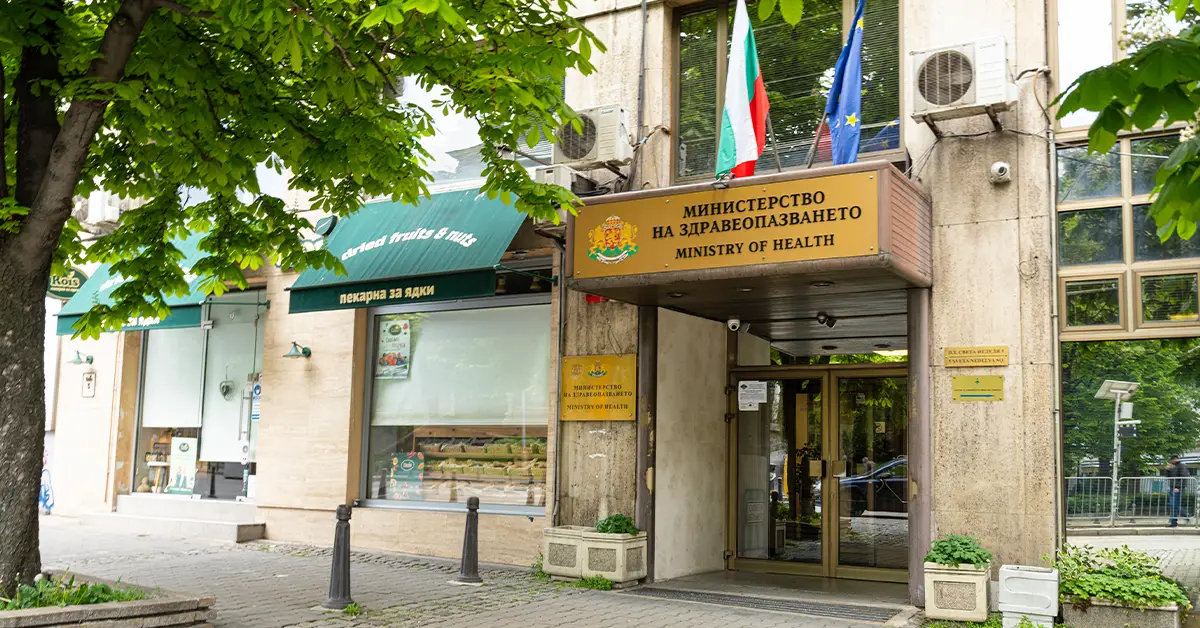
Healthcare in Bulgaria is a two-tier system, with a public sector operating through the National Health Insurance Fund (NHIF — НЗОК) and a growing private sector. Although public health spending in Bulgaria is only 4–5% of GDP — the lowest in the EU according to Eurostat — the quality of private services in Sofia and the major cities is rated on a par with Western Europe at 50–70% lower cost.
For foreigners settling inBulgaria, understanding Bulgaria’s healthcare system is decisive for long-term quality of life. This article analyses in detail the compulsory NHIF system, private insurance options, the leading hospitals, the cost of services and the registration process for foreign nationals — especially Vietnamese people considering settlement through investment or a Visa D.
Message
Overview of Bulgaria’s healthcare system
Bulgaria’s healthcare system is governed by the Health Insurance Act of 1998 and subsequent amendments. The Bulgarian Ministry of Health (Министерство на здравеопазването) is responsible for policy and state administration, while the National Health Insurance Fund (NHIF — Национална здравноосигурителна каса) is the sole body managing compulsory health insurance and allocating budgets to healthcare facilities. The NHIF has 28 regional offices covering the 28 administrative provinces.
The public sector comprises more than 1,600 healthcare facilities nationwide, including 322 hospitals. University hospitals in Sofia, Plovdiv and Varna are the largest, with the most highly qualified staff. However, the facilities of many public hospitals remain outdated due to lack of funding — most foreign nationals and Bulgarians who can afford it choose private services.
The private sector of Bulgarian healthcare has grown rapidly over the past 15 years, accounting for about 35% of total national health spending. Large private hospitals in Sofia such as Tokuda Hospital, Acibadem City Clinic, Sofiamed and Pirogov have modern facilities and highly qualified doctors, most of whom speak good English. This is the system mainly used by foreign nationals and wealthy Bulgarians.
Considering a residency programme? The Prosperous Living Investment team assesses your profile free of charge and advises on the pathway that fits your goals.
The National Health Insurance Fund (NHIF) — compulsory
The NHIF is the compulsory public health insurance system — everyone working or self-employed in Bulgaria must contribute. Under theBulgarian Health Insurance Act, the contribution rate in 2026 is 8% of income, with employees paying 3.2% and employers 4.8% (a 40:60 split). Self-employed people pay the full 8%.
The minimum contribution for self-insured people in 2026 is based on the minimum wage of 620.20 EURO a month — equivalent to about 50 EURO a month. The maximum contribution is based on the income ceiling of 3,850 BGN (about 1,969 EURO) a month — a maximum of about 158 EURO. This is the lowest national health insurance contribution level in the EU.
NHIF coverage is broad — including general practitioner (GP) visits, specialist visits by referral, inpatient treatment, emergency care, some prescription medicines and maternity care. GP visits carry a co-payment of 1.50 EURO per visit and specialist visits 5.80 EURO. Inpatient treatment is free for insured people. Emergency care is free regardless of insurance.
The biggest limitation of the NHIF is long waiting times for non-urgent procedures. Specialist appointments through the NHIF can involve waits of 2–6 weeks, and elective surgery 3–6 months. Dentistry is almost entirely outside NHIF coverage — people pay for it themselves. This is why private health insurance is widely used to supplement the NHIF in practice.
Private health insurance — the choice of foreign nationals
Bulgaria’s private health insurance market is competitive, with both domestic and international companies. Major domestic health insurers include Bulstrad VIG, DZI, Allianz Bulgaria and UBB Insurance. International companies such as Allianz Care, AXA, Cigna, Bupa and VUMI offer international health insurance plans specifically for foreign nationals.
Domestic private health insurance premiums are quite low — basic plans cost 10–25 EURO a month for young people (under 40), mid-range plans 30–60 EURO and premium plans 60–150 EURO. Premium plans cover specialist visits without referral, basic dental care, unlimited diagnostic imaging and a private room when hospitalised.
International health insurance from Allianz, Cigna or AXA costs more — 80–300 EURO a month — but provides worldwide cover, not just within Bulgaria. It is the choice of foreign nationals who travel internationally often or HNWIs who want access to the best hospitals in the EU and the US if needed.
For Vietnamese investors consideringBulgaria residency by investment, the optimal strategy is to combine the NHIF (compulsory, ~50–158 EURO a month) with premium domestic private insurance (~60–150 EURO a month). The total cost of 110–308 EURO a month is still significantly cheaper than private insurance alone in Germany, France or the Netherlands.
Health insurance requirements for a Visa D
A Bulgarian Visa D requires valid health insurance as a mandatory condition under Ministry of Foreign Affairs rules. Visa D applicants must have international health insurance with minimum cover of 30,000 EURO, covering Bulgaria and the entire Schengen Area and valid for the whole intended period of stay.
For the Digital Nomad Visa D launched on 20/12/2025, the health insurance requirement is stricter — it must be long-term residency health insurance, and travel insurance is not accepted. Many Vietnamese applicants get this wrong — short-term travel insurance does not qualify for entry into Bulgaria’s healthcare system.
After entering the country and obtaining a residence permit, foreign nationals working or self-employed in Bulgaria must register with the NHIF — they cannot opt out. People who have long-term residence but do not work (such as Golden Visa investors) can choose to self-insure with the NHIF (8% of the minimum income) or keep comprehensive private health insurance instead.
Holders of a European Health Insurance Card (EHIC) — available only to EU/EEA citizens — are entitled to necessary healthcare in Bulgaria at NHIF facilities on the same terms as Bulgarians. This is not an option for Vietnamese people, as Vietnam is not in the EU/EEA.
The leading hospitals for foreign nationals
The leading private hospitals in Sofia are the main choice of the foreign community for healthcare in Bulgaria. Tokuda Hospital Sofia is Bulgaria’s largest and most modern private hospital, invested in by Japan’s Tokushukai Group since 2006. It has 360 beds, 21 operating theatres and 800 doctors and nurses who speak English, Japanese and German. It is a popular destination for complex surgery, oncology and cardiology.
Acibadem City Clinic is part of Turkey’s Acibadem healthcare group and operates 4 facilities in Sofia and Plovdiv. Acibadem specialises in cardiology, oncology, IVF and orthopaedics, using advanced medical equipment imported from the US and Germany. Most of its doctors were trained in Western Europe or the US.
Sofiamed Hospital and UMHAT “Sveti Georgi” are two large university hospitals in Sofia with broad specialist networks. Although public, these hospitals have international departments serving foreign nationals with English-language services and private rooms available for a fee.
In Plovdiv, “Sveti Karidad” and Aleksandrovska Hospital are the two main facilities. In Varna, MBAL “Sveta Anna” and St. Marina University Hospital serve most foreign nationals. However, specialised healthcare in Bulgaria outside Sofia is more limited — complex cases are usually referred to Sofia.
The cost of healthcare in Bulgaria
The cost of healthcare in Bulgaria is among the lowest in the EU. A general check-up at a private hospital in Sofia costs about 30–50 EURO per visit and a specialist consultation 50–100 EURO. Diagnostic imaging — ultrasound 30–60 EURO, MRI 200–400 EURO, CT scan 150–300 EURO. These prices are about 30–50% of those in Western European countries for the same quality of service.
Surgery costs at private hospitals in Sofia: appendectomy 1,500–3,000 EURO, caesarean section 1,500–2,500 EURO, cardiac surgery 8,000–25,000 EURO, knee surgery 6,000–12,000 EURO. Public university hospitals cost 30–50% less, but the quality of service and post-operative care is less consistent.
Bulgarian dentistry is known for high quality and low cost and has become an important medical tourism destination. Fillings cost 30–60 EURO, scaling 30–50 EURO, dental implants 600–1,200 EURO per tooth (compared with 2,000–4,000 EURO in Germany) and porcelain crowns 200–400 EURO. Germans, Britons and Austrians fly to Bulgaria for regular dental treatment — saving money and combining it with a holiday.
Prescription medicines in Bulgaria cost on average 50–70% of the equivalent price in Western Europe. The NHIF has a list of medicines that are partly reimbursed (10–100% depending on the type). Generic medicines are widely available and of equivalent quality to the originals. Pharmacies (аптеки) are dense in the cities — Sofia has more than 600.
Medical tourism and cosmetic medicine
Bulgaria has become an important medical tourism destination in Eastern Europe, especially for three groups of services: dentistry, cosmetic surgery and orthopaedics. The total number of tourists travellingto Bulgaria for healthcareis about 200,000 a year according to the Bulgarian Medical Tourism Council, third in Eastern Europe after Hungary and Poland.
Cosmetic surgery in Sofia costs 50–60% of Western European prices for comparable quality. Breast augmentation costs 2,500–4,500 EURO, liposuction 1,500–3,500 EURO, rhinoplasty 2,000–3,500 EURO and IVF 3,500–6,000 EURO per cycle. Large clinics such as Genesis BG, NEW LIFE and Beauty Clinic Sofia serve international patients with all-inclusive packages including hotels and interpreters.
However, medical tourism needs careful preparation — choose internationally accredited facilities (JCI accreditation, ISO 9001), read service and insurance contracts carefully, and have someone accompany you for post-operative care. Some complications have occurred at small clinics with little experience of treating foreign patients.
Healthcare registration for newly arrived foreign nationals
Registering with Bulgaria’s healthcare system as a newly arrived foreign national involves 4 steps. Step 1 is registering for a personal identification number for foreigners (ЕНЧ) at the local residence office — this replaces the ЕГН number of Bulgarian citizens and is used for all administrative transactions, including healthcare.
Step 2 is registering with the NHIF at the local NRA office (the National Revenue Agency collects contributions). Bring your passport, residence card, ЕНЧ and employment contract or self-employment certificate. Registration is free. The NHIF then automatically issues an electronic insurance record giving access to Bulgaria’s public healthcare system.
Step 3 is choosing a family doctor (личен лекар — GP). Everyone in the NHIF system must register with a GP. The GP is the gateway to Bulgaria’s healthcare system — most specialist visits through the NHIF require a GP referral. You can change GP once a year. In Sofia, finding an English-speaking GP can be difficult — ask the expat community.
Step 4 is buying supplementary private health insurance. You can choose a domestic plan from a Bulgarian company or an international plan from Allianz or Cigna. Registration takes 3–7 working days. For most services, cover begins after a 30-day waiting period; emergency cover starts immediately.
Healthcare for families and children
For foreign families with young children settling in Bulgaria, the healthcare system provides good services for children at major specialist centres. The National Children’s Hospital in Sofia (Specialized Hospital for Active Treatment of Children’s Diseases) is the largest paediatric facility, with specialist staff and equipment meeting international standards.
Bulgaria’s childhood vaccination schedule follows WHO and EU standards — including BCG, hepatitis B, diphtheria/pertussis/tetanus, measles/mumps/rubella, Japanese encephalitis and HPV. All vaccines in the national immunisation programme are free through the NHIF. Children receive regular screening check-ups at local paediatric health centres.
Maternity care in Bulgaria is well regarded — especially at private hospitals such as Tokuda and Acibadem. A normal delivery at a private hospital costs 1,500–3,000 EURO and a caesarean section 2,000–4,000 EURO. At public hospitals, costs are lower, but an informal “thank-you payment” to doctors and nurses is customary — about 200–500 EURO.
For children in families naturalising via the pathway toBulgarian citizenship, NHIF registration is done through the parents — children are automatically insured when their parents contribute. From age 18, they must register themselves if working or self-insuring.
Summary
Healthcare in Bulgaria is a two-tier system whose strengths are low costs and good private service quality in Sofia by EU standards. Combining the compulsory NHIF with premium domestic private insurance gives foreign nationals full access to high-quality healthcare in Bulgaria for a total of 110–308 EURO a month — one of the lowest levels in the EU.
For Vietnamese investors considering settling in Bulgaria, there are three key recommendations: (1) arrange valid international health insurance with cover of at least 30,000 EURO before applying for a Visa D; (2) register with the NHIF and choose an English-speaking GP as soon as you receive your residence permit; (3) add a premium domestic private insurance plan for fast access to Sofia’s leading hospitals. Careful healthcare planning before settling is an important factor for long-term quality of life in Bulgaria.
Accompanying you on your journey in residency investment
The Prosperous Living Investment team advises on pathways, assesses profiles and manages investments transparently for every residency, citizenship and international property objective.
Free profile assessmentWhere life gets prosperous