

Luxury real estate in Limassol: luxury, marina, golf and integrated resort segments in 2026

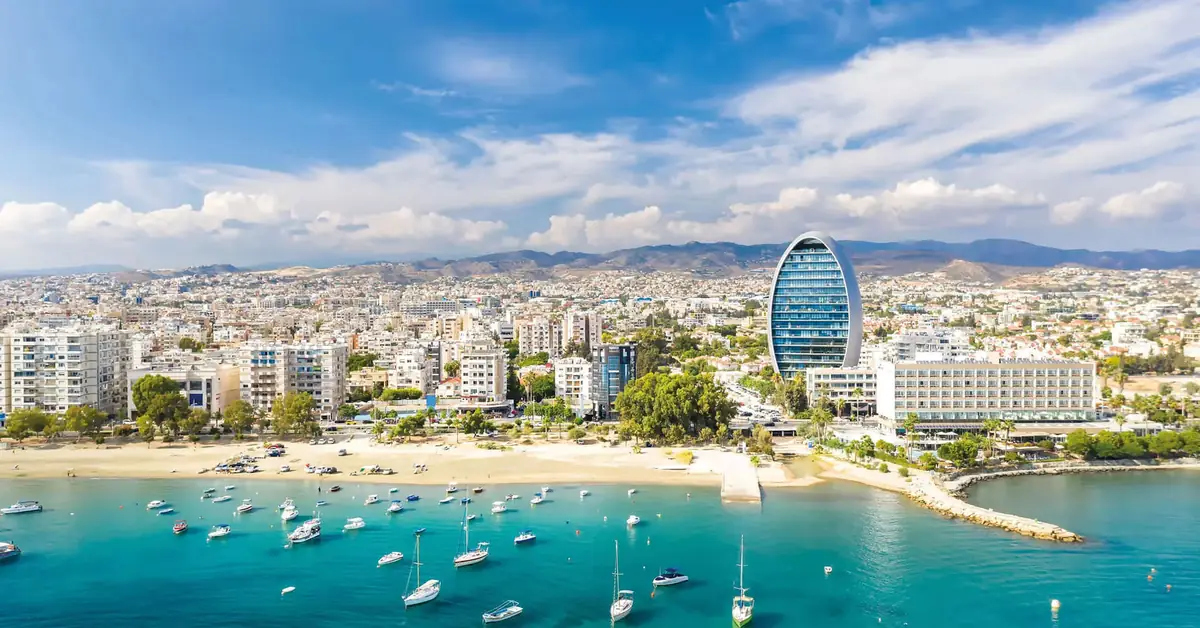
Luxury real estate in Limassol has become the leading prestige investment segment in the Eastern Mediterranean, attracting HNWIs from Israel, Lebanon, Russia, India and, more recently, Vietnam. In 2026, luxury seafront apartments cost 6,000–9,000 EUR per square metre, and seafront villas exceed 10,000 EUR per square metre in the top tier. At the same time, three landmark infrastructure projects — an integrated resort already in operation, an 18-hole golf course and a marina expansion — are consolidating Limassol’s position as the “Monaco of the Eastern Mediterranean”.
Message
Limassol on the Eastern Mediterranean luxury map
Limassol (Lemesos in Greek) is the second largest city ofCyprusand the island’s leading financial and shipping centre. The Limassol district has a population of more than 254,000, of whom foreigners make up about 30% — the highest share in Cyprus and one of the highest in the EU.
Limassol lies between two international airports: Larnaca International, a 60-minute drive away, and Paphos International, 50 minutes away. Limassol Port is the largest container port in Cyprus, as well as a port of call for cruise ships and superyachts. These three factors give it a connectivity advantage no other city on the island can match.
Limassol’s economic position is also outstanding. The city is home to hundreds of tech, fintech, shipping and professional services companies, notably the regional offices of international corporations. In 2024, foreigners accounted for 56% of property transactions in Limassol — evidence of the market’s international appeal. See the detailed comparison with the holiday market in the articleLimassol vs Paphos real estateto choose the right segment.
What creates the prestige
It is no accident that Limassol’s luxury segment is the most expensive in Cyprus. Many factors come together to create the city’s special premium pricing.
First is the scarcity of coastal land. Limassol’s coastline from Akrotiri to Mouttagiaka is only about 17 km long, and almost all the land suitable for high-end residential development has been used. New urban planning rules also tighten density and height limits in the coastal zone — which increases the value of existing properties.
Next is the international community and premium services. Limassol has a full range of international schools (English School, Heritage Private School, The Grammar School), international 5-star hotel chains, European-standard private hospitals, Michelin-recognised restaurants and luxury fashion brands. This is the standard of living international HNWIs look for.
Finally, there is its financial standing. Limassol is Cyprus’s main financial centre, where most international banks, international law firms and the Big Four accounting firms have their main offices. This creates steady long-term rental demand from high-earning professionals.
Considering a residency programme? The Prosperous Living Investment team assesses your profile free of charge and advises on the pathway that fits your goals.
Luxury real estate segments in Limassol by area
Limassol’s luxury market is clearly divided by area, with each area having its own characteristics and price levels. Understanding these segments helps Vietnamese investors choose the right location for their investment goals.
The marina district and port centre
The marina district is Limassol’s top-end segment, centred around the redeveloped port area and superyacht zone. It is the only place in the Eastern Mediterranean with apartments “on the sea” and private yacht berths for each villa.
Apartment prices in the marina area range from 8,000–12,000 EUR per square metre for new 2–4 bedroom units, with villas with private berths from 3.9 million EUR. This segment targets yacht owners and major business owners from the EU, the Middle East and Asia — buyers who see property as a second home + lifestyle asset.
Rental yields in the marina area are lower than elsewhere (4–5% gross) because entry prices are so high, but capital preservation and resale liquidity are extremely strong. This segment prioritises capital growth and branding over cash flow.
Agios Tychonas — top-tier seafront
Agios Tychonas is an urban area in eastern Limassol, considered the city’s most prestigious district. It is home to 5-star hotels such as Four Seasons and Amathus Beach, next to the Amathus beach on the UNESCO World Heritage list.
The average price in Agios Tychonas is 7,500 EUR per square metre, with seafront villas exceeding 2.5 million EUR and up to 17 million EUR at the top end. New 4-bedroom apartments with a pool and covered parking usually start from 1.4 million EUR. Average sizes are 150–300 square metres.
Buyers are mainly international HNWIs seeking a second home or high-end yield investment. Gross rental yields are 5–6%, with vacancy below 3% thanks to long-term rental demand from tech professionals relocating from Israel, Tel Aviv and Dubai.
Germasogeia (Tourist Area) — the active luxury segment
Germasogeia, or Potamos Germasogeias, is the focal point of Limassol’s active luxury market, stretching along the tourist strip with the city’s highest density of restaurants, cafés and boutiques. The area attracts digital nomads, young professionals and short-term rental investors.
Prices in Germasogeia range from 3,500–5,500 EUR per square metre depending on proximity to the sea and the age of the building. A fully renovated 2-bedroom apartment in a prime spot costs 300,000–500,000 EUR and can achieve gross yields of 6–7% with professional management.
Germasogeia’s standout feature is its diversity — investors can choose anything from small studios to million-euro penthouses. It is the most suitable area for PR 6.2 goals with a budget of 400,000–700,000 EUR.
Mouttagiaka and Parekklisha — upscale suburban villas
Mouttagiaka and Parekklisha are two suburbs east of Limassol, 1,000–1,500 metres from the sea but on high hillsides with panoramic sea views. The area is known for large family villas and gated-community villa compounds.
4-bedroom villas in Mouttagiaka and Parekklisha start from 730,000 EUR for 150 square metres, rising to 4.3 million EUR for a 594 square metre seafront villa. Plots are usually much larger than in the centre — 400–800 square metres is common.
Rental income in Mouttagiaka reaches 25,000 EUR a month in peak season for fully furnished high-end villas. This is the strongest rental income segment if professionally managed on a luxury short-let model.
Summary of prices by area
For easy comparison, below is a summary of Limassol’s main luxury areas in 2026:
- Marina district: 8,000–12,000 EUR per square metre for apartments; villas with berths from 3.9 million EUR
- Agios Tychonas: 7,500 EUR per square metre on average; villas 2.5–17 million EUR
- Germasogeia: 3,500–5,500 EUR per square metre; 2-bedroom apartments 300,000–500,000 EUR
- Mouttagiaka / Parekklisha: 4,500–6,500 EUR per square metre for villas; 730,000 EUR to 4.3 million EUR
- Neapolis: 4,000–6,000 EUR per square metre; 2–3 bedroom units averaging 620,000 EUR
Three infrastructure projects shaping luxury real estate in Limassol
Luxury real estate in Limassol is supported by three regional-class infrastructure projects, all either completed or in their final stages. Each project creates a spillover effect on property prices in the surrounding areas.
Europe’s first integrated resort
Europe’s first integrated resort opened in the Tserkezoi area (Limassol West) on 10/07/2023. It was the largest operating integrated resort in the EU as of 2024, with a 14-storey, 500-room hotel, a 7,500 square metre casino floor (1,000 slot machines, 100 live gaming tables), 8,000 square metres of MICE space, a family park and an amphitheatre.
With investment of about 600 million EUR, the project has significantly transformed the Tserkezoi and Zakaki areas. Before it opened, this was an overlooked industrial zone. After three years of operation, property prices within a 2 km radius have risen 22%, the density of upscale cafés and restaurants has doubled, and Zakaki has become Limassol’s fastest-gentrifying area.
The impact on the long-term rental market is also clear. More than 2,000 foreign employees working at the resort create steady long-term rental demand within a 5 km radius. Zakaki and Mesa Geitonia benefit directly from this wave of relocation.
The first 18-hole championship golf course within the city
Limassol is preparing for its first 18-hole championship golf course within the city limits — a game-changer for the luxury segment. Until now, Cyprus’s golf courses have been concentrated in the Paphos district (Aphrodite Hills, Minthis Hills, Secret Valley) — 50–60 km from Limassol.
When completed, the Limassol city golf course will be the first 18-hole championship course in the city, opening up a new golf-front property segment. Residential projects around golf courses usually command a 15–25% premium over comparable segments because of their exclusivity and lifestyle premium.
Golf property buyers are retired European HNWIs, international business people and lifestyle investors from Asia and the Middle East. This is a target market Limassol previously lacked without a golf course in the city.
Marina and superyacht berth expansion
Limassol has a superyacht-grade marina with 650 berths for yachts of up to 110 metres — the largest in the Eastern Mediterranean. The marina has won the 5 Gold Anchor Platinum Award (held by only 5 marinas worldwide) and a Blue Flag for its beach — the EU’s highest coastal environmental standard.
The expansion of marina-related services (yacht support, crew housing, luxury retail) has created a new economic cluster around the area. According to data fromCyprus Statistical Service (CYSTAT), the number of superyachts registered in Cyprus reached a record in 2024, driving demand for high-end second homes among yacht owners.
When investing in luxury real estate near the Limassol marina, investors benefit from three layers of value: a lifestyle premium, capital appreciation from the scarcity of berths, and rental yield from yacht crews looking for long-term lets.
Investing in Limassol luxury real estate for permanent residence
Luxury real estate in Limassol is a popular choice for Vietnamese HNWIs targeting the PR 6.2 programme with a large budget. The segment has three advantages: residency benefits, capital preservation and a lifestyle asset for the family.
Compatibility with the PR 6.2 investment threshold
Cyprus residency by investmentunder Permanent Residence Regulation 6(2) requires the purchase of at least one new property worth 300,000 EUR excluding VAT. In high-end Limassol, this threshold is only a starting point — most Vietnamese HNWI investors raise their budget to 500,000–1.5 million EUR for a product of suitable standing.
With 500,000–700,000 EUR excluding VAT, there is a wide choice in Germasogeia (high-quality 2–3 bedroom units) or Mouttagiaka (small villas in gated communities). With 1–2 million EUR, you can buy a prestigious villa in Agios Tychonas or a 3-bedroom penthouse in the marina area.
Investors need to calculate the total cost including VAT carefully. Buying a 500,000 EUR property + 19% VAT comes to 595,000 EUR in total — excluding legal fees, furnishing costs and annual expenses.
Warning: 5% VAT applies only to a primary residence
Cyprus property VATat the reduced 5% rate applies only to a home that becomes the investor’s primary residence, subject to 4 cumulative caps: 130 square metres, 350,000 EUR, 190 square metres and 475,000 EUR. This means the first 130 square metres + 350,000 EUR benefit from 5% VAT, and the portion above the cap is subject to 19% VAT.
In Limassol’s luxury segment, most units exceed the caps. A 200 square metre villa in Agios Tychonas priced at 1.5 million EUR would be taxed as follows: 130 square metres x (350,000/130) = 350,000 EUR at 5% (= 17,500 EUR), with the remaining 1.15 million EUR at 19% (= 218,500 EUR). Total VAT: 236,000 EUR.
If the investor does not live in Cyprus on a regular basis, 5% VAT may not apply and the whole amount will be taxed at 19%. This is a large cost that must be factored into the total investment before deciding.
Combining residency and yield
Luxury property in Limassol combines a residence permit and rental income better than many other markets. A 500,000 EUR 2-bedroom apartment in Germasogeia both meets the PR 6.2 requirement and generates rent of 2,500–3,500 EUR a month.
After the tax reform of 01/01/2026, the Special Defence Contribution on rental income was abolished. Non-resident investors pay only income tax on the progressive scale, with a tax-free threshold of 22,000 EUR a year. The 20% wear-and-tear allowance further reduces the taxable base. See the detailed articlethe Cyprus tax systemafter the 2026 reform.
The choice between individual ownership and a Cyprus Limited company needs specific advice depending on the size of the portfolio. With a single unit, individual ownership is usually more tax-efficient thanks to the 22,000 EUR tax-free threshold.
Yields and price growth opportunities by segment
Before committing funds, investors need a clear assessment of expected yields and price growth by segment. The Limassol luxury market is not uniform — each area has a different risk-return profile.
The top-end segment (1.5 million EUR and above)
The top-end segment includes seafront villas in Agios Tychonas, penthouses in the marina area and villas with private berths. Gross yields here are usually a low 4–5%, but capital preservation is excellent and resale liquidity is high within the international HNWI community.
Price growth in this segment depends on scarcity. With planning rules tightening coastal density, existing properties in Agios Tychonas and the marina are being re-rated upwards. Price growth of 5–8% a year is forecast for this segment in 2026, possibly reaching 10–15% for unique units.
It suits HNWIs with generous budgets who prioritise prestige and lifestyle over cash flow. Vietnamese investors in this group usually combine PR 6.2 + a second home for the family + capital preservation as a hedge against the VND.
The active luxury segment (500,000 EUR – 1.5 million EUR)
This segment includes high-quality apartments in Germasogeia, small villas in Mouttagiaka and penthouses in Neapolis. It is the sweet spot for the yield/price ratio, with gross yields of 5.5–7% and expected price growth of 5–7% a year.
This segment has diverse demand — lifestyle investors, HNWIs investing for yield and high-earning professionals buying to live in. This diversity creates stable resale liquidity and year-round rental demand.
Vietnamese investors who want a balance between PR 6.2 and rental returns should focus on this segment. A 600,000 EUR 2-bedroom apartment in Germasogeia can generate 30,000–40,000 EUR of rent a year while gaining 30,000–40,000 EUR in value a year — a total return of 10–13%.
A warning about absorption risk
Limassol’s luxury segment faces absorption risk after the wave of new construction in 2022–2024. According to CYSTAT data, Limassol was granted permits for 3,952 new dwellings in 2024 — 35% of the national total.
Abundant supply combined with high prices and mortgage rates of 4–5% could slow price growth in the top-end segment in 2026–2027. Some high-end projects have been completed but are filling up more slowly than expected.
Investors should carefully vet the developer’s track record, pre-sale rate and delivery speed before paying a deposit on an off-plan project. Choosing projects that are completed or nearly completed (delivery within 12 months) significantly reduces this risk.
Comparing Limassol’s luxury segment with other EU markets
To value luxury real estate in Limassol correctly, investors need to view this market in the context of other Mediterranean and EU luxury markets. A side-by-side comparison helps identify competitive advantages and relative risks.
Comparison with the Côte d’Azur (France) and Marbella (Spain)
Limassol is 30–50% cheaper than the Côte d’Azur (Cannes, Nice, Monaco) for comparable properties. A 250 square metre seafront villa in Agios Tychonas priced at 3 million EUR would be equivalent to 5–7 million EUR in Cannes. Marbella (Spain) is priced similarly to Limassol, but yields are 1–2 points lower.
Limassol’s advantages over these two markets: lower income tax (a 35% top rate vs 45–48% in France), no wealth tax as in France, and a lower PR investment threshold (300,000 EUR compared with 500,000 EUR in Portugal or 700,000 EUR in some areas of Greece).
The drawback is a much smaller market — Limassol has about 254,000 inhabitants compared with Marbella’s 150,000, but weaker infrastructure connections. Limassol has no airport of its own (you must go through Larnaca or Paphos), while Marbella, near Málaga, has better air links.
Comparison with the Athens Riviera (Greece)
The Athens Riviera is the closest market in size and geography. According to the latest data fromCentral Bank of Cyprus, luxury prices in Limassol rose faster than on the Athens Riviera in 2023–2025 thanks to stronger international HNWI demand.
The Athens Riviera has the advantages of Schengen membership, direct flights to more than 100 European cities and a much larger market. However, the Greek legal system is more complex (many procedures require Greek), transfer tax is higher (3% compared with 0% in Cyprus for first sales), and Golden Visa PR processing takes 12–18 months compared with 2 months in Cyprus.
Cyprus is seeking to join Schengen, aiming to complete the process in 2026–2027. When this happens, the Athens Riviera’s advantage will narrow significantly, driving capital appreciation for luxury property in Limassol.
Limassol’s advantages for Vietnamese HNWIs
For Vietnamese HNWIs specifically, Limassol has three hard-to-match advantages. First is PR processing speed — just 2 months compared with 6–12 months in Portugal, Greece and Spain. Second, there is no annual physical residence requirement — just one visit every 2 years to maintain PR.
Third is a well-developed business community with Eastern ties. Limassol has large Israeli, Lebanese, Russian and Indian communities — a business culture that is easier to work with than Marbella or Cannes, where English is not the main language. This is an important psychological advantage for Vietnamese HNWIs who are newly internationalising their portfolios.
The purchase process and risks to know
The process of buying luxury real estate in Limassol is more complex than in other markets because of the large transaction values and high compliance requirements. Investors need to work with a lawyer specialising in luxury real estate and carry outdue diligencethoroughly.
Due diligence for transactions above 1 million EUR
For luxury transactions, due diligence needs to go beyond the standard level. Besides checking the title deed and planning permit, the lawyer must verify: mortgage and encumbrance payment history, the previous owner’s unsettled tax obligations, whether the actual structure matches the approved plans, coastal protection zoning restrictions, and any divorce or inheritance circumstances of the owner.
Legal fees for due diligence in the luxury segment are usually 0.5–1% of the contract price, with a minimum of 5,000 EUR. This is a worthwhile investment to avoid legal complications that could cost 10–50 times as much if a dispute arises later.
The risk of scams and weak developers
The Limassol luxury market has many new projects from new, inexperienced developers. Some “branded residences” or “off-plan luxury” projects have been handed over 2–4 years later than promised, causing prolonged legal disputes.
Criteria for choosing a reputable developer include: a track record of at least 5 delivered projects, transparent finances, a bank guarantee for deposits, insurance for the construction site, and a willingness to let the client’s lawyer review its financial statements.
Avoid projects without a Bank Guarantee (BG) for deposits — especially off-plan with deposits of 30% or more. A BG is the final layer of legal protection if the developer goes bankrupt.
Market volatility risk
The Limassol luxury market is sensitive to regional geopolitical volatility. The conflict in the Middle East in 2023–2025 disrupted Israeli capital flows (25% of luxury transactions) for many months. Similar shocks could happen again.
In addition, dependence on foreign buyers (56% of transactions in 2024) makes the market react quickly to changes in international visa or tax policy. Cyprus is seeking to join Schengen, a change that could increase demand by 15–25% in the medium term.
Investors with a long-term horizon of 7–10 years usually ride out cyclical swings. However, short-term flippers (1–3 years) need to be especially careful about timing.
Advice for Vietnamese investors
The Limassol luxury segment suits Vietnamese HNWIs with a budget of 500,000 EUR or more who aim to combine Cyprus PR, a family second home and capital preservation. However, not every property in Limassol is of the right standard — the specific choice determines the investment outcome.
First-time buyers in Cyprus should prioritise high-quality apartments in Germasogeia or central Limassol rather than a large villa from the start. Apartments are easy to manage remotely, have good resale liquidity and lower risk — suited to a “test the market” phase in the first 2–3 years.
Once familiar with the market and with tax residency, or at least a trusted service ecosystem, investors can upgrade to a villa in Agios Tychonas or a marina penthouse for the long term. At that point, raising the budget to 1.5–3 million EUR is no longer a psychological barrier.
Most important of all is working with partners experienced in cross-border Vietnam–Cyprus matters. The purchase process, legalising Vietnamese documents, opening a Cyprus bank account and structuring taxes optimally all require an understanding of the law and practice on both sides.
Summary and next steps
Luxury real estate in Limassol holds a unique position in the Eastern Mediterranean in 2026 — combining a prestige location, a lifestyle premium, steady international capital flows and an economic trajectory tied to deeper EU integration. The Agios Tychonas and marina district luxury segments remain leaders in capital preservation, while Germasogeia and Mouttagiaka offer balanced yield opportunities for Vietnamese HNWIs.
Investment decisions should be based on three factors: a realistic budget including VAT, personal goals (PR, yield, lifestyle or capital growth) and a long-term horizon of 7–10 years. Budgets below 500,000 EUR can hardly access Limassol luxury in the true sense — considerLarnaca real estateor Paphos for better value for money.
The next step for investors considering Limassol is a 7–10 day survey trip, meeting 3–4 different developers and hiring a local lawyer to assess 2–3 specific options before deciding. See our other in-depth analyses of the Cyprus market and the Cyprus residency by investment process to make a strategic decision that fits your financial circumstances.
Accompanying you on your journey in residency investment
The Prosperous Living Investment team advises on pathways, assesses profiles and manages investments transparently for every residency, citizenship and international property objective.
Free profile assessmentWhere life gets prosperous