

Canada
Canada suspends citizenship by descent certificates issued under Bill C-3
IRCC has suspended some citizenship-by-descent certificates issued under Bill C-3 and requested their return, over concerns about the…


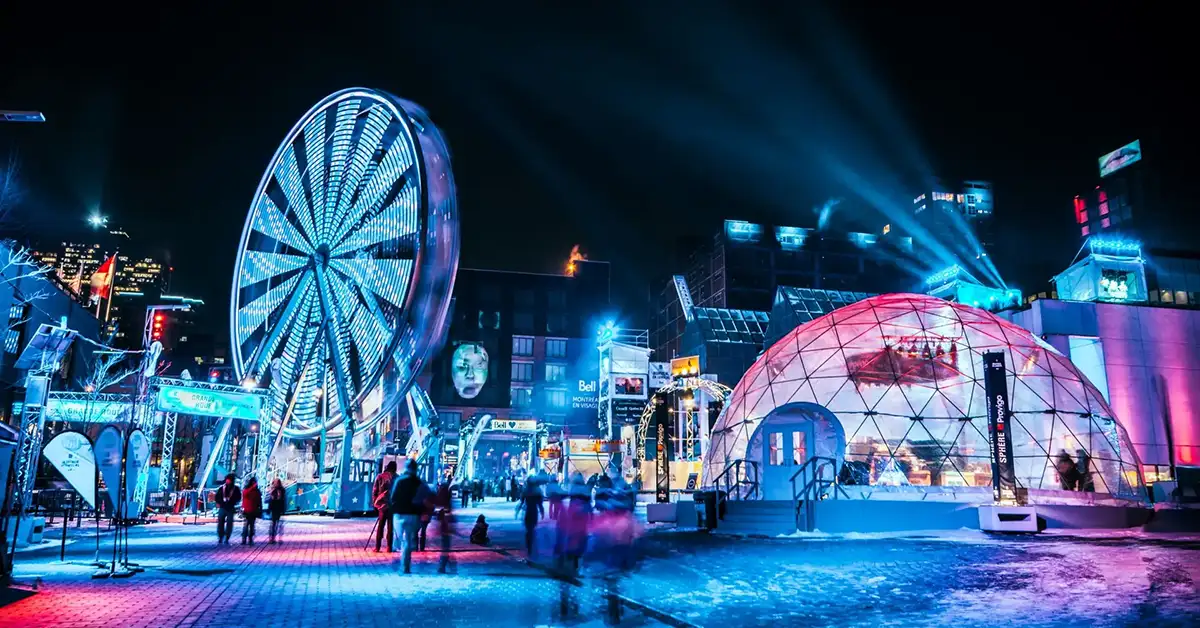
Winter festivals in Canada are numerous, with most being traditional celebrations that reflect the country’s cultural and religious diversity.
For new immigrants as well as long-term residents, these holidays offer time to connect, reflect, and celebrate through family, cultural, and community customs.
In this article, we will highlight 8 winter holidays in Canada that new immigrants celebrate before and after Christmas.
Advent is a season observed in many Christian traditions – including Catholic, Anglican, and Protestant – spanning the four Sundays leading up to Christmas, honouring the birth of Jesus Christ. The name derives from the Latin word meaning “coming” (adventus).
Each week focuses on one of four main themes: hope, peace, joy, and love, and the tradition is marked by lighting candles on an Advent wreath, reading the Bible, attending church services, and spending time in prayer and reflection. Fasting during the Advent season was historically common and is still practised by some today.
In contemporary Canada, Advent has taken on a broader cultural significance beyond its religious roots. Advent calendars, originally designed to help children count down the days to Christmas, have become widely popular with children and adults regardless of religious belief. They often contain chocolates, small gifts, or themed surprises – but in practice, they can include a wide variety of gifts.
Considering a residency programme? The Prosperous Living Investment team assesses your profile free of charge and advises on the pathway that fits your goals.
Hanukkah (or Chanukah in Hebrew) is an eight-day Jewish holiday, celebrated according to the Hebrew calendar and beginning on the 25th of Kislev – usually falling in November or December.
The most famous Hanukkah tradition is lighting the nine-branched candelabra (menorah) – one branch for each night of the eight nights of Hanukkah, plus the shamash (helper candle) to light the others. They are usually lit after sunset from left to right, and blessings are recited before lighting the candles. One candle is lit on the first night, two on the second night, and so on – until all candles burn together on the final night.
Other popular activities during the Jewish festival of lights include singing traditional songs, enjoying Chanukah food (classically potato latkes), playing dreidel, and giving Chanukah gelt (money gifts) to children.
Hanukkah began over 2,200 years ago when the Jewish Maccabees recaptured the Second Temple in Jerusalem from the Seleucid Empire. The holiday is celebrated to honour the miracle of the small amount of oil that kept the Temple’s menorah burning for eight days.
Celebrated on 26 December each year, Boxing Day comes immediately after Christmas and is a statutory holiday for Ontario residents as well as federal employees across Canada.
Boxing Day has become synonymous with major sales, with many Canadians heading to stores to purchase discounted goods – some even queuing early to get the best bargains.
But it is not just that; it is also a day marked by community and shared celebration. People gather to watch or attend sporting matches (usually hockey or football), host informal gatherings with friends and family, and/or participate in outdoor activities such as ice skating.
The holiday originated in England (Victorian era), when the upper class gave boxes containing food, money, or gifts to servants, tradespeople, or the poor.
Kwanzaa is an annual cultural celebration honouring African heritage, culture, and community, celebrated from 26 December to 01 January. The holiday was first created in 1966 and became popular during the 1980s and 1990s.
Kwanzaa is structured around the Nguzo Saba, a set of seven guiding principles. One principle is celebrated each day, symbolised by lighting candles on the kinara, a seven-branched candle holder. The seven principles include:
Throughout the seven days of celebration, families gather and celebrate through singing, storytelling, dancing, and on the final day: exchanging gifts and a community potluck called Karamu.
St. Nicholas Day is a Christian tradition honouring Saint Nicholas of Myra, a 4th-century bishop known for his generosity and care for children. The holiday is primarily celebrated by families of European heritage, including Dutch, German, Polish, and other Central and Eastern European communities.
On the evening of 05 December or on 06 December, children usually place shoes or stockings near the fireplace, door, or windowsill. Traditionally, Saint Nicholas “visits” during the night and fills the shoes with small gifts, sweets, gold coins (chocolate), or other treats.
Some families also include thank-you notes or prayers. In some communities, the holiday may include parades, church services, or community gatherings, emphasising generosity, kindness, and the spirit of giving.
Lunar New Year, also known as the Spring Festival, is celebrated by many East Asian communities in Canada, including Chinese, Vietnamese (Tết), Korean (Seollal), and other communities. The holiday changes annually, usually falling between late January and mid-February, based on the lunar calendar.
The holiday marks the beginning of the new year according to the lunar cycle and is a time for family reunions, honouring ancestors, and welcoming good fortune.
Popular traditions include decorating homes with red ornaments, banners, and lanterns, symbolising luck and prosperity. Families prepare and share special meals such as dumplings, spring rolls, fish, and pork dishes – often associated with symbolic meanings of wealth, health, and happiness.
Other common customs include giving red envelopes (hongbao or lai see) containing money, performing lion and dragon dances, setting off fireworks, and cleaning the house before the new year to sweep away bad luck.
Three Kings Day, also known as Epiphany, is a Christian holiday celebrated on 6 January to commemorate the visit of the Magi (the Three Kings or Three Wise Men) to the infant Jesus, bearing gifts of gold, frankincense, and myrrh. The holiday is observed by Catholic, Orthodox, and some Protestant communities, often rooted in traditions from Spain, Italy, France, and Latin America – and is particularly popular in Quebec.
In Canada, celebrations primarily take place within communities with European or Latin American heritage. Traditions often include (but are not limited to):
Special Mass: Many attend Mass or Epiphany services, sometimes featuring processions or the blessing of homes.
Gifts or sweets for children: In some cultures, children receive small gifts or sweets, reflecting the gifts the Magi brought to Jesus.
King Cake or similar festive foods: Families and communities often bake a King Cake (with a hidden object or coin inside) or other traditional desserts to mark the day.
Community events: Some churches or cultural organizations host public celebrations, often featuring music, dancing, and storytelling.
In Canada, this is a way for immigrant communities to preserve their heritage and share these customs in a multicultural environment.
Makar Sankranti is a Hindu festival celebrating the sun’s transition into the Capricorn (Makara) zodiac sign, symbolizing longer days after the winter solstice and the arrival of warmer, more auspicious weather. It is one of the few Hindu festivals based on the solar calendar, so the date is relatively fixed each year, usually falling on 14 or 15 January.
In Canada, Sankranti is celebrated by Hindu and Indian-origin communities, particularly those from South and West India. Traditions often include activities such as visiting local Hindu temples to perform special puja or rituals honoring the sun god, and cultural gatherings – Indian community organizations host festivals, kite-flying events (weather permitting), music, performances, and feasts. Families prepare til (sesame) sweets, jaggery-based treats, and regional dishes to mark the day.
Sankranti is a time for gratitude, community, and renewal, celebrating the return of the sun, prosperity, and new beginnings.
IRCC has suspended some citizenship-by-descent certificates issued under Bill C-3 and requested their return, over concerns about the…
On 21 May 2026, Prince Edward Island issued 114 PNP invitations through the Labour Impact and Express Entry…

Alberta issued 1,051 AAIP invitations between 1 and 13 May 2026 across four draws, prioritising healthcare, technology and…
The Prosperous Living Investment team advises on pathways, assesses profiles and manages investments transparently for every residency, citizenship and international property objective.
Free profile assessmentWhere life gets prosperous
We use analytics cookies (Google Analytics) to understand how this site is used. They stay off until you agree. Privacy policy.