

Canada
Canada suspends citizenship by descent certificates issued under Bill C-3
IRCC has suspended some citizenship-by-descent certificates issued under Bill C-3 and requested their return, over concerns about the…



As of 31 January, the total IRCC backlog Immigration, Refugees and Citizenship Canada (IRCC) fell to 990,300, the first time it has dropped below 1 million since October 2025.
The most significant changes in this backlog update compared to 31 December 2025 include: study permit backlog increased by 14%; work permit backlog decreased by 8%; and Provincial Nominee Programme (PNP) backlog decreased by 6%.
At the end of January, the total IRCC inventory reached 2,092,000, reflecting a decrease of 35,500 applications in one month. Of these, the department successfully processed 1,101,700 applications within service standards.
The table below provides an overview of the backlog over the past 6 months for comparison:
| Month | Immigration backlog | Change on previous month |
|---|---|---|
| 08/2025 | 958,850 | +6,33% |
| 09/2025 | 996,700 | +3,95% |
| 10/2025 | 1,006,700 | +1,00% |
| 11/2025 | 1,005,800 | -0,09% |
| December 2025 | 1,014,700 | +0,88% |
| January 2026 | 990,300 | -2,41% |
Considering a residency programme? The Prosperous Living Investment team assesses your profile free of charge and advises on the pathway that fits your goals.
As of 31 January, IRCC had a total of 995,500 permanent resident (PR) applications in its inventory — an increase of 21,700 applications from the previous month.
Of these, the department processed 460,200 applications (46%) within service standards, resulting in 535,300 applications classified as backlog.
This category includes applications for Express Entry, PNP (Express Entry linked) and family sponsorship (outside Quebec).
The Express Entry backlog continues to decline, with only 15% of applications in the backlog (compared to 20% the previous month) — well below IRCC’s projected backlog for January of 35%.
The Express Entry-linked PNP backlog also continues to decline, with 42% of applications in the backlog at the end of January (compared to 48% at the end of December). This figure is lower than IRCC’s projected backlog of 55%.
Conversely, family sponsorship applications recorded a slight increase — from 21% the previous month to 22% on 31 January. This figure exceeds the department’s projected backlog for January of 20%.
In January 2026, IRCC processed 32,400 permanent resident applications and welcomed 24,100 new permanent residents to Canada.
The total number of temporary residence applications in IRCC’s inventory at the end of January was 845,400, a decrease of 65,500 applications from the end of December.
Of these applications, 450,700 (53%) were processed within service standards. Consequently, 394,700 applications are considered backlog. These figures include work permits, study permits, and temporary resident visas (visitor visas).
The work permit backlog decreased significantly compared to the previous month — from 46% at the end of December to 38% on 31 January. However, this figure still exceeds the projected backlog by 7%.
While the work permit backlog decreased, the study permit backlog surged to 50% (exceeding the projected backlog by 38%) — after being at 36% in November and December. This is the highest study permit backlog rate since IRCC began publishing this data in 2022.
Regarding the visitor visa backlog, 54% of applications were classified as backlog at the end of January (compared to a projected backlog of 47%). This is the lowest visitor visa backlog level since June 2025.
In January 2026, IRCC completed 34,200 study permit applications (including extensions) and 136,700 work permit applications (including extensions).
As of 31 January, there were 251,100 citizenship applications in IRCC’s inventory, 8,300 fewer than on 31 December 2025.
IRCC processed 190,800 applications (76%) within service standards, resulting in 60,300 backlog applications (24%), which is within IRCC’s projected backlog of 25%.
This is the second consecutive month that 24% of citizenship applications have been in the backlog. Number of citizens welcomed from 1 April 2025 to 31 January 2026: 227,300 people.
IRCC establishes service standards as internal criteria for different application types to determine processing times for each.
These standards define the typical timeframe for completing most applications (80%) in each category. For example, Express Entry applications are typically processed within 6 months, while family sponsorship applications generally aim for completion within 12 months.
If an application exceeds the projected timeframe without a final decision, it is classified as backlog.
Although IRCC strives to process 80% of applications within the established timeframe, the department acknowledges that approximately 20% may require additional time due to complexity, additional documentation, or further checks and verification.
IRCC has suspended some citizenship-by-descent certificates issued under Bill C-3 and requested their return, over concerns about the…
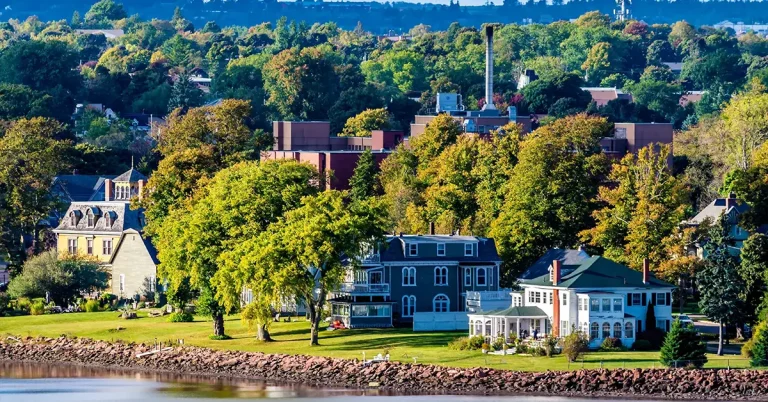
On 21 May 2026, Prince Edward Island issued 114 PNP invitations through the Labour Impact and Express Entry…

Alberta issued 1,051 AAIP invitations between 1 and 13 May 2026 across four draws, prioritising healthcare, technology and…
The Prosperous Living Investment team advises on pathways, assesses profiles and manages investments transparently for every residency, citizenship and international property objective.
Free profile assessmentWhere life gets prosperous
We use analytics cookies (Google Analytics) to understand how this site is used. They stay off until you agree. Privacy policy.