

Canada
Canada suspends citizenship by descent certificates issued under Bill C-3
IRCC has suspended some citizenship-by-descent certificates issued under Bill C-3 and requested their return, over concerns about the…



Canada’s Start-up Visa programme was once seen as a golden path for immigrant entrepreneurs. However, processing times now exceed 10 years, leaving many stunned. This situation reflects deep-seated issues within the Canadian immigration system.
The Start-up Visa aims to attract innovative entrepreneurs from around the world. Applicants are facing a massive backlog of files.
Detailed article on the The Start-up Visa in Canada.
The Start-up Visa programme was launched in 2013 as a pilot and became permanent in 2018. It encourages entrepreneurs to build innovative businesses in Canada. The goal is to boost the economy through fresh ideas.
Applicants require a potential business idea and a letter of support from a designated organisation. These organisations may be venture capital funds, angel investor groups, or business incubators. Following this, they apply for permanent residency without a minimum personal investment requirement.
The focus is on job creation and global competitiveness. The programme is suitable for the technology, healthcare, or environmental sectors. Entrepreneurs can begin their journey without worrying about significant financial barriers.
Considering a residency programme? The Prosperous Living Investment team assesses your profile free of charge and advises on the pathway that fits your goals.
Applicants must demonstrate language skills at level Canadian Language Benchmark (CLB) 5 for English or French. They require sufficient funds to settle without relying on government support. A commitment certificate from a designated organisation plays a crucial role, ensuring the business idea is viable.
There must be no dependent children under 22 years of age in the application. The programme allows a maximum of 5 people in a start-up team, with each person owning at least 10% of the shares. The supporting organisation must commit real investment or support for the application to be approved.
Canada prioritises highly innovative sectors. This helps applicants focus on ideas rather than capital. However, meeting all conditions still requires thorough preparation.
The Start-up Visa grants permanent residence right from the start, bypassing a lengthy temporary residence phase. The applicant’s family, including spouse and children, also benefit equally. This provides stability for a new life.
An open work permit lasting 3 years was introduced in 2024. Entrepreneurs can work in Canada while awaiting application processing. It helps them build their business earlier, taking advantage of market opportunities.
The programme drives economic innovation, enabling access to the Canadian ecosystem. This benefit once made the Start-up Visa globally attractive. However, the current situation is changing rapidly.
Start-up Visa processing times now exceed 10 years according to official data. On average, 80% of applications take 52-53 months. However, with the massive backlog, new applications could wait more than 120 months, leaving entrepreneurs overwhelmed.
This figure has surged from previous years. In 2018 it was only 11 months, rising to 28 months in 2020 due to the pandemic. To date, the delay has become a disaster.
In 2025, Immigration, Refugees and Citizenship Canada (IRCC) updated processing times to over 10 years. The backlog reached 43,200 applications in October, an increase of 23,000 compared to April 2024. These numbers have astonished many at the level of stagnation.
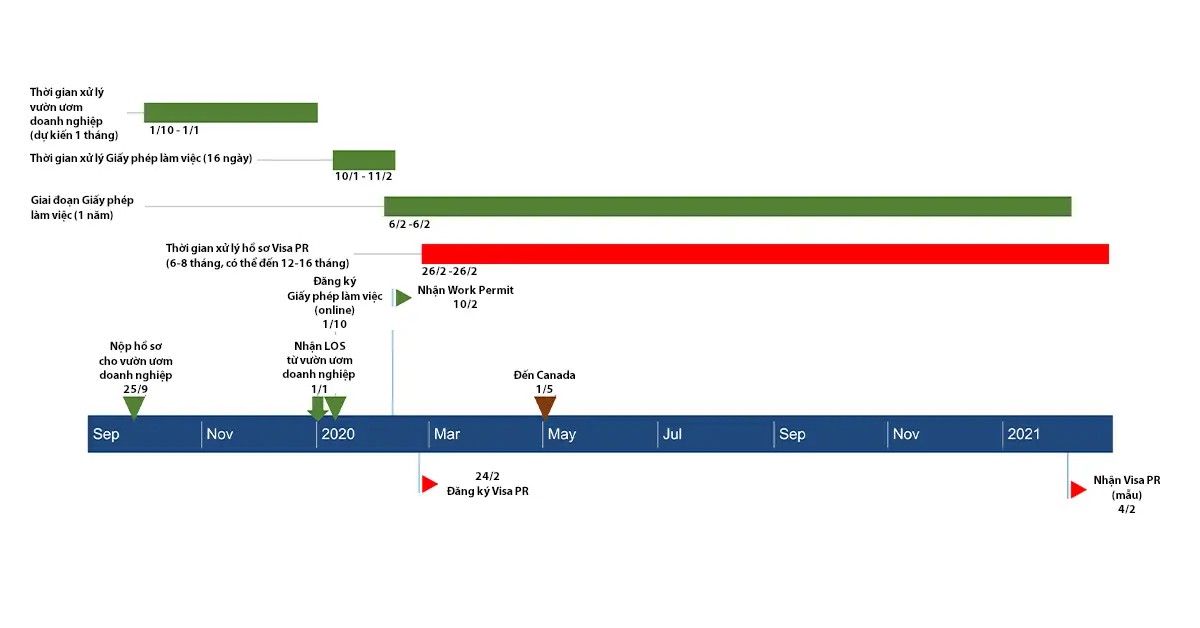
| Year | Average processing time (months) | Endorsements |
|---|---|---|
| 2018 | 11 | Early period, few applications |
| 2019 | 16 | Slight increase |
| 2020 | 28 | COVID-19 impact |
| 2022 | 32 | Backlog begins |
| 2023 | 37 | Increase due to misuse |
| 2024 | 40 | Reduction in immigration targets |
| 2025 | 52-53 (average), >120 (estimated) | Large backlog |
Data from IRCC shows severe delays. The target is only 2,000 slots in 2025. This figure is insufficient to clear the backlog, leading to even longer wait times. Check IRCC processing times at here.
Record-high refusal rates in 2025. The incubator stream reached 73%, while the angel investor stream reached 85%. Work permit refusals stood at 77%, up from 55% the previous year.
The overall immigration backlog exceeds 43,000 applications according to reports. The Start-up Visa accounts for a large portion. IRCC prioritises high-quality applications, but the system remains overwhelmed, leaving applicants waiting endlessly.
Entrepreneurs face high risks. This severely impacts business plans. The backlog continues to grow, creating a vicious cycle.
The delays stem from programme abuse. Many low-quality applications come from brokers charging high fees without guaranteeing a genuine start-up. This has led to stricter screening.
Immigration targets have been drastically reduced: 5,000 slots in 2024, only 2,000 in 2025, and 1,000 in 2026. This cap prolongs the backlog.
IRCC lacks processing resources, combined with the pandemic slowing initial progress. Fraud checks have increased, but are insufficient to address the root cause.
These factors have extended processing times. Entrepreneurs are facing greater difficulties than ever before. The programme is gradually losing its appeal compared to initial expectations.
The IRCC introduced a 3-year open work permit in 2024 to help entrepreneurs arrive in Canada sooner. They prioritise applications with high economic benefits.
New legislation allows for the cancellation of unsuitable applications. However, with low targets, the backlog continues to grow. Major reform is needed to bring processing times under 2 years.
Delays cause entrepreneurs to give up and move to the United States or Europe. Waiting 10 years is not feasible for fast-paced startups. They lose the opportunity to develop their ideas in a timely manner.
Canada is losing its ability to attract global talent. The programme was intended to create jobs but is now underperforming. The economy suffers due to a lack of external innovation.
Applicants’ families face financial and mental strain. Long waits lead to disrupted plans. Many must maintain their lives in their home countries during this period of uncertainty.
An Indian entrepreneur applied in 2023 and has waited 2 years with no progress. With an estimated 10-year wait, he must consider withdrawing. His business plan has completely stalled.
A group from Brazil received a letter of support in 2024 and is using a temporary permit. However, they worry that permanent residency is a distant prospect. Their business faces high risks due to a lack of long-term stability.
These cases are common on immigration forums. Applicants feel deeply disappointed. The programme is no longer as reliable as advertised. See more on the immigration forum at here.
Canada may lose thousands of potential jobs from new businesses. The programme creates fewer benefits than initially expected. Delays reduce contributions to growth.
The technology sector is heavily affected. Toronto and Vancouver are losing their competitive edge. Entrepreneurs are choosing locations with faster processing, such as the United States.
The government recognises the problem but is acting slowly. Canada’s reputation among investors is declining. Those interested in immigration should consider their options carefully.
Express Entry is suitable for highly skilled workers, with a processing time of only 6 months. The system uses a points-based approach to select candidates. It prioritises work experience and skills.
The Provincial Nominee Programme (PNP) allows provinces to select their own candidates. Some provinces have faster startup streams. Processing times are typically 12-18 months depending on the region.
Intra-company transfers (ICT) for multinational employees transferring for work. The Global Talent Stream focuses on the technology sector and offers fast processing.
Prepare high-quality applications to avoid rejection. Avoid exploitation by disreputable agents. Focus on genuine business ideas.
Apply for a temporary work permit as soon as possible. Start the business in Canada to reduce the risks of waiting. Monitor IRCC updates monthly via the official website.
Join forums to share experiences. Diversify your plans and consider other countries if time is of the essence. Acting early increases the chances of success.
Start-up Visa processing times exceeding 10 years are a major issue, reflecting challenges within the immigration system. Entrepreneurs need patience or must find other paths. Canada remains attractive due to its stable economy.
However, the programme requires rapid reform to maintain its appeal. Monitor changes from the IRCC. Those interested in Canadian immigration should seek professional advice to make informed decisions. The situation may change positively in the near future.
IRCC has suspended some citizenship-by-descent certificates issued under Bill C-3 and requested their return, over concerns about the…

On 21 May 2026, Prince Edward Island issued 114 PNP invitations through the Labour Impact and Express Entry…

Alberta issued 1,051 AAIP invitations between 1 and 13 May 2026 across four draws, prioritising healthcare, technology and…
The Prosperous Living Investment team advises on pathways, assesses profiles and manages investments transparently for every residency, citizenship and international property objective.
Free profile assessmentWhere life gets prosperous
We use analytics cookies (Google Analytics) to understand how this site is used. They stay off until you agree. Privacy policy.