

Citizenship of Antigua and Barbuda

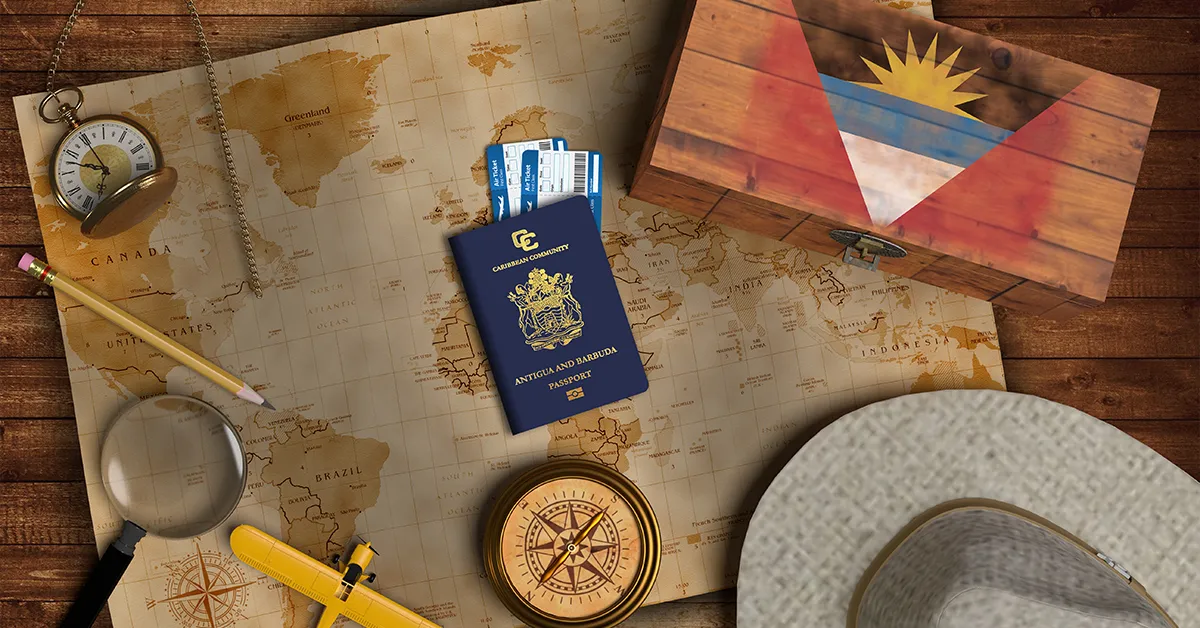
Citizenship of Antigua and Barbuda is governed by the 1981 Constitution (Chapter VIII), the Citizenship Act 1982 (CAP. 22), the Millennium Naturalisation Act 2004 and certain British nationality acts that applied during the transitional period after independence. Citizenship law combines the principle of birthplace (jus soli) with the principle of descent (jus sanguinis), with additional routes through marriage, naturalisation and investment.
A notable feature of the country’s citizenship system is its recognition of dual citizenship — new citizens are not required to renounce their existing nationality, provided their country of origin allows it. This is important for Vietnamese people interested in Antiguan and Barbudan citizenship through the investment programme, as Vietnam also recognises dual citizenship in certain cases. This article analyses in detail the routes to citizenship, the rights and obligations of citizens, and the rules on loss and restoration of citizenship.
Detailed article onthe country of Antigua and Barbuda.
Message
Legal framework
The legal framework governing citizenship of Antigua and Barbuda was established at independence on 01/11/1981 and has been amended several times to reflect the international context. According to data published onLaws of Antigua and Barbuda, the main legal instruments include:
- The 1981 Constitution (Chapter VIII): sets out the basic principles of citizenship, the cases of automatic citizenship at independence and the general conditions
- The Citizenship Act 1982 (CAP. 22): details the procedures for registration, naturalisation and loss of citizenship
- The Millennium Naturalisation Act 2004: updates modern naturalisation rules, including residence and competence requirements
- The Citizenship by Investment Act: governs the CBI programme launched in 2013
- The Immigration and Passport Act 2014: governs the issue of passports to citizens
Citizenship policy is implemented by the Department of Immigration under the Ministry of Foreign Affairs, Immigration and International Trade. The Minister for Immigration and Citizenship has final authority over naturalisation applications, based on a risk assessment by the Chief Immigration Officer. For the citizenship by investment programme, applications are processed by the Citizenship by Investment Unit (CIU) under the Office of the Prime Minister.
Considering a residency programme? The Prosperous Living Investment team assesses your profile free of charge and advises on the pathway that fits your goals.
Citizenship by birth (jus soli)
Under Section 113 of the 1981 Constitution, everyone born in the territory of Antigua and Barbuda on or after 01/11/1981 automatically becomes a citizen. This is the principle of jus soli — citizenship by birthplace — applied fairly widely in Commonwealth countries that inherited the British tradition.
However, there are some important exceptions:
- Children of diplomats: do not automatically acquire citizenship if neither parent is a citizen or permanent resident
- Children of enemy aliens in wartime: are not granted citizenship (a provision for emergency situations)
- Protection of children from statelessness: a child born in Antigua with no other nationality may be granted citizenship to avoid becoming stateless
Everyone born in Antigua before 31/10/1981 who was a Citizen of the United Kingdom and Colonies (CUKC) at that time also automatically became a citizen of Antigua and Barbuda under Section 112 of the Constitution.
Citizenship by descent (jus sanguinis)
Citizenship by descent applies to people born abroad whose father or mother (or in some cases grandparent) is a citizen of Antigua and Barbuda. This is one of the more generous aspects of the country’s citizenship system — many countries allow citizenship by descent only to the children of citizens (the first generation), while Antigua and Barbuda recognises it up to grandchildren (the second generation).
Specific jus sanguinis cases:
- Born after 01/11/1981 to a citizen father or mother: automatically becomes a citizen of Antigua and Barbuda
- Born before 01/11/1981 with a father, mother or grandparent born in Antigua: recognised at independence
- Born abroad to a naturalised or registered father or mother: recognised under the transitional provisions
For children born to a parent who acquired citizenship by naturalisation (rather than by birth in Antigua), registration of citizenship at an Embassy or Consulate of Antigua and Barbuda is required. The process requires the child’s birth certificate, proof of the parent’s citizenship and some supporting documents.
Citizenship by marriage
The spouse of a citizen of Antigua and Barbuda may register for citizenship after meeting specific conditions in the Constitution and the Citizenship Act:
- Minimum length of marriage: 3 years
- A legal and subsisting marriage: not living apart under a court order
- Where the spouse has died: the surviving spouse must not have been living apart at the time of death
- Police clearance certificate: no serious criminal record
- Good health: no communicable diseases that could threaten the community
The registration process does not include a formal interview at the Department of Immigration for marriage cases — a difference from ordinary naturalisation. However, applicants must submit evidence of a genuine marriage, including joint bills, a joint lease, joint account statements and children’s birth certificates (if any).
Citizenship by naturalisation
Adults with full legal capacity may apply for naturalisation in Antigua and Barbuda if they meet the following conditions:
- Continuous residence for the last 12 months: in Antigua and Barbuda before applying
- Total residence of 5 of the previous 7 years: in the country
- Good character: no criminal record, a clean background
- Intention to reside long-term: in Antigua and Barbuda after naturalisation
- Ability to demonstrate financial self-sufficiency: not dependent on social welfare
The naturalisation process requires:
- An application to the Minister for Immigration and Citizenship through the Chief Immigration Officer
- An interview at theDepartment of Immigrationincluding a test of knowledge of Antigua and Barbuda and of English
- A medical certificate from a local doctor
- Police clearance certificates from Antigua and Barbuda and every country of residence for more than 6 months
- Copies of all passports held during the residence period
- An Oath of Allegiance ceremony before receiving the certificate
Citizens of OECS member states who have held indefinite stay permission in Antigua and Barbuda for more than 7 years must still go through the formal naturalisation process — there is no automatic naturalisation mechanism.
Citizenship by investment (CBI)
The Citizenship by Investment (CBI) programme, launched in 2013 under the Baldwin Spencer government, is the fastest and most popular route for foreigners seeking citizenship of Antigua and Barbuda. Unlike the traditional routes, which require long-term residence, CBI grants citizenship within 4–6 months of submitting an application and making a qualifying investment.
The four current investment options:
- National Development Fund (NDF): a $230,000 USD non-refundable contribution for a family of up to 4 people
- Real estate investment: a minimum of $300,000 USD in an approved project
- Business investment: $1.5 million USD individually or $400,000 USD as a joint investment
- University of the West Indies Fund (UWIF): $260,000 USD — only for families of 6 or more
The physical residence requirement is just 5 days within the first 5 years after receiving citizenship — one of the lowest among Caribbean CBI programmes. People granted citizenship through CBI enjoy the same full rights as citizens who acquired it by other routes, includingpassportand the right to pass it on to their descendants. Full details of the programme are set out in the articleAntigua and Barbuda Citizenship by Investment.
Dual citizenship and benefits
Antigua and Barbuda recognises dual citizenship under the 1981 Constitution and supplementary legislation. People who become citizens by any route — including naturalisation or CBI — are not required to renounce their existing nationality. This is an important difference from some countries that allow only a single nationality.
Detailed article onDual citizenship in Antigua and Barbuda.
However, CBI participants should check the dual citizenship rules of their country of origin:
- Vietnam: allows dual citizenship in certain special cases and does not require renunciation of Vietnamese nationality on acquiring foreign citizenship
- Mainland China: does not allow dual citizenship — citizens automatically lose Chinese nationality on acquiring foreign citizenship
- United States: allows dual citizenship
- United Kingdom: allows dual citizenship
- Hong Kong: allows dual citizenship under its own rules
- European countries: most allow it, but some (such as Austria, the Netherlands and Germany) restrict it
Vietnamese people who become citizens of Antigua and Barbuda through CBI keep their Vietnamese nationality and the related rights. However, note that declaring a second nationality to the Vietnamese tax authorities may be required in some cases.
Basic rights of citizens of Antigua and Barbuda:
- A strong passport: visa-free or visa-on-arrival access to 154 countries
- Free movement within the OECS: no passport needed, only an ID card
- Unlimited right of residence: in Antigua and Barbuda
- Right to work: no work permit required
- Right to own real estate: no Alien Landholding Licence required
- Right to public health services: qua Medical Benefits Scheme
- Right to education: preferential tuition at UWI and public schools
- Right to pass citizenship on to descendants: under the jus sanguinis principle
Loss and restoration of citizenship
Citizenship of Antigua and Barbuda can be lost in two ways:
Voluntary loss of citizenship
Citizens can voluntarily renounce their citizenship through a registration procedure. Renunciation is usually done when a citizen wants to naturalise in a country that does not allow dual citizenship. The process involves submitting a renunciation application, proving that another nationality has been acquired (to avoid statelessness), and review by the Ministry of Justice before approval.
Involuntary loss of citizenship
Citizenship acquired by naturalisation (including CBI) can be revoked in the following cases:
- Fraud or false statements: during the naturalisation application
- Conviction for sedition or treason: against Antigua and Barbuda
- Activities against the national interest: with specific evidence
- Continuing to live in a country at war with Antigua and Barbuda: in wartime
Citizenship by birth or by descent cannot be involuntarily revoked, even in the cases above — an important difference between citizenship by birth and citizenship by naturalisation.
Restoration of citizenship
People who have renounced their citizenship can apply to the Minister for Immigration and Citizenship to have it restored. The main requirements include: proof of a continuing connection with Antigua and Barbuda, no criminal record during the period without citizenship, and a legitimate reason for restoration. The process usually takes 6–12 months and approval is not guaranteed.
Citizenship of Antigua and Barbuda — a summary
Citizenship of Antigua and Barbuda is a relatively flexible system, combining the traditional British principles of jus soli and jus sanguinis with a modern citizenship by investment programme. The five routes to citizenship — birth, descent, marriage, naturalisation and investment — offer options suited to many different circumstances. Allowing dual citizenship is one of the most attractive features of the country’s citizenship.
For Vietnamese people interested in a second citizenship to diversify their residence rights, optimise taxes or secure their assets, the CBI programme is the fastest and most popular route. Combining Vietnamese and Antiguan and Barbudan citizenship brings significant global mobility advantages, especially for the 27 Schengen countries, the United Kingdom and the 10-year US B-1/B-2 visa.
Accompanying you on your journey in residency investment
The Prosperous Living Investment team advises on pathways, assesses profiles and manages investments transparently for every residency, citizenship and international property objective.
Free profile assessmentWhere life gets prosperous