


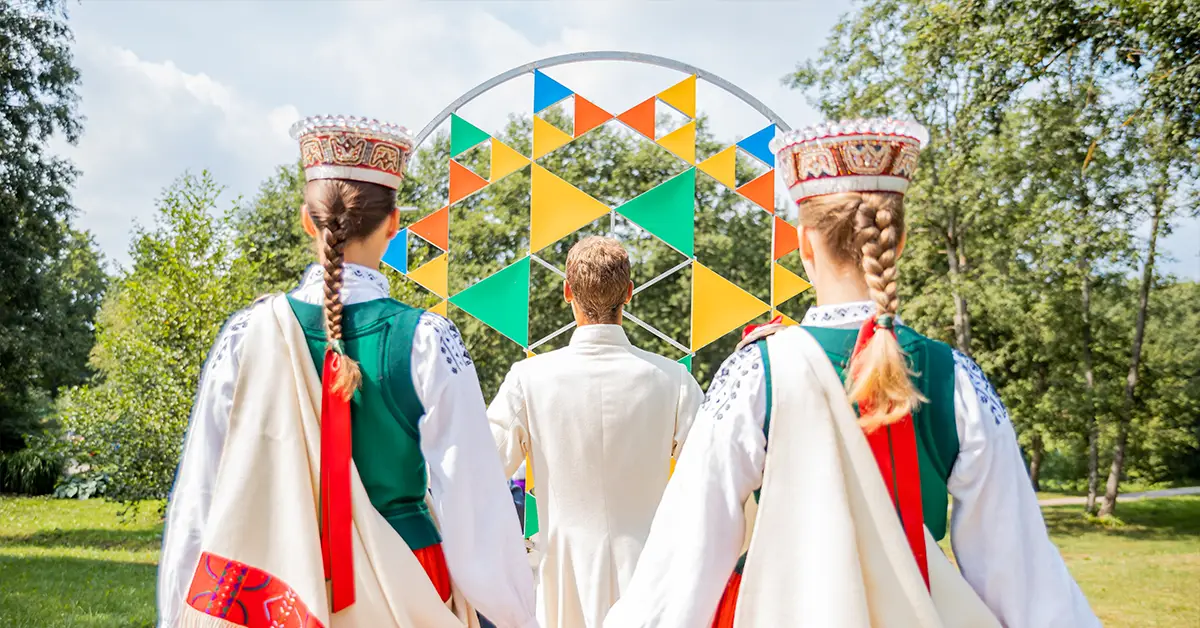
Latvian demographics reflect the character of a small Baltic country with a turbulent history and a varied population structure. The countryLatviahad a population of 1,857,000 at the start of 2025, on figures from the Official Statistics Portal of Latvia (CSB). The country faces a population decline running for more than 3 decades, together with a varied ethnic and linguistic structure inherited from the Soviet period.
This article analyses Latvian demographics systematically across 6 main aspects: population and the trend of decline, ethnic composition, languages in Latvia, religion, migration and the “non-citizen” question, and life expectancy and public health.
Message
Population and the trend of decline in Latvian demographics
Latvia’s population at the start of 2025 was 1,857,000, on the June 2025 publication of the Official Statistics Portal of Latvia. Against 2024, the population fell 1.0%, equivalent to 18,400 people. The decline has 2 components: negative natural change (deaths exceeding births, a fall of 13,800) and negative net migration (4,600). This is a decades-long trend in Latvian demographics.
Against the historical milestones, the trend of population decline in Latvian demographics is stark. The population peaked at 2.67 million at the restoration of independence in 1991, and has fallen by more than 30% over the past 35 years. On the 2011 census, the population was 2,067,887; by the 2021 census the figure was 1,893,223 — down 8.5% in a single decade.
Population density is around 28.7 per km², among the lowest in the European Union. The main causes of the decline comprise a low birth rate, population ageing and a wave of emigration particularly strong after EU accession in 2004. Latvia’s total fertility rate (TFR) is only around 1.3 children per woman — below the replacement level of 2.1 and among the lowest in Europe.
In 2024, Latvia recorded 12,887 births — 1,603 fewer (11.1%) than in 2023. The CSB analyses that Latvians’ values and life priorities are changing: many young people prioritise higher education, career development, a steady income and secure housing before thinking about starting a family. This is a common trend in Latvian demographics and in many other European Union countries.
The distribution of population in Latvian demographics varies widely between regions. Around 68% of the population lives in towns, with nearly 33% concentrated in the capital Riga and the surrounding Pieriga area. The Latgale region in the south-east has the lowest population density and the highest rate of ageing. The working-age population (15–64) accounts for 63%, children under 14 for 15.1%, and those over 65 around 22% — reflecting an ageing structure.
Considering a residency programme? The Prosperous Living Investment team assesses your profile free of charge and advises on the pathway that fits your goals.
Ethnic composition in Latvian demographics
Ethnic composition is the most important feature of Latvian demographics, reflecting the historical consequences of foreign rule and the Soviet legacy. On CSB figures at the start of 2025, Latvians account for 63.7% of the population (up 0.4% on 2024), Russians 24.1%, Belarusians 2.9%, Ukrainians 2.9%, Poles 1.9%, Lithuanians 1.1%, and other groups 1.6%. This is one of the standout features of Latvian demographics compared with the other EU countries.
The Latvian share has changed considerably over the periods of Latvian demographics. In 1935, Latvians made up 75–77% of the population. After nearly 50 years of Soviet occupation with its policy of Russification, the share fell to only 52% in 1989. Since the restoration of independence, the Latvian share has risen steadily: 57.7% in 1995, 62.1% in 2011, 62.7% in 2021 and 63.7% at the start of 2025. This is the result of many Russians returning to Russia, a higher birth rate in the Latvian community, and the integration of the younger generation.
Russians are the largest minority in Latvian demographics, concentrated mainly in 3 large urban centres. In Daugavpils — the country’s second largest city — Latvians account for only 21.0% of the population, while Russians are the largest community. In Rēzekne and Riga, Latvians likewise account for under 50%. Conversely, the other regions and towns have a very high Latvian share: Valmiera 84.8%, the Vidzeme region 87.3%. The Latgale region in the east has the lowest Latvian share at only 46.2%.
The Russian community in Latvia can be divided into 2 main groups within modern Latvian demographics. The first comprises the descendants of the Old Believers — Russians fleeing religious persecution from the 18th century who settled long ago in the Latgale region. This group is well integrated and mostly holds Latvian citizenship. The second and larger group comprises the descendants of Russians who migrated to Latvia during the Soviet period (1940–1991), concentrated in Riga, Daugavpils and the industrial towns.
The Livonians (Līvi) are Latvia’s other indigenous people, of the Finno-Ugric group with their own language. This community now numbers only around 250 people identifying as Livonian, with very few still fluent in Livonian. Despite the small numbers, Livonian cultural heritage is legally protected and supported from the state budget. Latvia also has Belarusian, Ukrainian, Polish and Lithuanian communities — largely a legacy of the Soviet Union and the Russian Empire, living mainly in the towns.
Language in Latvian demographics
Latvian (latviešu valoda) is the country’s only official language, protected by law and required in state bodies, public education and the media. Latvian belongs to the Baltic branch of the Indo-European family, most closely related to Lithuanian, and is one of the 2 surviving Baltic languages (with Lithuanian). This is central to Latvian demographics on the linguistic side.
On the 2021 census, 62.1% of the population used Latvian as their main language at home, while 37.2% used Russian. By 2023, CSB figures recorded around 37.7% of the population with Russian as their mother tongue and 34.6% using Russian at home. Against the 2011 census, the proportion using Latvian at home rose 1.9%, while the proportion using Russian at home fell 2.6% — reflecting a long-term trend in the linguistic side of Latvian demographics.
An interesting figure is that 90.7% of ethnic Russians use Russian at home, while 8.5% use Latvian. This varies by age: 30.0% of children aged 0–4 use Russian at home, against 44.2% of those aged 55–64. This shows that the younger generation in the Russian community is integrating into Latvian faster, partly because the education system has been moving to Latvian since 2018.
English serves as the most common second language in international communication and business. Around 46% of adults can use English at a conversational level, on Eurostat data. In schools, besides Latvian, pupils may study English, German, French, Russian and other languages. Latvian is a second language for around 23.1% of the population.
Latgalian is a regional variety of Latvian, used mainly in the Latgale region in the east. Although it has some differences in pronunciation and vocabulary, Latgalian is not regarded as a separate language but as a dialect recognised and protected in law. Livonian — the Finno-Ugric language of the indigenous people — is critically endangered with only a few dozen fluent speakers, but is actively supported through educational and cultural programmes.
Reform of the language of instruction is an important development in Latvian demographics over the past decade. In 2022, the Saeima passed amendments to the Education Law requiring all nursery and school teaching to move to Latvian over a 3-year timetable. From 01/09/2023, nursery and years 1, 4 and 7 teach only in Latvian. From 01/09/2024, this applied to years 2, 5 and 8. From 01/09/2025, the transition was completed with years 3, 6 and 9.
Pupils from minority communities may still study their own language and cultural history through extracurricular programmes. This reform has a major long-term effect on the linguistic side of Latvian demographics, particularly for the younger generation in the Russian-speaking community.
Religion in Latvian demographics
The religious landscape of Latvian demographics is varied and marked by history. Christianity is the main religion, at around 79% of the population when asked about religion. However, the actual level of religious practice in Latvian demographics is far lower — only around 7% of Latvians take part in religious services regularly. Latvia is among the highly secular societies of Europe alongside the other Nordic countries.
Lutheranism is the largest Christian branch, at around 34% of those declaring a religion. It spread in Latvia during Swedish rule in the 17th century and is the traditional religion of most Latvians. Before the Soviet period, the Evangelical Lutheran Church of Latvia (LELB) was estimated to have around 600,000 members. After nearly 50 years of Soviet religious persecution, active membership was only around 25,000 by 1987. Since the restoration of independence, Lutheranism has revived but has not regained its pre-war standing.
Roman Catholicism accounts for around 24% of those declaring a religion, concentrated mainly in the Latgale region — an area once under Polish-Lithuanian influence which retained Catholicism over centuries. Aglona in Latgale is the oldest Catholic pilgrimage site, drawing tens of thousands of the faithful from across Latvia and the Baltic states for the Feast of the Assumption (15 August) each year. The Basilica of Aglona was visited by Pope John Paul II in 1993.
Russian Orthodoxy accounts for around 18% of those declaring a religion, mainly within the Slavic community — Russians, Belarusians and Ukrainians. The Latvian Orthodox Church (LPB) is a semi-autonomous body within the Russian Orthodox Church. After the Ukraine conflict of 2022, there was political and social pressure for the LPB to separate entirely from the Moscow Patriarchate. In 2022, the Saeima passed a law granting the LPB full independent status, separate from the Russian Orthodox Church.
Besides the main Christian branches, Latvian demographics also records the presence of the Old Believers — a branch that split from Russian Orthodoxy in the 17th century and settled long ago in Latgale; growing Baptist, Adventist and Pentecostal communities; a small Jewish community of around 416 people (on the 2011 census) as the remaining legacy after the Holocaust; and a small Muslim community of around 319. The Latvian folk religion (Dievturība) also has a few thousand followers, representing the movement to revive pre-Christian beliefs.
On the 2010 Eurobarometer, 38% of Latvian citizens answered that they “believe there is a God”, 48% that they “believe there is some sort of spirit or life force” and 11% that they “do not believe there is any sort of spirit, God or life force”. These figures reflect the secular character of modern Latvian society, although many still maintain religious traditions at the important festivals such as Christmas, Easter and the Jāņi midsummer festival.
Migration and the non-citizen question in Latvian demographics
The “non-citizen” (nepilsoņi) question is a distinctive feature of Latvian demographics, absent from most other European countries. On restoring independence in 1991, Latvia automatically granted citizenship only to those who had been Latvian citizens before 17/06/1940 and their descendants. Those who migrated to Latvia during the Soviet period — mainly Russians, Belarusians and Ukrainians — were not granted citizenship automatically and had to go through naturalisation with tests in Latvian language, history and the constitution.
As at the start of 2025, on CSB figures, 87.8% of the population are Latvian citizens, 8.9% are Latvian “non-citizens” and 3.2% are citizens of other countries (of whom 28.2% are Ukrainian refugees). The number of “non-citizens” has fallen steadily — from 290,660 (14.1% of the population) in 2015 to around 165,000 (8.9%) at the start of 2025. More than 130,000 people have successfully naturalised since 1995. Children born to “non-citizen” parents have been granted Latvian citizenship automatically since 1999.
“Non-citizens” hold a special passport with its own number, and enjoy most civil and social rights as citizens do, but cannot vote in Saeima or local elections. They also may not serve in certain sensitive fields such as the police, the judiciary and the military. The OSCE and several international human rights bodies have repeatedly recommended that Latvia extend local voting rights to “non-citizens”, but this has not been done.
Migration is another important driver in Latvian demographics. After EU accession in 2004, hundreds of thousands of Latvians emigrated to Britain, Germany, Ireland and other Western European countries in search of better economic opportunities. On estimates, around 200,000 Latvians now live in Britain and Ireland. After Brexit, some returned, but net migration has remained negative in most years. Returnees (remigrants) made up 72.9% of the 13,700 immigrants to Latvia in 2024 — a notable trend in modern Latvian demographics.
The composition of migration to modern Latvia has changed fundamentally, enriching Latvian demographics. In 2024, 28.3% of immigrants came from EU countries, 20.9% from EU candidate countries (mainly Ukraine with 2,700 people), 20.7% from Britain (mainly returning Latvians), and 21.6% from CIS countries (including 2,100 from Russia, down 17.5% on 2023). After the Ukraine conflict of 2022, Latvia received more than 40,000 Ukrainian refugees; by the start of 2025, around 17,000 were still resident under temporary protection.
After the Ukraine conflict of 2022, Latvia tightened residence requirements for Russian citizens. Russians wanting to renew a residence permit must pass a Latvian language test at A2 level. In 2025, 841 Russian citizens who failed the test received orders to leave Latvia. This is a measure the government has applied to protect national security against geopolitical tension, although it has also drawn controversy over the human rights of older people.
Life expectancy and public health in Latvian demographics
Life expectancy and public health reflect the quality of life in Latvian demographics within a developed society. Life expectancy in Latvia was 75.7 years in 2025, above the global average of 72 but below the EU average of 81. There is a wide gender gap: men have a life expectancy of 71 years and women 80 — a 9-year difference, among the widest in Europe.
The average age of the Latvian population is 43.5, ranging from 42.7 in the Riga region to 45.9 in Latgale. Average age by ethnic group also varies markedly: Latvians 40.7, Russians 48.8, Belarusians 56.8, Ukrainians 47.3, Poles and Lithuanians 52.4, and Roma only 39.5. The Russian and Belarusian communities have a higher average age because most are the generation that migrated during the Soviet period with few younger generations.
Latvia’s infant mortality rate was 2.5 per 1,000 live births in 2025, 51% below the regional average of 5.1 — an important achievement reflecting the quality of public health. The leading causes of death remain cardiovascular disease (around 55% of all deaths), cancer (20%) and external causes such as accidents, suicide and poisoning. Suicide and alcohol abuse rates above the EU average are public health issues the government has prioritised.
Latvia’s health system is a public system combined with a private sector, with compulsory health insurance funded through taxation. Basic health services are free for citizens and lawful residents, although patients usually pay extra for medicines, specialist appointments and certain procedures. Public health spending is around 4–5% of GDP, below the EU average of 7.5%. The private sector has grown strongly in Riga with many hospitals and clinics meeting international standards.
Population ageing is the greatest long-term challenge in Latvian demographics. Around 22% of the population is already 65 or over, forecast to rise to 30% by 2050. The age dependency ratio (those outside working age against those of working age) is expected to rise from 60% today to 75% by 2050. In response, the government has raised the retirement age to 65 for both men and women (rising gradually to 67 by 2032), encouraged older workers to stay in work, and expanded elderly care services.
A summary of Latvian demographics
Latvian demographics reflect the complex consequences of 20th-century history — the Holocaust, Soviet deportations, Russification and the wave of emigration after 2004 — combined with the general population trends of modern Europe such as low fertility, ageing and urbanisation. A population of 1.857 million with 63.7% Latvians and 24.1% Russians makes for a distinctively multicultural society, but one that also carries challenges of integration and identity.
The education language reform of 2018–2025, the naturalisation policy and the residence measures for Russian citizens reflect Latvia’s efforts to strengthen Latvian national identity as the foundation of the state. At the same time, the country continues to respect minority rights within the framework of EU law and the international human rights conventions.
The long-term outlook for Latvian demographics depends on the ability to resolve 3 major challenges: reversing the population decline through policies supporting childbearing and attracting the diaspora home, fully integrating the Russian-speaking community into a plural society, and making use of selective migration from the EU and friendly countries to offset labour shortages. Current trends show the Latvian share of the population rising steadily and the integration of the younger generation from minority communities progressing positively, if slowly.
Accompanying you on your journey in residency investment
The Prosperous Living Investment team advises on pathways, assesses profiles and manages investments transparently for every residency, citizenship and international property objective.
Free profile assessmentWhere life gets prosperous