


The history of Ontario is a journey spanning thousands of years, from the first indigenous communities to its status as Canada’s most populous and wealthiest province today. For Vietnamese people interested in Canada, understanding the formation of this land helps explain why it has become the economic and political centre of the entire nation.
From the Upper Canada colonial period, through the Canada West phase, until it officially became a province in 1867, each stage has left a profound mark.
Detailed article introduction Ontario province.
Message
Overview of Ontario’s history
The historical process of Ontario can be divided into several major stages, reflecting its transformation from a land of indigenous peoples into a modern province. Each stage is associated with significant political shifts and waves of migration.
Before Europeans arrived, this area was home to many indigenous peoples for thousands of years. Subsequently, the British and French colonial period, wars, and waves of immigration shaped the face of the land.
The most important milestone was 1867, when the region officially became one of the four founding provinces of the Canadian Confederation. Since then, it has continuously developed to become the economic and demographic engine of the entire nation. Understanding this process is the key to grasping the province’s identity.
Considering a residency programme? The Prosperous Living Investment team assesses your profile free of charge and advises on the pathway that fits your goals.
The era of indigenous peoples
Before the arrival of Europeans, the land today was inhabited by many indigenous peoples with rich cultures. They lived and thrived here for thousands of years before the colonial period.
The southern region was home to Iroquoian-speaking peoples, who lived primarily by agriculture, including the Huron, Tionontati, and Erie. They cultivated corn, beans, and squash, building relatively stable settled communities.
Meanwhile, the vast northern region was the territory of Algonquian-speaking peoples, who lived primarily by hunting and gathering, including the Algonquin, Ojibwa, and Cree. Their lifestyle adapted to the taiga forest conditions and the harsh northern climate. The heritage of these indigenous peoples is still present in the culture and place names of the province today.
Colonial period and the arrival of Europeans
The arrival of Europeans opened a new chapter in Ontario’s history. The French were the first Europeans to explore this area in the 17th century, primarily through the fur trade and missionary work.
The fur trade created a trade network between Europeans and indigenous peoples. However, competition between colonial powers, especially Britain and France, led to many prolonged conflicts in the North American region.
After Britain gained control from France in the mid-18th century, the region gradually shifted to British influence. A major turning point occurred after the American Revolution, when a series of people loyal to the British Crown, known as Loyalists, migrated north and settled in this land, changing the demographic structure.
Upper Canada and the Canada West phase
In 1791, the region was organised as the colony of Upper Canada, separate from French-speaking Lower Canada. This was an important milestone that laid the foundation for the land’s distinct political entity.
The first lieutenant governor, John Graves Simcoe, was instrumental in establishing a British-style legal and administrative system, building roads, and choosing York, now Toronto, as the capital. He also encouraged strong waves of immigration from various sources.
The period from 1815 to 1840 saw the dominance of a conservative elite group known as the Family Compact. Dissatisfaction with this regime led to the rebellions of 1837. By 1841, Upper Canada and Lower Canada merged into the Province of Canada, and the region was known as Canada West until 1867.
Throughout the 19th century, waves of immigration from Ireland, England, and especially Scotland poured in to settle. These streams of people contributed to rapid population growth and shaped the English-speaking cultural identity of the land.
1867 and the birth of the province
The most significant milestone in Ontario’s history was 01/07/1867, when the British North America Act came into effect, establishing the Dominion of Canada. The Canada West region officially became a province with its current name.
According to information from Government of Canada, the province was one of the four founding members of the Confederation, along with Quebec, Nova Scotia, and New Brunswick. Dividing the old Province of Canada into two separate provinces helped each linguistic group have its own self-governing land.
After Confederation, under the leadership of Premier Oliver Mowat for many years, the province consolidated its autonomy and significantly expanded its territory through successful border disputes. This period affirmed the region’s pioneering position in the young federation.
Economic development and industrialisation
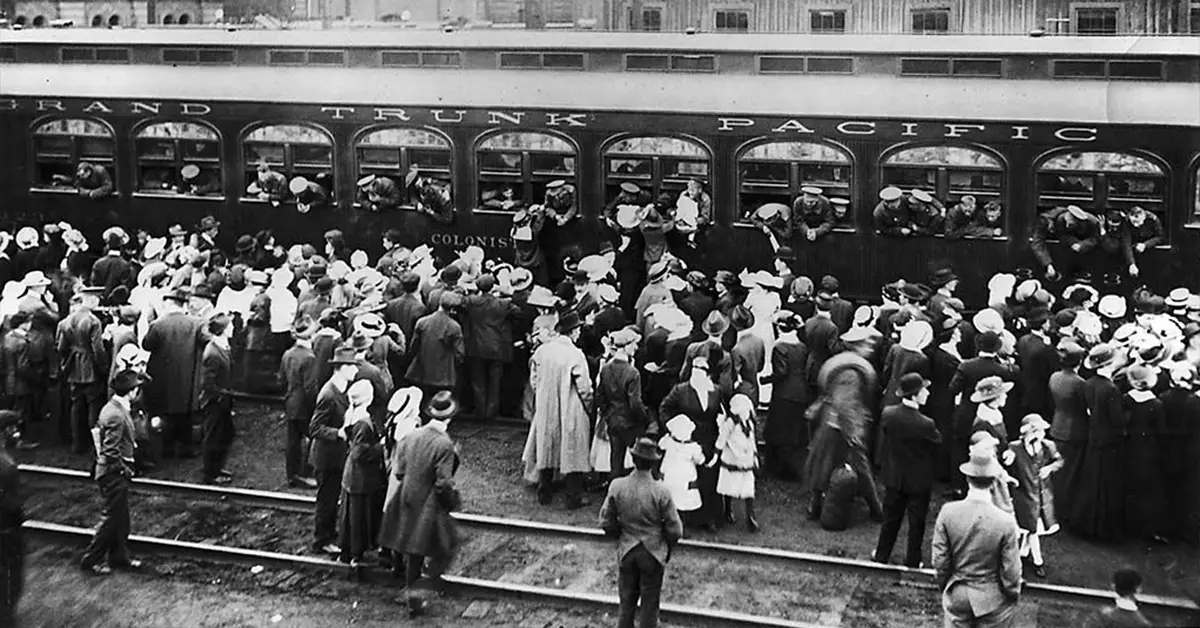
Entering the late 19th and early 20th centuries, the region entered a period of strong industrialisation. The development of railways, mining, and manufacturing turned it into Canada’s leading economic centre.
Toronto rose to become a financial and commercial hub, while manufacturing industries developed along the southern region. Abundant natural resources in the north also contributed significantly to general prosperity.
Waves of immigration continued to pour in during the 20th century, especially after the two world wars, when migrants from across Europe and later the entire world chose this place as their destination. This diversity laid the foundation for the multicultural society characteristic of the modern province.
Modern era and historical heritage
Throughout the latter half of the 20th century and the early 21st century, the province continued to assert its position as Canada’s economic engine. Rapid urbanisation, the growth of the service economy, and waves of global immigration have shaped its modern landscape.
Toronto has become one of the most multicultural cities in the world, a hub for communities from every nation. Canada’s open immigration policy has made this region a premier destination for migrants, including the Vietnamese community.
Historical legacies have left a clear mark on today’s political institutions, education system, and cultural identity. Understanding the past helps explain why the province remains central to national life. Readers can learn more about the geography of Ontario to see the connection between natural conditions and the development process.
The formation of multicultural identity through the ages
One of the most significant legacies of this historical process is the formation of a multicultural identity. This land has been built by successive waves of migrants over the centuries.
The first wave consisted of United Empire Loyalists who migrated from the south after the American Revolution. This was followed by an influx of people from the British Isles, particularly Ireland and Scotland, during the 19th century. Each group brought its own traditions and culture, contributing to the shaping of society.
In the 20th century, especially after the two world wars, migration waves expanded to include all of Europe and eventually the entire world. Canada’s open immigration policy from the mid-century onwards transformed the region into a melting pot of hundreds of cultures. This historical process explains why society here is as tolerant and diverse as it is today.
Figures and events that shaped history
The development of this region is linked to many key figures and events. They have left a profound mark on how the province is organised and operated.
John Graves Simcoe, the first Lieutenant Governor of Upper Canada, laid the foundations for the administrative and legal systems and chose Toronto as the capital. His decisions continue to influence the structure of the region to this day.
After Confederation, Premier Oliver Mowat was instrumental in strengthening provincial autonomy and expanding the territory. Alongside these figures, events such as the Rebellion of 1837, the Act of Union 1840, and Confederation in 1867 were decisive turning points. Understanding these people and events helps the Vietnamese community gain a deeper grasp of the foundations of modern society.
Conclusion: Understanding the past to guide the future
The history of Ontario is the story of a transformation from a land of indigenous peoples into the most modern, multicultural, and prosperous province in Canada. Each stage, from the colonial period and Upper Canada to Confederation in 1867, has contributed to shaping today’s identity.
For Vietnamese individuals interested in Canada, grasping this process is not only foundational knowledge but also helps in understanding the environment they will be part of if they settle here. The long history and tradition of welcoming migrants are testaments to the openness of this land.
To gain a comprehensive picture of the province, you should learn more about the politics of Ontario and an overview of Ontario province, thereby building a solid foundation for any plans related to this region.
Accompanying you on your journey in residency investment
The Prosperous Living Investment team advises on pathways, assesses profiles and manages investments transparently for every residency, citizenship and international property objective.
Free profile assessmentWhere life gets prosperous