


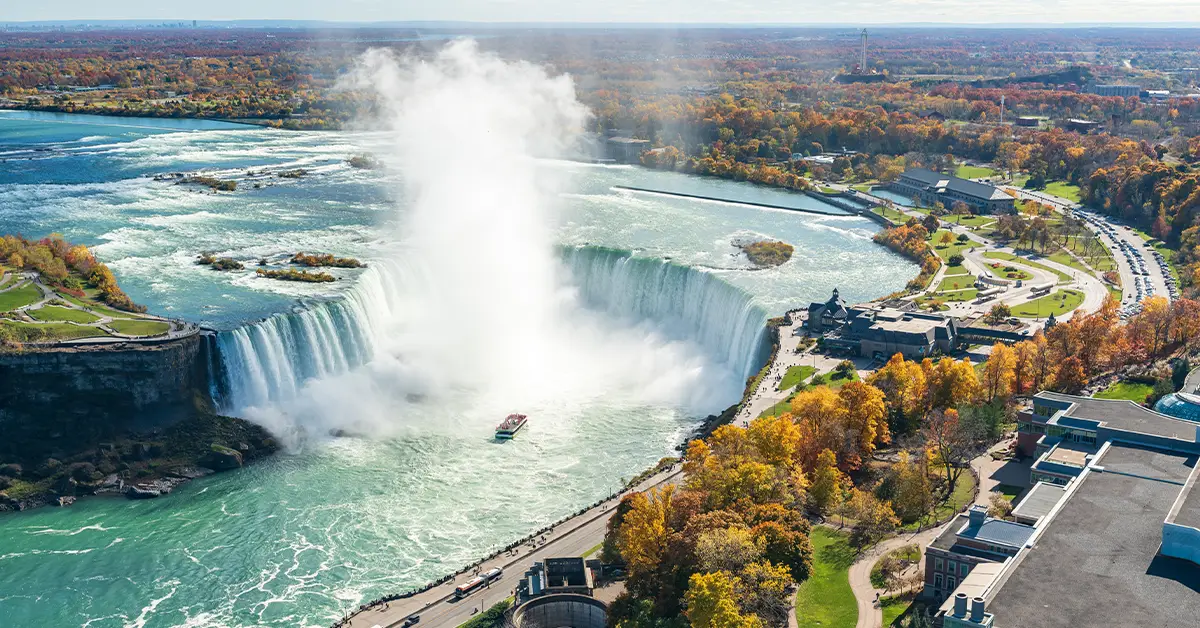
The geography of Ontario is a fundamental factor explaining why this province has become the economic and demographic centre of Canada. With an area of over 1,000,000 square kilometres, stretching from the Great Lakes in the south to Hudson Bay in the north, the region possesses incredible diversity in terrain and climate. For Vietnamese individuals considering immigration, understanding natural conditions helps in choosing a suitable place to live and visualising the actual living environment.
Detailed article introduction Ontario province.
Message
Overview of the geography of Ontario
The geographical characteristics of Ontario are notable for their vast scale and the stark contrast between regions. It is the fourth-largest province by area in Canada, with a total area of approximately 1,076,395 square kilometres.
The province is often divided into two regions with very different characteristics: the south and the north. This division is not only geographical but also reflects major differences in population, economy, and lifestyle.
Its unique geographical location, bordering the United States to the south and situated in the centre of Eastern Canada, provides a strategic advantage. This makes the region a vital gateway for trade and a hub for the majority of the nation’s economic activity.
Considering a residency programme? The Prosperous Living Investment team assesses your profile free of charge and advises on the pathway that fits your goals.
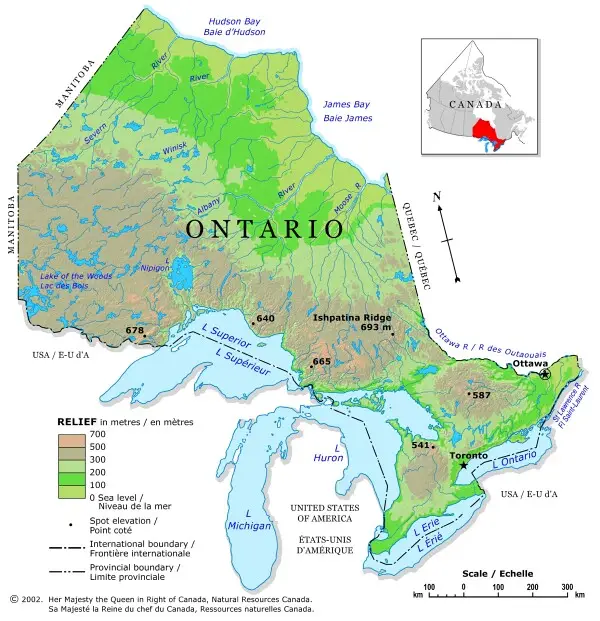
Location and boundaries
The region is located in the central-eastern part of Canada, occupying a highly favourable geographical position. It is the southernmost province of the country, with borders adjacent to several important entities.
To the west, the province borders Manitoba, while to the east it borders Quebec. To the north lie the vast James Bay and Hudson Bay, creating a distinctive inland coastline.
Most notably is the southern border, which adjoins several US states including Ohio, Pennsylvania, New York, Michigan, and Minnesota. Much of this boundary is naturally formed by the Great Lakes system and the Saint Lawrence River. The location bordering the United States is a key factor driving trade and economic development in the region.
Terrain and regional divisions
Topographical diversity is a prominent feature when discussing the geography of Ontario. The province is divided into two main regions with completely different landscapes and natural characteristics.
The South
The South is smaller in area but concentrates the majority of the population and economic activity. It is a low-lying, fertile region around the Great Lakes and the Saint Lawrence River, with a milder climate.
Most major cities such as Toronto, Ottawa, Hamilton, and London are located in the South. Favourable natural conditions make this region a centre for agriculture, industry, and services, where the vast majority of residents live.
The North
The North occupies the majority of the area but is sparsely populated. This is a region of the Canadian Shield, with ancient rocky terrain, vast taiga forests, and countless lakes and rivers.
This area is rich in mineral and forest resources, but the harsh climate and rugged terrain result in a very low population density. Economic activities are primarily mining, forestry, and hydroelectricity. The pristine landscape of the North is also a draw for eco-tourism.
Regional climates
Climate is an important aspect of Ontario’s geography, directly affecting daily life and the choice of residence. Because it spans a wide latitude, the province has significant climatic differences between regions.
The South has a humid continental climate with four distinct seasons. Summers are warm and humid, while winters are cold and snowy. The area near the Great Lakes is moderated by the water, resulting in a milder climate compared to inland regions.
The further north one goes, the harsher the climate becomes, with long, cold winters and short summers. For Vietnamese people accustomed to a tropical climate, adapting to the cold winter is a factor that requires careful preparation. However, the majority of the Vietnamese community settles in the South, where the climate is more pleasant.
Each season here has its own characteristics and influences the rhythm of life for residents. Autumn, with its vibrant yellow and red foliage, is the most beautiful time of the year, while the snow-covered winter opens up activities such as skiing and ice skating. Getting used to the four-season cycle and preparing appropriate clothing and housing is part of the adaptation process that new arrivals need to keep in mind.
River and lake systems and water resources
The region is famous for having one of the richest systems of rivers and lakes in the world. The name of the province is derived from the lake of the same name, one of the large lakes in the Great Lakes system.
The Great Lakes system consists of large lakes located along the southern border, providing a massive source of fresh water and serving as an important waterway for transport. The Saint Lawrence River connects these lakes to the Atlantic Ocean, creating a vital trade corridor.
In addition, the North has countless small lakes and rivers, formed by glacial activity in ancient times. This abundant water source not only serves daily needs and agriculture but also serves as the basis for a strong hydroelectric industry, providing clean energy for the entire province.
Natural resources
The wealth of natural resources is an inseparable part of the geography of Ontario. Diverse resources have played a crucial role in economic development over many centuries.
The North possesses abundant mineral reserves, including nickel, gold, copper, and various other precious metals. Mining has long been an economic pillar of this region, attracting investment and creating jobs.
Beyond minerals, vast forest resources provide timber and forestry products. Fertile agricultural land in the South forms the foundation for a thriving agricultural sector. Abundant water resources also support hydroelectric power and serve as a long-term strategic asset.
According to data from Natural Resources Canada, the province is one of the most mineral-rich regions in the country. The combination of these resources contributes to strengthening the region’s economic position. To better understand how resources are transformed into economic strength, readers should read more about Ontario economy.
Natural environment and biodiversity
Beyond terrain and resources, a rich natural environment is a prominent feature of the land. The diversity of landscapes creates various ecosystems, from boreal forests to lakeside wetlands.
The North, with its vast taiga forests, is home to many wild animals such as moose, bears, and wolves. The system of lakes and rivers is also a habitat for countless species of fish and waterfowl, creating a rich ecological balance.
The province possesses many provincial parks and nature reserves, protecting precious ecosystems and serving eco-tourism. For residents, the vast natural space offers opportunities to enjoy outdoor activities such as camping, canoeing, and hiking. This is an attractive part of the lifestyle in this region.
Major cities and urban distribution
Urban distribution is an important aspect reflecting the geographical characteristics of the province. Most major cities are concentrated in the South, along the Great Lakes and Saint Lawrence River corridor.
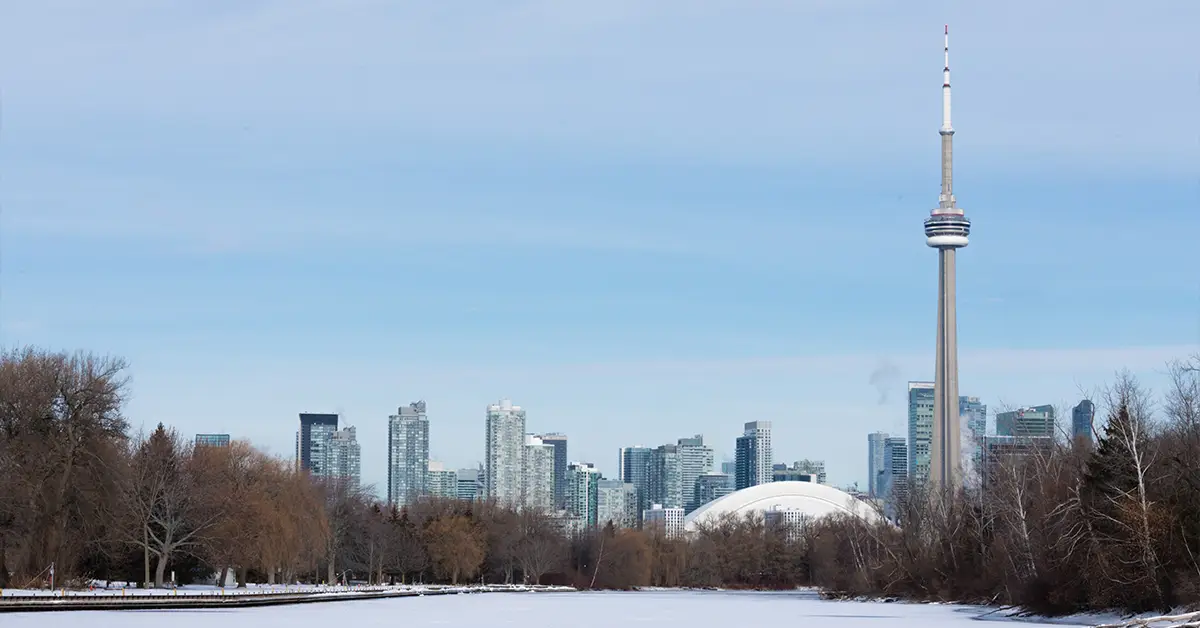
Toronto, the capital and largest city, located on the shores of Lake Ontario, is the economic and population hub. Ottawa, the capital of Canada, is located in the East bordering Quebec. Other cities such as Hamilton, London, Kitchener, and Windsor are also distributed in the favourable southern region.
The location of these urban centres is linked to favourable natural conditions: a temperate climate, fertile land, and access to water and land transport routes. Conversely, the North has only a few small population centres. This distribution explains why the vast majority of Vietnamese immigrants choose southern cities.
Summary: Natural conditions shape life
Ontario’s geography, with its vast scale, the contrast between the crowded South and the pristine North, and its abundant resources, has shaped the entire economic and social life of the province. Its strategic location bordering the United States and the Great Lakes system are invaluable natural advantages.
For Vietnamese people considering immigration, the South, with its milder climate, large cities, and substantial communities, is the most popular choice. Understanding natural conditions helps in better preparing for a new life, especially in adapting to winter.
For a comprehensive overview, you should learn more about the history of Ontario and an overview Ontario province, thereby grasping the close connection between geography, history, and the development of this land.
Accompanying you on your journey in residency investment
The Prosperous Living Investment team advises on pathways, assesses profiles and manages investments transparently for every residency, citizenship and international property objective.
Free profile assessmentWhere life gets prosperous