

Canada
Canada suspends citizenship by descent certificates issued under Bill C-3
IRCC has suspended some citizenship-by-descent certificates issued under Bill C-3 and requested their return, over concerns about the…



The federal government of Canada is about to announce the Canada 2026-2028 Immigration Levels Plan, which will set out the number of permanent and temporary residents Canada aims to approve in 2026.
On or before 1 November 2025, Immigration, Refugees and Citizenship Canada will announce the 2026-2028 Immigration Levels Plan.
The annual Levels Plan presents the admission targets for the upcoming year, along with nominal targets for the following two years. Previous announcements from the government have given us some indications of what we can expect from the upcoming Plan.
If the federal government keeps its election promise, we can expect that the permanent resident admission target for 2027 will not exceed 416,500.
We can establish this projected upper limit because leading up to the last election, the Liberal Party pledged to stabilise permanent resident admissions at under 1% of Canada’s population annually, and Canada’s population is estimated at 41,650,000 as of 1 July 2025.
The targets from the Plan announced last year also fell below this upper limit, as the government cut the permanent resident admission target for 2025 by 20% compared to the Plan announced in 2023.
The targets for total permanent resident admissions under the two previous Immigration Levels Plans are as follows:
| Year | 2025-2027 Immigration Levels Plan (announced 2024) | 2024-2026 Immigration Levels Plan (announced 2023) |
|---|---|---|
| 2025 | 395,000 | 500,000 |
| 2026 | 380,000 | 500,000 |
| 2027 | 365,000 | – |
These targets include economic immigration, family reunification, and refugees and humanitarian cases.
Considering a residency programme? The Prosperous Living Investment team assesses your profile free of charge and advises on the pathway that fits your goals.
Detailed article on the Express Entry.
Although last year’s Immigration Levels Plan reduced the high-level immigration target for permanent resident admissions across all programmes by 20%, the settlement target for economic immigrants through the Express Entry system actually increased.
Last year’s Immigration Levels Plan introduced the Federal Economic Priorities and In-Canada Focus categories, replacing what was previously known as Federal Skilled Worker — allocated for admissions through the Express Entry system.
For 2025, the combination of Federal Economic Priorities (41,700) and In-Canada Focus (82,980) provides a target of 124,680, an increase from the 117,500 for Federal High Skilled from the previous year’s plan.
| Year | Federal Economic Priorities (2025-2027) | In-Canada Focus (2025-2027) | Federal High Skilled (2024-2026) |
|---|---|---|---|
| 2025 | 41,700 | 82,980 | 117,500 |
| 2026 | 47,400 | 75,830 | 117,500 |
| 2027 | 47,800 | 70,930 | – |
Federal Economic Priorities include in-demand occupations for category-based selection rounds, as well as French language proficiency, while In-Canada Focus refers to the admission of permanent residents who are foreign nationals already in Canada with valid temporary status.
Detailed article on the Provincial Nominee Program (PNP).
Last year’s Immigration Levels Plan saw a significant shift in Canada’s recent immigration strategy regarding Provincial Nominee Program targets.
The plan cut federal admission targets for the Provincial Nominee Program by half compared to the previous year, reducing admissions to just 55,000 per year in 2025, 2026, and 2027, down from the 110,000 target for 2024.
| Year | 2025-2027 Immigration Levels Plan | 2024-2026 Immigration Levels Plan |
|---|---|---|
| 2025 | 55,000 | 120,000 |
| 2026 | 55,000 | 120,000 |
| 2027 | 55,000 | – |
In line with this, provinces and territories received significantly smaller nomination allocations for 2025.
Since then, however, many provinces and territories – including British Columbia, Manitoba, Saskatchewan, Newfoundland and Labrador, and New Brunswick – have successfully negotiated increased Provincial Nominee Program nomination allocations for 2025.
Furthermore, on 16 October, Immigration Minister Lena Diab met with provincial and territorial counterparts to discuss the allocation of additional quotas for their Provincial Nominee Programs.
If the federal government continues along the same path we have seen throughout 2025, we would expect 2026 to see an increase in Provincial Nominee Program immigration targets from last year’s 55,000 target.
Immigration, Refugees and Citizenship Canada is expected to include temporary residents in the upcoming Immigration Levels Plan. During the 2025 consultations – intended to inform the 2026–2028 plan – Immigration, Refugees and Citizenship Canada stated that it would build upon last year’s approach and remain guided by the commitment to reduce the non-permanent resident population to below 5% of Canada’s total population by the end of 2027.
Last year marked the first time the Immigration Levels Plan included temporary resident levels. Temporary residents include temporary foreign workers and international students.
In last year’s Immigration Levels Plan, the target for international students accounted for the majority of temporary resident admissions for 2026 and 2027, while the remainder was allocated to temporary workers under Temporary Foreign Worker Program and International Mobility Program.
| Programme | 2025 | 2026 | 2027 |
|---|---|---|---|
| International Mobility Program | 285,750 | 128,700 | 155,700 |
| Temporary Foreign Worker Program | 82,000 | 82,000 | 82,000 |
| International graduates | 305,900 | 305,900 | 305,900 |
| Total admissions | 673,650 | 516,600 | 543,600 |
Prime Minister Mark Carney has signalled upcoming changes to the Temporary Foreign Worker Program, but it is unclear what impact the upcoming changes might have on annual immigration targets under the Temporary Foreign Worker Program, previously set at 82,000.
In a speech to the Liberal Party in Edmonton on 10 September, Carney said that the Temporary Foreign Worker Program must have a “focused approach” targeting specific strategic sectors, and needs in specific regions.
Over the past 18 months, the government has implemented significant changes to the Temporary Foreign Worker Program:
The Temporary Foreign Worker Program has been criticised this year, with Conservative Party leader Pierre Poilievre calling for its abolition.
If the federal government keeps its election promise, we can expect to see an increase in immigration targets for French-language immigration for 2028.
In last year’s Immigration Levels Plan, the federal government committed to gradually increasing the proportion of French-speaking permanent residents settling outside Quebec, targeting 8.5% in 2025, 9.5% in 2026, and 10% in 2027.
During the election campaign, Carney committed to boosting French-language immigration outside Quebec to 12% by 2029.
Immigration, Refugees and Citizenship Canada has also reiterated that French-language immigration is a priority, even as overall immigration levels are reduced.
Over the past few years, Immigration, Refugees and Citizenship Canada has continued to prioritise French-language immigration by introducing French-language category-based selection rounds, launching French-language immigration pathways (such as the French Minority Communities Pilot), and increasing settlement support for French-speaking immigrants.
It is unclear whether the upcoming plan will adjust targets for international student admissions.
Last year’s Immigration Levels Plan set the following targets for international student admissions:
| Year | International Student Admissions (under the 2025-2027 Immigration Levels Plan) |
|---|---|
| 2025 | 305,900 |
| 2026 | 305,900 |
| 2027 | 305,900 |
To achieve these targets, the federal government established an annual cap on study permit applications, enforced by requiring non-exempt international students to include a Provincial Attestation Letter with their study permit application. The cap for study permit applications is updated each year, and is usually announced each 1 January.
Update the latest information on the Government of Canada website for appropriate immigration planning at here.
IRCC has suspended some citizenship-by-descent certificates issued under Bill C-3 and requested their return, over concerns about the…
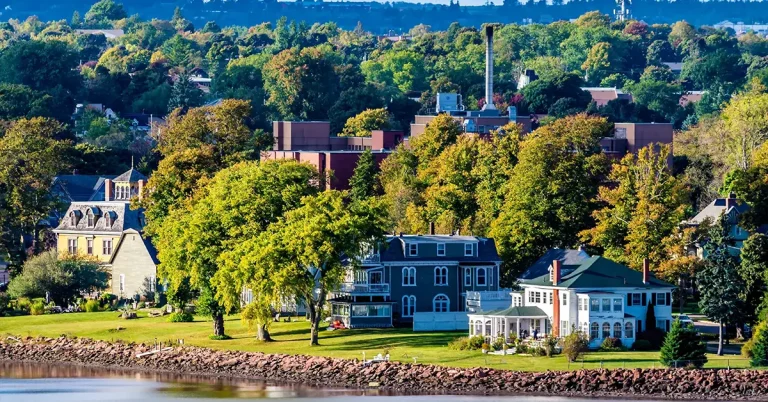
On 21 May 2026, Prince Edward Island issued 114 PNP invitations through the Labour Impact and Express Entry…

Alberta issued 1,051 AAIP invitations between 1 and 13 May 2026 across four draws, prioritising healthcare, technology and…
The Prosperous Living Investment team advises on pathways, assesses profiles and manages investments transparently for every residency, citizenship and international property objective.
Free profile assessmentWhere life gets prosperous
We use analytics cookies (Google Analytics) to understand how this site is used. They stay off until you agree. Privacy policy.