

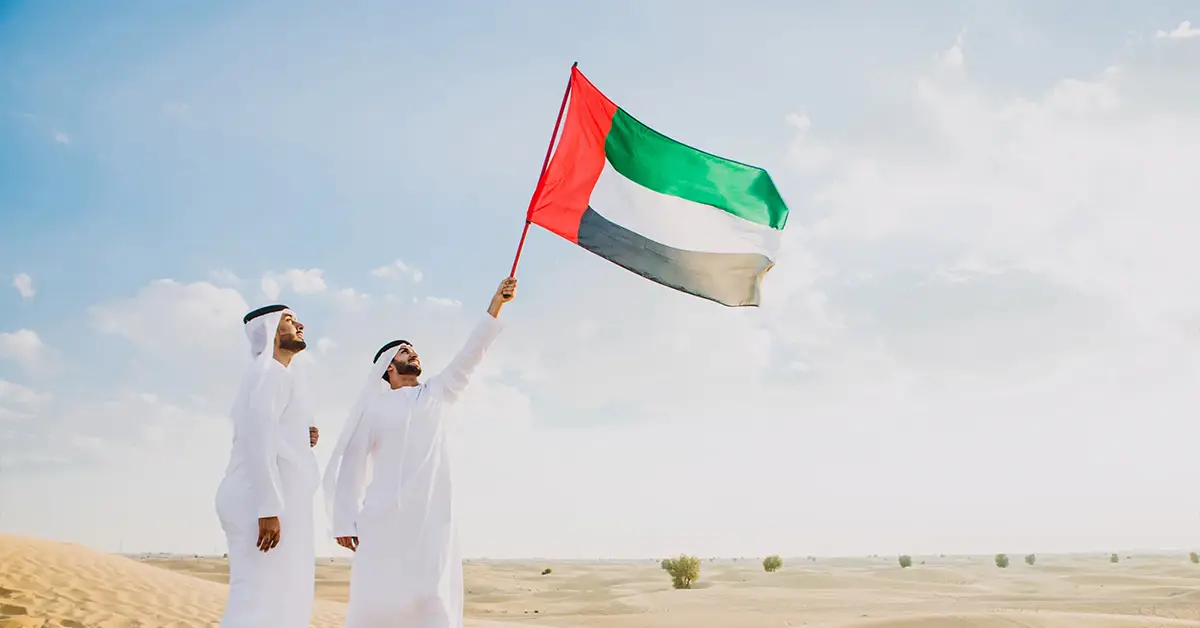
The UAE (United Arab Emirates) is a federation of seven emirates located in West Asia, on the eastern side of the Arabian Peninsula. The country’s capital is Abu Dhabi and its largest city is Dubai — the Middle East’s leading financial, tourism and commercial centre. According tothe official portal of the UAE Government, the UAE is a constitutional federation of seven emirates, the dirham (AED) is the national currency and Arabic is the official language.
Since independence from Britain on 02/12/1971, the UAE has risen to become one of the most diverse and fastest-growing economies in the Arab world. From a poor desert land relying on fishing and pearling, the country now has the world’s seventh-largest oil reserves, modern infrastructure and a very high Human Development Index (HDI), ranking 15th in the world in 2023.
Message
The name of the UAE and its meaning
The UAE’s full name in Arabic is “Al-Imārāt al-ʿArabiyyah al-Muttaḥidah”, translated into English as the United Arab Emirates. The name reflects the country’s distinctive political structure: seven emirates joined together into a single unified state.
The seven member emirates are: Abu Dhabi, Dubai, Sharjah, Ajman, Umm Al Quwain, Fujairah and Ras Al Khaimah. Each emirate is ruled by an emir and has a degree of autonomy in internal matters. Supreme federal authority rests with the Federal Supreme Council, made up of these seven rulers.
Before becoming the UAE, the region was known to the British as the Trucial States — after the maritime truce agreements signed with Britain in the 19th century. Another former name was the “Pirate Coast”, arising from the naval conflicts between the Al Qawasim confederation and British shipping in the 17th–19th centuries.
Considering a residency programme? The Prosperous Living Investment team assesses your profile free of charge and advises on the pathway that fits your goals.
The history of the UAE
A detailed article onThe history of the UAE.
The history of this land stretches back more than 125,000 years, with archaeological evidence of human presence from the Palaeolithic. The region was once part of the migration route of humankind out of Africa to the other continents. The Bronze Age Magan civilisation, recorded by the Sumerians, traded copper with Mesopotamia, Iran and the Indus Valley civilisation from around 3,000 BC.
Islam arrived in the region in 630 AD, following the Prophet Muhammad’s letter to the rulers of Oman. The Battle of Dibba helped secure the unity of the Arabian Peninsula under the Rashidun Caliphate. From the 16th century, European powers such as Portugal, the Netherlands and Britain appeared in turn in the Persian Gulf, competing for maritime commercial influence.
The 19th century marked strong intervention by the British Empire. After military campaigns in 1809 and 1819, Britain and the emirs signed the General Maritime Treaty of 1820, laying the foundations for the concept of the Trucial States. By 1892, the Exclusive Agreement turned the region into a British protectorate, opening more than 70 years of dependence.
The pearling industry was once the economic mainstay of the region, but collapsed in the late 1920s because of the Great Depression and the advent of cultured pearls. Economic hardship continued until oil was discovered in Abu Dhabi in 1958, leading to the first oil exports in 1962.
On 02/12/1971, after Britain announced its withdrawal from the Gulf, six emirates — Abu Dhabi, Dubai, Sharjah, Ajman, Umm Al Quwain and Fujairah — united to found the UAE. Ras Al Khaimah joined later, on 10/02/1972. Sheikh Zayed bin Sultan Al Nahyan, the ruler of Abu Dhabi, became the first president and is regarded as the father of the modern UAE.
After Sheikh Zayed died in 2004, his son Sheikh Khalifa bin Zayed Al Nahyan succeeded him. On 14/05/2022, Sheikh Mohamed bin Zayed Al Nahyan became the third president. Under this leadership, the federation signed the Abraham Accords normalising relations with Israel in August 2020 and launched the Hope spacecraft to Mars in February 2021 — becoming the first Arab country to reach Mars orbit.
The geography of the UAE
A detailed article onThe geography of the UAE.
The UAE occupies a strategic position in the Middle East, bordering the Gulf of Oman and the Persian Gulf, between Oman and Saudi Arabia. The country’s total area is around 83,600 km², ranking 114th in the world. Its geographical coordinates lie between latitudes 22°30′ and 26°10′ North and longitudes 51° and 56°25′ East.
The country has 530 km of border with Saudi Arabia to the west, south and south-east, together with 450 km of border with Oman to the south-east and north-east. The coastline runs nearly 650 km along the Persian Gulf, other than a small part belonging to Oman. Its position near the Strait of Hormuz — the world’s most important crude oil transit route — brings enormous geopolitical advantage.
The terrain is mainly flat desert, with dunes stretching south and west of Abu Dhabi, merging into Saudi Arabia’s Rub al-Khali (the Empty Quarter). The Liwa Oasis in the south and the Al-Buraimi Oasis in the east are two areas with enough groundwater for permanent settlement and cultivation. The Hajar Mountains in the north-east are the highest point, with the peak of Jebel Jais at 1,934 m.
The Emirate of Abu Dhabi accounts for 87% of the federation’s total area, equivalent to 67,340 km². By contrast, Ajman covers only 259 km², making it the smallest emirate. Six of the seven emirates lie on the Persian Gulf, while Fujairah alone lies on the eastern side of the peninsula, directly adjoining the Gulf of Oman.
The climate is hot arid desert, with summers from May to September when temperatures may exceed 45°C. Winters are milder, with temperatures ranging from 14–23°C. Average annual rainfall is very low, around 100 mm, concentrated mainly in the winter months. Sandstorms and high humidity in coastal areas are characteristic weather phenomena.
The ecosystems include the Al Hajar montane woodlands, the Gulf of Oman desert and semi-desert, and arid shrubland. The government launched a conservation programme on Sir Bani Yas Island from the 1970s, helping sustain native species such as the Arabian oryx, the Arabian camel and the Arabian leopard.
The politics of the UAE
A detailed article onThe politics of the UAE.
The UAE is a semi-presidential, semi-constitutional federal monarchy, with a unique political system combining monarchical tradition and a modern federal structure. The Federal Supreme Council, made up of the seven emirate rulers, is the highest authority. The Council elects one of its members as federal president, who then appoints the prime minister and cabinet.
The current president is Sheikh Mohamed bin Zayed Al Nahyan, the incumbent Emir of Abu Dhabi. The prime minister is Sheikh Mohammed bin Rashid Al Maktoum, who is also the Emir of Dubai. By unwritten convention, the president is always the ruler of Abu Dhabi and the prime minister the ruler of Dubai — reflecting these two emirates’ particular economic role.
The Federal National Council (FNC) is the legislature, with 40 members serving 4-year terms. Half the seats are appointed by the emirate rulers, the other half elected by eligible voters. The first national election took place on 16/12/2006, marking a first step towards controlled democratisation.
Each emirate retains considerable autonomy in internal matters, particularly oil and gas extraction, local revenue and the court system. However, fields such as defence, foreign affairs, immigration and monetary policy fall within the federal government’s competence. International human rights organisations rate the country poorly on political freedom and freedom of expression, with many reports of restrictions on freedom of assembly and freedom of the press.
The economy of the UAE
A detailed article onThe economy of the UAE.
The UAE has the most diverse economy in the Gulf Cooperation Council (GCC). On 2025 estimates, GDP (PPP) reached USD 905.23 billion, ranking 36th in the world, with GDP per capita (PPP) of USD 81,680 — ranking 13th globally. Nominal GDP reached USD 548.60 billion, with USD 49,550 per capita.
Oil and natural gas remain the traditional economic mainstay. The country has the world’s seventh-largest oil reserves and seventh-largest natural gas reserves. However, since the early 21st century the government has actively diversified the economy, gradually reducing dependence on natural resources. Oil and gas now account for only around 30% of GDP, with the remainder coming from trade, tourism, finance, property and industry.
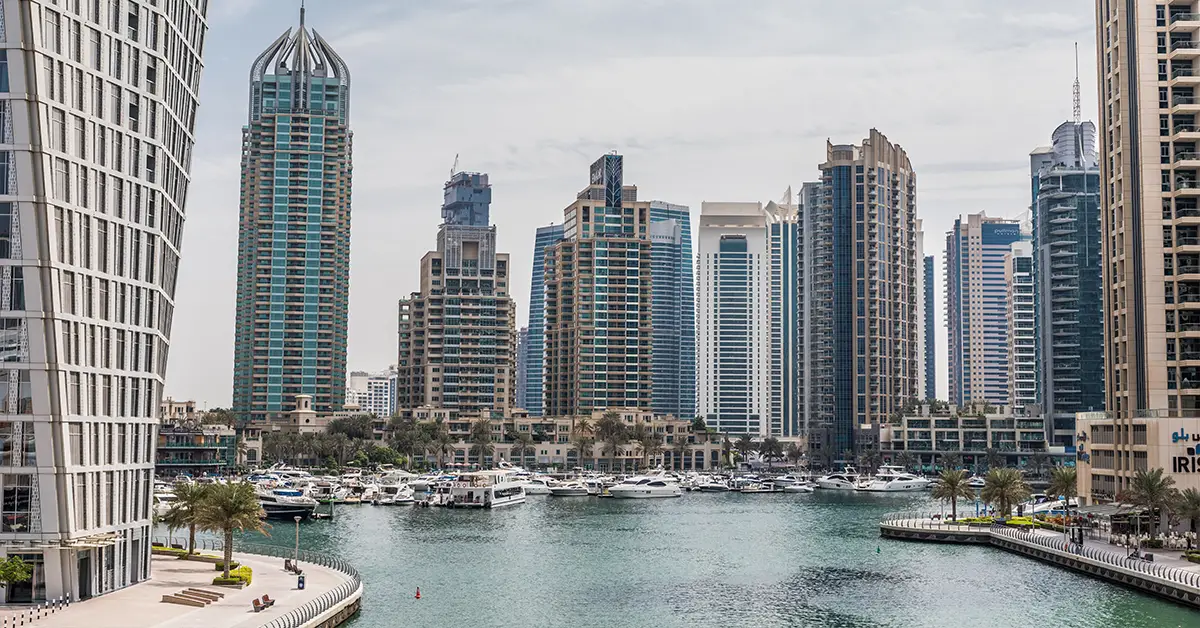
Dubai is the Middle East’s leading financial, tourism and logistics centre. Dubai International Airport (DXB) is consistently among the world’s busiest airports for international passengers. Jebel Ali Port is the largest container port outside Asia. The Dubai International Financial Centre (DIFC) and the Abu Dhabi Global Market (ADGM) are the region’s two leading financial free zones.
The government has rolled out many programmes to attract international investment and talent. TheGolden Visa UAEprogramme allows investors, entrepreneurs, professionals and outstanding scientists to obtain long-term residence visas of 5 or 10 years, to bring their families and to dispense with a local sponsor. This is an important tool in maintaining the country’s position as a leading destination for foreign nationals in the Middle East.
The UAE dirham (AED) is pegged to the United States dollar at a fixed rate of USD 1 = AED 3.6725, ensuring stability for international trade and investment. Personal income tax is 0%, and corporate tax is only 9%, applying to profits above AED 375,000 a year — one of the lowest rates in the world. This is a key factor attracting millions of foreign nationals to live and work there.
The “We the UAE 2031” vision sets the goal of doubling national GDP from AED 1.49 trillion to AED 3 trillion, while focusing on social development, investment and science and technology. The country also joined BRICS in early 2024, expanding economic co-operation with major emerging economies.
The demographics of the UAE
A detailed article onThe demographics of the UAE.
The population was estimated at 11.02 million in 2024, with a density of 132 people per km². The most striking feature is that only around 11% of the population are native Emirati citizens — most of the remainder are foreign nationals and migrant workers. This is the highest proportion of foreign nationals in the world.
The ethnic composition reflects this distinctive multiculturalism. On 2015 figures, South Asians accounted for 59.4%, of whom Indians made up 38.2%, Bangladeshis 9.5% and Pakistanis 9.4%. Native Emiratis accounted for 12%, Egyptians 10.2% and Filipinos 6.1%. The remainder come from Arab, European and East Asian countries.
Islam is the official state religion, with 74.5% of the population following it — of whom Sunnis account for 63.3% and Shias 6.7%. The Christian community accounts for 12.9%, Hindus 6.2% and Buddhists 3.2%. The country is known for its policy of religious tolerance in the region, permitting churches, temples and Shia mosques to be built openly.
Arabic is the official language, but English is the most widely used language of business and communication. Most signage, administrative documents and contracts are printed bilingually in Arabic and English. Foreign communities widely use Hindi, Urdu, Malayalam, Tagalog and Persian.
The UAE’s population is young, with a median age of around 33. Life expectancy is 78 for men and 80 for women. Adult literacy exceeds 97%, reflecting heavy investment in education over recent decades.
Education in the UAE
A detailed article onEducation in the UAE.
The education system has been heavily invested in and has developed rapidly since independence. Public education is free for Emirati citizens from primary through to university, including scholarships to study abroad. Foreign nationals mainly attend private international schools, with a diverse range of education systems from Britain, the United States, India, France, Germany and Japan through to the IB programme.
The Ministry of Education runs school education nationwide, while higher education falls within the competence of the Ministry of Higher Education and Scientific Research. The school programme runs for 12 years, divided into three levels: kindergarten, primary and secondary. Primary school enrolment is close to 100%.
The country has many prestigious international universities with campuses there, such as NYU Abu Dhabi, Sorbonne Abu Dhabi, Heriot-Watt Dubai and Middlesex Dubai. Prominent domestic universities include United Arab Emirates University (UAEU), Khalifa University and Zayed University. Dubai Knowledge Park and Dubai International Academic City are the region’s two largest university clusters.
The government treats education as a strategic priority in the 2031 Vision. Key programmes include renewing teaching methods, integrating technology, developing 21st-century skills and encouraging scientific research. The world’s first university dedicated to artificial intelligence — Mohamed bin Zayed University of Artificial Intelligence (MBZUAI) — opened in Abu Dhabi in 2020.
The culture of the UAE
A detailed article onThe culture of the UAE.
Emirati culture is a unique blend of Arab Bedouin tradition and modern global influences. Core values such as hospitality, respect for elders, family solidarity and Islamic faith are still preserved in daily life, even though the country is one of the most rapidly urbanising in the world.
Traditional dress clearly reflects cultural identity. Emirati men wear the kandura (a white robe) with the ghutra (headscarf) and agal (black cord). Women wear a long black abaya with the shayla (headscarf). At formal events, Emiratis favour traditional dress even in the highest leadership positions.
Emirati cuisine is influenced by Arab, Persian and South Asian cooking. Characteristic dishes include machboos (spiced meat and rice), harees (wheat stewed with meat), luqaimat (fried sweet dumplings) and thareed (bread stewed with vegetables and meat). Arabic tea (karak) and Arabic coffee (gahwa) are traditional drinks indispensable at any reception of guests.
Art and literature are flourishing with government support. The Louvre Abu Dhabi — the first branch of the Paris Louvre outside France — opened in 2017, marking the ambition to become a world cultural centre. The Emirates Literature Festival in Dubai is the region’s largest literary event. Traditional sports such as camel racing, falconry and dhow sailing races are still held regularly alongside international events such as the Abu Dhabi Grand Prix and the Dubai World Cup.
Important festivals and holidays include National Day (02/12), Commemoration Day (30/11), the month of Ramadan, Eid al-Fitr and Eid al-Adha. Islamic festivals follow the Hijri calendar, greatly affecting the rhythm of social life, particularly working hours and daily routines during Ramadan.
The UAE’s international relations
The UAE is regarded as a middle power in global politics, with an active foreign policy and diversified partnerships. The country was a founding member of the Gulf Cooperation Council (GCC) in 1981, and is also a member of the United Nations, the Arab League, the Organisation of Islamic Cooperation, OPEC, the Non-Aligned Movement, the World Trade Organization (WTO) and BRICS.
The relationship with the United States is a strategic pillar. A bilateral defence agreement was signed in 1994, opening the way to participation in many international coalition military operations, including the 1991 Gulf War and the global campaign against terrorism. Al Dhafra Air Base near Abu Dhabi is an important coalition military facility. France also established a permanent military base in Abu Dhabi in 2008.
On 29/08/2020, the Abraham Accords were signed, normalising diplomatic relations with Israel — a historic step that changed the Middle Eastern landscape. The accords opened up bilateral economic, technological and tourism co-operation, and set a precedent for other Arab countries considering normalising relations with Israel.
The country maintains balanced relations with both the West and emerging powers. Relations with China have developed rapidly through the Belt and Road Initiative, with China its largest trading partner outside the GCC region. Relations with Russia have been maintained even amid the Ukraine conflict. Abu Dhabi is also a dialogue partner of the Shanghai Cooperation Organisation.
Within the region, the relationship with Iran remains complex because of the sovereignty dispute over the islands of Abu Musa, Greater Tunb and Lesser Tunb — islands Iran occupied in late 1971 before the federation became independent. Relations with Qatar were tense in the period 2017–2021 when Abu Dhabi, together with Saudi Arabia, Bahrain and Egypt, cut diplomatic ties, but have been fully restored since 2021.
Tourism in the UAE
A detailed article onTourism in the UAE.
The UAE is one of the most attractive tourist destinations in the Middle East, drawing around 25 million international visitors a year before the pandemic. Dubai and Abu Dhabi are the two leading tourism centres, with world-class hotel, restaurant and entertainment infrastructure.
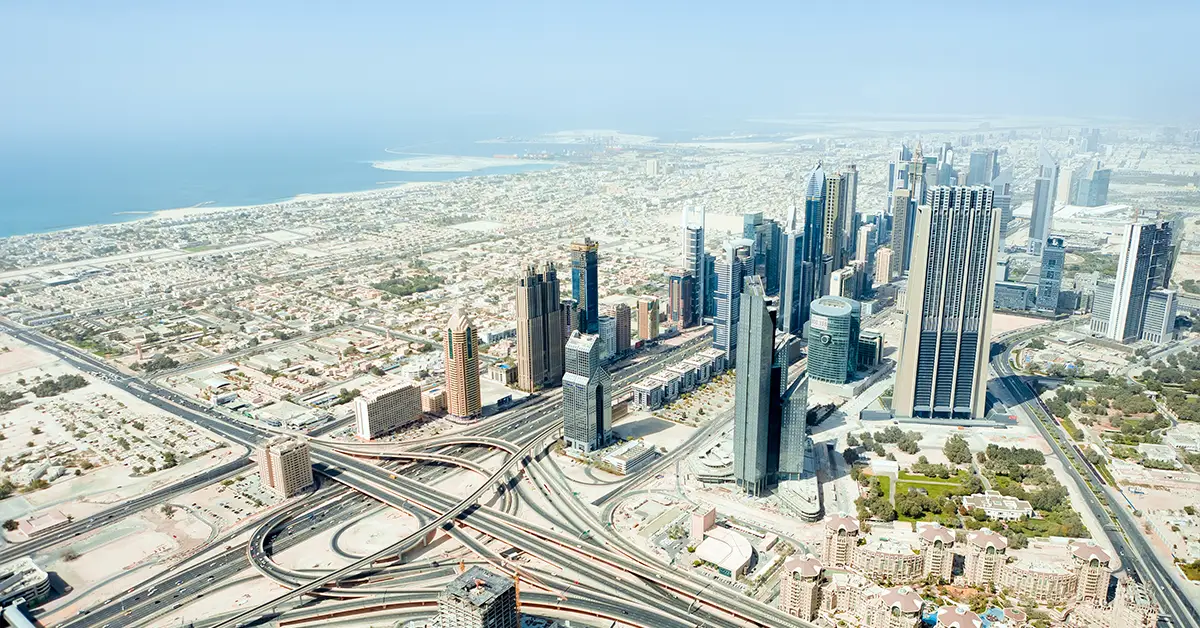
In Dubai, the iconic attractions include the world’s tallest building, the Burj Khalifa (828 m), the 7-star Burj Al Arab hotel, the Dubai Mall shopping centre, the artificial Palm Jumeirah archipelago and the historic Al Fahidi district. Expo 2020 Dubai (held in 2021–2022 because of Covid-19) left a major architectural legacy in the Expo City Dubai district.
Abu Dhabi is proud of the Sheikh Zayed Grand Mosque — one of the most beautiful mosques in the world — together with the Louvre Abu Dhabi, the Ferrari World theme park, Yas Island and the conservation island of Sir Bani Yas. Sharjah has been recognised by UNESCO as the Arab cultural capital, notable for its museums and heritage old quarters. Ras Al Khaimah is famous for the world’s longest zipline on the summit of Jebel Jais.
UAE infrastructure and transport
The transport system there is among the most modern in the world. Dubai International Airport (DXB) is the world’s busiest airport for international passengers, and together with Zayed International Airport (Abu Dhabi), Sharjah International and Ras Al Khaimah International forms a dense international aviation network.
The national airlines Emirates (Dubai) and Etihad Airways (Abu Dhabi) both rank among the world’s highest-quality carriers. Flydubai and Air Arabia are two low-cost carriers serving the regional network. The road system is extensive, with the E11 highway, the country’s longest, running through all seven emirates.
The Dubai Metro, opened in 2009, is the world’s longest driverless automated metro system. The Etihad Rail system — the first federal railway — is expanding its passenger and freight network linking the seven emirates and neighbouring GCC countries. Dubai’s Jebel Ali Port is the world’s 11th largest container port.
Frequently asked questions about the UAE
UAE stands for the United Arab Emirates.
The UAE comprises seven emirates: Abu Dhabi, Dubai, Sharjah, Ajman, Umm Al Quwain, Fujairah and Ras Al Khaimah.
The capital of the UAE is Abu Dhabi, while Dubai is the largest city and the international economic centre.
The UAE dirham (AED), pegged to the United States dollar at a rate of USD 1 = AED 3.6725.
Arabic is the official language, but English is widely used in business and daily life.
Yes. Vietnamese nationals may settle in the UAE through the UAE Golden Visa programme with a term of 5 or 10 years, for investors, entrepreneurs, highly skilled professionals and outstanding students.
No. The UAE charges no personal income tax. Corporate tax is only 9% on profits above AED 375,000 a year.
The UAE has a hot arid desert climate. In summer (May–September) temperatures exceed 45°C, while winter (November–March) is milder with temperatures of 14–23°C and low rainfall year round.
Accompanying you on your journey in residency investment
The Prosperous Living Investment team advises on pathways, assesses profiles and manages investments transparently for every residency, citizenship and international property objective.
Free profile assessmentWhere life gets prosperous